

Two significant media communications that emerged in the first part of 2016 have garnered considerable attention, offering a dual source of inspiration and urgency regarding the global challenge of climate change. The first, Leonardo DiCaprio’s acceptance speech for the Best Actor Oscar for his role in "The Revenant," delivered a powerful and unequivocal message on the escalating climate crisis. The second, former U.S. Vice President Al Gore’s latest TED Talk, titled "The Case for Optimism on Climate Change," presented a forward-looking perspective on potential solutions and progress. Both instances, originating from highly visible platforms, underscore a growing mainstream acknowledgment of climate change and a call for collective action.
DiCaprio’s Oscar Speech: A Platform for Climate Advocacy
Leonardo DiCaprio’s long-awaited Best Actor Oscar win on February 28, 2016, for his arduous performance in Alejandro G. Iñárritu’s "The Revenant," transcended the typical celebratory acceptance speech. Instead, DiCaprio leveraged the global spotlight to deliver a passionate and detailed plea for immediate and decisive action on climate change. His remarks, broadcast live to an estimated audience of over 30 million viewers in the United States alone, marked a pivotal moment for climate advocacy within popular culture.
Key Themes and Demands:
In his address, DiCaprio did not shy away from the gravity of the situation. He stated, "Climate change is real. It is happening right now. It is the most urgent threat facing our entire species." He underscored the scientific consensus, referencing the observable impacts that have become increasingly undeniable.
- Scientific Urgency: DiCaprio highlighted the tangible consequences of a warming planet, alluding to the extreme weather events and environmental degradation that have become more frequent and intense. While he did not cite specific scientific reports within his brief speech, his message aligned with the findings of bodies such as the Intergovernmental Panel on Climate Change (IPCC), which consistently reports on the human-induced nature of global warming and its multifaceted impacts.
- Collective Responsibility: A central tenet of his speech was the call for a unified global response. He emphasized that addressing climate change is not merely an individual or national responsibility but a collective human endeavor. This resonated with the principles of international cooperation, such as those outlined in the United Nations Framework Convention on Climate Change (UNFCCC) and its subsequent agreements, including the Paris Agreement, which was being finalized around the same time.
- Critique of "Politics of Greed": DiCaprio’s most pointed critique was directed at what he termed "the politics of greed." This phrase, while broad, alluded to the influence of vested interests, particularly in the fossil fuel industry, that have historically obstructed climate action and policy implementation. He implicitly called for a shift in political will, prioritizing environmental sustainability over short-term economic gains.
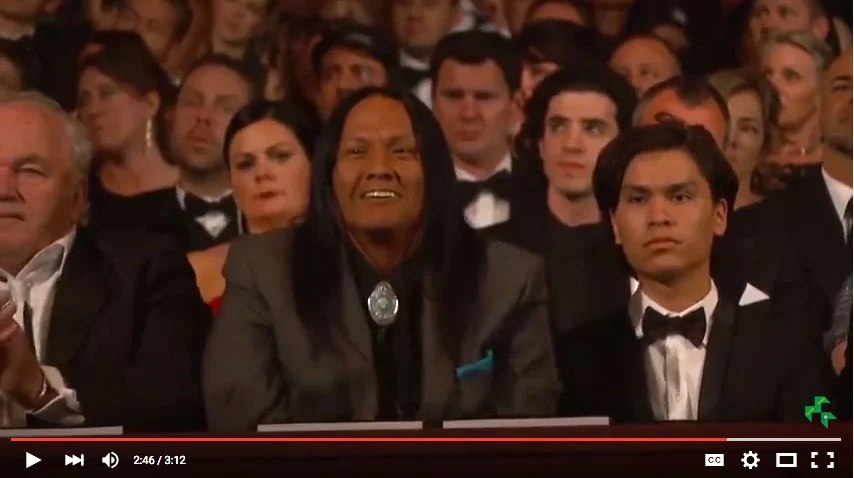
- Support for Indigenous Voices: A particularly resonant aspect of his speech was his specific acknowledgment and championing of Indigenous peoples. He stated, "It is not the politicians in Brussels or the politicians in Washington who have put [this issue] on the table, but the people on the front lines who are feeling the direct impacts of it. Their voices have been drowned out by the politics of greed." This recognition highlighted the disproportionate vulnerability of Indigenous communities to climate change impacts and their often-overlooked role in environmental stewardship and traditional ecological knowledge. Indigenous communities, often residing in ecologically sensitive areas, have been at the forefront of witnessing and experiencing the effects of climate change, from altered weather patterns to resource depletion.
Background and Context:
DiCaprio’s advocacy for environmental causes is not new. He established the Leonardo DiCaprio Foundation in 1998, which supports a wide range of environmental initiatives. His film "Before the Flood," a documentary released in late 2016, further explored the impacts of climate change and potential solutions, featuring interviews with world leaders, scientists, and activists. The Oscar speech served as a powerful culmination of years of personal commitment and a strategic use of a monumental platform to amplify a critical message.
Implications of the Speech:
The impact of DiCaprio’s speech was immediate and far-reaching:
- Increased Public Awareness: The sheer magnitude of the Oscar audience ensured that the message of climate change reached a vast demographic, many of whom may not have previously engaged deeply with the issue. This brought the conversation to dinner tables and news cycles globally.
- Mainstream Validation: For many, seeing a global icon like DiCaprio speak so passionately about climate change provided a sense of validation and encouraged greater personal engagement.
- Pressure on Policymakers: While not a direct policy proposal, the speech’s emphasis on collective action and critique of obstructionist politics served as a subtle but significant pressure point on political leaders to accelerate climate initiatives.
Al Gore’s TED Talk: A Case for Climate Optimism
Complementing DiCaprio’s urgent call to action, Al Gore’s TED Talk, delivered in early 2016, offered a different yet equally vital perspective: a reasoned and evidence-based case for optimism in the fight against climate change. Gore, a long-time figure in climate advocacy and a recipient of the Nobel Peace Prize for his work on the issue, presented a nuanced view that acknowledged the ongoing severity of the crisis while highlighting significant progress and the potential for a sustainable future.
Key Themes and Arguments:
Gore’s presentation was structured to first acknowledge the enduring reality and consequences of climate change before pivoting to areas of progress and innovation.
- Persistent Threat: Gore began by reiterating the seriousness of climate change, a message consistent with his earlier work, including the seminal documentary "An Inconvenient Truth" (2006). He likely referenced ongoing scientific data demonstrating continued warming trends, rising sea levels, and extreme weather events, reinforcing the necessity of continued vigilance and action.
- Emerging Solutions and Progress: The core of Gore’s optimistic outlook lay in showcasing tangible advancements and shifts in global efforts:
- Renewable Energy Growth: He likely highlighted the exponential growth in solar and wind power, citing dramatic cost reductions and increased deployment worldwide. Data from the International Renewable Energy Agency (IRENA) at the time would have supported this, showing a significant increase in renewable energy capacity. For instance, global solar photovoltaic capacity, which was around 150 GW in 2015, has seen a compounded annual growth rate that far outstripped projections.
- Technological Innovation: Gore would have pointed to innovations in energy storage, smart grids, and carbon capture technologies as crucial enablers for a low-carbon future.
- Policy Shifts: He likely discussed the increasing number of countries and corporations setting ambitious climate targets and implementing supportive policies, such as carbon pricing mechanisms and renewable energy mandates. The impending ratification of the Paris Agreement, which saw significant global buy-in in 2016, would have been a key example of this progress.
- Shifting Public Opinion and Corporate Engagement: Gore would have emphasized the growing public demand for climate action and the increasing commitment from businesses to adopt sustainable practices, driven by both ethical considerations and market opportunities.
- The "What Is Now Possible": By detailing these developments, Gore aimed to demonstrate that the transition to a sustainable economy is not only necessary but increasingly feasible and economically viable. He painted a picture of a future powered by clean energy, with reduced pollution, greater energy independence, and new economic opportunities.
Background and Context:
Al Gore’s engagement with climate change dates back decades. His 2006 film "An Inconvenient Truth" played a pivotal role in raising global awareness about the issue. In 2007, he was awarded the Nobel Peace Prize along with the IPCC for their work in documenting and communicating the impacts of climate change. His continued efforts through organizations like The Climate Reality Project have focused on educating the public and mobilizing action. His TED Talk in early 2016 represented a strategic update, offering a hopeful counterpoint to the often-overwhelming narrative of climate disaster.
Implications of Gore’s Talk:
Gore’s TED Talk provided a crucial counter-narrative to widespread climate despair:
- Combating Climate Fatigue: By focusing on solutions and progress, Gore offered a message of hope that could combat the feelings of helplessness and apathy that often accompany discussions about climate change.
- Encouraging Investment and Innovation: His presentation likely inspired continued investment and innovation in the clean energy sector by demonstrating its viability and growth potential.
- Empowering Individuals and Communities: The talk aimed to empower individuals and communities by showing that their actions, collective efforts, and advocacy contribute to a larger, achievable goal.
- Reinforcing Policy Momentum: By highlighting policy successes and opportunities, Gore’s talk likely reinforced the momentum for climate-friendly legislation and international agreements.
The Synergy of DiCaprio and Gore’s Messages
The convergence of Leonardo DiCaprio’s urgent plea and Al Gore’s optimistic roadmap in early 2016 offered a powerful one-two punch in the global climate discourse. DiCaprio’s speech, amplified by its Oscar platform, injected raw urgency and a moral imperative into the conversation, directly challenging inaction and highlighting those most affected. Gore’s TED Talk, grounded in data and foresight, provided a tangible vision of what is achievable, demonstrating that progress is not only possible but already underway.
Together, these communications represented a significant moment in the mainstreaming of climate action. DiCaprio’s emotional appeal resonated with a broad audience, while Gore’s analytical approach offered concrete pathways forward. The synergy between these two influential figures and their respective messages served to both galvanize immediate concern and foster long-term commitment to addressing the existential threat of climate change. This dual approach, balancing urgent warnings with hopeful solutions, is crucial for sustained engagement and effective action on one of humanity’s most pressing challenges. The communications served as powerful reminders that while the threat is real and immediate, so too are the opportunities for innovation, collaboration, and positive change.

