

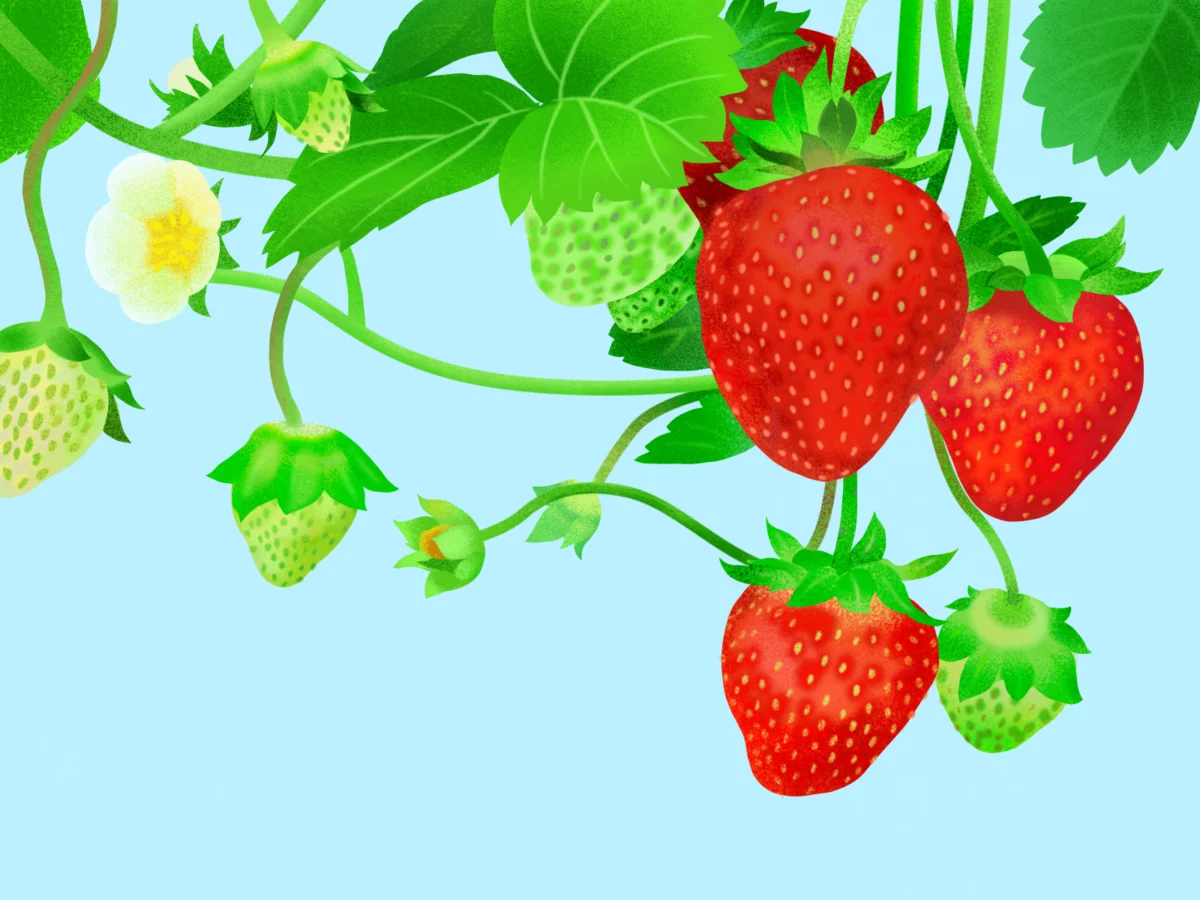
The Tricycle Haiku Challenge, a recurring event that invites poets to capture moments of profound observation in the traditional 5-7-5 syllable structure, has concluded its latest round, focusing on the poignant symbolism of the strawberry. This season’s theme celebrated the ephemeral nature of high summer, a concept deeply resonant with the haiku form itself, which often evokes "a melancholy gleam" of life’s passing. The winning and honorable mention poems masterfully utilized the designated season word, "strawberry," to encapsulate the preciousness of fleeting moments.
Winning Entry Captures the Ephemeral Glow of Sunset
The top honor was awarded to Stevie Rosenfeld for a haiku that poetically bridges the gap between the natural world and human consciousness:
seemingly aware
of day’s end, wild strawberries
flirt with the last light
This winning entry is lauded for its evocative imagery and its ability to imbue a simple natural phenomenon with a sense of shared awareness. The haiku’s strength lies in its capacity to convey meaning and emotion through concrete images, a hallmark of the haiku form. As the article explains, the juxtaposition of the wilting day and the ripening fruit suggests a profound connection between our inner experiences and our outward perceptions. The poem implies that both the poet and the wild strawberries are attuned to the subtle shifts in light and the inevitable passage of time, a shared mortality that binds them to the earth. The phrase "flirt with the last light" adds a layer of playful personification, suggesting a dance between nature and the fading sun, while simultaneously hinting at the gentle melancholy that accompanies the end of a beautiful day. This moment of observation, tinged with a recognition of life’s brevity, mirrors the subjective experience of human existence, where individual lives, like the brief season of a strawberry, are finite.
Honorable Mentions Reflect on Memory, Seasonality, and Sensory Experience
Two poems received honorable mentions, each offering a distinct perspective on the strawberry’s symbolic weight. Nancie Zivetz-Gertler’s haiku connects the fruit to personal history and memory:
your first hand thrown bowl
it’s holding strawberries now
I thought you should know
This poem evokes a sense of gentle remembrance, linking the tangible presence of strawberries in a handmade vessel to a personal narrative. The simple act of observation and sharing this detail underscores the quiet power of everyday moments to carry significant emotional weight.
Tracie Renee’s haiku captures the sensory delight and regenerative power of the fruit, even amidst less than ideal conditions:
caught in the downpour
eating just-picked strawberries
I taste only sun
This poem highlights the potent sensory experience of a strawberry, suggesting that its inherent sweetness and vibrancy can transcend external circumstances. The contrast between the rain and the taste of sunshine speaks to the enduring power of natural pleasures to uplift the spirit.
The Strawberry as a Symbol of Transience and Mindfulness
The choice of the strawberry as the season’s theme is deeply rooted in its inherent qualities and cultural associations. With its short growing season and intense sweetness, the strawberry has long been a symbol of the preciousness of each moment. The article draws a parallel between the brief lifespan of a strawberry and the human experience of time, noting that even the longest human lifespans are minuscule when compared to geological timescales. This perspective, it argues, imbues each moment with greater value, much like the fleeting season of the strawberry makes it a more cherished delight.
The haiku’s ability to distill profound truths into seventeen syllables is further explored through an allegorical Zen parable. This story, often interpreted as a lesson on impermanence, features a man hanging precariously over a precipice, pursued by tigers and with time running out as mice gnaw at his lifeline. In his final moments, he notices a strawberry, plucks it, and exclaims, "How sweet!" The parable’s traditional interpretation focuses on the inevitability of birth and death, the relentless march of time represented by day and night, and the importance of mindfulness in the face of mortality.
However, the article proposes a deeper, ecological interpretation of the parable. It suggests that the true wisdom lies not in the man’s fleeting awareness of his predicament, but in the strawberry itself. The strawberry, existing in a state of unity with birth and death, offers a profound truth: "Everything that eats is also eaten. This is the truth of all life." This "plant medicine," as described, is not about altering consciousness but about embodying a fundamental understanding of interconnectedness and the natural cycle of existence. The berry’s sweetness, experienced directly and without intellectualization, represents a truth that can be understood "with the belly, not the head." This perspective shifts the focus from human anxiety about time to an acceptance of the natural order, where life and death are integral parts of a continuous whole.
Haiku Challenge Context and Guidelines
The Tricycle Haiku Challenge, hosted by Tricycle: The Buddhist Review, aims to foster a deeper engagement with poetry and mindfulness. Participants are encouraged to submit haiku that adhere to the traditional 5-7-5 syllable structure and incorporate the designated season word. The focus is on capturing a single, present moment with straightforward descriptions, avoiding excessive imagery or complex ideas.
For the "Strawberry" challenge, participants were instructed to:
- Write haiku in three lines of 5, 7, and 5 syllables.
- Include the word "strawberry" in each poem.
- Focus on a single moment happening "now."
- Be straightforward in descriptions, limiting subject matter to enhance focus.
The challenge aims to encourage poets to observe the world with heightened awareness, finding poetry in the ordinary and the ephemeral. Submissions are reviewed by editors, with winning and honorable mention poems being highlighted in publications and online. Additional poems of merit are often showcased in dedicated online groups, such as the Tricycle Haiku Challenge group on Facebook, fostering a community of poets and readers.
The Strawberry’s Rich Cultural and Botanical Background
Beyond its symbolic weight in haiku, the strawberry boasts a fascinating botanical and cultural history. In the northeastern United States, its harvest typically spans from June to mid-July, with warmer climates extending its season into early fall. Wild varieties, often smaller and sweeter than cultivated ones, tend to appear earlier.
Botanically, the strawberry is a member of the rose family. Contrary to popular belief, the fleshy part we commonly call the "berry" is not a true berry but an enlarged receptacle. The actual fruits, known as achenes, are the tiny, seed-like structures embedded on the surface. The strawberry’s delicate white flowers have historically been associated with purity and innocence, while its heart-like shape has linked it to themes of love and romance.
The introduction of strawberries to Japan in the 19th century marked a significant moment for haiku poetry. It became a popular "summer season word," allowing poets to explore themes of seasonality and sensory experience. This tradition was notably advanced by modern poet Suzuki Masajo (1906-2003), who pioneered the use of haiku to explore themes of love, a subject previously more commonly addressed in the longer tanka form. Her poem, "still longing for love / I pop a ripe strawberry / right into my mouth," exemplifies this, where the act of eating a strawberry evokes a nostalgic longing for past love and a playful temptation towards new romantic connections.
Broader Implications for Mindfulness and Art
The Tricycle Haiku Challenge, through its engagement with themes like the strawberry, serves as a valuable platform for exploring the intersection of art, mindfulness, and ecological awareness. By focusing on transient elements of nature and human experience, the challenge encourages participants and readers to cultivate a deeper appreciation for the present moment and the interconnectedness of all things. The haiku form, with its emphasis on brevity and precise observation, provides an ideal medium for this exploration, mirroring the very essence of mindful living. The ongoing success of the challenge, evidenced by the continued participation and the thoughtful engagement with its themes, underscores a growing interest in contemplative practices and the power of poetry to illuminate the profound beauty found in the everyday.
The continued exploration of such themes within the haiku community suggests a broader cultural inclination towards finding meaning in the ephemeral, a recognition that even in the fleeting nature of a strawberry’s season or a day’s light, profound truths about life, interconnectedness, and beauty can be found. The challenge not only celebrates poetic talent but also offers a gentle invitation to pause, observe, and savor the transient moments that define our existence.

