

The pervasive sense of disconnection from our natural surroundings and a lack of deep commitment to place represent a critical challenge of our time, a sentiment echoed by thinkers and writers who advocate for a radical shift in human behavior. This profound detachment, amplified by a globalized consumer culture and increased geographic mobility, has led to widespread ignorance of ecological systems, a diminished sense of belonging, and an impaired ability to perceive and respond to environmental crises. The concept of "reinhabitation," championed by figures like Gary Snyder, offers a pathway to rectify this disconnect by fostering an intimate, informed, and responsible relationship with the specific places we inhabit.
The Erosion of Place Attachment
In contemporary Western societies, a significant portion of the population spends the majority of their lives indoors, often engrossed in digital screens. This indoor existence, coupled with a culture that encourages frequent relocation for education, career advancement, or personal relationships, has fostered a state of being "dis-located and dis-placed." Gary Snyder, a poet, essayist, and environmental activist, articulates this problem starkly: "One of the key problems in American society now, it seems to me, is people’s lack of commitment to any given place—which . . . is totally unnatural and outside of history. Neighborhoods are allowed to deteriorate, landscapes are allowed to be strip-mined, because there is nobody who will live there and take responsibility; they’ll just move on." This transient lifestyle, driven by economic and social pressures, creates a vacuum of stewardship, leaving local environments vulnerable to degradation and exploitation.
Daniel Wildcat, a scholar and member of the Yuchi (Euchee) tribe, provides historical context to this phenomenon. He observes that "In the increasingly geographically mobile world humans inhabit at the beginning of what Western civilization calls the twenty-first century, fewer and fewer people have tangible lifeway relationships to the places in which they live. Humankind’s diets, clothing, dwellings, and everyday lives are increasingly shaped by social forces such as corporations and marketers that attempt to transcend the unique features of the peoples and places of the planet." This globalizing force has resulted in "one monolithic global consumer culture that makes a sense of place—or more properly, natural landscapes—irrelevant in its homogenizing logic." The consequence is a population largely unaware of the ecological shifts occurring around them, such as declining pollinator populations, dwindling songbird numbers, and the proliferation of insect-borne diseases. This lack of awareness directly impedes our collective capacity to grasp the severity and urgency of climate disruption.
The Philosophy of Reinhabitation
The concept of reinhabitation, as espoused by Gary Snyder, emerges as a potent antidote to this widespread disconnection. Snyder, drawing from a rich tapestry of experiences—including his rural upbringing, extensive wilderness immersion, Zen Buddhist practice in Kyoto, deep commitment to his home region in the Sierra Nevada foothills, and profound respect for Indigenous knowledge systems—proposes a vision for living more fully within our specific locales. He advocates for discerning "the web of the wild world" and achieving "intimate contact with the real world, the real self." This approach resonates with the Zen principle of non-duality, the understanding that we are not separate from the world but intrinsically interconnected with it. However, the current patterns of mobility and mental estrangement from nature have, in Snyder’s view, rendered us "an unsettled and disenfranchised people."
The author’s personal narrative illustrates this pattern of unsettledness. While formative childhood experiences fostered a deep, embodied connection to a particular river valley—characterized by intimate knowledge of its flora, fauna, and the sensory experiences of fishing, exploring, and enduring insect bites—a subsequent thirty-year period of frequent relocation led to a detachment from local watersheds and communities. Despite occasional moments of connection with nature, this knowledge remained superficial. This personal trajectory highlights the challenge of maintaining deep ecological awareness when one’s life is characterized by constant movement and superficial engagement with surroundings.
Snyder’s counsel for reinhabitation is direct: "First, don’t move, and second, find out what that teaches you." This philosophy emphasizes long-term commitment to a place, urging individuals to "honor this land’s great antiquity—its wildness—learn it—defend it—and work to hand it on to the children (of all beings) of the future with its biodiversity and health intact." The author’s decision to remain in a semi-urban condo on the outskirts of Boston, rather than pursuing a more bucolic lifestyle that might involve wood heating, exemplifies the practical challenges and ethical considerations involved in reinhabitation, acknowledging the environmental impact of even seemingly benign choices.
Cultivating Bioregional Awareness
At the core of reinhabitation lies the cultivation of "bioregional awareness." This goes beyond a generalized affection for nature or abstract desires for planetary harmony. It necessitates a deep, information-grounded understanding of one’s immediate environment. As Snyder explains, "Bioregional awareness teaches us in specific ways. It is not enough just to ‘love nature’ or to want to ‘be in harmony with Gaia.’ Our relation to the natural world takes place in a place, and it must be grounded in information and experience." This grounded knowledge allows us to perceive our place as a unique locus of interconnectedness. Snyder elaborates, "You should really know what the complete natural world of your region is and know what all its interactions are and how you are interacting with it yourself." Charles Strain, in his analysis of Snyder’s work, emphasizes this as a practice of "mindful concentration, samadhi, refocused as the kind of attention to the detailed variations of climate and soil, to what will flourish and what will not in this place."
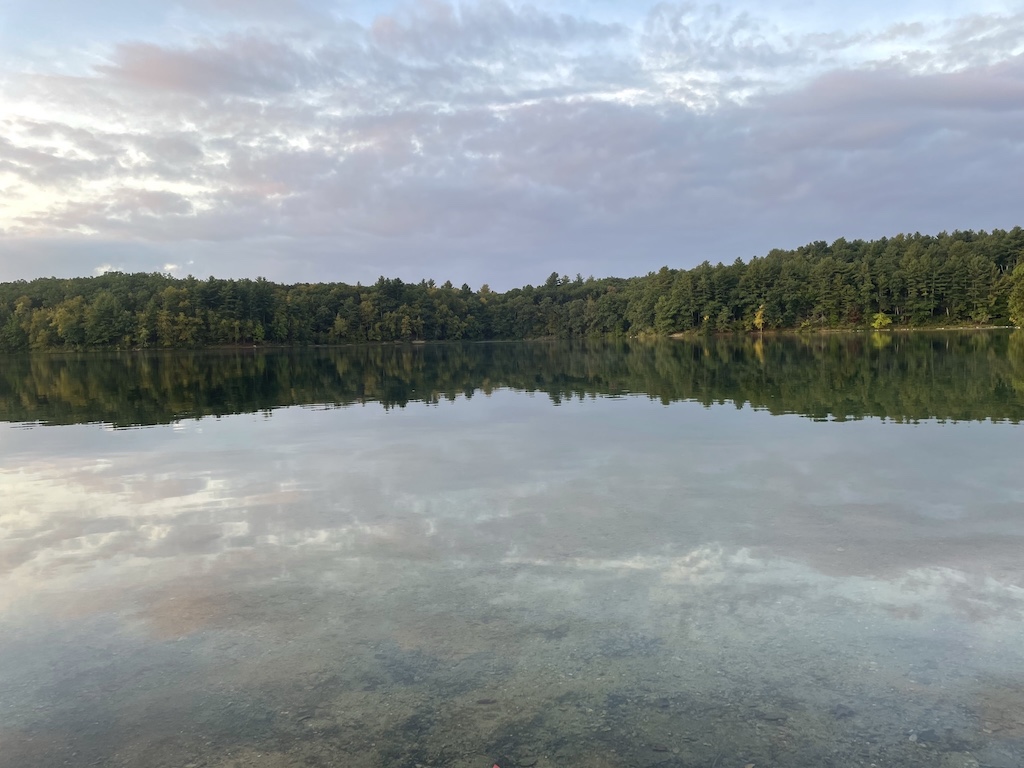
This detailed understanding requires delving into the geological history beneath our feet, comprehending the composition of bedrock and soil. For instance, knowing that the author’s current locale was once covered by a mile-thick ice sheet during the last Ice Age, and that nearby Walden Pond is a kettle pond formed by glacial melt, provides crucial context for understanding the present-day landscape.
Learning from Indigenous Knowledge and History
Crucially, reinhabitation involves learning from the intricate knowledge systems of Indigenous peoples, whose enduring connections to land, waterways, animals, and all life forms offer profound insights into sustainable lifeways. Snyder suggests that Indigenous communities can be "a great instructor in certain ways of tuning into what the climatic cycles, plant and animal communities, can tell us of where we are." Daniel Wildcat (Yuchi, Muscogee) emphasizes that "Tribal lifeways can remind us of the imperative to reconstitute a life-enhancing nature-culture nexus in the places where we live." For non-Native individuals, particularly those of colonial descent, this learning process must also include acknowledging and grappling with the history of displacement and land dispossession that has shaped their current residences.
The imperative to understand our place extends to its more recent history. This includes the lifeways of all peoples who have inhabited the area, both Indigenous and subsequent settlers. It requires identifying the local flora and fauna, from the insects in our backyards to the plants surrounding our buildings. Understanding the hydrological cycle—how water moves through the landscape—is equally vital. As Scott Russell Sanders aptly puts it, "When we figure our addresses, we might do better to forget zip codes and consider where rain goes after it falls outside our windows." In the author’s location, formerly known by its original inhabitants as Pigsgussett (now Watertown, Massachusetts), understanding that much of the rain flows into Quinobequin (the Charles River) is a critical piece of bioregional knowledge, impacting local water quality and recreational opportunities, as evidenced by the potential cancellation of a cherished annual swim race due to sewage contamination.
Furthermore, comprehending how local ecosystems change seasonally and how land is being utilized, or potentially damaged, within one’s town or city is essential. This includes examining the role of local government in environmental regulation.
The Imperative of Ecological Citizenship
The call for reinhabitation is, in essence, a call for a new form of ecological citizenship. It demands a shift from passive consumption to active participation in the well-being of our local environments. This requires moving beyond abstract environmentalism to concrete, place-based action. The implications of this approach are far-reaching. By fostering a deeper connection to place, reinhabitation can strengthen community bonds, as individuals working together to understand and care for their local environments develop shared purpose and responsibility.
This grounded approach to environmentalism is not merely an intellectual exercise; it is a fundamental reorientation of human existence. It acknowledges that our well-being is inextricably linked to the health of the ecosystems in which we live. As the climate crisis intensifies, the urgency of this reinhabitation becomes ever more apparent. The disappearing trout populations due to warming rivers, the vanishing fireflies, the increased risk of vector-borne diseases—these are not isolated incidents but symptoms of a broader ecological unravelling, exacerbated by our collective detachment from the very places that sustain us.
The path outlined by Snyder and other proponents of reinhabitation offers a hopeful, actionable response. It is a call to come home, not just to a house, but to the intricate, dynamic, and life-affirming web of the wild world that surrounds us. It is a journey of discovery, responsibility, and ultimately, of profound reconnection. The book "Zen Ecology: Green and Engaged Living in Response to the Climate Crisis" by Christopher Ives, from which this article draws, further explores these themes, offering a comprehensive framework for individuals and communities seeking to engage in this vital work of reinhabitation.

