

The current predicament of two NASA astronauts, whose eight-day mission has unexpectedly extended to a forty-five-day journey with no clear end date, serves as a potent metaphor for a deeper human experience of confinement. While well-provisioned and trained for extended duration in space, their prolonged stay aboard a spacecraft, designed to navigate the vast expanse of the cosmos, highlights an ironic paradox: being physically present in the boundless universe yet feeling "stuck." This situation mirrors a fundamental human condition, as articulated by Tarthang Tulku, where mental conditioning creates "small, tight spaces" of selfhood, obscuring a "vast, open space of being." This article delves into the nature of these perceived spatial limitations, both external and internal, and explores pathways to transcend them, drawing on insights from Tarthang Tulku’s work and offering practical exercises for cultivating a more expansive awareness.
The Prison of Regime-Space
The concept of "regime-space" refers to the socially constructed and mentally ingrained frameworks that define our understanding and experience of space. Just as a "regime-time" dictates our schedules and perceptions of temporality, regime-space imposes limitations that profoundly shape our daily lives. It establishes a sense of being physically bound to our bodies, which are perceived as having impermeable borders that separate us from the external world and from one another. This perception extends inward, creating a mental landscape where a distinct "self" or "I" is believed to reside in a specific location, often equated with the forehead, the perceived seat of the mind.
This ingrained notion of a localized self leads to a feeling of being compressed into a minuscule area, a "tiny closet in the middle of a huge mansion." Within this cramped mental space, thoughts and emotions are also perceived as discrete entities, each with its own defined boundaries. Anger, sadness, joy, awe—each is seen as a separate "bubble" with a distinct border, leading to a feeling of being trapped in one emotional state after another. This constant oscillation between narrowly defined mental territories contributes to a sense of suffering and an inability to experience sustained happiness, as our inherent capacity for movement, exploration, creation, and boundless being is stifled by these self-imposed limitations. The consequences of this perceived confinement can manifest in societal issues, such as the punitive nature of incarceration, where physical restriction serves as a potent symbol of the "not-free" state.
Challenging Misconceptions About Space
A critical step towards reclaiming a more expansive sense of being involves examining and challenging the unexamined assumptions we hold about space. Tarthang Tulku, in his work Lotus Body, highlights two significant misconceptions that most individuals harbor regarding space:
-
Space as a Passive Backdrop: In our external environment, we often perceive space as a mere backdrop, analogous to the blank canvas of an artist. Our attention fixates on the objects within this space, rendering the space itself invisible, formless, and devoid of significance. This perspective, often referred to as "negative space" in art, leads to the erroneous conclusion that matter is paramount and space is secondary. However, this view overlooks the fundamental role of space. Without space, no objects could exist or appear. Space is not merely a passive stage; it is the enabling condition for the presence of matter. Therefore, space and matter are equally essential for the manifestation of our perceived reality. By focusing solely on matter, we apprehend only a partial truth, remaining blind to the interconnectedness and foundational nature of space.
-
The Neglect of Inner Space: In our inner world, the neglect of space is even more pronounced. Thoughts and emotions, acting as mental "objects," completely capture our attention, leaving us mesmerized and oblivious to the space that surrounds and contains them. Just as external objects require space to exist, so too do our internal mental phenomena. We fail to recognize the space that encompasses, underlies, and permeates our thoughts and feelings. This oversight results in an overemphasis on the content of our mental states and a deficit in experiencing inner spaciousness, leading to feelings of constriction and emotional distress. This lack of awareness about the nature of inner space is a primary cause of psychological suffering.
The Illusion of Borders and Boundaries
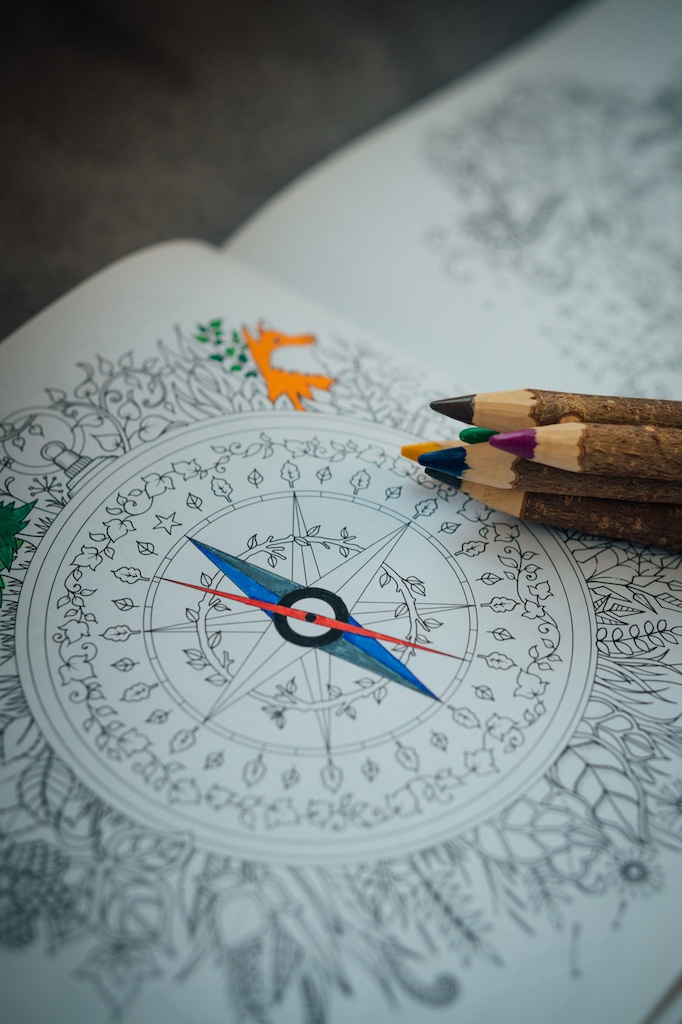
Compounding the issue of spatial misunderstanding is our ingrained belief in absolute borders and boundaries, both in the external and internal realms. In the outer environment, we perceive objects as distinct entities defined by clear outlines. Our skin, for instance, is seen as the boundary separating "me" from "everything else." Similarly, trees, lamps, and other objects are understood by their defined edges. This creates a conceptual landscape akin to a coloring book, where thick black lines delineate forms and distinguish them from one another. The "regime" of our mental conditioning labels these distinct forms, emphasizing difference over sameness. This emphasis on distinction—"I am not you," "a tree is not a dog"—becomes the primary mode of perception.
This tendency to perceive through difference extends to our inner lives. Mental states like anger, sadness, guilt, and impatience are treated as discrete entities, each with its own defined boundary, separated from all other states. We label these internal phenomena, assuming a real difference and a distinct border between, for example, "anger" and "not-anger," or "love" and "not-love." This creates a fragmented experience of reality, where both the external world and our inner lives are perceived as a dense grid of isolated silos.
The Pervasive Nature of Space
The assumption of absolute borders between everything, while facilitating efficient communication and object identification, leads to a profound sense of separation. This separation extends to our sense of self, our positions, our feelings, our senses, and our thoughts. When we perceive only through difference, our senses become fixated on the distinctions at the perceived borders—color, form, light, darkness, texture, sound, or symbolic representation. In this focus on difference, we fail to recognize the fundamental interconnectedness that underlies all phenomena.
The reality, however, is that no object, no thought, no symbol exists in isolation. The space outside each of them, the space within them, and the space between them—above, below, and around—is pervasive and continuous. This unified field of space constitutes the very fabric of existence. If space were not pervasive and continuous, we would experience gaps and holes, necessitating the traversal or bridging of these voids for the extension and continuity of the world to be possible. Our conventional conceptualization of "this" and "that," "inside" and "outside," "tree" and "lamp," or "you" and "I," fails to capture the essence of this unifying nature of space. This limited perception is a product of the specific training our minds have received.
Reclaiming Freedom Through Experiencing Space
Understanding the pervasive and continuous nature of space has profound implications for our lives. The effort we expend in acquiring and holding onto objects, in clinging to specific emotional states, or in grasping at particular thoughts and feelings, may be fundamentally misdirected. If the space within and outside any form is continuous, then absolute borders do not exist. When we try to grasp something, we are, in essence, touching only space.
Our experiences can be likened to "paintings in air"—transient phenomena that can be enjoyed and engaged with, but which ultimately fade. Grasping at these experiences as if they were solid, bounded objects is akin to an impossible task, leading to unhappiness when we inevitably fail. This echoes the myth of Sisyphus, condemned to an eternal, futile endeavor.
As Tarthang Rinpoche has suggested, "There are many manifestations, but there may not be borders or betweens, positions, or gateways. If you really know how to play, what shows up could be very interesting." This perspective encourages a shift from attempting to control or possess experiences to engaging with them playfully, recognizing their ephemeral nature and the boundless space in which they arise.
Three Practices for Cultivating Spaciousness
To cultivate a deeper understanding and direct experience of space and boundaries, Tarthang Tulku offers several practices. These exercises are designed to help individuals interrogate their ingrained perceptions and open themselves to a more expansive awareness:
-
Body’s Balance Point: This practice encourages an exploration of the body’s perceived center and the nature of balance.
- Sit quietly, breathing naturally, with feet on the ground and hands relaxed.
- Focus on an imagined point in the abdomen, just below the navel.
- Imagine your entire body resting effortlessly on this point, as if balanced on a tiny fulcrum.
- Allow your awareness to deepen towards this "sense of the center." Notice any subtle wobbles as ripples that eventually subside.
- Inquire: "Have you found the center of the center of that center point? Could you keep going further?" The practice suggests that relaxation and balance may not have a final, fixed resting place, encouraging a continuous exploration rather than a fixed attainment.
-
Borders and Difference: This exercise prompts direct observation of perceived boundaries.
- Observe your hands and whatever they are touching.
- Ask yourself: "Where do they end? Where does what they are touching begin? How do you know? How do you know they are your hands?" This practice encourages a questioning of the assumed solidity and separateness of physical objects and our own bodies.
-
Sky Breath: This practice connects the breath to a sense of vast, open space.
- Sit or lie down comfortably, relaxing the body and becoming aware of your breath.
- Imagine a distant place with a beautiful, clear blue sky—a place you have visited or longed to visit.
- As you bring this place to mind, let each inhale feel as though it originates from that distant sky, and each exhale return there.
- This simple act of breathing connects you to a sense of clear, beautiful spaciousness. The practice emphasizes simply breathing, allowing the connection to the vastness to unfold naturally.
Broader Implications and Future Directions
The astronaut’s predicament, while a specific instance, resonates with a universal human experience of feeling confined by perceived limitations. By understanding the nature of "regime-space" and its role in shaping our perception of self and reality, we can begin to dismantle the mental constructs that create suffering. The insights from Tarthang Tulku and the practical exercises offered provide a framework for reclaiming our innate spaciousness and recognizing the interconnected, boundless nature of existence. This shift in perspective has the potential to alleviate individual suffering, foster greater compassion and understanding between people, and inspire a more harmonious relationship with the world around us. The journey beyond perceived spatial limitations is not a distant cosmic voyage, but an internal exploration readily accessible through a conscious reorientation of our awareness.

