

The systematic application of periodization remains the cornerstone of modern exercise science, serving as the primary framework through which strength and conditioning professionals optimize athletic performance and physiological adaptation. At its core, programming is the strategic manipulation of training variables—including volume, intensity, and frequency—to elicit specific biological responses while mitigating the risk of overtraining and injury. For industry professionals, mastering these methodologies is not merely a matter of academic interest but a practical necessity for ensuring client longevity and success. Drawing upon the expertise of prominent figures such as Tasha Wolf Whelan and established protocols from institutions like Cressey Sports Performance, this analysis examines the hierarchical progression of training schemes from foundational linear models to advanced neurological potentiation strategies.

The Foundations of Linear Periodization and Progressive Overload
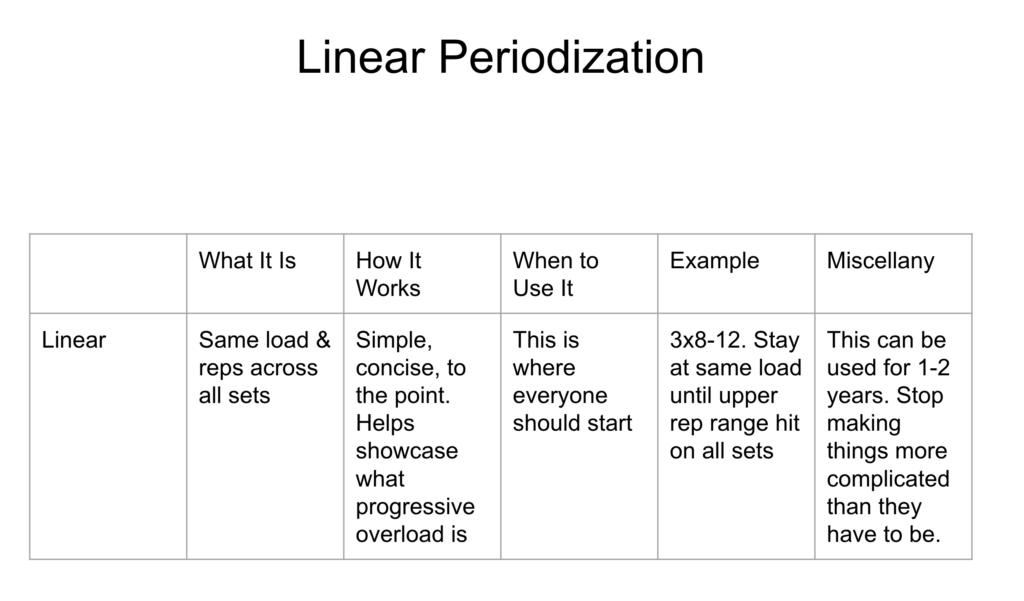
Linear periodization represents the most accessible and widely utilized programming model within the fitness industry, particularly for novice to intermediate trainees. The fundamental premise of this model is the gradual increase in training intensity (load) accompanied by a reciprocal decrease in total volume (reps and sets) over a predetermined timeframe. For the "general population" client—individuals seeking improved health, body composition, and functional strength—linear periodization provides a clear, manageable path toward the concept of progressive overload.
In a typical linear progression, a practitioner might prescribe a standard 3×8-12 rep scheme. The objective is to maintain a specific load until the trainee can successfully complete three sets of 12 repetitions with technical proficiency. Once this benchmark is achieved, the load is increased, and the cycle repeats. This "rinse, wash, repeat" methodology is supported by the General Adaptation Syndrome (GAS) theory, which suggests that the body will adapt to a specific stressor if that stressor is applied consistently and increased incrementally.

Data suggests that for beginners, the "novice effect" allows for rapid strength gains regardless of complex programming. However, the efficacy of linear periodization extends beyond the initial months of training. By transitioning from higher-volume phases (e.g., 3 sets of 10-12) to higher-intensity phases (e.g., 5 sets of 4-6), coaches can systematically build a foundation of hypertrophy before peaking for maximal strength. This transition ensures that the musculoskeletal system is adequately prepared for the mechanical tension required by heavier loads.
Transitioning to Fixed Loading and Threshold Training
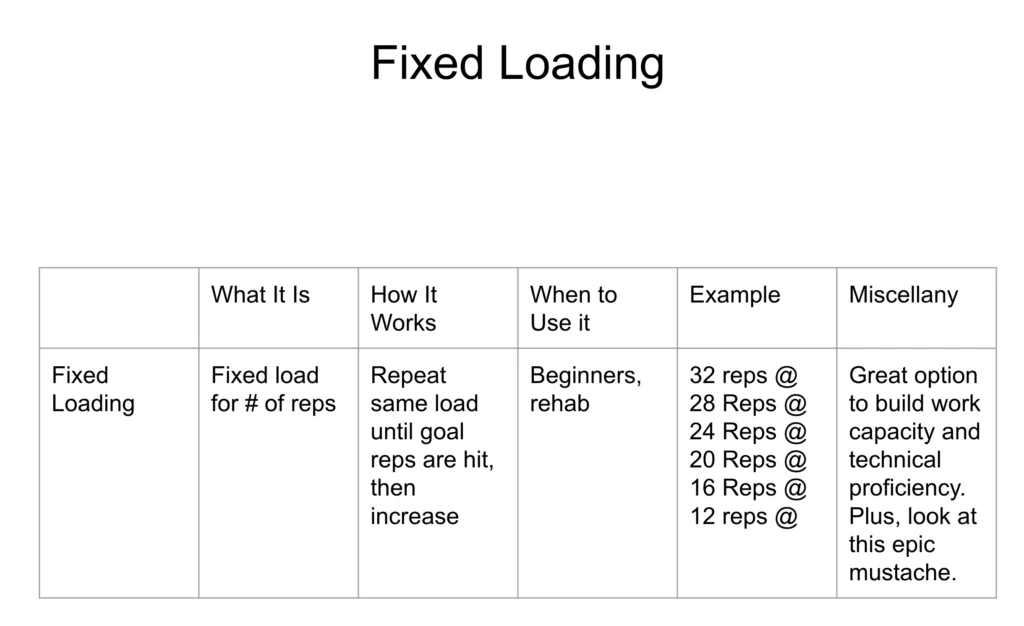
As trainees move beyond the "newbie gain" phase, their ability to adapt to simple linear increases often plateaus. At this juncture, Fixed Loading emerges as a logical progression. This method requires the trainee to have a firm understanding of their physical limits and technical execution. Unlike linear models where the weight changes frequently, Fixed Loading involves selecting a specific, challenging load and aiming for a total "rep goal" within a session, regardless of how many sets it takes to reach that total.

This approach shifts the focus toward work capacity and density. For example, a coach may assign a trainee 32 total repetitions of a Trap Bar Deadlift at a load equivalent to 75% of their one-rep maximum (1RM). The trainee may complete this in four sets of eight or six sets of various rep counts. As the trainee becomes more advanced, the total rep count may decrease while the load increases (e.g., 12 total reps at 90% 1RM). This methodology encourages psychological resilience and allows for autoregulation, as the trainee must navigate the sets based on their immediate recovery state.
Daily Undulating Periodization (DUP) and Variable Stimulus
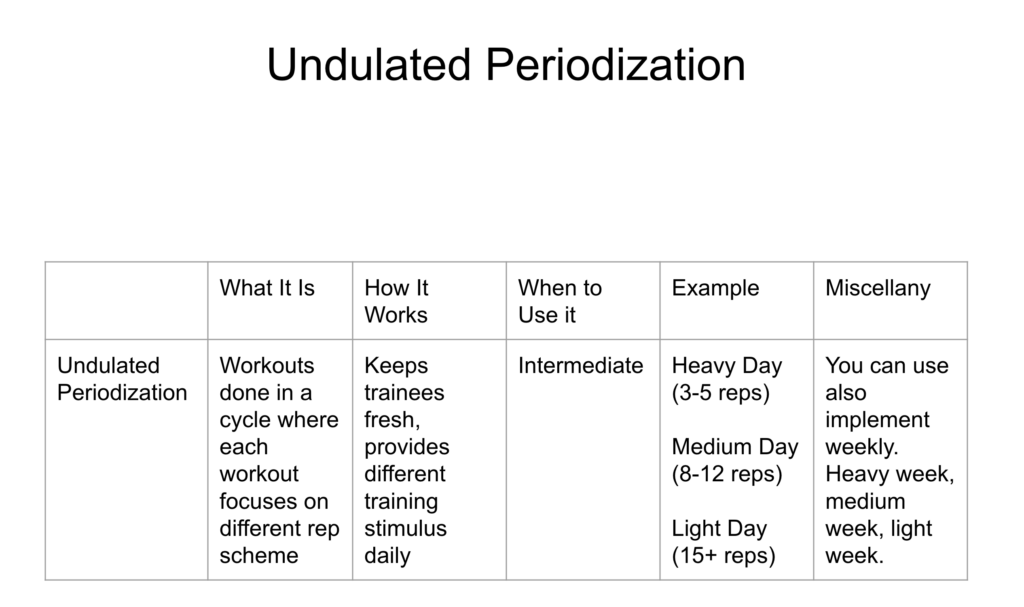
Daily Undulating Periodization, or undulated programming, has gained significant traction in both athletic and general population circles due to its ability to address multiple physical qualities simultaneously. While linear periodization focuses on one trait (e.g., endurance or strength) for weeks at a time, DUP "undulates" the intensity and volume within a single week or microcycle.
Professional strength coaches often categorize these as "Heavy," "Medium," and "Light" days. In an athletic context, this is crucial for managing "competing demands." An athlete in-season must balance practice, travel, and games; therefore, a heavy lifting session may only be appropriate on a day with low technical sport demand. For the general population, DUP provides variety that can enhance adherence while preventing the stagnation often associated with repetitive linear cycles.
Research, including studies published in the Journal of Strength and Conditioning Research, has frequently shown that DUP may lead to superior strength gains in trained individuals compared to linear models. By hitting different rep ranges—such as 3-5 reps for strength, 8-12 for hypertrophy, and 15+ for local muscular endurance—the practitioner ensures that all energy systems and muscle fiber types are recruited and challenged within the training week.
Advanced Neurological Potentiation: Stage and Wave Loading
For advanced trainees and elite athletes, programming must leverage the nervous system to overcome physiological plateaus. Stage Loading and Wave Loading are two methodologies that utilize Post-Activation Potentiation (PAP). PAP is a physiological phenomenon where the contractile history of a muscle influences its subsequent performance. Specifically, performing a heavy, near-maximal contraction increases the recruitment of high-threshold motor units, making subsequent submaximal loads feel lighter and move faster.
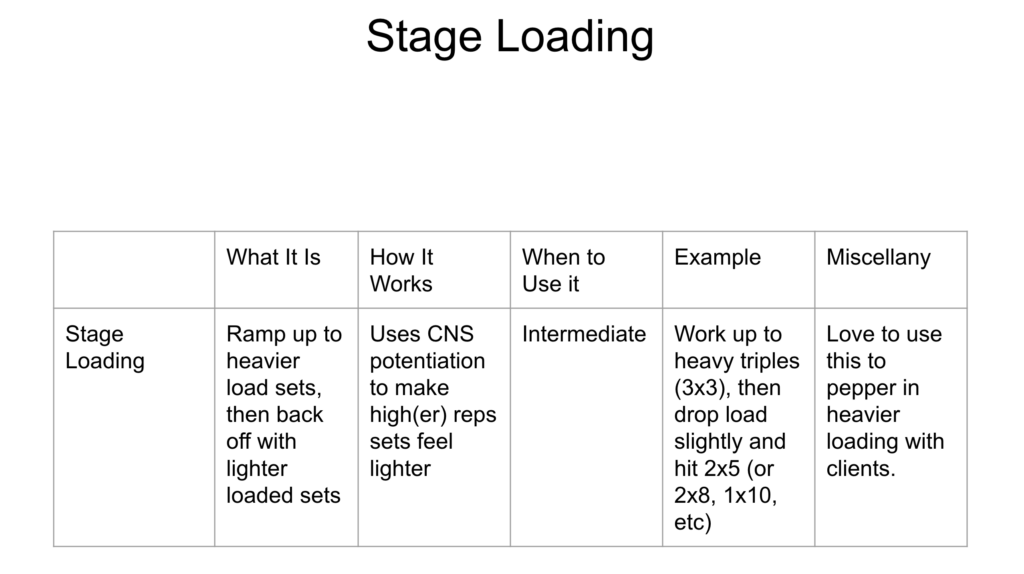
In Stage Loading, a client might perform several heavy sets of a low-rep range (e.g., 3×3) followed by "back-off sets" of a higher rep range (e.g., 1×10). The heavy sets "potentiate" the nervous system, allowing the trainee to perform the higher-rep sets with more weight or better explosive power than they would have been able to do in a traditional straight-set format.
Wave Loading takes this concept further by oscillating the load within the sets of a single exercise. A common "wave" might look like 3 reps, then 2 reps, then 1 rep, with the load increasing each set. After completing one wave, the trainee begins a second wave at a slightly higher load than the first. This method is highly taxing on the Central Nervous System (CNS) and is typically reserved for those with a high training age. The psychological benefit is significant; by the time the trainee returns to the "3-rep" set in the second wave, the nervous system is so primed that the weight feels considerably more manageable.
Rest/Pause and Cluster Sets: Managing Intra-Set Fatigue
To maximize volume at high intensities, coaches often turn to Rest/Pause and Cluster training. While frequently confused, these two modalities serve distinct purposes in a periodized plan.
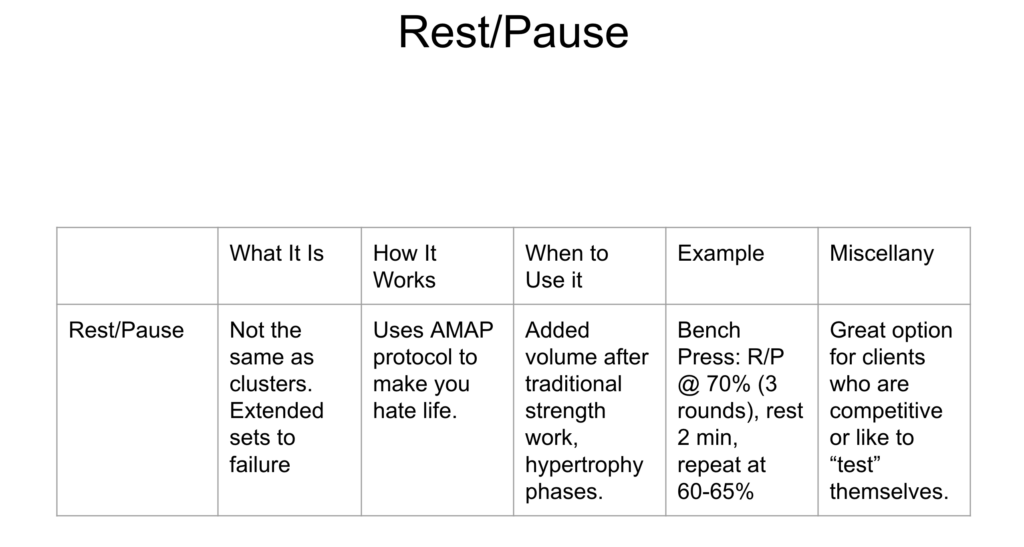
Rest/Pause training involves taking a set to technical failure, resting for a brief period (typically 15-30 seconds), and then performing additional repetitions to failure again. This is primarily an accessory modality designed to increase metabolic stress and total volume, which are key drivers of hypertrophy. It is particularly effective for competitive athletes or bodybuilders looking to break through size plateaus.
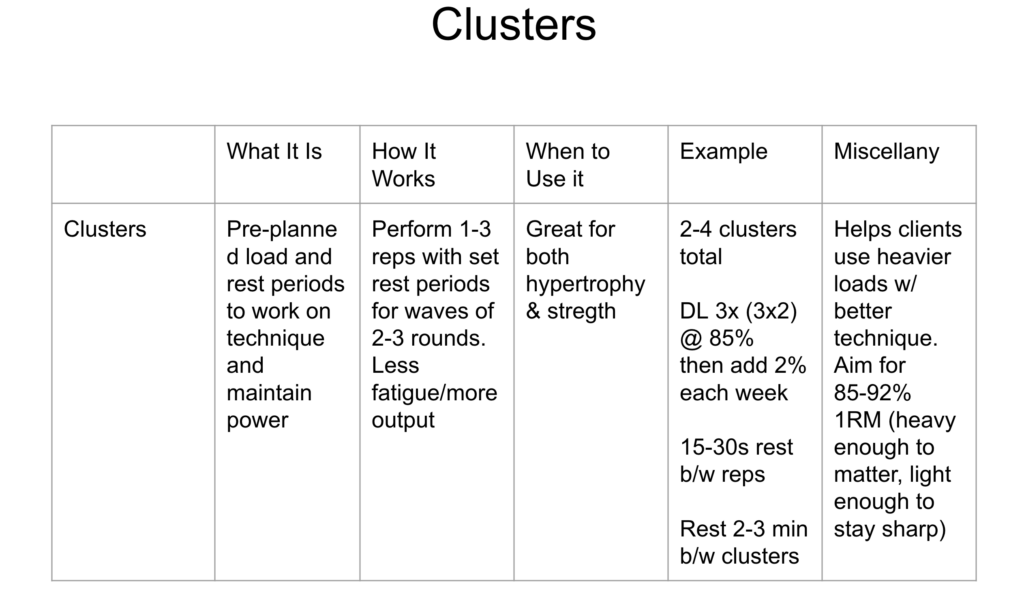
Cluster Sets, conversely, are pre-planned and used primarily for the "main lifts" (squats, presses, deadlifts). Instead of performing a straight set of six repetitions, a trainee might perform three "clusters" of two repetitions with 20 seconds of rest between each cluster. This brief intra-set rest allows for the partial resynthesis of Adenosine Triphosphate (ATP) and Phosphocreatine (PCr), enabling the trainee to maintain higher power output and better technical form throughout the entire set. From a safety perspective, Cluster Sets are invaluable for maintaining the integrity of the movement under heavy loads, as they prevent the "form breakdown" often seen in the latter half of high-rep heavy sets.
Industry Implications and Professional Application
The implementation of these diverse programming models has profound implications for the fitness industry. As the market becomes increasingly saturated, the distinction between a "personal trainer" and a "strength and conditioning coach" often lies in the ability to apply these scientific principles to a client’s specific needs.
The economic impact of effective programming is also noteworthy. Clients who see consistent, injury-free progress are more likely to maintain long-term training contracts. Furthermore, the use of advanced techniques like DUP and Wave Loading can reduce "training boredom," a leading cause of client attrition.
From a clinical perspective, the transition from linear to undulated and potentiation-based models represents a move toward "Precision Exercise Medicine." By tailoring the neurological and metabolic demand of a session to the client’s current recovery capacity, practitioners can mitigate the risk of overtraining syndrome—a condition that can lead to hormonal imbalances, sleep disturbances, and decreased immune function.
Conclusion and Future Outlook
The "cheat sheet of programming wizardry" described herein is not a collection of shortcuts, but rather a map of the physiological landscape. Whether it is the simplicity of linear periodization for a beginner or the neurological complexity of Wave Loading for an elite athlete, the goal remains the same: the systematic application of stress to elicit a positive adaptation.

As sports science continues to evolve, the integration of wearable technology and real-time biometric data (such as Heart Rate Variability and Velocity Based Training) will likely further refine these models. However, the bedrock principles—progressive overload, PAP, and volume management—will remain the essential tools for any coach dedicated to transforming their clients into the most resilient versions of themselves. The transition from a "gazillion" random programs to a structured, periodized approach is what ultimately defines expertise in the field of human performance.

