

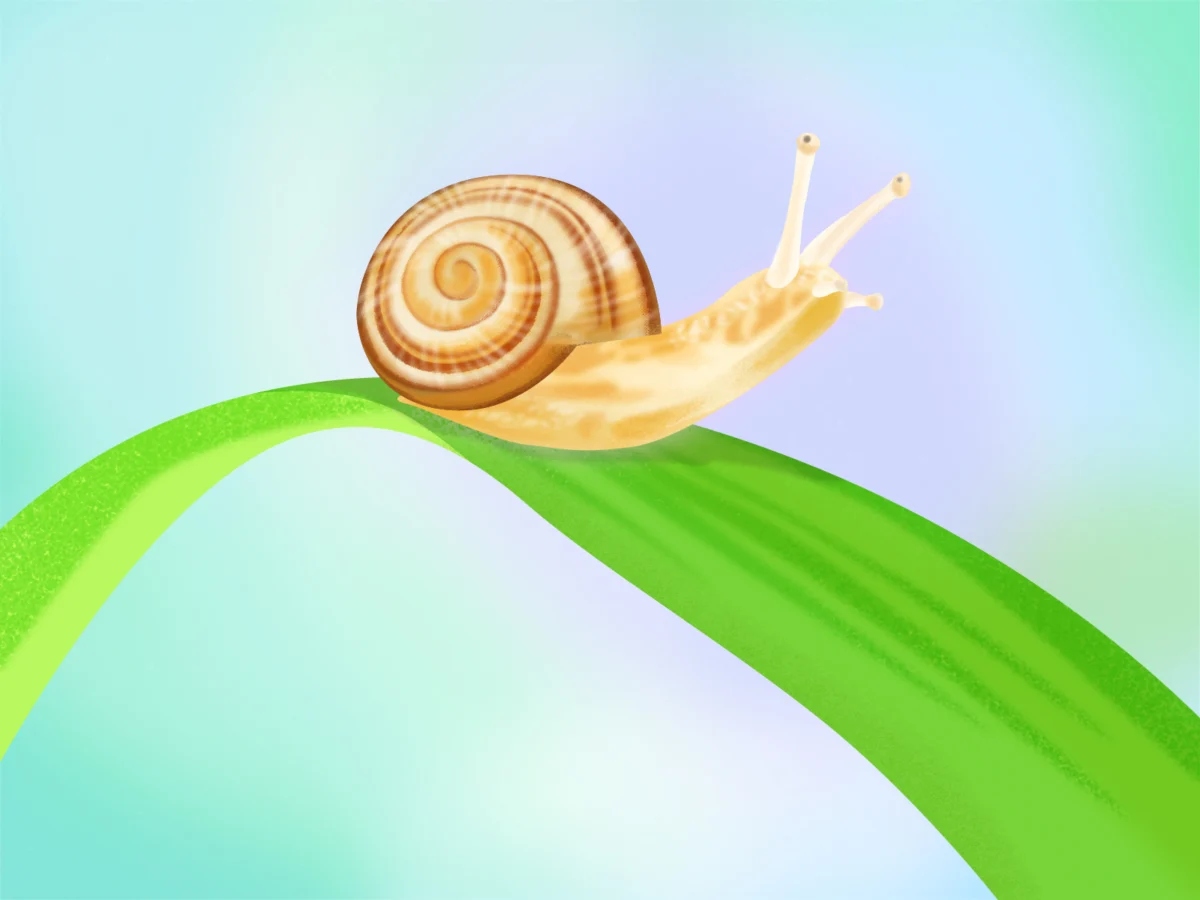
The Tricycle Haiku Challenge, a recurring event that invites poets to explore seasonal themes through the concise 5-7-5 syllable structure of haiku, has recently concluded its exploration of the "snail" as its summer season word. While often perceived as a symbol of slowness and simplicity, this year’s submissions revealed a profound capacity for the snail to embody complex themes such as solitude, confinement, vulnerability, and even existential contemplation. The winning and honorable mention poems, in particular, eschewed the more conventional, lighthearted portrayals of snails in favor of darker, more introspective interpretations, mirroring a growing trend in Western haiku towards embracing the avant-garde and surrealist leanings that have long been present in Japanese haiku traditions.
A Shift in Perspective: From Comical to Profound
Historically, snails have occupied a whimsical space in classical haiku, frequently anthropomorphized into comical figures. However, the Tricycle Haiku Challenge’s recent emphasis on the "snail" has showcased a significant departure from this tradition. The winning haiku by Stevie Rosenfeld, "deep inside her shell / the snail becomes a mountain / and lets the sun go," exemplifies this shift. The poem transforms the snail’s shell from a mere protective covering into a metaphorical mountain, suggesting a profound withdrawal from the external world and a deliberate relinquishing of life’s warmth and light. This interpretation delves into themes of intense solitude, the deliberate embrace of inner space, and perhaps even a contemplation of mortality or the cessation of existence.
This inclination towards more complex and somber themes in Western haiku has been noted by editors of haiku publications, who have sometimes been hesitant to publish verses that deviate from established, often gentler, conventions. Yet, as the Tricycle Haiku Challenge demonstrates, these more profound explorations are not uncommon in Japan, where avant-garde and surrealist haiku have been a significant part of the poetic landscape for nearly a century.
Echoes of Modern Japanese Haiku: Kaneko Tōta’s Blue Sharks
To understand the lineage of this more daring approach, one can look to influential modern Japanese haiku poets. Kaneko Tōta (1919-2018), a celebrated poet whose work often pushed boundaries, provides a compelling example. His famous haiku, "plum trees in blossom / blue sharks arrive everywhere / throughout the garden," initially appears cheerful, evoking the vibrant renewal of spring. However, as literary critic Ozawa Minoru notes in his anthology WELL-VERSED: Exploring Modern Japanese Haiku, the poem’s context is crucial.
Minoru explains that when originally published in a collection titled "Blue Sharks," Tōta’s poem was strategically placed between two others that cast a far more menacing shadow. These surrounding poems, "The spirit / of a blue shark in the mist / stabs me," and "The blue shark / turns over, shows its stomach / at the house where I was born," imbue the shark imagery with a palpable sense of threat and unease. Tōta himself served as a soldier during World War II, experiencing the brutal fighting at Truk Atoll (Chuuk Lagoon). Minoru posits that the "blue sharks" in Tōta’s garden could be interpreted as the souls of his fallen comrades, their unsettling presence in the spring landscape a somber reminder of wartime sacrifice and loss. The image of a shark turning over to show its stomach, typically a precursor to an attack, takes on a tragic dimension, potentially symbolizing the consumption of young lives in conflict.
The continued citation of Tōta’s shark poem in English-language haiku journals, despite the relative scarcity of similar stylistic or thematic explorations in the West, underscores the potential for haiku to engage with profound and even disturbing aspects of the human experience. Tōta himself was known to lament what he perceived as a tendency for haiku to become "too tame." He championed the concept of the ara bompu, a Buddhist term he translated as "wild, raw, ordinary human being," as the ideal for a poet, reflecting his admiration for masters like Kobayashi Issa, who fearlessly tackled everyday life with unvarnished honesty.
The Snail as a Metaphor for Inner Resolve and Existential Depth
Stevie Rosenfeld’s winning haiku, "deep inside her shell / the snail becomes a mountain / and lets the sun go," can be seen as a contemporary echo of this spirit. It draws a subtle parallel to Kobayashi Issa’s famous invitation to a snail to climb Mount Fuji, famously adding "but slowly, slowly." However, Rosenfeld’s snail does not undertake a physical journey; instead, it undergoes a profound internal transformation. By becoming a "mountain" within its shell, the snail embodies an immense stillness and a deep interiority.
The final line, "and lets the sun go," is particularly striking. It suggests a deliberate detachment, a turning away from the external world, warmth, and perhaps even life itself. This can be interpreted in several ways: as an expression of profound solitude, a coping mechanism for confinement during illness, or a poignant reflection on the vulnerability of small, fragile beings. The poem evokes the image of hermits in Buddhist folklore who voluntarily immure themselves, choosing a life of deep introspection and withdrawal from worldly concerns.
The poem’s complexity and originality are such that it can resonate on multiple levels. After a week of contemplation, the author of the article suggests another layer of meaning: the poem might also describe a fossil. A snail, turned to stone within a mountain, having "let the sun go" eons ago, imbues the poem with an immense geological timescale and a sense of ancient, enduring stillness. This interpretation adds significant depth to an already profound work, bridging the ephemeral nature of life with the vastness of geological time.
Honorable Mentions: Embracing Solitude and Resilience
The honorable mentions also offer nuanced perspectives on the snail’s symbolic potential. Molly Skeen’s haiku, "the snail makes its way / feelers sensing light and dark / at home with either," highlights the snail’s adaptability and its ability to find contentment in varied environments. The poem suggests a quiet resilience, a capacity to navigate both illumination and obscurity with an inherent sense of belonging.
Monica Kakkar’s "sharing the stillness / on both sides of the window . . . / solitary snails," offers a poignant reflection on shared solitude. The image of snails on either side of a window pane, separated yet sharing a common atmosphere of stillness, speaks to the universal human experience of isolation and the subtle connections that can exist even in separateness. It captures a moment of quiet observation, where the stillness of the snails mirrors a deeper, internal quietude.
The Tricycle Haiku Challenge: Fostering Poetic Growth
The Tricycle Haiku Challenge aims to cultivate a deeper appreciation for haiku as a versatile poetic form capable of addressing a wide spectrum of themes. The emphasis on a single seasonal word, like "snail," encourages poets to engage deeply with a specific element of nature and explore its multifaceted symbolism. The challenge provides clear guidelines: haiku must adhere to the 5-7-5 syllable structure, focus on a single, present moment, and be straightforward in its observation.
The article also includes a "Haiku Tip: Keep It Light!" section, which, paradoxically, emphasizes the importance of handling serious subjects with a light touch. This concept, central to haiku practice, suggests that by adhering to the strict form and focusing on clarity, poets can distill complex truths into seventeen syllables without succumbing to ponderousness or pretension. The tip emphasizes that "saying something serious is often easy, provided we don’t try too hard." This involves a process of refinement, winnowing out distractions to reach the "pith" of the message.
The article further elucidates the connection between lightness and humor in haiku, noting that the Japanese characters for haiku can be translated as "humorous verse" or "light verse." This suggests that a sense of playful observation and understated wit often accompanies profound insight in haiku. The challenge of haiku lies not in avoiding difficult subjects but in approaching them with a refined simplicity and a certain ease that comes from dedicated practice and a deep understanding of the subject.
Understanding the Snail: Biological and Cultural Context
To further enrich the poetic exploration, the article provides a brief biological and cultural context for the snail. As a gastropod with a coiled shell, snails are found in diverse environments, from deserts to the deep sea, though haiku typically refers to terrestrial species. Their shells grow with them, formed by consuming calcium. Snails exhibit a range of reproductive strategies, and most land snails are herbivores, preferring nocturnal activity or damp conditions due to their reliance on mucus for locomotion.
Culturally, snails have long symbolized slowness, a characteristic that has permeated their use in haiku. However, they are also an important food source in many cultures and have historical associations with desire, as evidenced by the brief inclusion of a haiku about "garden snails in love." This broader understanding of the snail’s natural history and cultural resonance can inform and deepen a poet’s engagement with the season word.
The Tricycle Haiku Challenge, by consistently providing seasonal themes and offering insights into poetic technique and context, fosters an environment where poets can develop their craft. The recurring nature of the challenge encourages sustained practice, allowing poets to hone their ability to observe, distill, and express profound truths within the elegant constraints of seventeen syllables. This ongoing commitment to the art of haiku ensures that the tradition continues to evolve, embracing new interpretations and exploring the vast symbolic potential of the natural world. The recent focus on the snail, moving beyond superficial observation to delve into its capacity for embodying complex human emotions and existential queries, is a testament to the enduring vitality and adaptability of the haiku form.

