

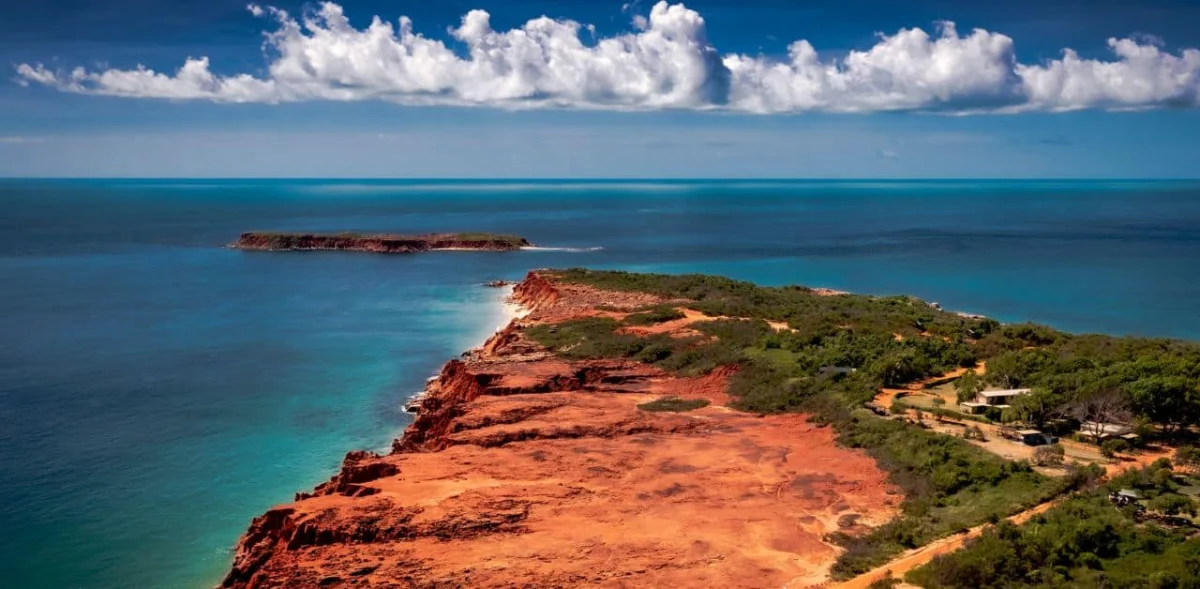
The historical significance of the Kimberley is rooted in its status as one of the earliest sites of human habitation in Australia. Archaeological evidence indicates that Indigenous Australian groups have occupied the region for over 40,000 years. Today, the Kimberley is a global benchmark for Indigenous land rights, with approximately 70% of the region recognized under Native Title. This legal framework ensures that Traditional Owners maintain a central role in the management of the land, balancing the preservation of sacred sites with the growing demands of the international tourism sector. As the region transitions from its traditional economic reliance on pastoralism and mining toward high-value eco-tourism, the following ten locations represent the pinnacle of the Kimberley’s natural and cultural heritage.
1. Broome: The Multicultural Gateway
Broome serves as the primary logistical hub and gateway to the Kimberley. Originally established in the 1880s as a pearling port, the town’s identity is shaped by a unique blend of Aboriginal, Japanese, Chinese, Malay, and European influences. This multicultural heritage is most evident in the historic precinct of Chinatown and the local culinary scene, where barramundi and pearl meat are staples.
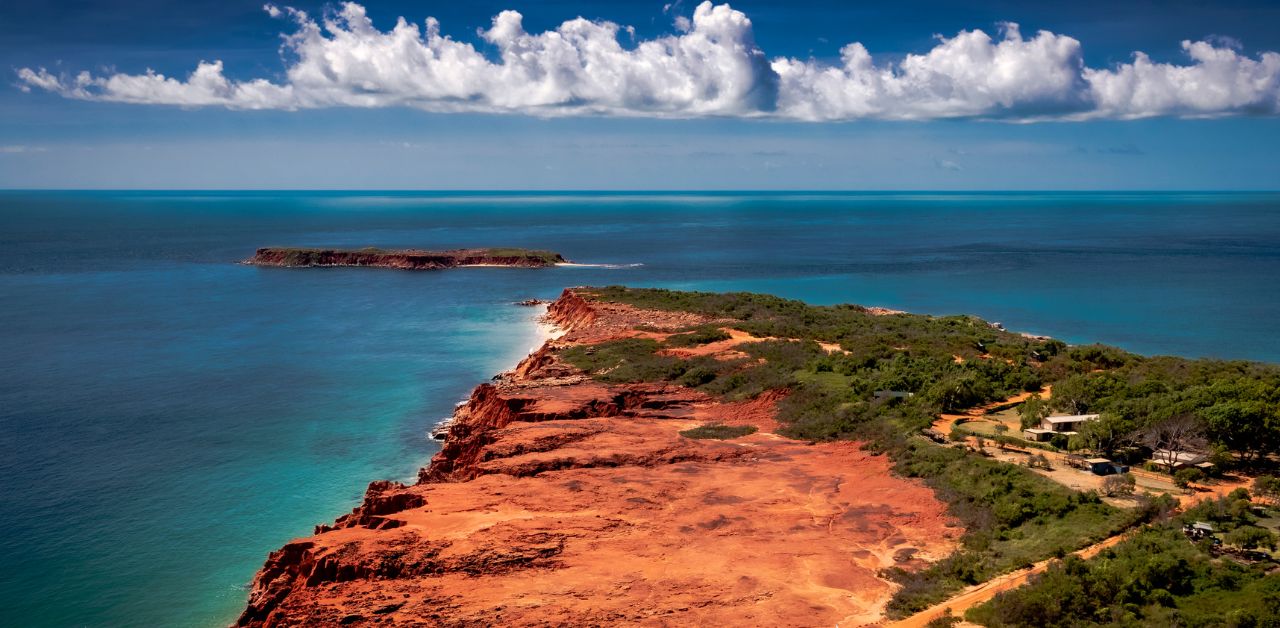
The town’s most recognizable asset is Cable Beach, a 22-kilometer stretch of white sand and turquoise water. Geographically, the beach is famous for its west-facing orientation, providing a vantage point for sunsets that have become a cornerstone of the regional tourism brand. Beyond the beach, Broome’s Roebuck Bay is a site of international significance for migratory birds. The Broome Bird Observatory monitors thousands of shorebirds that migrate from the Northern Hemisphere, highlighting the region’s role in global ecological corridors.
2. Mitchell Falls: A Triple-Tiered Geological Marvel
Located within the Mitchell River National Park on the Mitchell Plateau, Mitchell Falls (Punamii-unpuu) is one of the most photographed landmarks in Australia. The falls consist of a spectacular four-tiered cascade that drops into deep emerald pools. The surrounding plateau is a refuge for endemic species that have vanished from other parts of the continent, including the monjon (the world’s smallest rock wallaby) and the rough-scaled python.
The park is also a repository of ancient rock art, featuring both Gwion Gwion and Wandjina styles. Access to the falls remains a challenge due to the rugged terrain of the plateau; most visitors utilize 4WD vehicles via the Kalumburu Road or opt for helicopter transfers. The management of the park by the Wunambal Gaambera people ensures that tourism activities do not infringe upon the cultural integrity of the site.
3. The Bungle Bungle Range: A UNESCO World Heritage Site
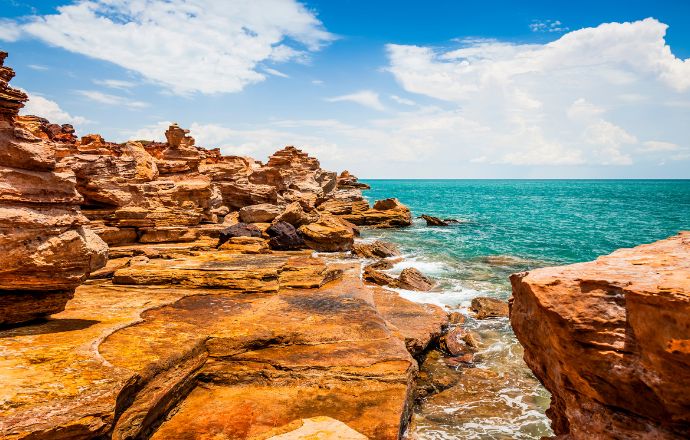
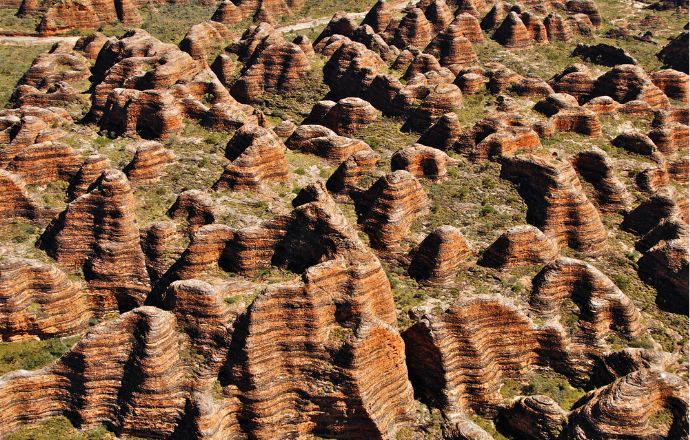
The Bungle Bungle Range, located within Purnululu National Park, was largely unknown to the non-Indigenous world until 1983. In 2003, the park was inscribed as a UNESCO World Heritage site due to its extraordinary geological value. The range is characterized by orange and black striped sandstone domes that resemble giant beehives. These structures were formed over 350 million years ago and are the result of complex interactions between biological processes (cyanobacteria) and mineral deposits (iron oxide).
Spanning 239,723 hectares, Purnululu is a testament to the Kimberley’s geological antiquity. The park offers several hiking trails, including the Cathedral Gorge walk and the Echidna Chasm trail. Due to its extreme remoteness—located roughly 300 kilometers south of Kununurra—aerial tours have become the preferred method for viewing the vast scale of the formations, providing a perspective that ground-based travel cannot replicate.
4. The Lacepede Islands: An Avian Sanctuary
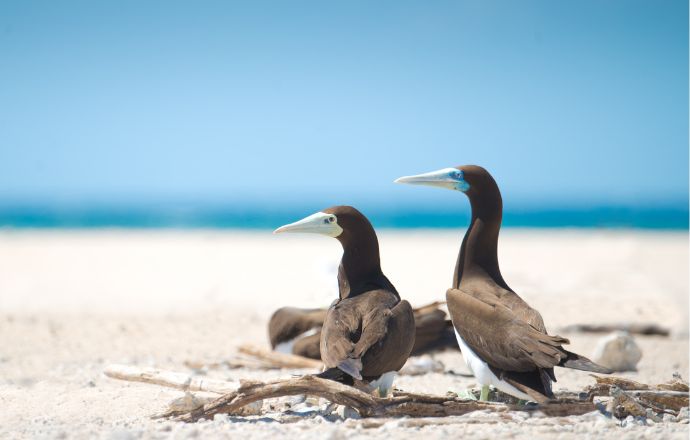
Situated approximately 120 kilometers off the coast of Broome, the Lacepede Islands are a chain of four low-lying coral islands. The islands are classified as an "Important Bird Area" by BirdLife International, serving as the most significant breeding colony for Brown Boobies in the world, with populations often exceeding 18,000 breeding pairs.
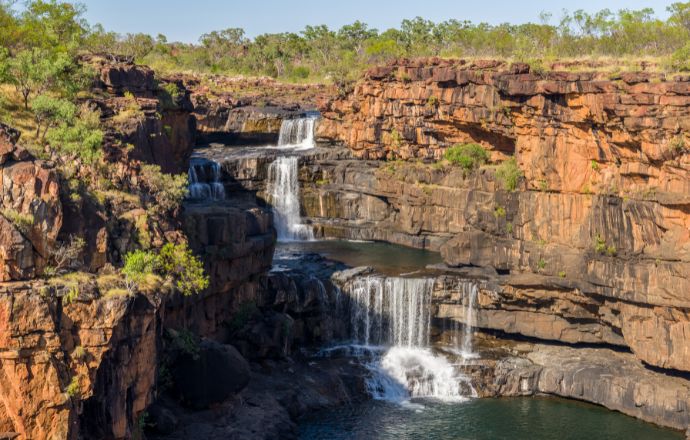
The archipelago is also a critical nesting site for Green Sea Turtles. Because the islands are a Class A Nature Reserve, landing is generally restricted to protect the fragile nesting environments. However, small-ship expedition cruises allow for Zodiac excursions that offer close-range observation of the wildlife, including Lesser Frigatebirds and various species of terns. The surrounding waters are also frequented by Humpback whales during their annual migration between July and October.
5. King George Falls: The Highest Twin Cascades
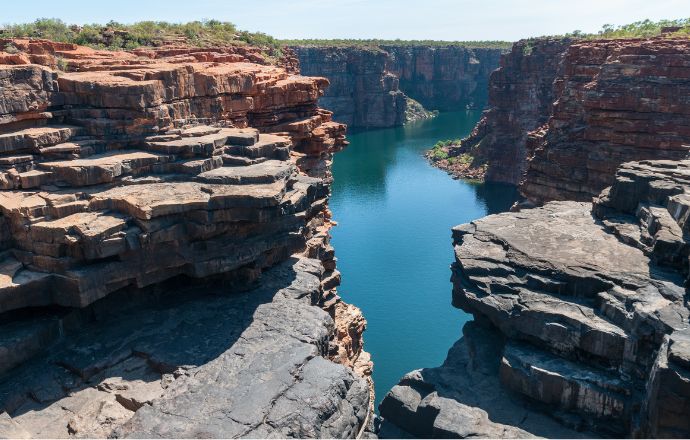
The King George River culminates in a dramatic 80-meter drop over sandstone cliffs, forming the King George Falls. These twin falls are the tallest in Western Australia and are only accessible by water or air. The verticality of the surrounding red rock canyons creates a visual contrast with the deep blue of the river below.
The falls gained international fame following their appearance in the 2008 film Australia, but they have long been a site of spiritual importance for the Balanggarra people. During the "wet season" (December to March), the volume of water is immense, often creating a mist that can be seen from miles away. In the "dry season," the flow reduces, allowing for more intimate exploration of the ancient sandstone ledges that line the river.
6. Horizontal Falls: A Tidal Phenomenon
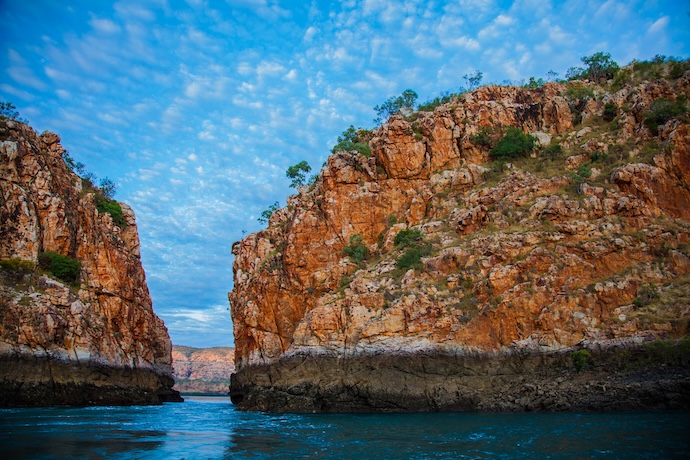
Described by Sir David Attenborough as "one of the greatest natural wonders of the world," the Horizontal Falls in Talbot Bay are a unique tidal phenomenon. Unlike a standard waterfall, these falls are created by the massive movement of water through two narrow gaps in the McLarty Range. With tides in the Kimberley reaching up to 12 meters, the volume of water trying to force its way through the narrow gorges creates a sea-level difference of several meters, resulting in a horizontal "waterfall" effect.
The direction of the flow reverses with each tide change, creating turbulent whirlpools and rapids. Tourism operators utilize high-powered vessels to navigate these gaps, providing a high-adrenaline experience that highlights the raw power of the Kimberley’s maritime environment.
7. El Questro Wilderness Park: The Heart of the Outback
El Questro is a former cattle station that has been transformed into a 700,000-acre wilderness park. It represents the successful integration of commercial tourism with environmental stewardship. The park features a diverse range of ecosystems, from thermal springs and rainforest pockets to salt flats and rugged mountain ranges.
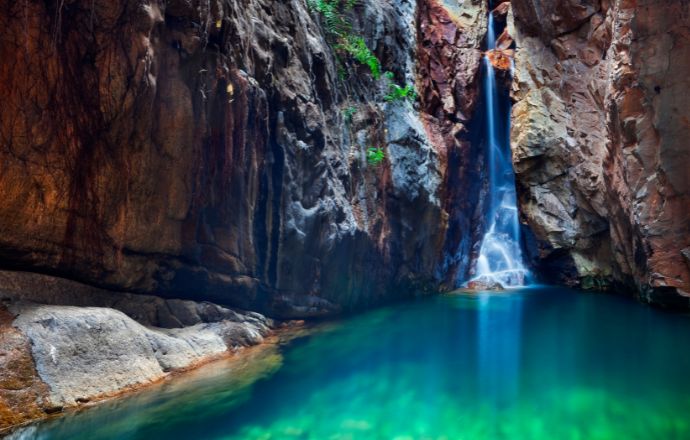
Key attractions within El Questro include Emma Gorge, which features a 65-meter high droplet waterfall, and Zebedee Springs, a series of permanent thermal pools surrounded by prehistoric Livistona palms. The Pentecost River, which bisects the property, is a prime location for barramundi fishing and crocodile spotting. The park’s management maintains a permit system to ensure that visitor numbers do not exceed the carrying capacity of the fragile gorge environments.
8. The Buccaneer Archipelago: A Thousand-Island Labyrinth
The Buccaneer Archipelago consists of between 800 and 1,000 islands scattered across the Timor Sea. The geology of these islands is some of the oldest in the world, with rocks dating back 2 billion years. The archipelago is characterized by "drowned" mountain ranges and a coastline of extreme complexity.
The region is a biodiversity hotspot, home to various species of rock wallabies, quolls, and an array of marine life including dugongs and snubfin dolphins. The high tidal range makes navigation hazardous for all but the most experienced mariners, which has helped maintain the archipelago’s pristine state. Iron ore mining occurs on some islands, such as Koolan Island, creating a juxtaposition between industrial activity and untouched wilderness.
9. The Gibb River Road: An Iconic 4WD Journey
Originally constructed as a cattle route to transport livestock from remote stations to the ports of Derby and Wyndham, the 660-kilometer Gibb River Road is now one of Australia’s most famous "bucket list" road trips. The unsealed road traverses the central Kimberley, providing access to several national parks and station stays.
A highlight of the route is Windjana Gorge National Park, where the Lennard River has carved a path through the Napier Range—an ancient Devonian reef system. The gorge is famous for its high concentration of freshwater crocodiles, which can often be seen basking on the sandy banks. The route requires a high-clearance 4WD vehicle and careful planning, as many sections become impassable during the summer monsoon.
10. Jar Island: A Gallery of Ancient Art
Jar Island, located in the Bonaparte Archipelago, is a site of immense archaeological and cultural value. It is best known for its extensive galleries of Gwion Gwion (formerly known as Bradshaw) rock art. These paintings, characterized by elongated, highly adorned human figures, are estimated to be at least 17,000 years old, making them some of the oldest detailed depictions of human society in existence.
In addition to its Indigenous heritage, the island contains evidence of early contact with Macassan fishermen from modern-day Indonesia, who visited the coast for centuries to harvest trepang (sea cucumber). The island also holds remnants of World War II history, including aircraft wreckage, reflecting the Kimberley’s strategic importance during the Pacific conflict.
Analysis of Implications and Future Outlook
The Kimberley is currently at a crossroads between economic development and environmental conservation. The Western Australian government has recently expanded the Great Kimberley Marine Park, which now covers over 30,000 square kilometers, making it one of the largest marine sanctuaries in the world. This move is seen as a strategic shift toward protecting the region’s "natural capital" as a long-term economic driver.
However, challenges remain. The region is highly susceptible to the impacts of climate change, with rising sea temperatures threatening coral systems in the Buccaneer Archipelago and shifting rainfall patterns affecting the seasonal flow of the great waterfalls. Furthermore, the "closing of the gap" in economic outcomes for Indigenous communities remains a priority, with tourism providing a viable pathway for employment and cultural preservation.
As global travelers increasingly seek "off-the-beaten-path" destinations, the Kimberley’s appeal lies in its authenticity and its refusal to be tamed. The management of this region over the next decade will require a delicate balance of infrastructure investment and strict environmental regulation to ensure that the "wild" character of the Kimberley remains intact for future generations. For the visitor, the Kimberley offers not just a holiday, but an encounter with deep time and the enduring power of the natural world.

