

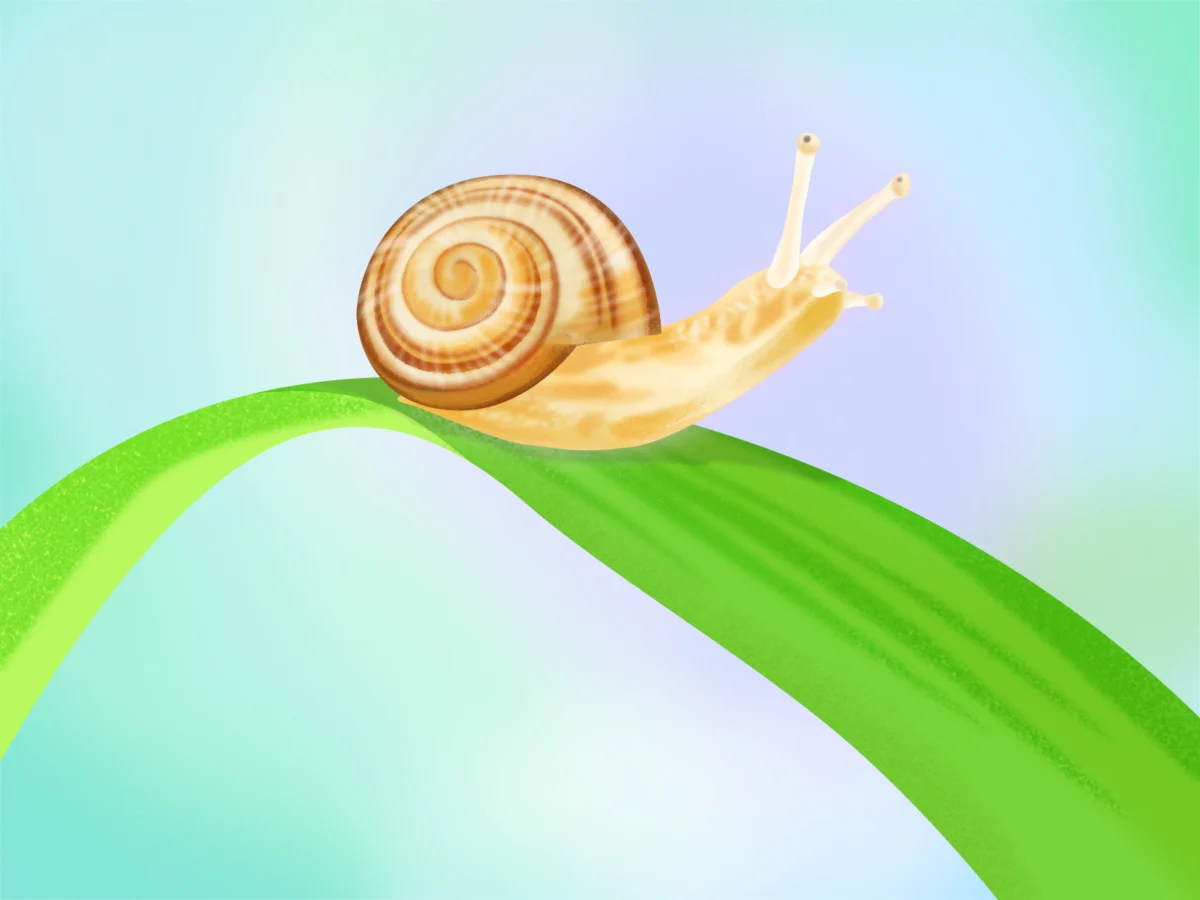
The Tricycle Haiku Challenge, a monthly exploration of poetry through a designated seasonal word, recently concluded its summer feature with "snail" as the central theme. While often perceived as a lighthearted subject in classical haiku, the winning and honorable mention poems this month delved into more profound and introspective territories, exploring themes of solitude, illness, vulnerability, and existential stillness. This shift reflects a growing trend in Western haiku, mirroring a long-standing tradition in Japan of embracing more complex and avant-garde interpretations of the seventeen-syllable form.
A Deeper Dive into the Snail’s Shell
The winning haiku, penned by Stevie Rosenfeld, elegantly captures this nuanced approach:
deep inside her shell
the snail becomes a mountain
and lets the sun go
This poem stands in stark contrast to the typical whimsical portrayal of snails in haiku, such as Kobayashi Issa’s famous invitation to a snail to climb Mount Fuji. Instead, Rosenfeld’s work transforms the humble snail into a symbol of profound introspection and potent resolve. The "mountain" within the shell suggests an immense inner world, a self-imposed enclosure that transcends the physical limitations of the creature. The final line, "and lets the sun go," carries a weight of profound resignation or perhaps a deliberate detachment from the external world, evoking a sense of profound stillness or even a conscious withdrawal from life itself.
The editors of Tricycle, a magazine dedicated to exploring the intersection of Buddhism and contemporary life, noted that such verses, while not uncommon in Japan, have historically faced reluctance in Western haiku publications. Avant-garde and surrealist haiku have been a significant current in Japanese poetry for nearly a century, a tradition that the Tricycle Haiku Challenge appears to be actively embracing and promoting.
Echoes of Japanese Modernism: The Blue Sharks and Their Shadows
To illustrate the potential for depth and unconventional imagery in haiku, the article referenced the celebrated modern Japanese haiku by Kaneko Tōta (1919-2018):
plum trees in blossom
blue sharks arrive everywhere
throughout the garden
This poem, a favorite among haiku enthusiasts in Japan and featured in Ozawa Minoru’s anthology WELL-VERSED: Exploring Modern Japanese Haiku, showcases a surreal and striking juxtaposition. While seemingly cheerful, Minoru’s analysis, as quoted in the article, reveals a much darker undercurrent. Tōta, a veteran of World War II and the brutal fighting at Truk Atoll, reportedly described the poem as being about the "great joy of spring’s arrival." However, its placement within a collection, flanked by verses like "The spirit/of a blue shark in the mist/stabs me" and "The blue shark/turns over, shows its stomach/at the house where I was born," imbues the "blue sharks" with the souls of fallen comrades. The image of the shark turning over, before snatching prey, is interpreted as a chilling metaphor for the potential consumption of the flesh of soldiers.
This stark example highlights a significant divergence. While Tōta’s poem has been frequently cited in English-language haiku journals, the article points out that few comparable poems in style or content emerge from these discussions. Tōta himself was known to lament the perceived timidity of haiku, advocating for what he termed an ara bompu – a "wild, raw, ordinary human being" – a descriptor he applied to his admired poet, Kobayashi Issa.
The Snail as a Metaphor for Inner Worlds
Rosenfeld’s winning haiku, in its own way, echoes Tōta’s willingness to imbue a seemingly simple image with profound meaning. The snail, rather than embarking on a journey, becomes the destination. "Deep inside her shell" is not merely a physical location but a state of being. The transformation into a "mountain" speaks to an immense, self-contained universe, a testament to inner fortitude. The act of "letting the sun go" can be interpreted in multiple ways: a serene acceptance of impermanence, a deliberate turning inward, or even a profound melancholy.
The article’s analysis further probes the multifaceted nature of this poem, suggesting it could represent solitude, the quiet dignity of illness, or the inherent vulnerability of small, fragile beings. The contemplation of the poem for an entire week by the author underscores its originality and depth. The revelation that the poem might also describe a fossil – a snail turned to stone within a mountain, having "let the sun go" eons ago – adds a geological timescale to the existential themes, deepening the resonance of the verse. This interpretation connects the immediate moment of poetic observation to the vastness of geological time, a powerful juxtaposition that elevates the haiku beyond a simple nature observation.
Honorable Mentions: Exploring Solitude and Perception
The Tricycle Haiku Challenge also recognized two other poems that, while perhaps less overtly surreal, also engage with the quieter, more introspective aspects of the snail:
Molly Skeen’s haiku:
the snail makes its way
feelers sensing light and dark
at home with either
This poem highlights the snail’s adaptability and its inherent connection to its environment. The "feelers sensing light and dark" represent a nuanced awareness, a sensitivity to the world’s dualities. The phrase "at home with either" suggests a profound sense of peace and acceptance, a state of being comfortable in all circumstances, much like the inherent acceptance of the snail’s slow, deliberate pace.
Monica Kakkar’s haiku:
sharing the stillness
on both sides of the window . . .
solitary snails
Kakkar’s poem introduces a human element through the "window," creating a subtle barrier between the observer and the observed. The "solitary snails" on both sides suggest a shared experience of isolation, a quiet communion in their individual stillness. The poem evokes a sense of empathy, a recognition of shared solitude across different planes of existence.
The Broader Context of Haiku and Seasonal Words
The article also delves into the pedagogical aspects of the Tricycle Haiku Challenge, emphasizing the importance of a "season word" and the craft of writing within the strict 5-7-5 syllable structure. The example of Caroline LeBlanc’s haiku:
watch—you’ll see moonbeams
spiral for the fun of it
on the wet snail’s shell
is used to illustrate how seemingly straightforward instructions, like "watch," can be exceptions to the rule of direct observation in haiku. Here, the imperative serves to guide the reader’s imagination, transforming a simple reflection of moonlight into a dynamic, almost playful, phenomenon. Clark Strand’s commentary on this poem highlights the crucial role of imagination in haiku, where the poet doesn’t just report an observation but invites the reader to experience it with enhanced perception.
The underlying philosophy of the challenge, as articulated in the "Haiku Tip: Keep It Light!" section, is that while haiku is characterized by brevity and often a sense of lightness, this does not preclude it from addressing serious subjects. The key lies in expressing profound truths with simplicity and grace, avoiding ponderousness or pretension. This paradoxical approach, where "lightness and humor are closely connected" to the ability to tackle difficult themes, is fundamental to the art of haiku. The Japanese characters for haiku themselves are sometimes translated as "humorous verse" or "light verse," underscoring this dual nature.
The article stresses that mastering haiku involves not just adhering to syllable counts and seasonal words, but also a dedication to a theme, allowing the truth of the subject matter to emerge organically through patient observation and revision. This commitment to a singular focus, month after month, season after season, is presented as the pathway to poetic maturity.
Understanding the Snail: Biology and Folklore
Beyond the poetic interpretations, the article provides a brief biological and folkloric context for the snail. As gastropods with coiled shells, snails inhabit a vast array of environments, from deserts to the deep sea, though the haiku season word typically excludes marine varieties. Their life cycle, from hatching as "tiny adults" to shell growth through calcium consumption, is a testament to their resilience. Their reproductive diversity – being male, female, hermaphroditic, or parthenogenetic – adds another layer of complexity. Primarily herbivores, land snails are more active during damp weather, their locomotion dependent on mucus.
Historically, snails have served as a food source and a source for dyes. In folklore, they are universally associated with slowness, a symbol that can be interpreted as patience or a lack of progress depending on the context. Intriguingly, in some cultures, snails are also linked to sexual desire, a facet that adds another potential dimension to their symbolic weight in poetry, as suggested by the final example:
you need an hour
because it happens slowly
garden snails in love
This final haiku, presented without attribution, serves as a concise illustration of the snail’s symbolic association with slowness and, in this instance, with the deliberate unfolding of affection.
Implications and Future Directions
The Tricycle Haiku Challenge, by selecting "snail" as a summer theme and publishing poems that explore its darker, more introspective facets, signals a commitment to pushing the boundaries of haiku in the Western world. This approach not only honors the rich history of Japanese haiku but also cultivates a new generation of poets capable of wielding the seventeen-syllable form to address the complexities of human experience. The emphasis on originality, depth, and the courage to tackle difficult subjects with grace suggests that haiku is evolving beyond its popular perception as a purely observational or lighthearted form. The challenge’s success in drawing out such profound reflections from a seemingly simple subject indicates a promising future for haiku as a vehicle for nuanced and impactful poetic expression. The ongoing dialogue fostered by the challenge, particularly through its Facebook group and submission portal, provides a vital platform for poets to connect, learn, and contribute to the evolving landscape of contemporary haiku.

