

In an increasingly demanding world where time is a precious commodity, the pursuit of optimal physical fitness often competes with professional and personal commitments. For those seeking to elevate their fitness levels efficiently and effectively, scientific consensus points towards compound exercises as a cornerstone strategy. This approach, characterized by engaging multiple muscle groups and joints simultaneously, offers a potent pathway to enhanced strength, improved metabolic health, and superior overall physical conditioning, often in significantly less time than traditional isolation-based routines.
Understanding Compound Exercises: A Foundational Concept in Exercise Science
At the heart of any effective strength training regimen lies the fundamental distinction between compound and isolation exercises. Isolation exercises, as their name suggests, target a single muscle group across a single joint, such as a bicep curl focusing solely on the biceps brachii, or a leg extension isolating the quadriceps. While these movements have their place in specific contexts like bodybuilding or rehabilitation, they represent a less efficient use of time and energy for comprehensive fitness goals.
In stark contrast, compound exercises involve the coordinated movement of multiple joints and engage several major muscle groups concurrently. A prime example is the squat, which recruits the quadriceps, hamstrings, glutes, and core muscles, all while moving through the hip, knee, and ankle joints. Other quintessential compound movements include deadlifts, overhead presses, bench presses, and rows. This multi-joint, multi-muscle activation is not merely a matter of convenience; it is a biomechanical principle that underpins superior physiological adaptations, making workouts more productive and results-driven.
The recognition of compound movements as a superior training modality has evolved over decades within exercise science. Early strength training methodologies often mimicked functional movements essential for survival and labor, inherently employing compound actions. From ancient Greek athletes training with stones to Roman soldiers engaging in rigorous physical drills, the emphasis was on integrated body movements rather than isolated muscle development. As the scientific understanding of human anatomy and physiology deepened in the 20th century, researchers began to quantify the metabolic and neurological demands of different exercise types. The rise of bodybuilding in the mid-20th century popularized isolation exercises, facilitated by specialized machines. Concurrently, fields like sports performance and functional fitness increasingly emphasized integrated movements, recognizing their direct transferability to athletic endeavors and daily life. Modern exercise physiology, supported by electromyography (EMG) studies and metabolic analyses, consistently validates the efficacy of compound exercises in stimulating greater muscle activation, energy expenditure, and hormonal responses compared to their isolation counterparts. This scientific backing reinforces their critical role in comprehensive fitness programming.
The Multifaceted Benefits: Why Compound Movements Reign Supreme
The advantages of integrating compound exercises into a fitness regimen are extensive, extending far beyond mere time efficiency. Scientific studies and expert consensus highlight several key benefits that collectively contribute to a more robust, functional, and healthier physique.
1. Unparalleled Efficiency and Time-Effectiveness:
One of the most compelling arguments for compound exercises is their extraordinary efficiency. By engaging multiple large muscle groups simultaneously, these movements elicit a far greater metabolic demand than isolation exercises. This translates to a significantly higher calorie burn both during the workout and in the post-exercise recovery period, known as Excess Post-exercise Oxygen Consumption (EPOC). Research consistently indicates that workouts featuring compound movements can lead to a substantially higher energy expenditure per unit of time. For instance, studies comparing the metabolic cost of compound versus isolation movements often show a significant advantage for compound exercises in terms of energy expended per minute. This efficiency is critical for individuals with limited time, allowing them to achieve comprehensive fitness outcomes with shorter, more intense sessions.
2. Enhanced Functional Strength and Real-World Application:
Functional strength refers to the ability to perform real-world activities efficiently and without injury. Unlike isolation exercises that train muscles in isolation, compound movements train muscles to work synergistically, mirroring the coordinated patterns required in daily life – lifting groceries, climbing stairs, carrying children, or engaging in sports. This integrated approach builds strength that is directly transferable to practical tasks, improving overall physical capability and reducing the risk of injury by strengthening stabilizing muscles and improving neuromuscular coordination. Athletes, in particular, benefit immensely from compound training, as it mimics the complex movements inherent in their respective sports, fostering explosive power and agility.
3. Superior Calorie Expenditure and Accelerated Weight Loss:
For individuals prioritizing weight loss, compound exercises are an invaluable tool. The recruitment of multiple large muscle groups triggers a greater systemic response, elevating heart rate, increasing oxygen consumption, and stimulating a more significant release of fat-burning hormones. Moreover, compound exercises are highly effective at building lean muscle mass. Muscle tissue is metabolically active, meaning it burns more calories at rest than fat tissue. By increasing muscle mass, compound training effectively boosts an individual’s basal metabolic rate (BMR), leading to sustained calorie expenditure even when not exercising, thereby accelerating long-term weight loss and improved body composition. The greater the muscle mass engaged, the higher the metabolic demand, making compound exercises a cornerstone for effective fat loss strategies.
4. Potent Hormonal Response:
Large, multi-joint movements are potent stimulators of anabolic hormone release, including testosterone and growth hormone. These hormones are crucial for muscle growth, tissue repair, and overall metabolic health. While both men and women produce these hormones, the significant systemic stress provided by compound exercises contributes to improved body composition, faster recovery, and greater strength gains for all individuals, regardless of gender. This hormonal upregulation is a key driver of the adaptive responses seen with effective strength training.
5. Improved Coordination, Balance, and Stability:
Executing compound movements often requires significant coordination and balance. For example, a squat demands precise control over the body’s center of gravity, engaging core stabilizers and proprioceptors (sensory receptors that contribute to body position sense). This constant challenge to the nervous system enhances intermuscular and intramuscular coordination, leading to improved balance and overall stability, which are vital for preventing falls and maintaining mobility as one ages. This benefit is particularly pronounced in exercises involving unilateral movements or unstable loads.
6. Enhanced Bone Density and Joint Health:
Weight-bearing compound exercises, such as squats and deadlifts, place mechanical stress on bones, stimulating osteoblasts (bone-forming cells) to lay down new bone tissue. This process helps to increase bone mineral density, offering a critical defense against osteoporosis and improving overall skeletal integrity. Furthermore, by strengthening the muscles surrounding joints, compound movements contribute to greater joint stability and resilience, potentially reducing the risk of injuries to ligaments and tendons. The integrated nature of these movements also promotes better joint tracking and overall joint health.
7. Cardiovascular Health Benefits:
While primarily a strength training modality, high-intensity compound exercise circuits can significantly elevate heart rate and improve cardiovascular fitness. The rapid transitions between movements and the engagement of large muscle groups create a cardiovascular demand comparable to moderate-intensity aerobic exercise, contributing to improved heart health and endurance.
Expert Perspectives on Compound Training
Leading exercise physiologists and strength and conditioning coaches consistently advocate for the inclusion of compound exercises as the bedrock of any effective fitness program. Dr. Michael Yessis, a renowned sport biomechanist, has long emphasized the importance of training movements, not just muscles, a concept central to compound exercises. Similarly, organizations like the American College of Sports Medicine (ACSM) and the National Strength and Conditioning Association (NSCA) include compound, multi-joint exercises as core components of their recommended strength training guidelines for general health, athletic performance, and rehabilitation. Experts agree that while isolation work can complement a program for specific aesthetic or rehabilitation goals, the foundational strength, metabolic, and functional benefits are predominantly derived from compound movements. The consensus among professionals underscores their indispensable role in a holistic fitness strategy.
Key Bodyweight Compound Exercises for Holistic Fitness
The beauty of many compound exercises is their accessibility; many can be performed effectively with little to no equipment, relying solely on bodyweight. This makes them ideal for home workouts or for individuals just beginning their fitness journey.
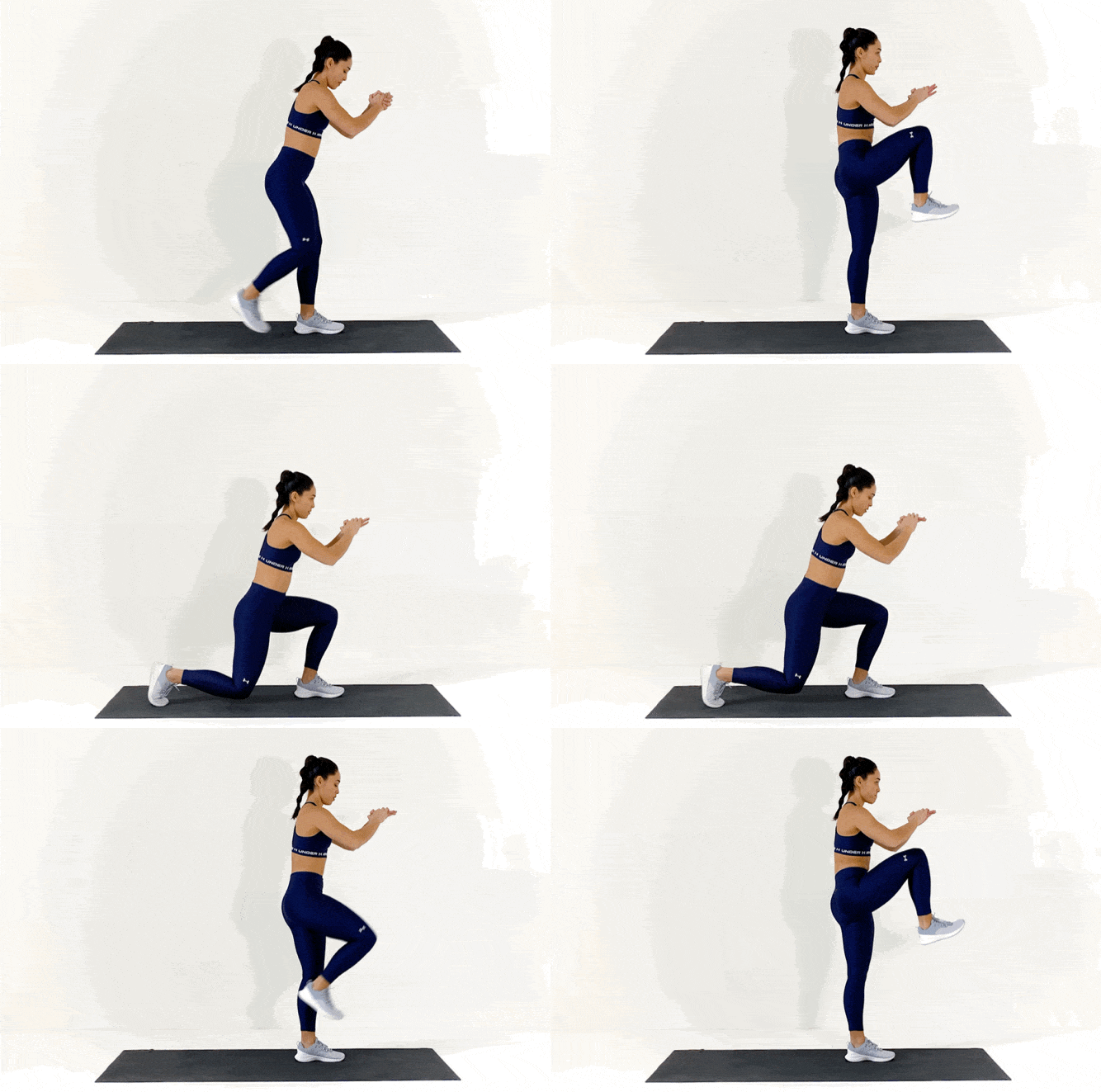
1. Reverse Lunge with a Knee Drive:
This dynamic exercise is a superb lower-body and cardiovascular conditioner. It targets the quadriceps, glutes, and hamstrings of the working leg, while the knee drive engages the hip flexors and core, adding a significant cardio component.
- Execution: Begin standing tall with feet hip-width apart. Step one leg back into a deep lunge, ensuring the front knee tracks directly over the ankle and the back knee hovers just above the ground. Maintain an upright torso. Drive powerfully through the front heel to stand up, simultaneously bringing the back knee forward and up towards the chest in a controlled, explosive motion. Return to the starting position or step directly back into the lunge for continuous reps.
- Benefits: Builds unilateral leg strength, improves balance, enhances hip mobility, and elevates heart rate.
- Progression: Holding dumbbells in each hand significantly increases the challenge and resistance, enhancing muscle hypertrophy and strength.
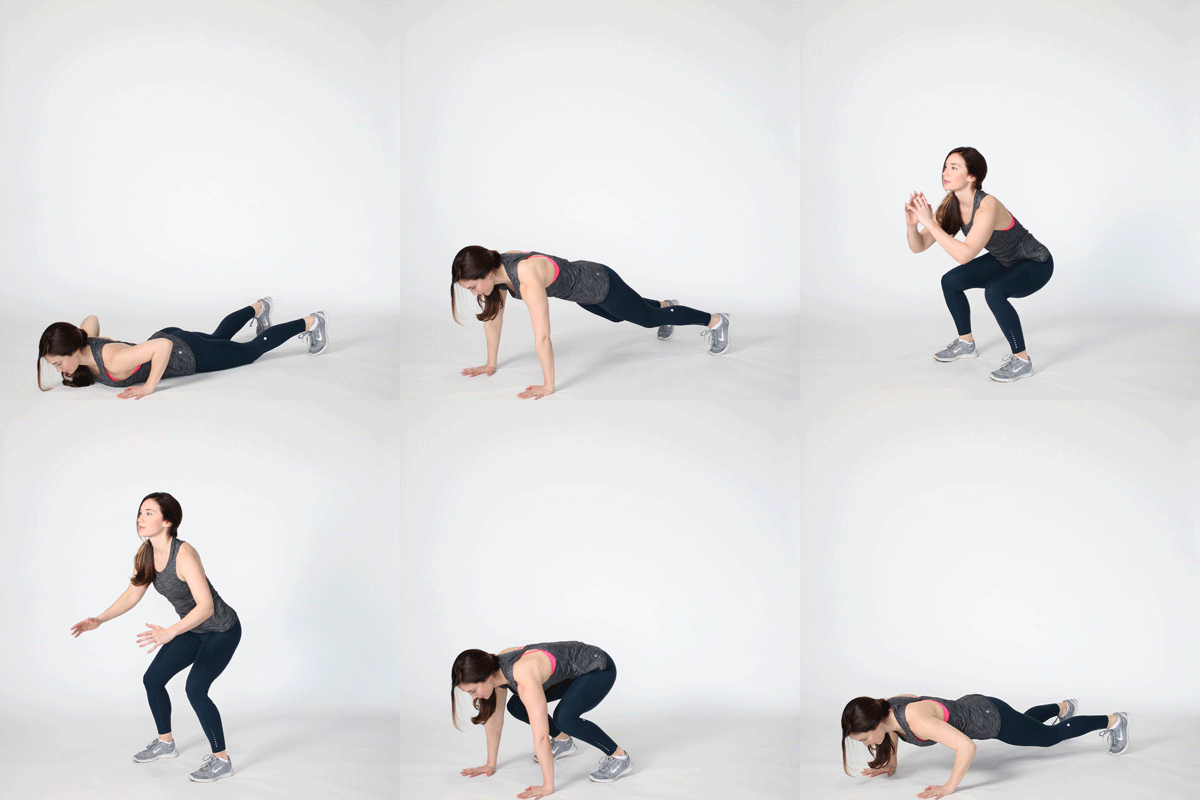
2. Burpees:
Often lauded (or dreaded) as the ultimate full-body conditioning exercise, the burpee combines a squat, a plank, a push-up, and a jump into a fluid, high-intensity sequence.
- Execution: Start standing with feet shoulder-width apart. Drop into a squat position with hands on the floor just inside your feet. Kick your feet back simultaneously into a plank position. Perform a full push-up (chest to floor is optimal). Immediately jump your feet back to the squat position. Explode upwards into a jump, reaching your hands overhead. Land softly and prepare for the next rep.
- Benefits: Develops explosive power, cardiovascular endurance, strength in the chest, shoulders, triceps,

