

The common corporate criticism leveled against the scientific nutrition literature, questioning the credibility of observational studies, warrants a closer examination. While randomized controlled trials (RCTs) are the gold standard for assessing interventions, particularly pharmaceuticals, their application to dietary research presents significant challenges. The inherent nature of diet-related diseases, often developing over decades, coupled with the practical impossibilities of administering placebo foods or ensuring long-term adherence to strictly assigned diets for years, necessitates reliance on observational studies. These studies meticulously track large populations and their dietary habits over extended periods to identify correlations between specific foods and disease development.
The Limitations and Necessities of Observational Studies
The core argument against observational studies often stems from their inability to definitively prove causation. Unlike RCTs, where researchers directly manipulate variables and observe outcomes, observational studies capture existing patterns and associations. Critics argue that these associations can be confounded by numerous lifestyle factors, genetic predispositions, and socioeconomic determinants that are difficult to fully account for. For instance, individuals who consume large amounts of processed foods might also be more likely to smoke, be sedentary, or have higher stress levels, making it challenging to isolate the precise impact of diet alone on disease risk.
However, the reality of nutritional science research necessitates these broader population-based investigations. The development of chronic diseases such as heart disease, cancer, and diabetes can span decades. Conducting RCTs for such long-term outcomes would be logistically complex, prohibitively expensive, and ethically challenging. Imagine attempting to randomize individuals to consume a diet high in red meat for 20 years to observe the incidence of colorectal cancer. Furthermore, the concept of a "placebo diet" is largely unfeasible, as even seemingly neutral foods can have subtle physiological effects. Adherence to restrictive dietary protocols for years is also a significant hurdle, leading to potential bias and reduced statistical power.
Bridging the Gap: Observational Data and Randomized Trials
Despite these limitations, research suggests a remarkable convergence between the findings of observational studies and RCTs when they are available. A meta-analysis comparing data from both study types has indicated little evidence for significant discrepancies in their average findings. In approximately 90% of examined treatments, the effects were not only in the same direction but also of similar magnitude. This suggests that while observational studies may not offer the same level of causal certainty as RCTs, they often point towards similar biological realities.
A notable historical example that has been cited to highlight potential discrepancies is the early research on hormone replacement therapy (HRT). Some observational studies suggested that women taking Premarin experienced fewer heart attacks. However, subsequent randomized controlled trials, such as the Women’s Health Initiative (WHI) study, revealed an increased risk of heart disease. Further investigation into the Premarin data revealed that the initial observational findings were influenced by the timing of HRT initiation. When analyzed considering when Premarin was started relative to menopause, the studies ultimately showed similar results, underscoring the importance of nuanced interpretation and the potential for timing to act as a confounding factor in observational research.
Differentiated Evidentiary Standards: Drugs vs. Diet
A crucial distinction often overlooked in the corporate criticism of observational studies is the differing levels of certainty required for interventions with vastly different risk profiles. When considering the prescription of a drug, which can have serious side effects and is associated with a significant number of deaths annually – reportedly the third leading cause of death in both Europe and the United States – the demand for rigorous, "rock-solid" evidence, ideally from randomized, double-blind, placebo-controlled trials, is entirely justified. Prescription drug side effects alone are estimated to cause around 100,000 deaths annually in the United States, even when taken as directed. The potential for harm necessitates an exceptionally high bar for evidence.
Conversely, recommendations to increase broccoli consumption or reduce soda intake, while important for public health, do not carry the same immediate and severe risk profile. The potential negative consequences of these dietary shifts are generally far less acute and often reversible. Therefore, the evidentiary standard for dietary recommendations, while still requiring robust support, may not necessitate the same level of absolute certainty and the exclusive reliance on RCTs, especially when such trials are impractical or impossible to conduct.
Industry Influence and Methodological Misapplication
The critique of observational studies has been weaponized by industries with vested interests. A prominent example is a paper funded by the sugar industry, which concluded that dietary guidelines advising sugar reduction were untrustworthy due to their reliance on "low-quality evidence." This approach has been characterized as an "inappropriate use of the drug trial paradigm in nutrition research." Critics argue that the sugar industry, and similar entities, deliberately apply the stringent evidentiary standards of drug trials to dietary science, where such standards are often impractical, to undermine public health recommendations.

The methodology employed in such critiques often relies on frameworks like GRADE (Grading of Recommendations Assessment, Development and Evaluation). While GRADE is a valuable tool for assessing the quality of evidence, particularly for clinical interventions, its rigid application to nutrition can be problematic. Some argue that GRADE, by design, tends to favor RCTs and may inherently downgrade observational data, which is crucial for nutritional epidemiology.
Alternative Frameworks for Nutritional Evidence
Recognizing the limitations of applying drug-centric evaluation systems to nutrition, alternative frameworks have been developed. NutriGrade is one such system, specifically designed to assess and judge the level of evidence in nutrition research. A key feature of NutriGrade is its explicit consideration of funding bias, which leads to a downgrade in the perceived quality of industry-funded trials. This feature is particularly relevant given the aforementioned sugar industry-funded paper, which might have chosen the "inappropriate drug method" precisely to circumvent such bias assessments.
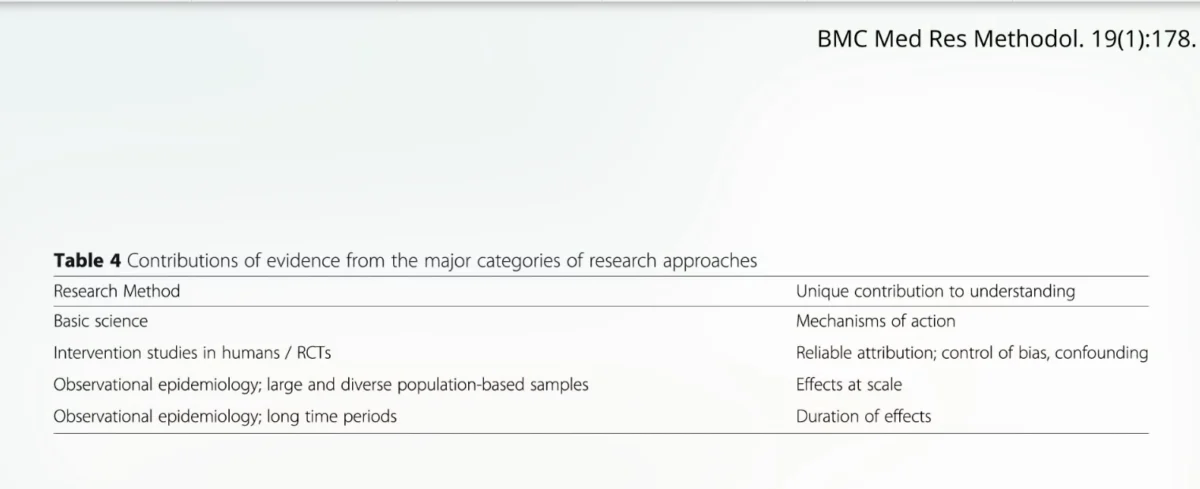
Another important framework is HEALM (Hierarchies of Evidence Applied to Lifestyle Medicine). HEALM was developed to address the inadequacy of existing tools like GRADE when questions cannot be fully answered through RCTs. It acknowledges that each research method, including laboratory studies, RCTs, and large-scale population studies, contributes uniquely to our understanding of health and disease. Laboratory studies can elucidate exact mechanisms, RCTs can demonstrate cause and effect under controlled conditions, and large observational studies can track trends in hundreds of thousands of individuals over decades, providing invaluable insights into population health patterns.
The Trans Fat Success Story: A Testament to Combined Evidence
The successful removal of trans fats from the U.S. food supply serves as a compelling case study for the power of integrating evidence from various study designs. Randomized controlled trials provided evidence that trans fats increased risk factors for heart disease. Simultaneously, extensive population studies demonstrated a clear correlation: the higher the trans fat consumption, the greater the incidence of heart disease. The confluence of these different lines of evidence built an irrefutable case for the detrimental effects of trans fat.
The consequence was significant public health action, leading to the virtual elimination of artificial trans fats from the American food supply. This intervention is credited with preventing an estimated 200,000 heart attacks annually. Crucially, the absence of long-term RCTs examining hard endpoints like heart attacks and mortality related to trans fat consumption did not prevent decisive action. This exemplifies the principle that "you can’t let the perfect be the enemy of the good when there are tens of thousands of lives at stake."
Public Health Decision-Making in the Face of Imperfect Data
Public health officials are routinely tasked with making critical decisions based on the best available balance of evidence, even when that evidence is not perfect. Consider the establishment of tolerable upper limits for environmental toxins like lead and PCBs. These limits are not derived from randomized experiments where children are intentionally exposed to varying levels of lead to observe the precise onset of neurological damage. Instead, public health authorities synthesize evidence from a multitude of sources, including animal studies, observational epidemiological data, and case reports, to make the most informed approximations possible. This pragmatic approach underscores the necessity of utilizing all available scientific information when direct experimental manipulation is unfeasible or unethical.
Industry-Funded Studies and the Undermining of Guidelines
The pattern of industry-funded research aimed at discrediting public health recommendations extends beyond the sugar industry. A similar strategy has been observed concerning red and processed meat consumption. A meat industry-funded institution reportedly hired the same individual who helped conceive the sugar industry-funded study to author a paper challenging dietary guidelines that recommend limiting meat intake. This paper, utilizing GRADE methods, concluded that the evidence supporting these recommendations was of "low quality." This mirrors the sugar paper’s conclusion and highlights a coordinated effort to leverage specific methodological critiques to cast doubt on widely accepted public health advice.
The Irony of Sugar Industry Tactics
Adding a layer of irony to the sugar industry’s critique, the authors of the paper highlighted inconsistencies in sugar consumption guidelines over a 20-year period to question their validity. However, these inconsistencies were partly fueled by an outlier guideline from the 2002 Institute of Medicine, which suggested that a quarter of the diet could be sugar without leading to deficiencies. This particular guideline was partially funded by an institute with financial ties to major beverage and confectionary companies. The industry, having influenced a questionable guideline, then used the resulting variations in recommendations as evidence against the trustworthiness of all such guidelines, creating a self-fulfilling prophecy of doubt.
The Broader Impact: A Series on Corporate Influence
This examination of the critique against observational studies is part of a larger series investigating how corporate interests influence dietary and health guidelines. Previous installments have delved into the corporate playbook employed to undermine dietary recommendations, particularly concerning sugar consumption, and how scientific data can be manipulated. The ongoing series aims to provide a comprehensive overview of these influences, with subsequent parts scheduled to analyze recent articles on meat consumption and other areas where industry lobbying intersects with public health policy. The consistent pattern of industry-funded research employing specific methodological critiques to challenge evidence-based recommendations underscores the critical need for transparency and independent evaluation in scientific research and public health policymaking. The implications are far-reaching, impacting consumer choices, disease prevention strategies, and the overall health and well-being of populations worldwide.

