

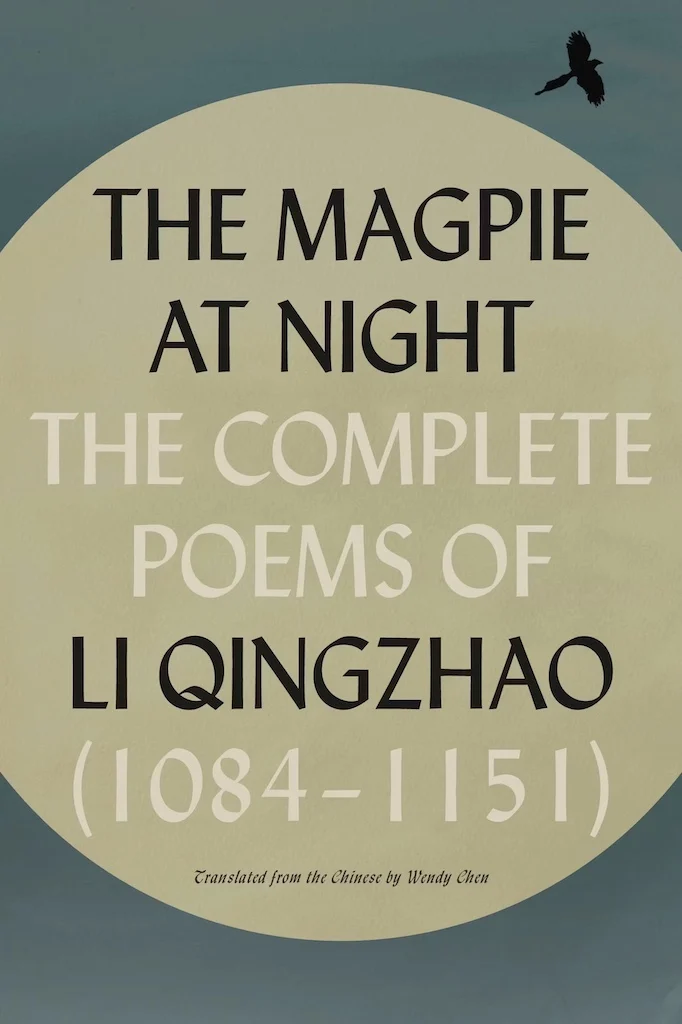
The enduring legacy of Li Qingzhao, widely regarded as the preeminent female poet in Chinese history, is being brought to a broader Western audience with the publication of The Magpie at Night: The Complete Poems of Li Qingzhao (1084–1151), translated by Wendy Chen. This comprehensive collection offers a profound gateway into the life and artistry of a Song Dynasty luminary whose work, characterized by its lyrical brilliance and emotional depth, has resonated across centuries. Despite her esteemed status in China, Li Qingzhao has historically remained a figure of relative obscurity in Western literary circles, a gap Chen’s meticulous translation aims to bridge.
Chen’s introductory essay sheds light on the challenges and motivations behind her endeavor. She recounts her initial encounter with Li Qingzhao’s poetry, describing it as an arresting experience that immediately captured her attention with its “power of imagery.” The translator notes Li Qingzhao’s remarkable ability to imbue her verses with unexpected beauty and profound observation. Examples cited include the poignant self-description of being “thinner than a yellow flower” in “Drunk in the Shade of Flowers,” and the evocative depiction of moonlight on pear blossoms in “Complaint Against a Prince: Spring Ends (1),” where the blossoms are rendered as “dipped / in the moon’s first / slanting light.” These selections underscore the poet’s mastery of sensory detail and her capacity to evoke a wide spectrum of human emotion, from the effervescence of youth to the profound sorrow of displacement and loss.
A Voice That Defied Convention
Li Qingzhao’s life (1084–1151 CE) unfolded during the Northern Song Dynasty, a period of significant cultural and intellectual flourishing, but one that also maintained rigid societal expectations for women. Chen highlights how Li Qingzhao not only excelled in ci, a sophisticated form of lyric poetry set to music, but also ventured into scholarly prose (wen) and critical poetic commentary (shi). Her willingness to engage with political commentary, a domain considered fraught with peril for any writer, and particularly for women who lacked the societal protections afforded to men, speaks volumes about her intellectual courage and artistic conviction. This boldness, as noted by Chen, was a testament to her defiance of prevailing cultural norms, which typically confined women to domestic spheres and discouraged public intellectual engagement.
The scarcity of preserved works by female poets throughout Chinese history is a significant factor contributing to their underrepresentation. Chen points out that the preservation and dissemination of literature were often biased towards male authors, leading to the loss of invaluable contributions from women. A contemporaneous account from fellow poet Zhou Hui vividly illustrates Li Qingzhao’s dedication: he recorded that “at every snowstorm, [Li Qingzhao] would wear a bamboo hat and cloak of reeds and climb on top of the city walls, looking into the distance in search of poems.” This image of unwavering poetic pursuit, even amidst harsh weather, has deeply influenced Chen’s translation approach, inspiring her to capture the poet’s indomitable spirit.
Bridging the Translational Divide
Chen’s personal journey into translating Li Qingzhao began in her teenage years. She observed a significant lacuna in available English translations, noting that by the time she started, only one translation of Li Qingzhao’s complete works remained in print: Kenneth Rexroth and Ling Chung’s Li Ch’ing-chao: Complete Poems (1979). Chen identifies a gendered bias within the field of translation itself, observing that the landscape of American translation has historically been dominated by white men translating male authors. This realization fueled her commitment to “reclaiming English translation of Chinese texts as a space where Chinese and Chinese American voices can be heard and appreciated.” Her translation of Li Qingzhao is therefore not solely an act of literary appreciation but also a significant contribution to rectifying historical imbalances and promoting a more inclusive literary canon.
Li Qingzhao’s upbringing provided a rare foundation for her intellectual development. Born into a family of respected scholar-officials, she received an education that fostered her literary talents. This parental encouragement was exceptional for women of her era, and by her adolescence, her poetry was already being recognized and performed by established male poets. Her literary output during her lifetime included several volumes published under the pseudonym Yi’an Jushi, meaning “the easily contented dweller.” She garnered acclaim for her shi and wen, including a notable essay on the ci form itself. Today, her fame rests predominantly on the exquisite simplicity and emotional resonance of her ci.
The nature of ci poetry, which involved setting lyrics to existing musical melodies with predetermined meters and tones, adds another layer of complexity to its preservation. While the original musical scores have largely vanished, Li Qingzhao’s lyrics themselves endure, carrying her “indomitable voice” across the centuries, as Chen eloquently puts it. This enduring voice is characterized by its ability to subvert tradition while working within its established frameworks, to infuse a previously imagined space of female interiority with a lived, authentic persona, and to chronicle a life marked by adversity with timeless creative power.
A Timeless Invitation
Chen concludes her introduction by reflecting on the enduring relevance of Li Qingzhao’s work. In the poem “Butterflies Long for the Flowers: Parting Feelings,” Li Qingzhao poses the question, “Who will drink with me / from wine and poems?” Chen interprets this as an invitation, an oracular call to readers to engage directly with the poet’s inner world. The profound connection forged through her verses, transcending the vast temporal and cultural distance, makes her poems feel as though they were written for the present moment.
Selected Poems from The Magpie at Night
The collection features several of Li Qingzhao’s most celebrated poems, offering a direct encounter with her artistry.
Silk-Washing Stream
In the small courtyard,
past the lattice window,
the colors of spring deepen.
The heavy unrolled curtains
sink the room into shadow.
Leaning against the railing,
I play wordlessly on my jade qin.
Clouds from distant caves
hasten the dusk.
A breeze blows in
misty rain.
The pear blossoms want
to wither.
I fear
I cannot stop them.
This poem evokes a palpable sense of quiet introspection and the melancholic beauty of a spring afternoon. The deepening colors of spring, contrasted with the shadowed interior, create a visual and emotional landscape. The act of playing the jade qin, a solitary and refined pursuit, underscores the poet’s inner world. The encroaching dusk and misty rain foreshadow a sense of fading beauty, culminating in the poignant observation of the pear blossoms’ inevitable wilting, a metaphor for the transient nature of beauty and perhaps life itself.
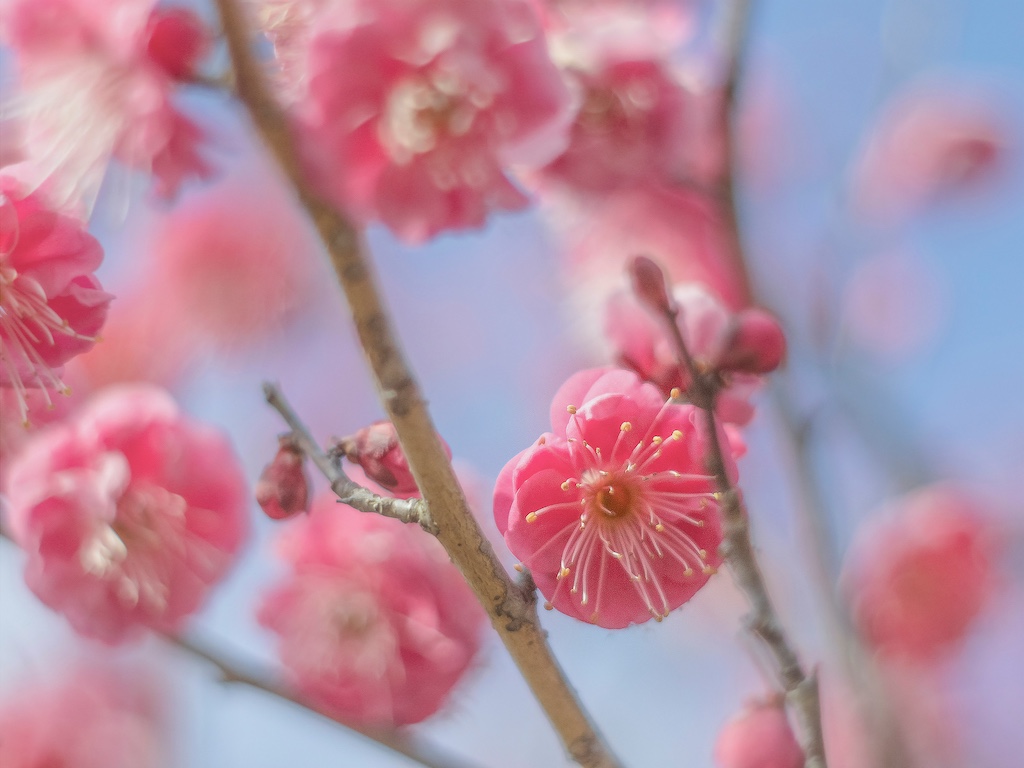
Fragrant Courtyard: Fading Plum Blossoms
My little house hides the spring.
Its windows fasten
the light of day.
The painted hall is dark,
endlessly deep.
The incense
has burned away.
Sunset falls
on the window latch.
The river plum tree
I planted by hand
is better.
Why should I
go down the river
or climb the tower?
No one visits.
I am lonely like He Xun
at Yangzhou.
We have always known the grace
of the plum blossoms.
Still, they suffer
against the relentless rain,
unable to bear
the raking wind.
And now, from whose house
blows over the sound
of the flute, blowing over
such heavy sorrow?
Do not resent their vanishing
fragrance, their falling
jade petals.
Have faith feelings will remain
when all traces are swept away.
It’s difficult to say—
Stirring against the beautiful window
and pale moon,
their scattered shadows
move me.
This poem delves into themes of solitude, beauty, and the passage of time. The imagery of a darkened hall and spent incense suggests a retreat from the world, perhaps a deliberate choice to observe rather than participate. The poet’s connection to the plum tree she planted highlights a personal relationship with nature, a solace against loneliness. The lament for the suffering blossoms under harsh weather, coupled with the distant sound of a flute carrying sorrow, amplifies the poem’s emotional weight. The concluding lines offer a philosophical reflection on the enduring nature of feelings even as physical traces disappear, and the profound impact of fleeting beauty.
Offering Incense
In the grass, the crickets cry out—
startling the wutong leaves
into falling.
Longing saturates the human world,
the heavens.
A stair of clouds to the moon.
A thousand locked gates.
Even if a boat could come
or go,
they would not meet.
The magpies make a starry bridge
for the Cowherd and the Weaving Girl
to meet just once a year.
Imagine their feelings at separating,
their never-ending resentment.
Are they still apart?
Suddenly, it is clear.
Then rain.
Then wind.
This poem uses the natural world as a canvas for profound emotional expression, particularly longing. The falling leaves, the distant moon, and the locked gates all contribute to a sense of separation and unattainability. The reference to the Cowherd and the Weaving Girl myth, a celestial tale of lovers separated and allowed to meet only once annually, powerfully encapsulates the poet’s feelings of enduring separation and resentment. The poem’s progression from cosmic imagery to intensely personal reflection, culminating in the sudden clarity followed by the elemental forces of rain and wind, suggests a cathartic release or a profound understanding of sorrow’s pervasiveness.
The Fisherman’s Pride: Dream Notes
The clouds, like waves
across the sky, join
with the morning fog.
The River of Stars turns
and a thousand sails dance.
In a dream,
my soul stands before the Emperor of Heaven,
who kindly asks
where I will go.
My journey is long, I say,
and the sun setting.
I have studied poetry
and attempted startling phrases
to no use.
Let the roc raise a wind
of ninety thousand li.
Wind, move again.
Blow my boat
to the islands of immortals.
This poem, presented as dream notes, reveals Li Qingzhao’s aspirations and perhaps her frustrations. The grand celestial imagery of clouds, fog, and the River of Stars sets a majestic stage. The dream encounter with the Emperor of Heaven provides an opportunity for introspection. The poet’s admission of a long journey, a setting sun, and the perceived futility of her poetic endeavors, despite her efforts to craft “startling phrases,” hints at a yearning for greater impact or a sense of unfulfilled potential. The invocation of the mythical roc, a creature of immense power capable of traversing vast distances, and the plea for the wind to carry her boat to the islands of immortals, signifies a deep desire for transcendence, escape, and perhaps a spiritual refuge.
The publication of The Magpie at Night represents a significant moment for appreciating Li Qingzhao’s contributions to world literature. Wendy Chen’s translation not only makes her exquisite poetry accessible but also provides crucial context regarding the poet’s life, the socio-cultural environment she navigated, and the historical challenges faced by women writers. The collection stands as a testament to Li Qingzhao’s enduring genius and her powerful voice that continues to resonate with readers centuries after her passing. The book, published by Farrar, Straus and Giroux, includes translation, introduction, and notes copyright © 2025 by Wendy Chen, ensuring a scholarly and deeply personal engagement with the poet’s oeuvre.

