

The landscape of the professional fitness industry is characterized by a distinct separation between high-performance athletic facilities and general-population commercial gyms. Tony Gentilcore, a prominent figure in the strength and conditioning sector for over 20 years and co-founder of Cressey Sports Performance, recently announced a significant change in his personal training regimen: the acquisition of a membership at a local commercial gym. This move marks the first time in more than a quarter-century that the veteran coach has sought training facilities outside of the specialized environments he either owns or manages. While the decision may appear trivial to the casual observer, it highlights broader themes within the industry regarding professional burnout, the necessity of environmental variety, and the evolving utility of commercial fitness equipment in high-level programming.
Historical Chronology of a Professional Fitness Career
To understand the significance of this transition, one must examine the trajectory of Mr. Gentilcore’s career, which mirrors the evolution of the American fitness culture over the last three decades. The journey began in approximately 1990, a period when home fitness was largely defined by entry-level equipment. Mr. Gentilcore’s initial foray into resistance training involved a rudimentary weight set—typical of retail offerings at the time—consisting of a basic bench, a barbell, and plastic-covered cement weights.
By the mid-1990s, his training transitioned to institutional settings. During his high school years, he utilized the school’s weight room, an environment he described as a "dungeon" characterized by "universal" multi-station machines and cast-iron plates. This era was foundational, marking his first successful attempt at a 135-pound bench press, a standard milestone in strength development.
The year 1996 represented a pivotal moment in both his personal development and the expansion of the commercial fitness industry. In a small town dominated by agriculture, the opening of a commercial gym provided access to modern amenities previously unavailable in rural settings. This exposure to a wider array of equipment and a different social atmosphere preceded his entry into the fitness profession in 2002.
From 2002 to the present, Mr. Gentilcore’s training occurred almost exclusively within professional bubbles. This included a year spent at South Side Barbell in Stratford, Connecticut—a renowned powerlifting hub—and eventually, the 2007 co-founding of Cressey Sports Performance (CSP) in Hudson, Massachusetts. For nearly two decades, his training was conducted in high-performance environments where full-range-of-motion pull-ups and 400-pound deadlifts were the cultural norm, and commercial "big-box" memberships were unnecessary.
The Motivation for Environmental Diversification
The decision to return to a commercial gym after a 25-year hiatus is driven by two primary factors: equipment accessibility and psychological necessity. In specialized strength and conditioning facilities, the focus is often on free weights, power racks, and specialty bars. While these tools are optimal for developing raw strength and athletic power, they often lack the mechanical isolation offered by commercial-grade machines.

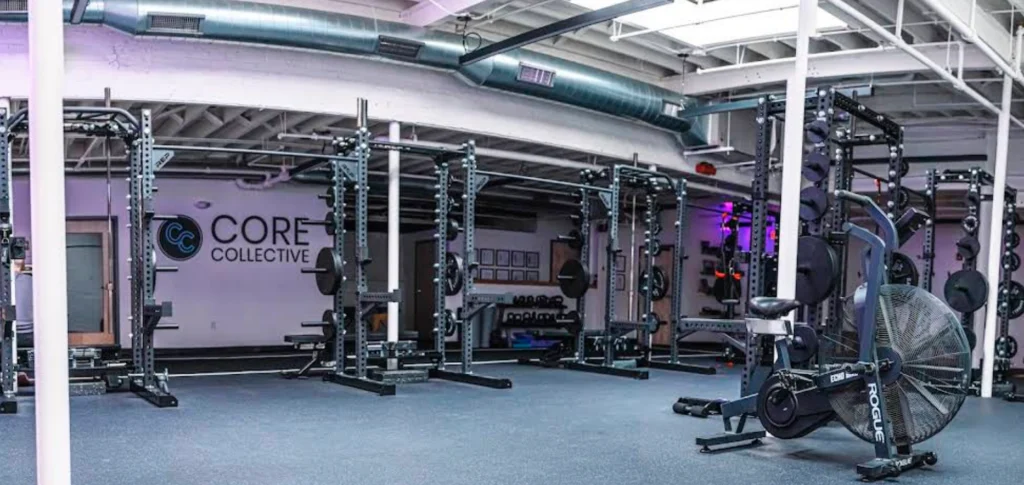
Mr. Gentilcore noted a specific desire for access to equipment such as Hammer Strength machines, functional trainers, and leg presses. In the context of hypertrophy (muscle growth) and joint longevity, these machines provide stable resistance profiles that are difficult to replicate with barbells alone. The "tipping point" for this decision was the recognition that his current training environment at Core Collective in Brookline, Massachusetts, while highly equipped for his primary needs, lacked the specific mechanical variety required to maintain engagement and meet evolving physical goals.
Furthermore, the psychological concept of the "separation of church and state" plays a crucial role. For fitness professionals who own or manage facilities, the gym is a place of business, client management, and administrative responsibility. Training in the same space where one works can lead to a phenomenon known as "occupational saturation," where the inability to mentally disconnect from professional duties hinders the efficacy of the workout. By joining a neighborhood commercial gym, Mr. Gentilcore has effectively established a "third space," allowing for a focused, distraction-free training environment.
Market Context and the Evolution of the Commercial Gym Sector
The commercial gym industry has undergone a massive transformation since Mr. Gentilcore last held a membership in the late 1990s. According to data from the International Health, Racquet & Sportsclub Association (IHRSA), the U.S. fitness industry was valued at approximately $30.8 billion in 2023. The market is currently bifurcated into "High-Volume, Low-Price" (HVLP) models, such as Planet Fitness, and premium, amenity-heavy clubs like Equinox or Life Time.
The return of a high-level coach to this sector underscores the enduring value of the commercial model, even for elite practitioners. While boutique and specialized studios saw a surge in the 2010s, the post-pandemic era has seen a resurgence in "big-box" gym attendance. Data indicates that consumers are increasingly seeking "omni-channel" fitness experiences—combining home workouts, specialized coaching, and general gym access.
Mr. Gentilcore’s observations of the commercial gym environment—noting the "silent camaraderie" and the presence of "peacocking" (performative displays of strength or physique)—reflect the sociological diversity of these spaces. Unlike the homogeneous culture of a powerlifting gym or an athletic performance center, the commercial gym serves as a microcosm of the general public, offering a different type of social energy that can be invigorating for a seasoned professional.
Professional Implications and Industry Reactions
Within the fitness community, the reaction to a prominent coach joining a commercial gym is often one of validation. Many industry peers suggest that "stepping outside the bubble" is essential for professional growth. By interacting with the general population and utilizing standard commercial equipment, coaches can better empathize with the experiences of their clients, most of whom do not have access to elite private facilities.
Inferred reactions from the coaching community suggest that this move may encourage other professionals to seek "environmental resets." The monotony of training in the same four walls for decades can lead to a plateau in both physical progress and creative output. For a writer and educator like Mr. Gentilcore, the commercial gym also serves as a laboratory for observation, providing a wealth of anecdotal evidence and "fodder" for instructional content regarding common training errors and gym etiquette.

Analysis of Equipment and Training Methodology
The inclusion of machines like the "pec deck" or the leg press into a veteran’s program highlights a shift in modern strength science. While the "functional training" movement of the early 2000s often demonized machines in favor of unstable surfaces and free weights, contemporary research emphasizes the importance of mechanical tension and stability for muscle hypertrophy.
- Mechanical Stability: Machines allow the lifter to exert maximum force without the limiting factor of balance or core stabilization, which is beneficial for targeted muscle growth.
- Resistance Curves: Modern commercial machines are engineered with cam systems that match the human strength curve, providing consistent tension throughout the entire range of motion.
- Recovery Management: For older athletes and long-time lifters, machines offer a way to accumulate training volume with less systemic fatigue and lower risk of acute injury compared to heavy compound barbell movements.
Mr. Gentilcore’s move suggests a pragmatic approach to longevity in the fitness industry: utilizing the best tools available, regardless of whether they fit the "hardcore" aesthetic of a specialized strength coach.
Broader Impact on the Fitness Landscape
The transition of a high-profile coach back into the commercial sector may signal a narrowing of the gap between "hardcore" strength training and "general" fitness. As more information becomes available through digital platforms, the average commercial gym member is becoming more educated, and the elite coach is becoming more open to the benefits of mainstream facilities.
This "cross-pollination" of training styles benefits the industry as a whole. It challenges the elitism often found in specialized bubbles and promotes a more inclusive view of what constitutes a "good" training environment. For gym owners, this highlights the importance of equipment variety; even a facility dedicated to powerlifting can benefit from the inclusion of a few high-quality isolation machines.
Conclusion
Tony Gentilcore’s return to a commercial gym membership after 25 years is more than a personal anecdote; it is a reflection of the maturing fitness industry. It acknowledges that even for those at the pinnacle of the profession, the need for variety, mental separation, and specific mechanical tools remains constant. As the fitness landscape continues to evolve, the distinction between "specialized" and "commercial" may continue to blur, driven by a pragmatic focus on results, longevity, and psychological well-being. This move serves as a reminder that the optimal training environment is not necessarily the most exclusive one, but rather the one that provides the necessary stimulus and mental clarity to sustain a lifelong commitment to physical excellence.

