

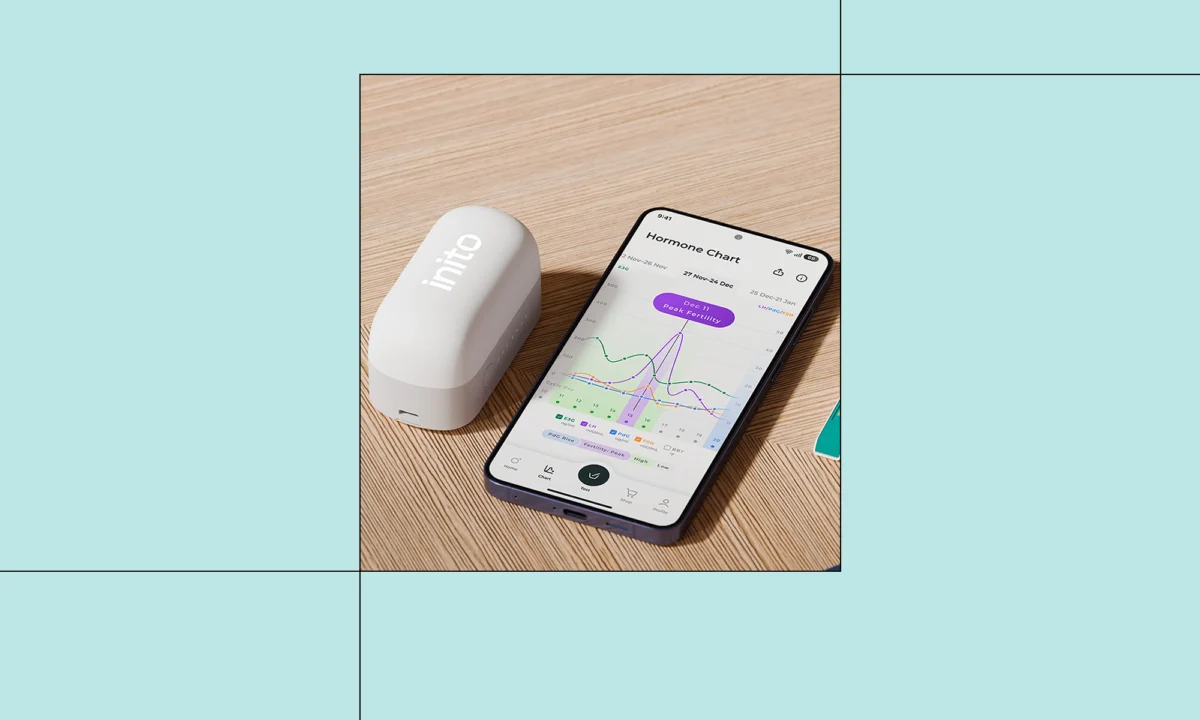
For individuals navigating the complexities of fertility, traditional ovulation prediction methods can often feel like guesswork. Standard ovulation predictor kits (OPKs) typically focus on a single hormone, luteinizing hormone (LH), leaving users to interpret subtle line changes and face the uncertainty of whether an LH surge truly signifies ovulation. Basal body temperature (BBT) tracking, while informative, confirms ovulation retrospectively, and cervical mucus monitoring is highly subjective. This landscape of fragmented information is precisely what the Inito Fertility Monitor aims to address by offering an all-in-one, at-home system that measures four key fertility hormones.
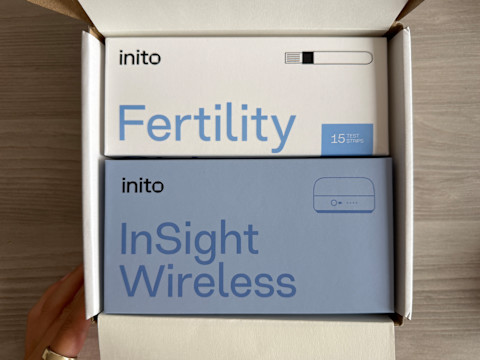
Launched with the promise of providing lab-grade hormone readings, Inito has garnered attention for its ability to deliver personalized insights into a user’s fertile window and confirm ovulation. This advanced approach moves beyond population averages, offering data that reflects an individual’s unique hormonal fluctuations. The system comprises a portable monitor and disposable test strips, designed to be used with a companion smartphone application. This review delves into the technology behind Inito, its reported accuracy, how it compares to traditional methods, and its potential impact on fertility journeys, especially for those with challenging reproductive health conditions.
The Inito Fertility Monitor: A Deeper Dive

At its core, Inito is designed to provide a comprehensive view of a woman’s cycle by tracking four crucial hormones:
- Estrogen (E3G): Rising estrogen levels indicate the approaching fertile window and prepare the body for ovulation.
- Luteinizing Hormone (LH): An LH surge triggers ovulation, typically occurring 24-36 hours after the surge begins.
- Progesterone (PdG): A rise in progesterone after ovulation confirms that ovulation has occurred and supports the early stages of pregnancy.
- Follicle-Stimulating Hormone (FSH): While less critical for immediate fertility window prediction, FSH plays a role in follicular development.
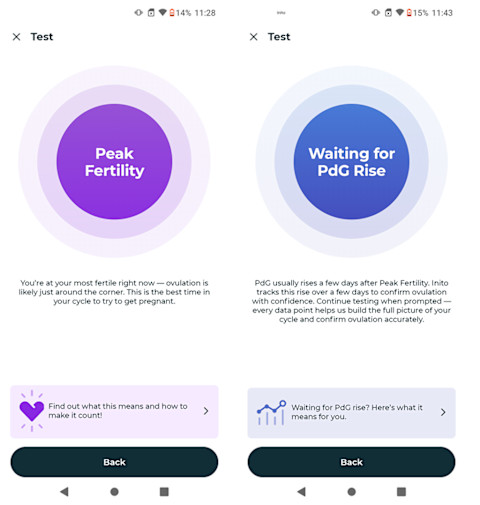
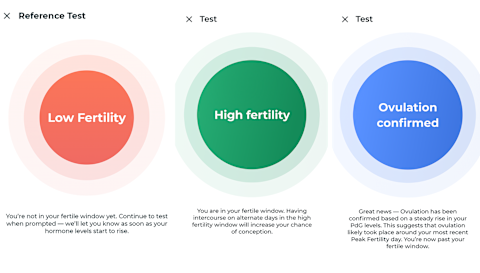
Unlike conventional OPKs that rely on visual interpretation of line intensity, Inito employs "Spectral Mapping technology." This advanced method uses both colorimetric imaging and fluorescence signals to analyze the test strips with a high degree of detail. This allows the device to quantify the actual levels of each hormone, rather than providing a qualitative assessment. The accompanying app then translates these hormone values into actionable daily fertility statuses: Low Fertility, High Fertility, Peak Fertility, or Ovulation Confirmed. This provides users with a clear understanding of their cycle’s progression, offering a significant advantage over methods that offer less granular or delayed information.
The Chronology of Fertility Monitoring: From Basic to Advanced
The evolution of fertility tracking has mirrored advancements in medical science. Early methods relied on observable biological signs:

- Calendar Method: This rudimentary approach, dating back to the early 20th century, assumed a standard 28-day cycle with ovulation occurring around day 14. Its accuracy is notoriously low, especially for individuals with irregular cycles.
- Cervical Mucus Monitoring: Observing changes in cervical mucus, a method refined over decades, can indicate fertile periods based on its texture and consistency. However, it requires careful daily observation and can be influenced by factors like infection or sexual activity.
- Basal Body Temperature (BBT) Tracking: Since the mid-20th century, BBT has been a cornerstone of fertility awareness. A slight dip followed by a sustained rise in temperature post-ovulation confirms that ovulation has occurred. This method, however, requires meticulous daily temperature recording and can be affected by sleep disturbances, illness, or environmental changes.
- Ovulation Predictor Kits (OPKs): Emerging in the late 20th century, OPKs detect the LH surge, signaling impending ovulation. While popular, their reliance on a single hormone and the subjective interpretation of line darkness have limitations, particularly for individuals with atypical LH surges or conditions like Polycystic Ovary Syndrome (PCOS).
Inito represents a significant leap forward by integrating the measurement of multiple hormones into a single, user-friendly at-home device. This multi-hormonal approach addresses the limitations of single-hormone tests and retrospective confirmation methods, offering a more dynamic and personalized understanding of fertility.
Scientific Backing and Clinical Perspective
The accuracy and reliability of Inito’s technology are supported by several studies. Research published in h&ropen (2023) demonstrated a 95% correlation between Inito’s urinary hormone patterns and serum hormone trends, indicating that the device provides readings that closely mirror those obtained through blood tests. Further research in Scientific Reports (Nature) reported over 92.2% accuracy in confirming ovulation. These findings underscore the scientific validity of Inito’s approach.
Fertility specialists generally view Inito favorably, recognizing its potential to enhance patient understanding and improve clinical decision-making. Dr. Lora Shahine, a double board-certified OB/GYN and reproductive endocrinologist, highlights the importance of observing hormonal patterns rather than isolated numbers. She notes that Inito’s ability to track estrogen rise, LH surge, and subsequent PdG confirmation provides a more complete picture of the ovulatory process. This comprehensive data can be invaluable for diagnosing issues such as anovulation (lack of ovulation), luteal phase defects, or unexplained infertility.

Dr. Sasha Hakman, also a double board-certified OB/GYN and reproductive endocrinology and infertility specialist, emphasizes the transformative impact of having detailed hormonal data. Patients who come to appointments with Inito charts are more informed, leading to faster and more precise clinical decisions. Dr. Susan Nasab, a reproductive endocrinologist, echoes this sentiment, stating that the detailed hormonal history provided by Inito is particularly crucial for managing conditions like PCOS, ovulatory dysfunction, premature ovarian insufficiency, and early perimenopause, enabling more personalized treatment strategies.
Addressing Challenges: PCOS, Irregular Cycles, and Beyond
One of the most significant advantages of Inito lies in its utility for individuals with irregular cycles or conditions like PCOS (now often referred to as PMOS – Persistent Menstrual Ovulatory Syndrome). These conditions can lead to unpredictable ovulation patterns and hormonal imbalances, making traditional tracking methods less reliable.
For instance, many individuals with PCOS have an elevated LH:FSH ratio, which can cause standard OPKs to misfire or provide misleading results. Inito’s multi-hormonal approach allows it to differentiate these fluctuations more accurately. By tracking the entire hormonal sequence—estrogen rise, LH surge, and PdG rise—Inito can provide a clearer picture, even when LH levels are atypical. The system’s ability to personalize insights based on an individual’s baseline hormone levels is particularly beneficial for these individuals.
The system’s design also offers practical advantages over BBT tracking, which requires strict adherence to a daily routine and can be influenced by external factors. Inito’s at-home testing is more flexible, allowing users to test with ease regardless of travel or daily schedule variations.
User Experiences and Real-World Impact
Testimonials from Inito users often highlight the device’s ability to uncover issues that might otherwise go unnoticed. For example, users have reported catching secondary LH surges that led to conception, identifying anovulatory cycles, and discovering low progesterone levels that were subsequently addressed with medical intervention.
One user, Brooke Gresock, shared how an Inito graph revealed her lack of ovulation, prompting her gynecologist to initiate medication, which ultimately led to pregnancy. Another user, Katie McCormick, who experienced a decade of unexplained infertility, found that Inito not only indicated a later ovulation date than she anticipated but also prompted a conversation with her OB/GYN about low PdG levels, a critical piece of information for her fertility journey.
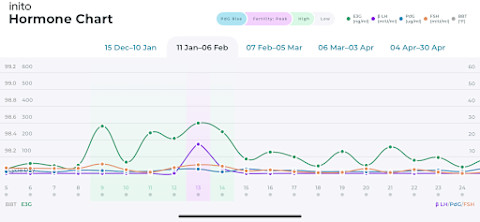
These anecdotal accounts, while not substitutes for clinical trials, illustrate the practical value of Inito’s detailed hormone tracking in empowering individuals with information and facilitating more informed discussions with healthcare providers.
The Science of Spectral Mapping and Precision
Inito’s accuracy stems from its Spectral Mapping technology, which analyzes test strips in extensive detail. This process captures richer information than traditional readers by employing both visual colorimetric imaging and fluorescence signals. This allows the system to distinguish between four hormones with remarkable sensitivity, accounting for subtle variations that simpler readers might miss.
The concept of "precision" is also paramount in Inito’s design. While accuracy refers to how close a measurement is to the true value, precision refers to the consistency of repeated measurements. For fertility tracking, where trends over time are crucial, precision is key. Inito’s technology is engineered to deliver consistent results, test after test, ensuring that observed shifts in hormone levels reflect actual physiological changes rather than variations in the testing process itself. This is particularly important in an at-home setting where environmental factors like lighting, humidity, and dust can influence readings. In controlled laboratory testing, Inito has reportedly demonstrated superior system-level precision compared to other over-the-counter fertility monitors.
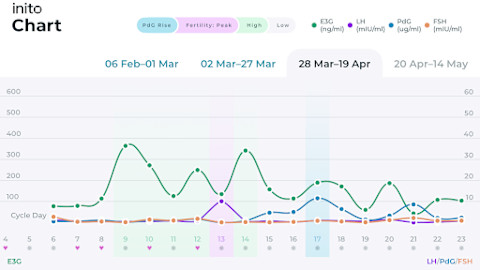
The role of progesterone (PdG) tracking is particularly noteworthy. Unlike a single blood test, which captures a snapshot of progesterone levels, serial PdG measurements from Inito provide a trend over several days. This is crucial because progesterone secretion is pulsatile, and a consistent rise post-ovulation is a strong indicator of successful ovulation and a healthy luteal phase. Inito’s urinary hormone tracking is thus a powerful trend-based tool that complements, rather than replaces, medical evaluations.
Who Benefits Most from Inito?
Based on its capabilities and expert endorsements, Inito is particularly well-suited for:
- Individuals with irregular cycles or PCOS/PMOS: The personalized tracking of hormone trends is invaluable for understanding and managing these conditions.
- Women over 35: As fertility naturally declines with age, precise tracking becomes more critical.
- Those experiencing secondary infertility or unexplained infertility: Inito can help uncover underlying hormonal issues that may be contributing to difficulties conceiving.
- Individuals who are recently off hormonal birth control: It can help them re-establish understanding of their natural cycle.
- Anyone seeking a comprehensive understanding of their fertility: Moving beyond basic prediction to actual confirmation offers greater insight.
Conversely, Inito may be less beneficial for individuals currently on hormonal birth control, as their natural hormone cycles are suppressed. Similarly, those undergoing aggressive IVF protocols may rely more heavily on their clinic’s direct monitoring methods. For individuals prone to increased anxiety with extensive data, the detailed information provided by Inito might not be the ideal choice.
Final Verdict: A Worthwhile Investment for Informed Fertility Journeys
The Inito Fertility Monitor represents a significant advancement in at-home fertility tracking. Its multi-hormonal approach, backed by scientific research and endorsed by fertility specialists, offers a level of insight far beyond traditional methods. The device’s ability to provide personalized, trend-based data, confirm ovulation, and identify fertile windows with enhanced accuracy makes it a valuable tool for anyone seeking to understand their reproductive health more deeply.
While the initial cost may be higher than a box of standard OPKs, the comprehensive information and actionable insights provided by Inito can potentially save time, reduce stress, and lead to more informed clinical decisions. For individuals facing challenges with irregular cycles, PCOS, or extended periods of trying to conceive, Inito offers a powerful and data-driven approach to navigating their fertility journey. It empowers users with knowledge, fostering a sense of control and clarity in what can often be an emotionally charged process. The ability to share detailed charts with healthcare providers further solidifies its role as a crucial adjunct to professional medical care.
Frequently Asked Questions
-
Does Inito work for irregular cycles?
Yes, Inito is particularly effective for individuals with irregular cycles or conditions like PCOS. Its personalized hormone trend tracking, which compares readings against an individual’s own baseline rather than a universal threshold, allows it to accurately identify fertile days and confirm ovulation even with long or variable cycles. -
Can you share your Inito charts with your doctor?
Absolutely. The Inito app allows users to easily export and share their detailed hormone charts with their healthcare providers. Fertility specialists frequently highlight this feature as one of Inito’s most significant benefits, as it can streamline appointments and guide diagnostic and treatment decisions. -
When should I start testing with Inito?
Inito recommends commencing testing on cycle day 6, with day 1 being the first day of menstruation. This early start helps establish a baseline of follicular hormone levels before estrogen begins to rise, making subsequent hormonal changes more meaningful and easier to interpret. Consistent testing with first-morning urine or after a six-hour urine hold is advised for optimal results.

