

A recent series of studies published in the Annals of Internal Medicine has ignited a firestorm of debate within the scientific and public health communities. These controversial papers, which identified a statistically significant association between reduced consumption of red and processed meats and lower rates of total mortality, cardiovascular disease mortality, and cancer mortality, ultimately concluded that individuals should largely disregard existing dietary guidelines and continue eating meat without significant restriction. This conclusion has been met with widespread criticism, with many experts arguing that the studies’ methodology and interpretation of data are flawed, potentially influenced by industry interests, and dangerously misleading to the public.
Background: The Unfolding Controversy
The controversy centers on a panel of researchers, known as the NutriRECS (Nutrition and Consumer Research Excellence) group, whose findings challenged decades of established nutritional science advising moderation in meat intake. The studies, released in September 2019, purported to offer a novel interpretation of existing evidence, leading to recommendations that diverged sharply from those provided by major health organizations worldwide.
The core of the debate lies in the panel’s justification for their counterintuitive conclusions. They presented three primary arguments to explain why their recommendations differed from contemporary dietary advice:
-
Taste Preference as a Dominant Factor: The panel suggested that the enjoyment derived from eating meat should heavily influence dietary guidelines. This assertion has been widely rejected by public health advocates, who argue that personal preference should not supersede scientifically established health risks. The argument draws a parallel to other health behaviors, such as exercise or smoking cessation, where individual desires do not alter the fundamental scientific understanding of their consequences.
-
Inappropriate Application of the GRADE Methodology: A second justification involved the panel’s use of the GRADE (Grading of Recommendations, Assessment, Development, and Evaluation) system. While a robust framework for evaluating evidence, particularly in clinical trials for pharmaceuticals, its application to dietary and lifestyle interventions has been questioned. Critics argue that GRADE was not designed for the complexities of nutritional science and that its inappropriate use could be leveraged to undermine well-established public health recommendations on issues ranging from secondhand smoke to physical inactivity.
-
Minimizing the "Magnitude of Effect": Perhaps the most contentious point is the panel’s emphasis on the "very small magnitude" of the health effects associated with meat consumption. They suggested that even if red and processed meats contribute to heart disease, cancer, and other ailments, the number of associated deaths or illnesses is not substantial enough to warrant significant dietary changes, especially when weighed against the pleasure derived from eating meat. This perspective has been criticized as a form of "risk minimization" that ignores the cumulative impact of such effects across large populations.
Chronology of the Debate
The Annals of Internal Medicine studies were published in a series of papers starting in late September 2019. The immediate reaction from many in the nutrition science community was one of disbelief and concern.
- September 2019: Publication of the key studies in the Annals of Internal Medicine.
- October 2019: Widespread dissemination of the findings, sparking immediate criticism from public health organizations and independent researchers. Calls for a closer examination of the studies’ methodology and funding sources begin to surface.
- Late 2019 – Early 2020: Further analysis and commentary emerge, highlighting specific studies that appear to have been excluded or downplayed by the NutriRECS panel. Concerns about potential industry influence grow.
- Early 2020: Investigative reports begin to detail the financial ties between researchers involved in the studies and the meat industry.
Analysis of Methodological Critiques and Exclusions
A central criticism leveled against the NutriRECS panel is their alleged cherry-picking of data and exclusion of crucial evidence that did not align with their predetermined conclusions. Several prominent studies, including major randomized controlled trials, appear to have been omitted from their meta-analyses.
-
Exclusion of Landmark Trials: Critics point to the PREDIMED trial and the hundreds of randomized controlled trials evaluating the DASH (Dietary Approaches to Stop Hypertension) diet as examples of significant research that was disregarded. These trials have consistently demonstrated the health benefits of dietary patterns that emphasize plant-based foods and limit saturated fats, often found in red and processed meats.
-
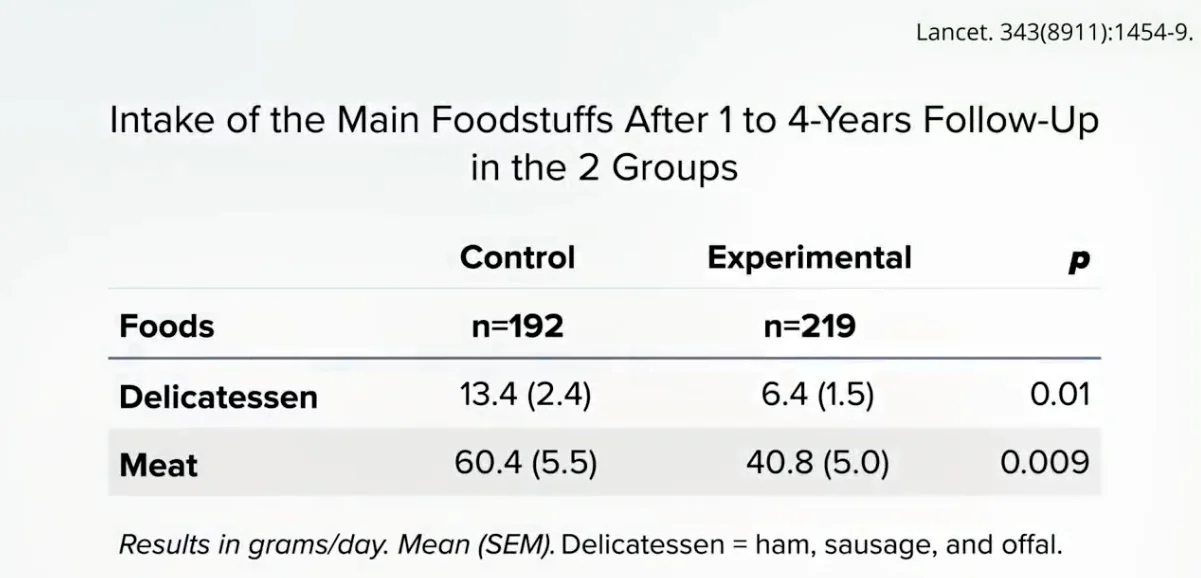
The Lyon Diet Heart Study: The exclusion of the Lyon Diet Heart Study is particularly noteworthy. This trial randomized participants to either a Mediterranean diet, which significantly reduced meat consumption, or a control diet. The results were striking: participants on the lower-meat diet experienced a 70% reduction in mortality from all causes. The panel reportedly excluded this study, citing an "implausibly large treatment effect," a justification widely seen as an attempt to dismiss evidence that contradicted their narrative.
-
Focus on "Realistic Decreases": The panel stated their interest was in "realistic decreases in meat consumption," defining this as reducing intake by approximately three servings per week. They largely relied on the Women’s Health Initiative (WHI) study, where participants reduced meat intake by an average of only 1.4 servings per week, translating to a mere half an ounce of meat per day – the equivalent of one-fifth of a hamburger. Critics argue that this narrow focus on modest reductions inherently limited the observed health benefits, making it easier to downplay the overall impact of meat consumption.

The Influence of Industry Funding
A significant aspect of the controversy involves the financial ties of the researchers and the institutions involved. The NutriRECS panel was partnered with, and had individuals on the payroll of, Texas A&M AgriLife. This institution receives substantial funding from the meat industry. This relationship has raised serious questions about potential conflicts of interest and the objectivity of the panel’s conclusions.
-
Financial Relationships: Investigative journalism has revealed that Texas A&M AgriLife receives millions of dollars annually from the meat industry. The panel’s close association with such an entity has led many to suspect that their findings were shaped by industry interests rather than purely independent scientific inquiry.
-
Exclusion of Vegetarian vs. Meat-Eater Studies: Further evidence of bias cited by critics is the panel’s exclusion of research that directly compared the health outcomes of vegetarians to meat-eaters. This omission prevented a comprehensive understanding of the full spectrum of dietary impacts, particularly the benefits of plant-based diets.
Expert Reactions and Broader Implications
The scientific community’s response to the NutriRECS studies has been overwhelmingly critical, with many experts drawing parallels to historical instances of industry influence on public health messaging.
-
Dr. Dean Ornish’s Analogy: Dr. Dean Ornish, a prominent advocate for plant-based diets, used a powerful analogy to illustrate the flawed logic of downplaying the risks of meat consumption. He compared it to arguing that smoking 24 cigarettes a day is only slightly worse than smoking 20, while deliberately ignoring studies that compare smoking to non-smoking. Such an argument, he contends, would erroneously conclude that smoking isn’t that bad.
-
The "Secondhand Smoke" Parallel: The magnitude of health risks associated with red and processed meat consumption, as indicated by robust epidemiological data, has been likened to the risks posed by secondhand smoke. While population studies are the primary method for assessing such risks, the public health consensus on the dangers of secondhand smoke is unequivocal. Critics argue that a similar rational approach should be applied to dietary recommendations regarding meat.
-
Statistical Significance vs. Clinical Meaningfulness: The NutriRECS panel highlighted the "small magnitude" of effects, but critics counter that even seemingly small increases in risk, when applied across millions of people, translate into significant public health burdens. For instance, reducing red and processed meat consumption has been associated with:
- A 13% reduction in total mortality.
- A 14% reduction in cardiovascular disease mortality.
- An 11% reduction in cancer mortality.
- A 24% reduced risk of type 2 diabetes.
These figures, while presented by the panel as modest, represent substantial public health gains. Interventions that achieve such broad-reaching benefits are typically considered highly impactful, especially when compared to the incremental benefits offered by certain pharmaceutical interventions like statins, which can have their own adverse effects.
- The Public Health Cost of Misinformation: The implications of the NutriRECS conclusions are far-reaching. If the public accepts the notion that meat consumption carries minimal risk, it could lead to a reversal of dietary trends towards healthier eating patterns. This could, in turn, exacerbate the burden of chronic diseases like heart disease, cancer, and diabetes, placing further strain on healthcare systems. The Harvard Chair of Nutrition estimates that moderately reducing red meat consumption could prevent 200,000 deaths annually – a figure that, while termed "small" by the panel, represents a profound loss for affected families.
Conclusion: A Call for Transparency and Evidence-Based Guidelines
The controversy surrounding the Annals of Internal Medicine studies serves as a stark reminder of the critical importance of scientific integrity and transparency in shaping public health policy. The alleged manipulation of evidence and the potential influence of industry funding raise serious concerns about the reliability of the panel’s conclusions.
As Dr. Ornish and others have emphasized, the history of scientific understanding, particularly concerning agents like tobacco, demonstrates how powerful industries can attempt to sow doubt and delay public health action. The quote from a 1959 paper on smoking and lung cancer resonates deeply: "If the mountain of evidence they found had been made on a new agent, to which hundreds of millions of adults were not already addicted, and on one which did not support a large industry, skilled in the arts of mass persuasion, the evidence for the hazardous nature of the agent would be generally regarded as beyond dispute."
The scientific community and the public alike must remain vigilant, scrutinizing research for potential biases and demanding that dietary guidelines be based on the totality of evidence, free from undue influence. The pursuit of optimal health for individuals and populations depends on an unwavering commitment to objective scientific inquiry and transparent communication. The question of how many minutes of life a burger costs remains a vital one, and the answer should be based on robust, unbiased science, not on industry-driven narratives designed to downplay risk.

