

The prevailing approach to cancer, heavily invested in seeking cures rather than proactive prevention, has yielded limited progress over decades, prompting a re-evaluation of foundational strategies. Despite a nearly 55-year "war on cancer" declared by President Richard Nixon in 1971, mortality rates from common cancers in the United States have remained stubbornly high. This persistent challenge suggests a fundamental misdirection in research priorities, with an overwhelming emphasis on late-stage interventions rather than early-stage disease prevention.
A critical aspect often overlooked in the cancer narrative is the lengthy latency period of most common epithelial cancers, including lung, colorectal, breast, prostate, pancreas, and ovarian cancers. These malignancies can develop over two decades or more before detectable symptoms emerge. The perception of being "healthy" until a tumor is discovered or felt is a dangerous misconception, akin to believing a barn is safe simply because the hay has not yet ignited into visible flames. This prolonged developmental phase presents a crucial window of opportunity for intervention, a window that current pharmaceutical-driven chemoprevention strategies may not fully address.
The Chemoprevention Paradigm: A Pharmaceutical Focus
The concept of chemoprevention—the use of drugs to prevent disease—has gained significant traction, particularly within the pharmaceutical industry. Companies invest heavily in promoting chemopreventive agents for cardiovascular diseases, such as statins to lower cholesterol and blood thinners to prevent strokes. This success has naturally led to explorations of similar drug-based approaches for cancer prevention. The rationale is straightforward: if daily medication can mitigate the risk of heart disease, why not a similar regimen for cancer?
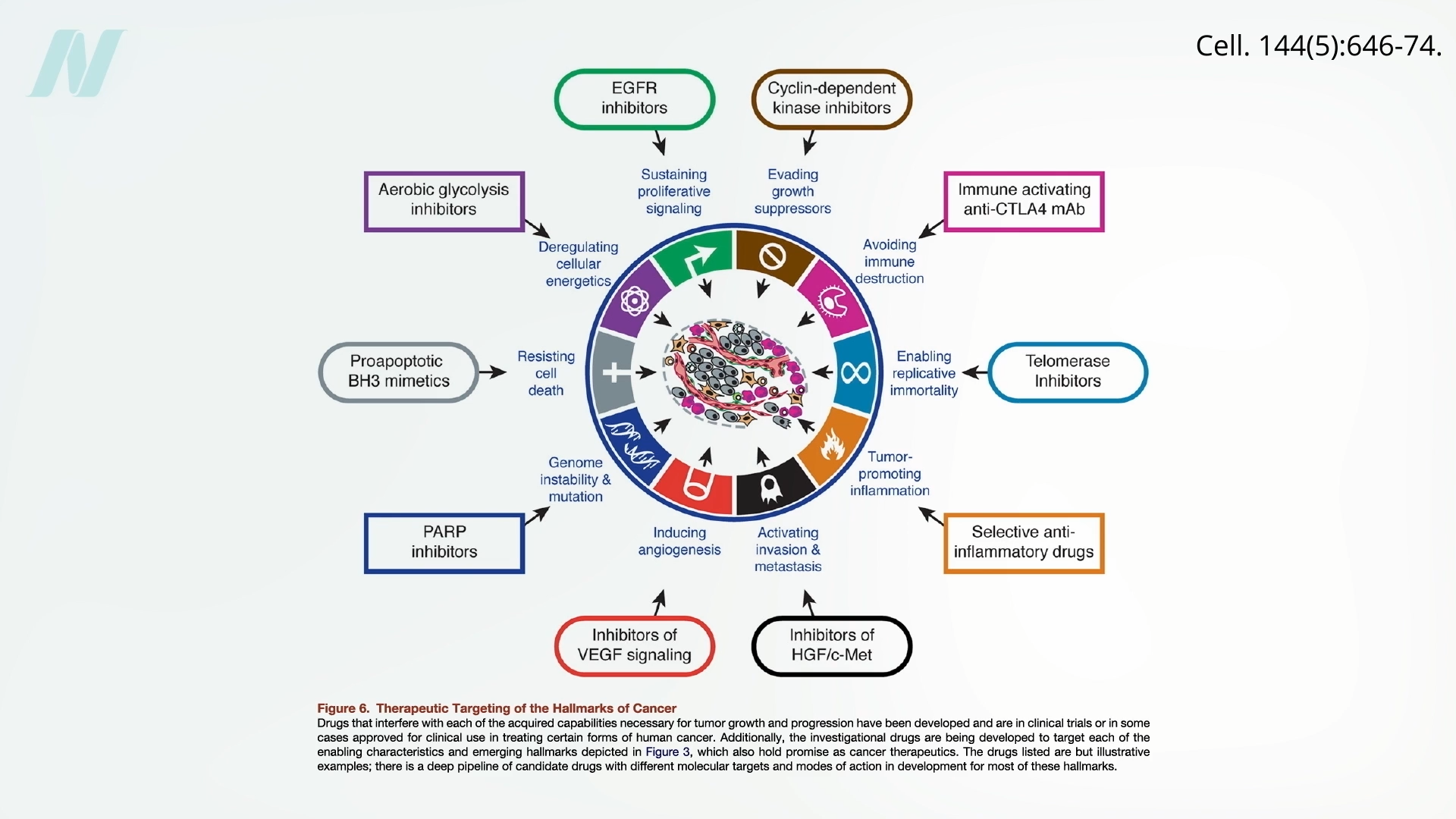
However, the complexity of cancer, with its over 200 distinct types, presents a significant hurdle for single-drug or even multi-drug chemoprevention. While pharmaceutical research aims to develop drugs that can target specific hallmarks of cancer, the reality is that most drugs are designed to address one or a few of these critical cellular processes. This piecemeal approach, while valuable in treating established disease, may fall short in comprehensively preventing the multifaceted development of cancer.

Unveiling the Ten Hallmarks of Cancer
Scientific understanding of cancer has evolved considerably, with the identification of ten key "hallmarks" that characterize malignant growth. These hallmarks, detailed in a series of influential papers cited tens of thousands of times in biomedical literature, represent fundamental capabilities acquired by cancer cells. They include:
- Sustaining proliferative signaling: Cancer cells develop the ability to continuously signal for their own growth and division, overriding normal regulatory mechanisms.
- Evading growth suppressors: They disable the body’s natural brakes on cell proliferation, allowing uncontrolled growth.
- Resisting cell death: Cancer cells become resistant to apoptosis, the programmed cell death that eliminates damaged or unnecessary cells.
- Enabling replicative immortality: They overcome the normal limits on cell division, achieving a form of biological immortality.
- Inducing angiogenesis: Tumors promote the formation of new blood vessels to supply themselves with oxygen and nutrients, essential for their growth and spread.
- Activating invasion and metastasis: Cancer cells gain the ability to invade surrounding tissues and spread to distant parts of the body.
- Deregulating cellular energetics: They alter their metabolism to support rapid proliferation and survival.
- Avoiding immune destruction: Cancer cells develop mechanisms to evade detection and elimination by the immune system.
- Genome instability and mutation: They accumulate genetic errors at an accelerated rate, driving further evolution and adaptation.
- Tumor-promoting inflammation: Chronic inflammation can create a microenvironment that supports tumor growth and progression.
Each of these hallmarks represents a potential target for therapeutic or preventive intervention. Pharmaceutical research has developed numerous chemotherapeutic agents, each designed to counteract specific aspects of these hallmarks. For instance, some drugs inhibit growth signaling pathways, while others target DNA replication or promote apoptosis. However, the challenge lies in developing a single agent, or even a combination of agents, that can effectively and safely address all ten hallmarks simultaneously over a long period.
The Power of Whole Foods: A Synergistic Approach
In contrast to the reductionist approach of targeting single pathways with isolated compounds, the scientific community is increasingly exploring the potential of whole plant foods for cancer prevention and treatment. This perspective is rooted in the understanding that fruits, vegetables, legumes, and whole grains contain a vast array of bioactive compounds that can interact synergistically to exert powerful health effects.
The rationale behind focusing on whole foods is compelling:
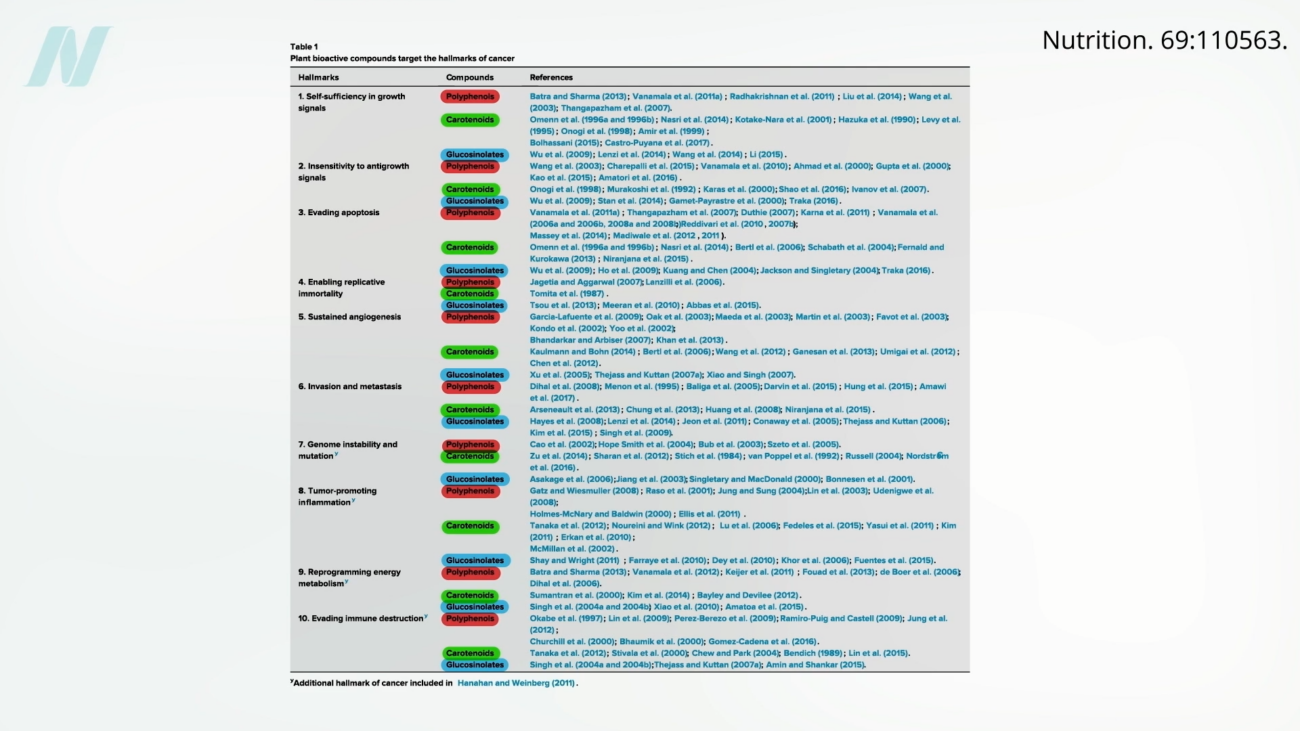
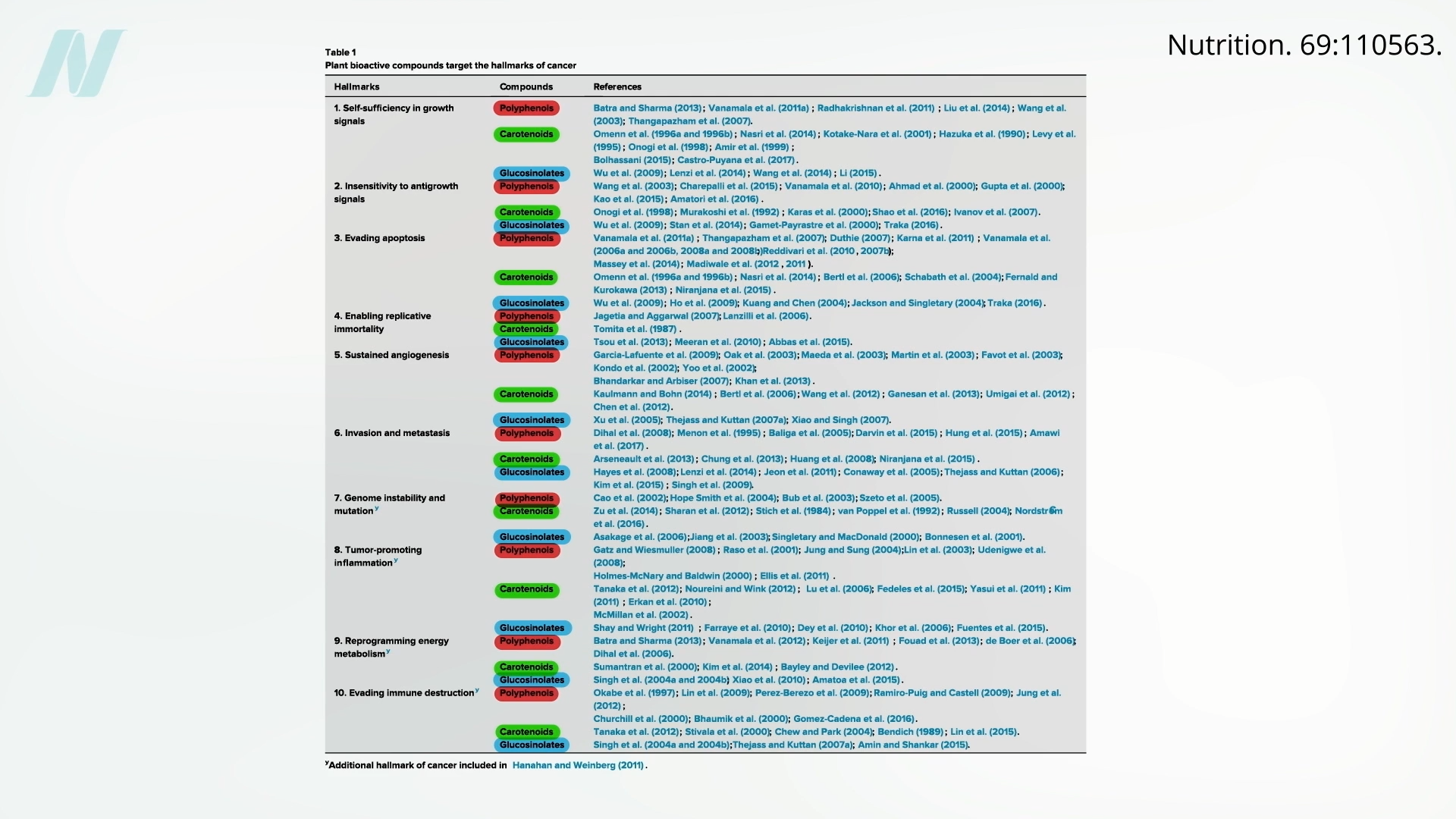
- Broad-Spectrum Targeting: Plant-based diets deliver a complex "cocktail" of bioactive compounds, many of which have been shown, at least in laboratory settings (in vitro), to target multiple hallmarks of cancer. For example, compounds found in berries, leafy greens, and broccoli have demonstrated the ability to influence processes such as cell proliferation, angiogenesis, and inflammation.
- Ideal Chemopreventive Qualities: Whole plant foods possess characteristics that align with the ideal profile of a chemopreventive agent. They are generally:
- Selective: They tend to target cancerous or precancerous cells while sparing normal, healthy cells.
- Side-effect-free: When consumed as part of a balanced diet, they are associated with minimal or no adverse side effects, unlike many pharmaceutical drugs.
- Broadly Applicable: The bioactive compounds within them can potentially target multiple types of cancer.
- Accessible and Sustainable: They can be incorporated into a daily diet, are widely available, and are typically inexpensive.
- Food Synergy: The concept of "food synergy" highlights that the combined effect of various compounds within a whole food can be greater than the sum of their individual effects. Nutritional science has historically focused on single nutrients or isolated phytochemicals, but research is increasingly recognizing the intricate interactions that occur within whole foods. A notable study involving breast cancer cell lines demonstrated that six different plant compounds, individually ineffective at typical bloodstream levels after consuming foods like broccoli, grapes, soybeans, and turmeric, collectively suppressed cancer cell proliferation by over 80%, inhibited invasion and migration, halted cell cycle progression, and induced cell death, all without harming normal cells.
Shifting the Paradigm: From Pills to Plants
The evidence suggests a significant shift in focus is needed, moving away from an over-reliance on pharmaceutical interventions and embracing a food system-based approach to cancer prevention. The foundation of cancer prevention, as supported by extensive research and global consensus reports, such as those from the World Cancer Research Fund (WCRF), rests on plant-based dietary patterns rather than pills.
This paradigm shift advocates for a dietary pattern that emphasizes:
- Whole Grains: Providing fiber, vitamins, minerals, and antioxidants that support cellular health and reduce inflammation.
- Vegetables: A diverse range of vegetables offers a rich source of phytonutrients, vitamins, and minerals, many of which have demonstrated anti-cancer properties.
- Fruits: Similar to vegetables, fruits are packed with antioxidants and compounds that can help protect cells from damage.
- Beans and Legumes: These are excellent sources of protein, fiber, and various beneficial plant compounds.
Conversely, this approach calls for a reduction in the consumption of:
- Alcohol: A known carcinogen linked to several types of cancer.
- Sugary Drinks: Associated with obesity and inflammation, both risk factors for cancer.
- Red and Processed Meats: Classified as probable or known carcinogens by major health organizations.
- Highly Processed Foods: Often high in unhealthy fats, sugar, and sodium, and lacking in essential nutrients and beneficial plant compounds.
Historical Context and Broader Implications
The persistent high cancer mortality rates, even after decades of intense research and significant financial investment in drug development, underscore the need for a fundamental re-evaluation of cancer control strategies. The "war on cancer" initiated in the 1970s, while galvanizing research efforts, primarily focused on the development of treatments. The understanding of cancer as a complex, multi-stage disease with a long latency period was less developed at that time.
The identification of the ten hallmarks of cancer in the early 2000s provided a more unified framework for understanding cancer biology and has since guided much of the research into targeted therapies. However, it has also highlighted the limitations of single-target approaches for both treatment and prevention.
The implications of prioritizing plant-based prevention are far-reaching. It suggests a potential for not only reducing cancer incidence and mortality but also for mitigating the economic burden associated with cancer treatment. Furthermore, adopting such dietary patterns can have broader public health benefits, reducing the incidence of other chronic diseases such as heart disease, type 2 diabetes, and obesity.
While the pharmaceutical industry plays a vital role in developing life-saving treatments, the emphasis on prevention necessitates a complementary approach that leverages the power of diet. Public health initiatives, educational campaigns, and policy changes that encourage the consumption of whole plant foods are crucial. The scientific community’s ongoing research into the intricate mechanisms by which plant compounds exert their protective effects will further solidify the role of diet as the cornerstone of cancer prevention. The future of cancer control may well lie not in the chemist’s laboratory alone, but also in the farmer’s field and the patient’s kitchen.

