

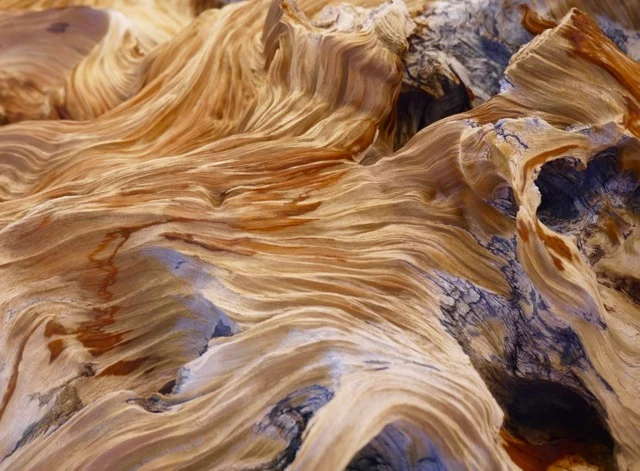
For the past eighteen months, a compelling correspondence has unfolded between the world of journalism and that of nature appreciation, centered around the profound work of writer, photographer, and ardent nature enthusiast, David Malinsky. Malinsky has cultivated a particular and deep-seated affection for the Great Basin Bristlecone Pines, a species he affectionately refers to as "Old Friends in High Places." His communications offer a rare and intimate glimpse into the aesthetic and philosophical beauty he encounters during his explorations of these venerable, tree-like beings, which are among the oldest living organisms on Earth. This article aims to delve into the significance of Malinsky’s observations and the ancient wisdom embodied by these remarkable trees, providing a broader context for their ecological and symbolic importance.
The Ancient Sentinels of the Great Basin
The Great Basin Bristlecone Pine (Pinus longaeva) is a species of coniferous tree found in the higher mountain ranges of the arid Great Basin of the United States. These trees are renowned for their extraordinary longevity, with some individuals estimated to be over 5,000 years old, making them the oldest known non-clonal organisms on the planet. Their ability to survive in harsh, high-altitude environments, characterized by extreme temperatures, strong winds, and nutrient-poor soils, is a testament to their remarkable resilience and unique evolutionary adaptations.
These ancient trees are not merely biological marvels; they are living historical records. Their slow growth rates, often adding only an inch in diameter over a century, and their ability to shed parts of their trunks to survive, create gnarled and twisted forms that tell stories of millennia. Dendrochronologists, scientists who study tree rings, rely on bristlecone pines to reconstruct past climates and environmental conditions with remarkable precision. The oldest confirmed non-clonal tree, "Methuselah," is a Great Basin Bristlecone Pine located in the White Mountains of California, estimated to be around 4,855 years old. Another, even older specimen, discovered in the same region, is believed to be over 5,000 years old. These ages dwarf the lifespan of most human civilizations, placing them in a geological timescale that dwarfs our immediate human concerns.
Malinsky’s Philosophical Exploration of Bristlecone Pines
Malinsky’s engagement with these ancient trees transcends mere botanical observation. His writings, shared through his communications and accessible via his email listserve, delve into the philosophical implications of their existence and the lessons they offer to the human spirit. He frames his explorations as a journey of self-discovery, intertwined with an appreciation for the natural world.
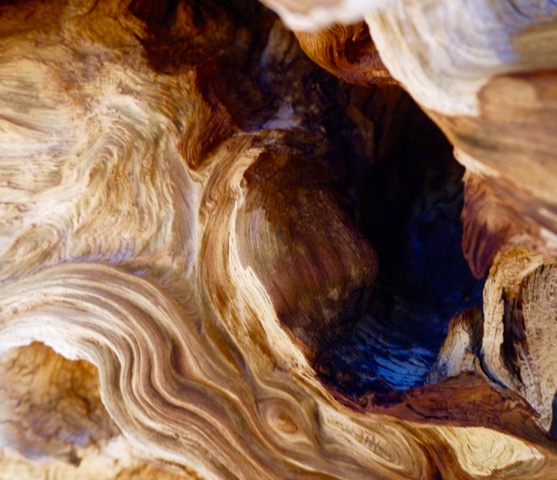
One of Malinsky’s poignant reflections, shared in his correspondence, draws a powerful analogy between human pursuits and the act of archery: "Daring to take a path towards what may be unknowable can be among the most noble pursuits of the human spirit. Known targets bring tangible opportunities for achievement, but also limitations; even a well-aimed arrow is forced to halt its arc, having reached a bullseye. Allow the arrow to be what it is, a tool for a particular purpose, but after your fingers release the bowstring do not let the confines of the arc define you. It was what you did, but only a small piece of who you are."
This metaphor speaks to the human tendency to fixate on predefined goals, which, while offering a sense of accomplishment, can also restrict broader exploration and personal growth. Malinsky suggests that true fulfillment lies not solely in hitting the bullseye, but in the courage to launch the arrow, to embrace the unknown, and to understand that the act of aiming and releasing is a part of a larger journey.
He elaborates on this idea: "Without narrowing the focus on the bullseye, there can be so much to see, much that will be missed if our sights are too confined. You do not have to reduce all of this to a single place; there is room in your consciousness for all of it, if you allow it in." This emphasizes the importance of an open and expansive perspective, urging individuals to embrace the multiplicity of experiences and insights that life offers, rather than limiting themselves to singular, narrowly defined objectives.
The Unfolding Path of Self and Nature
Malinsky further connects the act of exploration with the journey of self-discovery, suggesting that venturing beyond established paths leads to a profound understanding of both one’s inner self and the natural world. "It is in taking a path beyond established targets that you begin the journey of yourself, a path whose first steps may appear as though on the way to a ‘Where’, but as you venture will almost magically turn into as much a ‘Who’, person and place becoming one."
This profound statement suggests a merging of identity with the environment, where the external journey of exploration becomes an internal revelation. The physical act of traversing uncharted territories mirrors the internal process of uncovering one’s true nature. When one feels a sense of growth and heightened appreciation for their surroundings, Malinsky posits, they are on the cusp of a significant discovery, one that transcends the need for conventional maps or predetermined routes.
"When you feel something inside of yourself growing with each step, and your developing senses appreciating what surrounds the path even more, then you are on the verge of the most important discovery you can make, and any notions of maps can be discarded. Your path has no end, for both you and Nature are constantly evolving, and it is in that trust of Nature that you can place yourself, and explore the labyrinths ahead filled with the joy of anticipation, instead of trepidation." This sentiment underscores the dynamic and interconnected relationship between humanity and nature, advocating for a trust in natural processes and an embrace of the continuous evolution of both. The journey, in this context, is not about reaching a destination but about the ongoing process of becoming.
Embracing the Unknown with an Open Spirit
Malinsky’s reflections also touch upon the human response to perceived challenges and uncertainties. He offers a perspective on confronting darkness, not as an endpoint, but as an opportunity for illumination: "Once you develop that trust, both of Nature and of yourself, when you come across what appears to be a darkness you do not fear. That darkness is only a place that is currently without illumination, and should you venture forward with an open spirit, your path may well take you to where it was intended to all along – the place where it is you that are the light."
This powerful concluding thought suggests that challenges and periods of uncertainty are not inherently negative but rather unilluminated spaces awaiting discovery. By approaching these "darknesses" with an open spirit and a foundational trust in oneself and the natural world, individuals can transform these seemingly daunting situations into opportunities for profound personal growth and enlightenment. The journey, in this sense, leads not only to understanding the external world but also to discovering one’s own inner capacity to bring light and clarity.
Conservation and Appreciation: A Growing Imperative
The insights shared by David Malinsky are particularly relevant in an era where the preservation of ancient ecosystems and species is a growing global concern. Great Basin Bristlecone Pines, despite their resilience, face threats from climate change, invasive species, and human activity. Their high-altitude habitats are vulnerable to warming temperatures, which can alter the delicate balance of their ecosystems.
Organizations dedicated to conservation, such as the Bristlecone Pine Forest, actively work to protect these ancient trees and their habitats. Educational initiatives aim to raise public awareness about the ecological and scientific significance of these remarkable organisms. Malinsky’s work contributes to this broader effort by fostering a deeper emotional and philosophical connection with these trees, inspiring a sense of stewardship and respect.
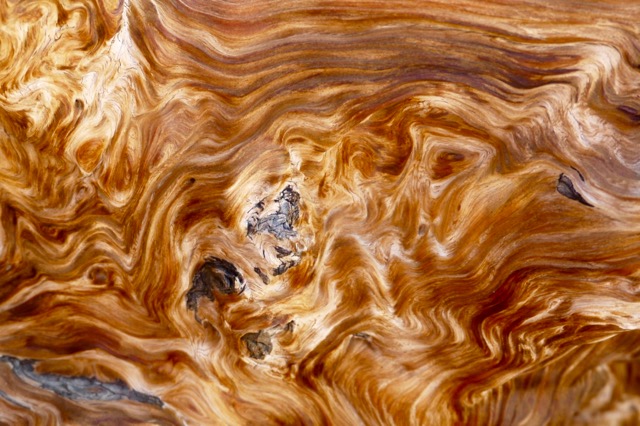
The data on bristlecone pine longevity is not merely scientific curiosity; it offers a profound perspective on time and existence. These trees have witnessed the rise and fall of civilizations, the shifts in climate over millennia, and the slow geological processes that shape our planet. Their continued existence serves as a living testament to the power of adaptation and endurance, offering a humbling counterpoint to the ephemeral nature of human endeavors.
Broader Implications for Human-Nature Connection
Malinsky’s philosophy, deeply rooted in his observations of the Great Basin Bristlecone Pines, resonates with the principles of ecopsychology, a field that explores the reciprocal relationship between the human psyche and the natural environment. The idea that personal growth is intertwined with an appreciation for nature, and that venturing into the unknown can lead to profound self-discovery, is a central tenet of this discipline.
The "Old Friends in High Places" moniker not only reflects Malinsky’s personal affection but also underscores the profound connection that can be forged with ancient, enduring natural entities. These trees act as silent witnesses to history, their very existence a source of wisdom and perspective. By engaging with them, Malinsky is not just observing nature; he is engaging in a dialogue with deep time and with the fundamental forces that shape life on Earth.
The invitation to join Malinsky’s listserve, to engage in conversation and share feedback, highlights the communal aspect of this exploration. It suggests that the journey of understanding and appreciation is one that can be shared, fostering a collective consciousness about our place within the natural world. In a world increasingly dominated by technological advancement and urban living, reconnecting with the ancient wisdom embodied by species like the Great Basin Bristlecone Pine is more crucial than ever for human well-being and the health of the planet. Malinsky’s photographic journeys and philosophical reflections serve as a powerful reminder of the enduring majesty of nature and the profound lessons it holds for us all.

