

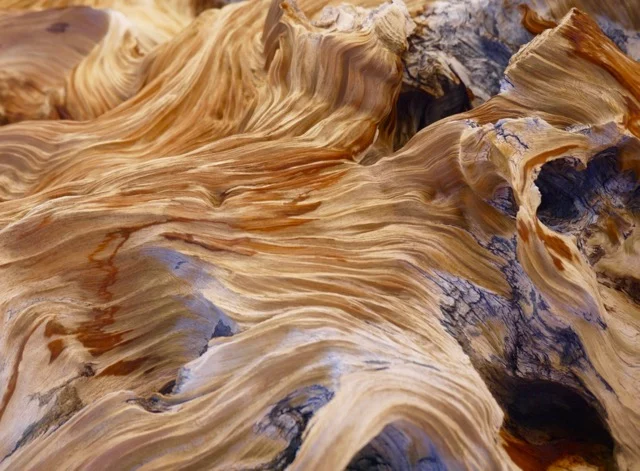
Over the past eighteen months, a profound correspondence has unfolded between this publication and David Malinsky, a writer, photographer, and dedicated nature enthusiast. Malinsky has cultivated a particularly deep and personal appreciation for the Great Basin Bristlecone Pine (Pinus longaeva), a species he affectionately refers to as his "Old Friend in High Places." This ongoing dialogue offers a unique window into the profound beauty and philosophical insights Malinsky uncovers during his explorations of these ancient and resilient trees, which stand as living testaments to time and endurance. Readers interested in engaging with Malinsky’s work and sharing their perspectives are invited to contact him via email at [email protected] to join his specialized listserve, fostering a community of shared appreciation and discussion.
The Bristlecone Pine: A Sentinel of Time and Resilience
The Great Basin Bristlecone Pine is not merely a tree; it is a biological marvel, a living relic that has captivated scientists and nature lovers alike for decades. These trees, found in the arid, high-altitude regions of the Great Basin of the United States, are among the oldest known non-clonal organisms on Earth. Their remarkable longevity is attributed to a combination of genetic factors, slow growth rates, and an ability to survive in extremely harsh environments characterized by thin, nutrient-poor soils, high winds, and extreme temperature fluctuations.
The oldest known individual, nicknamed "Methuselah," is located in the White Mountains of California and has been dated to approximately 4,850 years old. Another specimen, "Prometheus," discovered in the Wheeler Peak Wilderness of Nevada, was dated to over 4,900 years old before its unfortunate felling in 1964 for research purposes, a stark reminder of the sometimes-destructive nature of human scientific curiosity. The discovery of these ancient trees has revolutionized our understanding of climate history, as their annual growth rings provide a detailed, continuous record of climatic conditions stretching back millennia, offering invaluable data for dendrochronology and paleoclimatology.
Malinsky’s Philosophical Exploration Through Nature
Malinsky’s writings, imbued with a contemplative and poetic sensibility, draw parallels between the journey of exploring the Bristlecone Pines and the broader human pursuit of knowledge and self-discovery. He posits that venturing into the "unknowable" is one of the most noble endeavors of the human spirit. While clearly defined goals, like hitting a bullseye, offer tangible achievements, they also inherently impose limitations. Malinsky suggests that true growth lies not in the completion of a predetermined task, but in embracing the expansive possibilities that emerge once the initial objective is met.
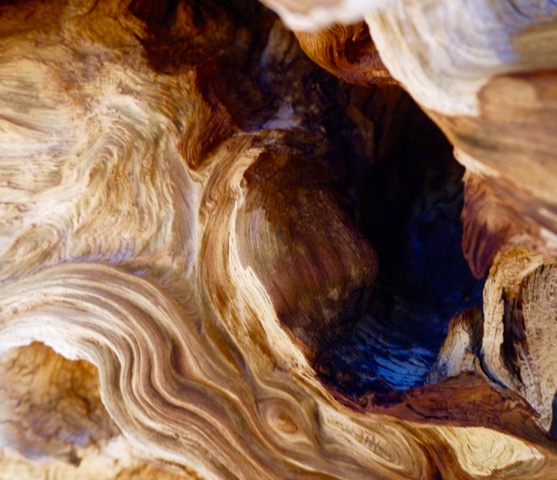
"Known targets bring tangible opportunities for achievement, but also limitations; even a well-aimed arrow is forced to halt its arc, having reached a bullseye," Malinsky writes. "Allow the arrow to be what it is, a tool for a particular purpose, but after your fingers release the bowstring do not let the confines of the arc define you. It was what you did, but only a small piece of who you are." This perspective encourages a shift from outcome-oriented thinking to a process-oriented approach, valuing the journey of exploration and the personal evolution it engenders.
He further elaborates on the importance of an open and expansive perception: "Without narrowing the focus on the bullseye, there can be so much to see, much that will be missed if our sights are too confined. You do not have to reduce all of this to a single place; there is room in your consciousness for all of it, if you allow it in." This sentiment underscores the idea that a rigid focus can blind us to the vastness and interconnectedness of the natural world and, by extension, our own inner landscape.
The Genesis of Self Through Uncharted Paths
Malinsky’s reflections highlight a profound connection between geographical exploration and personal identity formation. He argues that embarking on paths less traveled, those that move beyond established benchmarks, is where the true journey of self-discovery begins. What might initially appear as a destination-focused quest for a specific "Where" can, with continued engagement, transform into a profound exploration of "Who." This is a process where the individual and their surroundings become increasingly intertwined.
"It is in taking a path beyond established targets that you begin the journey of yourself, a path whose first steps may appear as though on the way to a ‘Where’, but as you venture will almost magically turn into as much a ‘Who’," Malinsky explains. The internal experience of this journey is marked by a sense of growth with each step and a heightened appreciation for the surrounding environment. This deepening sensory awareness is a key indicator of being on the cusp of significant personal revelation.
"When you feel something inside of yourself growing with each step, and your developing senses appreciating what surrounds the path even more, then you are on the verge of the most important discovery you can make, and any notions of maps can be discarded," he continues. This liberation from external guidance, such as maps, signifies a transition to an internal compass, trusting one’s own evolving intuition and connection to nature. The path, in this context, is not finite but a continuous process of evolution, mirroring the perpetual flux of both the individual and the natural world.
Trusting the Unfolding Journey and Embracing the Unknown
A cornerstone of Malinsky’s philosophy is the cultivation of trust—both in nature and in oneself. This trust is crucial for navigating the inherent uncertainties of life and exploration. When faced with what might appear as "darkness," which he reinterprets as merely an area lacking immediate illumination, fear gives way to curiosity and an open spirit. This willingness to venture into the unknown, he suggests, can lead to one’s intended purpose, with the individual becoming a source of light themselves.
"Once you develop that trust, both of Nature and of yourself, when you come across what appears to be a darkness you do not fear," Malinsky asserts. "That darkness is only a place that is currently without illumination, and should you venture forward with an open spirit, your path may well take you to where it is intended to all along—the place where it is you that are the light." This metaphorical framing imbues challenges and uncertainties with potential rather than peril, highlighting the transformative power of a receptive mindset.
The Enduring Significance of Bristlecone Pines
The Great Basin Bristlecone Pine, with its incredible lifespan and resilience, serves as a powerful metaphor for enduring spirit and adaptability. Its ability to thrive in some of the harshest conditions on Earth, slowly building its form over millennia, offers a potent lesson in patience, persistence, and the profound beauty that can emerge from adversity. Malinsky’s engagement with these ancient trees transcends mere observation; it is an act of deep communion that yields philosophical insights applicable to the human experience.
The ongoing dialogue facilitated by Malinsky through his listserve provides a valuable platform for individuals to share their own interpretations and experiences. This collaborative approach fosters a deeper understanding of both the natural world and our place within it, encouraging a more mindful and appreciative engagement with the environment. The persistent presence of these "Old Friends in High Places" continues to inspire contemplation on time, life, and the enduring wisdom of nature.
Broader Implications and Future Perspectives
The work of individuals like David Malinsky highlights a growing appreciation for the intersection of ecopsychology, nature observation, and personal growth. In an era increasingly dominated by digital connectivity and urban living, the profound lessons offered by ancient natural systems like the Bristlecone Pine are more relevant than ever. These trees, which have witnessed the rise and fall of civilizations, offer a perspective on time that can recalibrate human priorities and foster a sense of ecological stewardship.
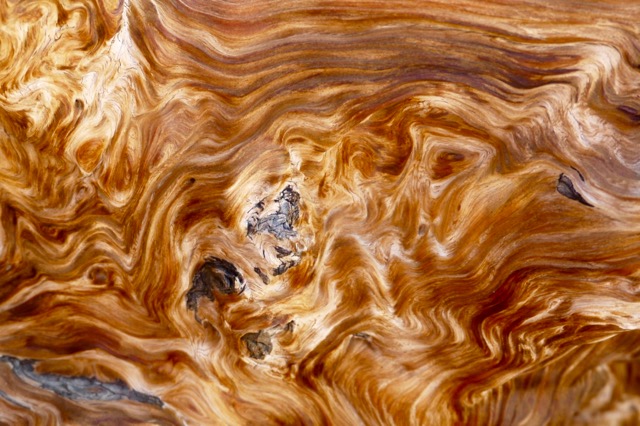
The data gleaned from Bristlecone Pine rings, for instance, not only informs scientific understanding but also provides a tangible link to past environmental conditions, underscoring the long-term consequences of current ecological practices. As climate change presents unprecedented challenges, the resilience and longevity of species like Pinus longaeva serve as a source of both concern and inspiration. Their ability to adapt and persist in extreme conditions offers a model for how life, in its myriad forms, can navigate environmental shifts.
The continuing exploration and documentation of these ancient forests, coupled with philosophical reflections such as those shared by Malinsky, contribute to a broader cultural narrative that emphasizes respect for natural heritage and the interconnectedness of all living things. The invitation to join his listserve suggests a desire to expand this conversation, encouraging a wider audience to engage with the profound wisdom that these ancient trees embody. The ongoing legacy of the Great Basin Bristlecone Pine, as observed and interpreted by enthusiasts like Malinsky, promises to continue inspiring awe and contemplation for generations to come.

