

The landscape of cancer treatment is frequently characterized by an avalanche of new chemotherapy drugs, often heralded by pharmaceutical companies and some media outlets as "game-changers" or "breakthroughs." However, a critical examination of clinical trial data reveals a more nuanced and, for many patients, disappointing reality: the survival benefits offered by these novel agents are, on average, exceptionally modest. A comprehensive analysis of chemotherapy drugs approved over a twelve-year period found that the average overall survival benefit conferred by these treatments hovers around a mere 2.1 months. This figure, while seemingly positive on its face, raises profound questions about the value proposition of many cancer therapies, particularly when weighed against their significant financial costs and potential for debilitating side effects.
Examining the Modest Gains of Novel Chemotherapies
The perception of progress in cancer treatment is often shaped by the marketing and reporting surrounding new drug approvals. While headlines frequently trumpet significant advancements, the underlying data often tells a different story. An editorial published in the Journal of the National Cancer Institute suggested that a substantial proportion of newly approved cancer drugs fail to deliver clinically meaningful benefits to patients. This discrepancy between public perception and scientific evidence underscores a critical need for greater transparency and a more rigorous evaluation of treatment efficacy.
A concerning aspect of this issue is the fate of drugs that, even after initial approval, are later found to be ineffective in real-world conditions. Contrary to what might be expected, drugs that fail to demonstrate significant clinical benefit in post-market studies are rarely withdrawn from the market. The U.S. Food and Drug Administration (FDA), which oversees drug approvals in the United States, often allows these medications to remain available, even when subsequent research indicates they offer no substantial advantage over placebos or standard observation. This retention of approval, coupled with exorbitant pricing, creates a situation where patients and healthcare systems are burdened with the costs of treatments that may not genuinely improve outcomes.
The Economics of Limited Efficacy
The financial implications are particularly stark. Studies have identified cancer drugs with annual costs exceeding $169,000 that have failed to improve overall survival. In some egregious cases, such expensive treatments have even been associated with a decline in patients’ quality of life, effectively costing patients thousands of dollars to experience worse health without any discernible benefit. This raises a fundamental ethical and economic question: why should patients, or the healthcare system, bear the expense of treatments that do not demonstrably help?
Statistical Significance vs. Clinical Meaningfulness
The pharmaceutical industry’s approach to clinical trials often favors designs that can detect statistically significant differences, even if these differences are clinically trivial. This is particularly evident in endpoint selection, where overall survival is the ultimate measure, but subtle, statistically significant extensions can be achieved through large-scale trials.
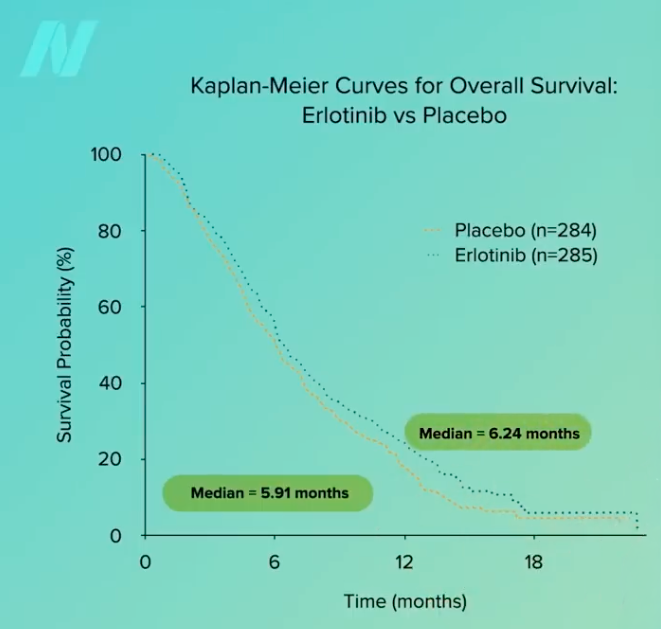
A notable example often cited involves the addition of erlotinib to gemcitabine for advanced pancreatic cancer. While this combination significantly prolonged overall survival in a clinical trial, the actual benefit was remarkably small. The placebo group survived for an average of 5.91 months, while the group receiving the added drug lived to 6.24 months. This represents an extension of just 0.33 months, or approximately 10 days. This marginal gain came with an increase in side effects, leading to a critical question: is a ten-day survival extension, coupled with increased toxicity and cost, a meaningful benefit that justifies the treatment?
This disparity highlights the danger of using statistical jargon like "significant improvement in survival" without clearly articulating the magnitude of that improvement in tangible terms for patients. When patients hear the word "survival," their expectations are often for substantial extensions of life, not a matter of days. This communication gap can lead to patients making treatment decisions based on a misunderstanding of the true benefits and risks involved.

The Patient’s Perspective: Unmet Expectations
Surveys consistently indicate that patients expect more from chemotherapy than these incremental survival gains. A significant portion of patients with advanced lung or colorectal cancer, for instance, do not fully grasp that their chemotherapy is unlikely to cure their disease. While chemotherapy is often the primary treatment modality, it frequently serves to eke out a few extra weeks or months of life rather than offering a curative pathway.
This lack of clear communication about the non-curative nature of many chemotherapy regimens is problematic. Researchers suggest this can deprive patients of the opportunity to weigh the significant risks and side effects of chemotherapy against its actual benefits, which may include symptom relief and a modest increase in lifespan, but not a chance of cure. Without this informed understanding, patients cannot make truly autonomous decisions about their care and their own bodies.
When directly asked, most cancer patients express a desire for at least six months of benefit to endure the side effects of chemotherapy. This suggests that a substantial number of patients might not opt for chemotherapy if they were fully aware of the minimal survival advantages it typically provides for many common cancers. However, individual patient perspectives vary greatly. Some may value even a week of extended life, while others might prioritize quality of life in their remaining time, even if it means forgoing treatments that offer marginal survival benefits but significant toxicity. Ultimately, patients deserve access to accurate and complete information to make informed choices.
Oncologists’ Reluctance and Chemotherapy’s Toxicity
Intriguingly, oncologists and cancer nurses themselves often express a lower willingness to undergo intensive chemotherapy, given its inherent toxicities. Chemotherapy drugs are typically cytotoxic, meaning they work by killing cancer cells. However, they are not perfectly selective and also damage healthy cells as collateral damage. This "collateral damage" can manifest in a range of severe side effects, including nerve damage, irreversible heart failure, gastrointestinal lining sloughing, and immune system compromise.
Downplaying Risks: A Pharmaceutical Practice
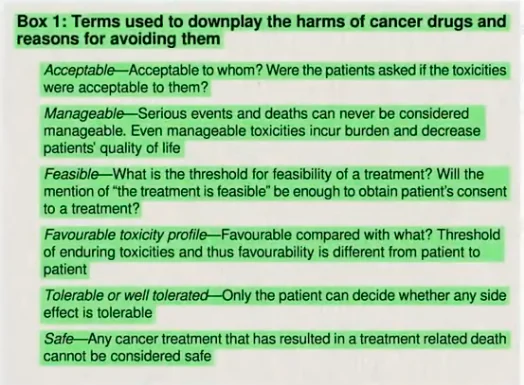
Pharmaceutical companies have been observed to downplay the risks associated with their drugs. For example, breast cancer drugs like ribociclib have been described as having an "acceptable" side-effect profile, and pancreatic cancer drugs like liposomal irinotecan have been characterized as having a "manageable and mostly reversible safety profile." These descriptions, often published in leading medical journals, can lead readers to accept them at face value.
However, a closer examination of the data often reveals a different picture. In some instances, the rate of serious or life-threatening side effects associated with new drugs has been found to be double or even five times higher compared to existing treatments. The term "manageable and mostly reversible" can be misleading, particularly when serious events and deaths occur. The categorization of toxicity as "manageable," "acceptable," "feasible," "favorable," "tolerable," or "safe" warrants careful scrutiny. Serious adverse events and fatalities are inherently unmanageable. "Acceptable" toxicity is subjective and depends on who is doing the accepting. "Feasible" toxicity suggests a mere possibility of enduring adverse effects, a term unlikely to be embraced by patients. "Favorable" is a relative term, and "tolerable" is ultimately a patient’s decision. Crucially, any drug that results in patient deaths can hardly be deemed "safe."
Exceptional Successes Amidst Widespread Modest Gains
Despite the overall trend of modest benefits, it is important to acknowledge that significant strides have been made in treating certain cancers. Testicular cancer, for instance, has seen dramatic improvements, with chemotherapy offering a greater than one-in-three chance of survival for at least five years. Hodgkin’s disease, a relatively rare lymphoma, has also benefited greatly from chemotherapy.
However, for the most common cancers—including colon, lung, breast, and prostate—even optimistic estimates suggest that chemotherapy’s contribution to five-year survival rates hovers around a mere 1% to 2%. This highlights a significant disparity in the effectiveness of chemotherapy across different cancer types.
Broader Implications and Future Directions
The findings presented raise critical questions about the current paradigm of cancer drug development and approval. The reliance on statistically significant but clinically marginal benefits, coupled with the retention of ineffective drugs on the market at high prices, creates a system that may not always prioritize patient well-being and value.
Potential Implications:
- Informed Consent and Patient Autonomy: A more transparent and detailed communication of treatment benefits and risks is crucial for ensuring genuine informed consent. Patients must be empowered to make decisions aligned with their personal values and priorities, understanding the true trade-offs involved.
- Regulatory Scrutiny: Regulatory bodies like the FDA face pressure to re-evaluate their approval criteria and post-market surveillance processes. A stronger emphasis on clinically meaningful benefits, rather than solely statistical significance, could lead to a more efficient allocation of healthcare resources.
- Research and Development Focus: The pharmaceutical industry and research institutions may need to shift their focus towards developing therapies that offer more substantial survival benefits or address unmet needs more effectively, rather than incremental improvements in established drug classes.
- Economic Impact on Healthcare Systems: The continued approval and marketing of high-cost, low-benefit drugs place an unsustainable burden on healthcare systems and payers, potentially diverting funds from more effective preventative measures or other essential health services.
The ongoing discourse surrounding chemotherapy effectiveness underscores the importance of continued research, open dialogue between medical professionals and patients, and a commitment to ensuring that cancer treatments provide genuine, meaningful value to those battling the disease. The pursuit of more effective and less toxic cancer therapies remains a paramount goal for the medical community and a vital hope for patients worldwide.
Doctor’s Note: This article builds upon previous discussions regarding the cost and effectiveness of chemotherapy. For further context, readers are encouraged to review "Chemotherapy Is Expensive—Is It Effective?"
Preventative Strategies: The discussion on cancer treatment efficacy also highlights the critical importance of cancer prevention. Resources on dietary changes for cancer prevention, such as "The Best Diet for Colon Cancer Prevention," and broader information on cancer can be found on relevant health platforms.

