

The introduction of the micromort, a unit designed to standardize the measurement and communication of risk, offers a novel approach to helping individuals comprehend the potential dangers associated with various activities and medical procedures. A micromort (mM) represents a one-in-a-million chance of dying, providing a tangible metric that transcends complex statistical jargon and abstract probabilities. This innovative concept, pioneered by researchers and advocated by figures like Dr. Michael Greger, aims to bridge the gap between technical risk assessment and public understanding, empowering individuals to make more informed decisions about their health and safety.
Understanding the Need for a Standardized Risk Metric
Historically, conveying the magnitude of risk has proven to be a significant challenge. Patients undergoing medical procedures, for instance, often struggle to grasp the statistical likelihood of adverse outcomes. A common refrain, "I could die just as easily crossing the road," highlights a fundamental misunderstanding of the disparate scales of risk involved. While crossing a road carries a certain risk, it is often orders of magnitude lower than the inherent risks associated with complex surgical interventions. This disparity underscores the critical need for a universally understood unit of measurement.
The development of the micromort emerged from a recognized deficit in how risk is communicated, particularly in clinical settings. For decades, medical professionals have grappled with translating probabilities into concepts that resonate with the general public. Traditional methods, such as comparing a medical risk to that of an expert skydiver or the odds of drawing a specific hand in poker, while illustrative, can still leave individuals struggling to internalize the scale. The difficulty in visualizing abstract probabilities, such as a 0.0017-mile by 0.00227-mile rug, further emphasizes the inadequacy of existing communication strategies. The micromort offers a solution by providing a simple, quantifiable, and relatable measure.

Defining the Micromort: A Unit of One-in-a-Million Mortality
At its core, a micromort is defined as a one-in-a-million chance of death. This definition allows for the direct comparison of risks across a vast spectrum of activities, from everyday occurrences to life-altering medical treatments. For context, achieving 20 consecutive heads when flipping a coin or drawing a royal flush in poker represent probabilities roughly equivalent to one micromort. However, the true power of the micromort lies in its application as a comparative tool.
For example, the risk associated with driving 100 miles is approximately one micromort. This establishes a baseline that can be readily understood and applied. By extension, scuba diving carries an estimated five micromorts per dive, meaning each dive is equivalent in risk to driving 500 miles. This direct comparability allows individuals to contextualize the risks of surgical procedures against familiar activities, thereby fostering a clearer understanding of their personal risk profiles.
Quantifying Everyday Risks and Medical Interventions
The application of micromorts extends to a wide array of human endeavors. Driving, a ubiquitous activity, serves as a useful benchmark. As mentioned, 100 miles of driving equates to approximately one micromort. This metric helps illustrate the cumulative risk associated with frequent travel.
In the realm of medical interventions, the micromort offers crucial insights:
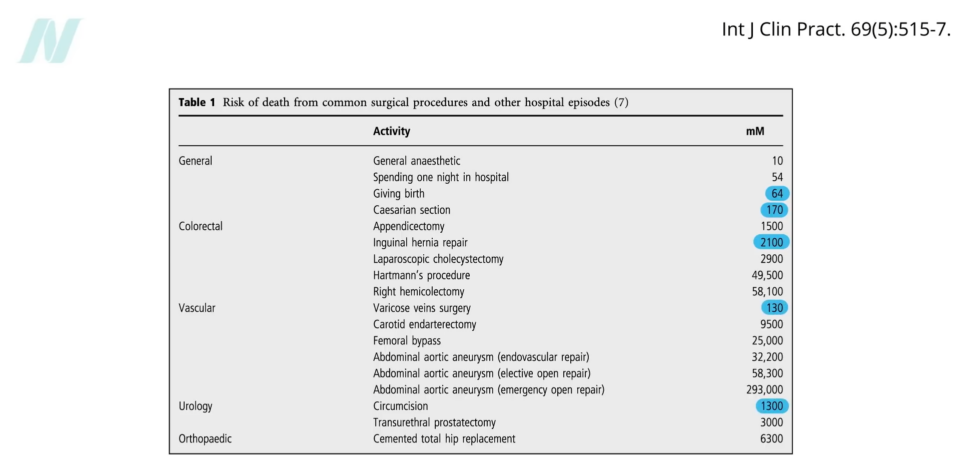
- Anesthesia: Undergoing anesthesia for a medical procedure carries a risk of approximately one in 100,000 of not waking up. This translates to 10 micromorts, a risk comparable to an expert skydive.
- Surgical Procedures: The risk of death associated with major surgical operations is often cited at around 0.5%, which equates to 5,000 micromorts. This starkly contrasts with the public’s perception and highlights the significant risks involved.
- Childbirth: Natural childbirth is associated with a risk of approximately 10 micromorts. This is comparable to driving from New York to Los Angeles and back. However, a Caesarean section significantly increases this risk, carrying more than double the micromort value of a vaginal birth.
- Common Surgeries: Even seemingly minor procedures carry risks that can be contextualized. A hernia repair, for instance, has a mortality risk equivalent to skydiving 200 times. Varicose vein surgery and circumcision, in certain contexts, also carry risks that can be avoided through lifestyle choices.
Comparing Diverse Risk Scenarios
The micromort framework enables surprising comparisons between seemingly disparate activities:
- Adventure Sports: While often perceived as highly dangerous, some adventure sports present risks that can be put into perspective. Rock climbing, for example, carries a lower risk profile than horseback riding, which is approximately four times deadlier per unit of time or activity. Base jumping, while inherently risky, is less perilous than climbing Mount Everest, which is about 30 times riskier.
- Cancer Treatments: The risks associated with aggressive medical treatments like chemotherapy and radiation for head and neck cancer are substantial. These treatments can carry a risk equivalent to rock climbing for 500 years, driving 5 million miles, or skydiving 5,000 times. This highlights the profound trade-offs involved in treating life-threatening diseases.
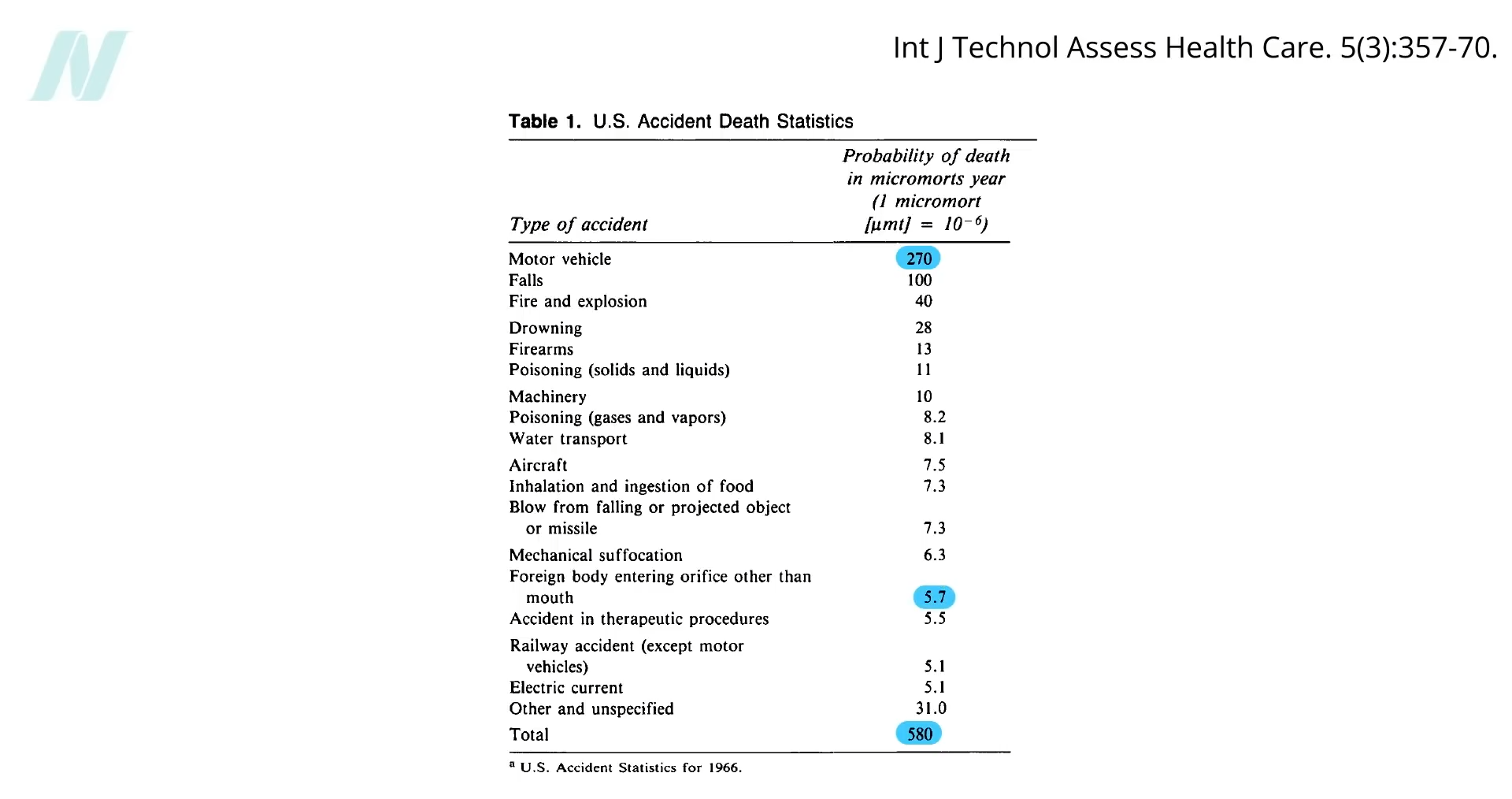
- Accidental Deaths: Accidental deaths constitute a significant portion of mortality. On average, individuals face a one-in-a-million chance of dying from an accident each day. Car crashes account for about half of this risk in the United States. Other accidental hazards include a one-in-200,000 annual risk of dying from a foreign object entering an orifice other than the mouth.
- Transportation: While trains and planes are statistically equivalent in risk over the same distance, riding a motorcycle is approximately 50 times deadlier than riding in a car. Cycling, while beneficial for health, carries a near-term risk that is about 10 times that of driving.
Examining Specific Health Concerns and Medical Devices
The micromort unit also sheds light on the risks associated with certain medical devices and conditions:
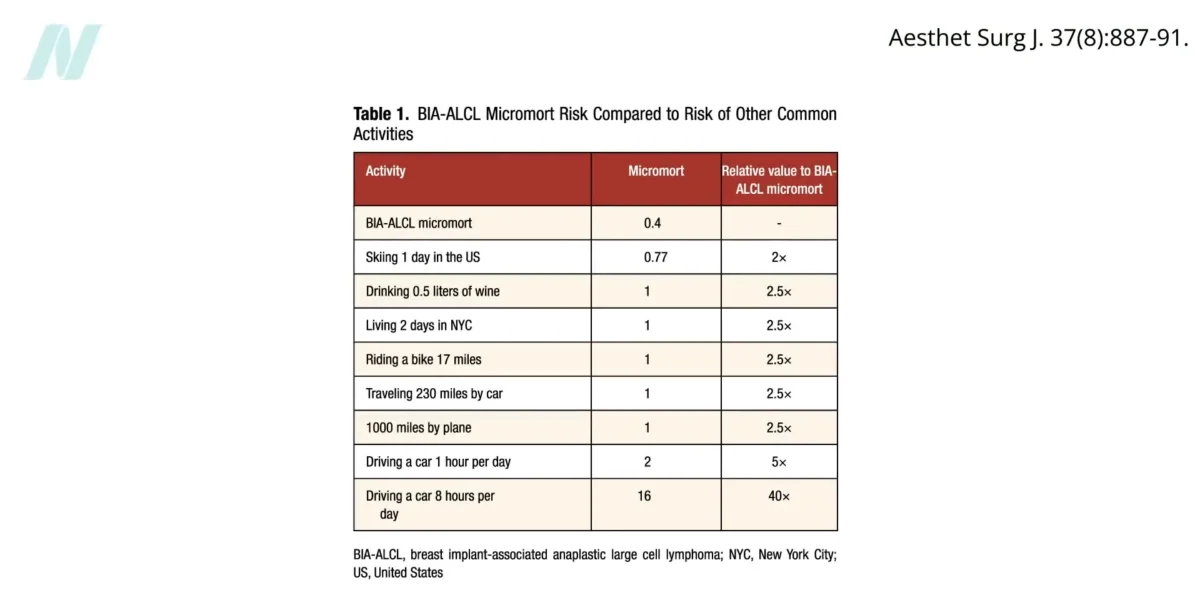
- Breast Implants: Certain types of breast implants have been associated with a rare form of cancer, breast implant-associated lymphoma. While the risk is exceptionally low, it can be contextualized against everyday activities. The risk of dying from this specific cancer is less than the risk associated with a single day of skiing. This comparison, while potentially unsettling, helps to frame the statistical reality for millions of women with implants.
- Physician-Induced Risks: The article also touches upon the concept of physician-induced risks. While not quantified in micromorts in this excerpt, it is noted that physicians themselves are a leading cause of death, underscoring the importance of preventative healthcare and the potential for medical interventions to carry their own inherent risks. Further exploration into this area, as suggested by the linked videos, would provide a more comprehensive understanding of this complex issue.
Implications and Future Applications
The micromort offers a powerful tool for enhancing public health literacy and promoting informed decision-making. By standardizing risk communication, it empowers individuals to:
- Assess Personal Risks: Individuals can better evaluate the risks associated with their lifestyle choices, recreational activities, and medical decisions.
- Compare Treatment Options: Patients can engage in more meaningful discussions with healthcare providers about the relative risks and benefits of different medical interventions.
- Prioritize Safety Measures: A clear understanding of risk can motivate individuals to adopt safer practices and advocate for improved safety standards in various sectors.
The widespread adoption of the micromort concept could revolutionize how health and safety information is disseminated. Educational institutions, public health organizations, and media outlets could leverage this unit to communicate complex risks in an accessible and understandable manner. Furthermore, ongoing research and data collection will continue to refine the micromort values for a broader range of activities and interventions, further enhancing its utility.
The initiative to quantify risk using micromorts represents a significant step forward in public health communication. By demystifying complex probabilities and providing a relatable metric, this approach empowers individuals with the knowledge necessary to navigate an increasingly complex world of risks and make more informed choices for their well-being. The ongoing development and application of this unit promise to foster a more risk-aware society, leading to potentially safer behaviors and improved health outcomes.

