

A recent series of studies published in the Annals of Internal Medicine has ignited a significant debate within the scientific and public health communities regarding the health implications of red and processed meat consumption. While the studies themselves identified a statistically significant association between reduced intake of these foods and lower overall mortality, cardiovascular disease mortality, and cancer mortality, the authors’ conclusions have been met with widespread criticism. These conclusions controversially suggest that individuals should largely disregard existing dietary guidelines and continue consuming red and processed meats without significant moderation. This critical analysis delves into the findings, the methodologies employed, and the broader implications of this contentious research.
Unpacking the Annals of Internal Medicine Findings
The core of the controversy lies in the divergent conclusions drawn by the panel of researchers, known as the NutriRECS (Nutrition and Lifestyle Evidence Consortium) group, from their own statistical analyses. The studies, published in late 2019, aimed to provide updated dietary guidance on red and processed meats. Their meta-analyses, which aggregated data from numerous observational studies, consistently pointed towards a beneficial effect of reducing meat consumption. Specifically, the research indicated that moderate reductions in red and processed meat intake were associated with:
- Lower total mortality: A reduction of approximately 13% in the risk of death from all causes.
- Reduced cardiovascular disease mortality: A decrease of around 14% in the risk of dying from heart-related conditions.
- Lower cancer mortality: An 11% reduction in the risk of death from various cancers.
- Decreased risk of type 2 diabetes: A significant 24% reduction in the incidence of type 2 diabetes.
These findings, in isolation, align with a substantial body of existing nutritional science that advocates for a more plant-forward dietary pattern. However, the panel’s subsequent recommendations dramatically deviated from this consensus.
The Controversial Rationale Behind the Recommendations
The NutriRECS panel presented three primary justifications for their counterintuitive conclusions, which have been scrutinized by nutrition experts globally.
1. The Primacy of Taste Preference
One of the most cited reasons for the panel’s stance was the acknowledgement of taste preferences. The researchers noted that individuals often enjoy the taste of meat and that this personal enjoyment should be a significant consideration when formulating dietary guidelines. This argument has been widely challenged. Critics argue that personal preferences, while understandable, should not supersede robust scientific evidence concerning public health. The same logic, they contend, could be used to justify continued smoking or lack of exercise, behaviors that are known to have detrimental health consequences despite being enjoyable for some.
2. The Application of the GRADE Methodology
A second key justification involved the panel’s exclusive reliance on the Grading of Recommendations, Assessment, Development, and Evaluation (GRADE) methodology. The GRADE system is a highly regarded framework for assessing the quality of evidence, particularly in clinical trials for pharmaceutical interventions. However, critics argue that GRADE is not inherently suited for evaluating the complex evidence base of dietary and lifestyle interventions, which often relies heavily on observational studies.
The panel asserted that other dietary guidelines had not employed GRADE, implying a deficiency in their scientific rigor. Conversely, nutrition scientists have pointed out that GRADE was largely developed for drug trials and that applying it to dietary research can inadvertently downplay the cumulative effects of lifestyle factors. Furthermore, concerns have been raised that the GRADE system, when misapplied, could be used to undermine recommendations on a wide range of public health issues, including secondhand smoke exposure, air pollution, trans fat intake, and physical inactivity.
3. The "Very Small Magnitude" of Effects
Perhaps the most contentious point of contention was the panel’s emphasis on the "very small magnitude" of the observed effects of meat consumption. The researchers argued that even if meat contributes to disease, the absolute risk reduction associated with moderate decreases in consumption was too small to warrant significant dietary changes, especially when weighed against taste preferences.
This perspective has been widely criticized as misleading and a misrepresentation of public health impact. Experts argue that while individual risk reductions may appear modest in percentage terms, their cumulative effect across large populations can be substantial, preventing tens of thousands, if not hundreds of thousands, of premature deaths annually. The analogy often drawn is with tobacco control: while the incremental risk of smoking an additional cigarette might seem small, the overall impact of smoking a pack a day is devastating. Similarly, even modest reductions in meat consumption, when adopted by millions, can translate into significant public health gains.
Scrutiny of the Evidence Base: Omissions and Exclusions
A significant aspect of the backlash against the NutriRECS studies centers on allegations of cherry-picking evidence and excluding relevant research that did not align with the panel’s preconceived notions.
The PREDIMED and Lyon Diet Heart Study Exclusions
Prominent studies that demonstrated clear health benefits from dietary patterns involving reduced meat consumption were notably absent from the NutriRECS panel’s review. The PREDIMED (Prevención con Dieta Mediterránea) trial, a large randomized controlled trial, and the Lyon Diet Heart Study, another significant randomized intervention study, are frequently cited examples.
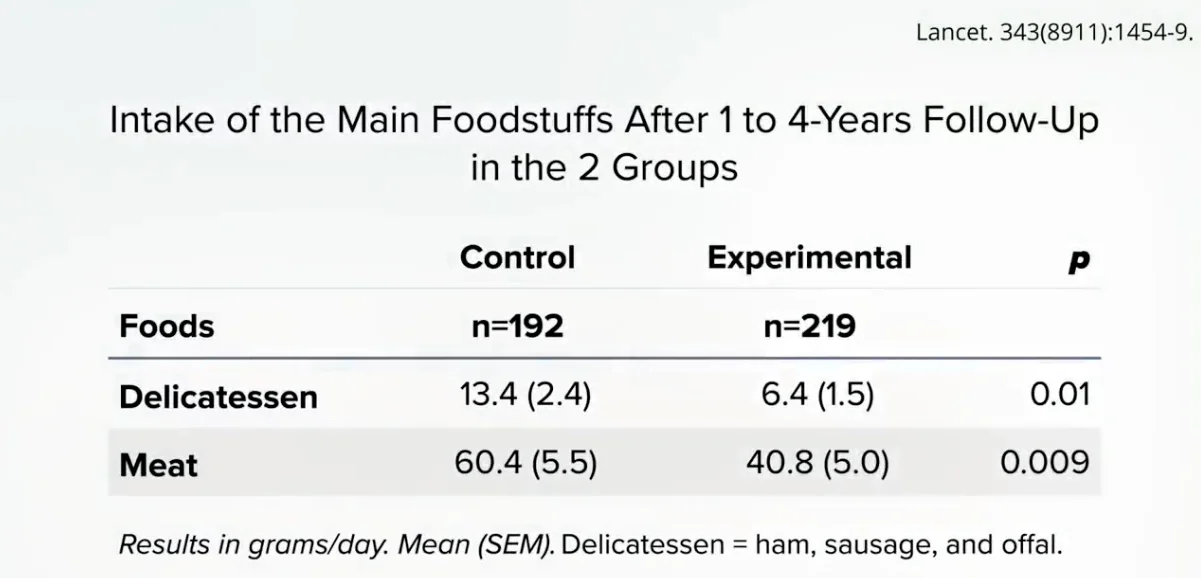
The Lyon Diet Heart Study, for example, randomized participants to either a control diet or a Mediterranean-style diet characterized by a significant reduction in meat intake. The results showed a remarkable 70% reduction in all-cause mortality for those adhering to the Mediterranean diet. When questioned about the exclusion of such a study, the NutriRECS panel reportedly dismissed it, citing an "implausibly large treatment effect." Critics interpret this as a dismissal of evidence that was simply too favorable to reduced meat consumption.

The Women’s Health Initiative (WHI) as a Cornerstone
Conversely, the panel heavily relied on the Women’s Health Initiative (WHI) study. However, the WHI intervention involved only a modest reduction in meat intake, averaging about 1.4 servings per week, which translates to a mere half-ounce per day, or roughly one-fifth of a hamburger. While the WHI did show a modest reduction in breast cancer mortality, critics argue that this modest intervention and its correspondingly modest outcome cannot support a conclusion that there is "no need to reduce red or processed meat consumption for good health." The analogy used by some researchers is that of tobacco use: suggesting no need to quit smoking because modest reductions yield only modest benefits would be equally inaccurate and dangerous.
Industry Ties and Potential Conflicts of Interest
A significant area of concern revolves around the funding and affiliations of the NutriRECS panel. Texas A&M AgriLife, a partner in the consortium, reportedly receives substantial financial support from the meat industry. Furthermore, multiple members of the panel were allegedly on the payroll of entities linked to the meat industry. This raises questions about potential conflicts of interest and whether industry funding may have influenced the interpretation and presentation of the research findings.
Critics argue that this financial entanglement provides a compelling explanation for why the panel might have deliberately excluded or downplayed studies that presented a strong case against high meat consumption. Research comparing the health outcomes of vegetarians to meat-eaters, for instance, was reportedly excluded, with the panel defining their scope as "realistic decreases in meat consumption" – a definition that appears to have been engineered to minimize the perceived benefits of dietary change.
The Magnitude of Impact: A Public Health Perspective
The debate over the "magnitude" of the health effects of meat consumption highlights a fundamental difference in perspective between the NutriRECS panel and many public health advocates and nutrition scientists.
Quantifying the Benefits
Data aggregated from large cohort studies, even those considered by the NutriRECS panel, consistently show significant health benefits from moderate meat reduction. These include:
- A 13% reduction in all-cause mortality.
- A 14% reduction in cardiovascular disease mortality.
- An 11% reduction in cancer mortality.
- A 24% reduction in the risk of type 2 diabetes.
From a public health standpoint, these figures are highly significant. The reduction of risk factors for major chronic diseases like heart disease, cancer, and diabetes is a primary goal of public health interventions. For comparison, statin medications, widely prescribed to reduce heart disease risk, can have adverse effects such as increasing the risk of type 2 diabetes and have minimal impact on cancer risk. A dietary intervention that simultaneously addresses multiple major disease pathways, as moderate meat reduction appears to do, would be considered a monumental breakthrough if achieved through pharmaceuticals.
The Preventable Death Toll
Estimates suggest that a moderate reduction in red meat consumption could prevent an estimated 200,000 deaths annually in the United States alone. While the NutriRECS panel may categorize this as a "very small effect," for the families affected by these preventable deaths, the impact is immeasurable. The numbers are comparable to the public health impact of secondhand smoke, another issue where population-based studies, rather than direct randomization, have driven significant policy changes.
The Smoking Analogy: A Stark Parallel
The parallels drawn between the current debate on meat consumption and the historical resistance to acknowledging the harms of smoking are striking. In the 1950s, faced with mounting evidence linking smoking to lung cancer, industry-backed researchers and some scientists employed similar tactics:
- Focusing on small differences: Emphasizing marginal increases in risk associated with slight variations in smoking habits.
- Excluding comparative studies: Avoiding direct comparisons between smokers and non-smokers.
- Applying stringent methodological criteria: Demanding only randomized controlled trials, which were ethically impossible to conduct for smoking.
- Highlighting taste preferences: Arguing that people enjoy smoking and that this should be a factor in recommendations.
A poignant quote from a 1959 paper on smoking and lung cancer encapsulates this parallel: "If the mountain of evidence they found had been made on a new agent, to which hundreds of millions of adults were not already addicted, and on one which did not support a large industry, skilled in the arts of mass persuasion, the evidence for the hazardous nature of the agent would be generally regarded as beyond dispute." This sentiment resonates deeply with the current discourse surrounding red and processed meat consumption, suggesting that economic and industrial interests can significantly impede the acceptance of scientific consensus on health matters.
Broader Implications and Future Directions
The controversy surrounding the Annals of Internal Medicine studies underscores several critical issues in nutrition science and public health communication:
- The Influence of Industry Funding: The potential for industry funding to shape research agendas and interpretative conclusions remains a persistent concern. Transparency in funding and rigorous conflict-of-interest policies are paramount.
- Methodological Rigor in Dietary Research: The debate highlights the challenges of applying methodologies developed for drug trials to the complex and multifactorial realm of diet and lifestyle. The scientific community needs to continue refining approaches to evaluating nutritional evidence.
- The Importance of Context in Communicating Risk: Public health messaging must effectively communicate the significance of risk reductions, particularly when extrapolated to population levels. Downplaying substantial public health gains through semantics like "small magnitude" can have detrimental consequences.
- The Role of Independent Scientific Review: Independent bodies and public health organizations play a crucial role in synthesizing evidence and providing guidance that is free from commercial influence.
As this debate continues, it serves as a stark reminder of the ongoing need for critical evaluation of scientific claims, particularly when they challenge established public health recommendations and appear to be influenced by vested economic interests. The long-term health of populations hinges on the integrity of scientific research and its unbiased translation into actionable dietary guidance.
Doctor’s Note: For further insights into the parallels between historical tobacco industry tactics and contemporary challenges in dietary science, readers are encouraged to explore related video content, such as "How Smoking in 1959 Is Like Eating in 2019." This analysis is part of an ongoing series examining the impact of various industries on dietary and health guidelines. The subsequent installment will delve into the quantifiable impact of dietary choices on lifespan, exploring "How Many Minutes of Life Does a Burger Cost?"

