

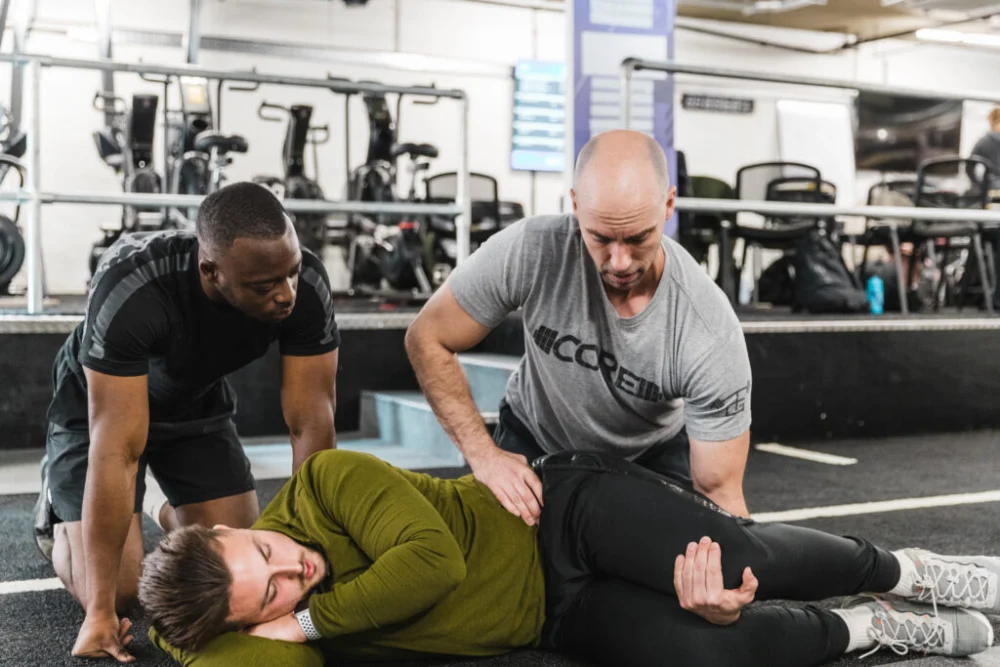
The global health and fitness industry has undergone a significant transformation over the last decade, transitioning from a niche service for elite athletes to a multi-billion-dollar mainstream sector. As consumer interest in preventative healthcare increases, the demand for qualified personal trainers has reached unprecedented levels. However, the lack of centralized federal regulation in the fitness industry has created a marketplace saturated with varying levels of expertise, making the selection process a critical decision for consumers. Hiring a fitness professional is increasingly viewed by economists and health experts not merely as a luxury expense, but as a strategic investment in long-term human capital. While the initial financial outlay may be less than that of a real estate or automotive purchase, the long-term implications for physical health, injury prevention, and metabolic longevity represent a more profound return on investment.
The Professionalization of the Fitness Industry and the Credentialing Landscape
To navigate the crowded field of fitness professionals, industry analysts emphasize the importance of formal accreditation. Unlike medical or legal professions, the "personal trainer" title is not legally protected in many jurisdictions, allowing individuals to practice without standardized oversight. Consequently, the first metric of evaluation for any prospective client must be the trainer’s certification status.
The fitness industry recognizes several "gold standard" certifications that require rigorous study in anatomy, physiology, biomechanics, and exercise programming. Leading organizations include the National Strength and Conditioning Association (NSCA), the National Academy of Sports Medicine (NASM), and the American Council on Exercise (ACE). These institutions are typically accredited by the National Commission for Certifying Agencies (NCCA), ensuring that the examinations meet professional psychometric standards.
Recent data from the Bureau of Labor Statistics (BLS) indicates that employment for fitness trainers and instructors is projected to grow 14 percent from 2022 to 2032, much faster than the average for all occupations. This growth underscores the necessity for consumers to distinguish between "enthusiasts" and "professionals." A certified professional, such as a Certified Strength and Conditioning Specialist (CSCS), has demonstrated a baseline competency in managing complex physiological needs, which is essential for safely guiding clients toward specific goals—whether those involve post-injury rehabilitation, athletic performance, or general hypertrophy.
Decoding Professional Titles and Communication Standards
A secondary criterion in the selection process involves the clarity and professionalism of the trainer’s self-description. Market analysts have observed a trend in "title inflation," where trainers adopt nebulous or hyperbolic descriptors such as "transformation guru," "body architect," or "fitness shaman."
In a professional journalistic context, these titles are often viewed as marketing red flags. Established experts in the field generally adhere to standard nomenclature, identifying as personal trainers, strength and conditioning coaches, or simply "coaches." This adherence to clear terminology reflects a focus on the science of exercise rather than the aesthetics of branding. Experts suggest that when a service provider uses obscure language to describe their methodology, it may indicate a lack of foundational knowledge or an attempt to obfuscate a lack of evidence-based practice. Effective trainers can concisely explain their philosophy and the physiological mechanisms behind their programming without resorting to jargon or sensationalism.
The Critical Role of the Initial Assessment and Intake Process
The most significant differentiator between a high-level professional and an amateur is the implementation of a comprehensive initial assessment. In the clinical and professional fitness world, an "intake session" serves as the diagnostic foundation for all future interventions.
A thorough assessment typically includes:
- Medical History and Injury Screening: Utilizing tools such as the Physical Activity Readiness Questionnaire (PAR-Q) to identify potential contraindications to exercise.
- Movement Screenings: Evaluating joint mobility, stability, and functional movement patterns (such as the Functional Movement Screen or FMS) to identify "speed bumps" or biomechanical inefficiencies.
- Goal Alignment: Discussing specific, measurable, achievable, relevant, and time-bound (SMART) goals to ensure the program is tailored to the individual’s needs.
Industry standards dictate that a trainer who begins a high-intensity program without an assessment is a liability risk. From a legal and safety perspective, the assessment is the "due diligence" phase of the trainer-client relationship. If a trainer fails to conduct this preliminary check, it suggests a "one-size-fits-all" approach that ignores individual biological variability, significantly increasing the risk of acute or overuse injuries.
The Integration of Soft Skills and Interpersonal Dynamics
While technical proficiency is non-negotiable, the efficacy of a personal trainer is also heavily dependent on interpersonal skills and psychological rapport. The "coaching alliance"—a term borrowed from clinical psychology—refers to the collaborative relationship between the trainer and the client.

Research in the Journal of Sports Science & Medicine suggests that client adherence to exercise programs is significantly higher when the trainer demonstrates high levels of empathy, active listening, and professional communication. A session that lasts 60 minutes requires a degree of social compatibility; if the interaction is strained or unprofessional, the likelihood of long-term consistency diminishes. Consistency is the primary driver of physiological adaptation; therefore, the "likability" of a trainer is not a superficial trait but a functional component of the client’s success.
Professionalism also extends to attire and conduct. While the gym environment is inherently more casual than a corporate office, a trainer’s presentation—such as wearing professional athletic attire rather than overly revealing or "performative" clothing—signals a commitment to the role of a service provider rather than a self-promoter.
Social Media Reconnaissance and the Digital "Red Flag"
In the modern era, social media serves as a primary marketing tool for fitness professionals. However, it also provides a wealth of data for prospective clients to perform "reconnaissance." Analysts suggest evaluating a trainer’s digital footprint based on the "education-to-performance" ratio.
A professional social media feed should prioritize client education, the showcasing of client results, and the dissemination of evidence-based fitness information. Conversely, a feed dominated by "performative" content—focused exclusively on the trainer’s own physique, "ego-lifting," or self-aggrandizement—may indicate a lack of experience in coaching others.
The "influencer" phenomenon has complicated the hiring process. Many individuals with large followings possess impressive physiques but lack the pedagogical skills required to teach complex movements to a beginner or an injured client. Consumers are advised to look for trainers who highlight their clients’ journeys and provide value through informative content rather than those who use their platform solely for personal branding.
Broader Economic Impact and Healthcare Implications
The shift toward hiring professional trainers reflects a broader trend in the "wellness economy." According to the Global Wellness Institute, the physical activity market was valued at $828 billion in 2023 and is expected to continue its upward trajectory.
The economic implications of choosing the right trainer extend to the healthcare system. Improperly guided exercise can lead to musculoskeletal injuries that result in expensive medical bills, physical therapy, and lost productivity. Conversely, a qualified trainer acts as a "front-line" health worker, potentially reducing the incidence of lifestyle-related diseases such as Type 2 diabetes, hypertension, and obesity.
By filtering trainers through the lenses of certification, assessment quality, and professional conduct, consumers contribute to a higher standard of care within the industry. This "market thinning" rewards high-quality practitioners and forces low-quality providers to either improve their standards or exit the marketplace.
Conclusion: A Data-Driven Approach to Personal Fitness
Selecting a personal trainer is a multi-faceted decision that requires a balance of objective data and subjective compatibility. The "gold standard" of the industry remains rooted in formal education and a commitment to individualized, assessment-based programming. As the fitness landscape continues to evolve with the integration of wearable technology and AI-driven data, the human element—the coach—remains the central figure in ensuring safety and motivation.
Prospective clients should view the hiring process with the same rigor they would apply to any professional service. By verifying credentials, demanding a thorough intake process, and evaluating professional communication, individuals can ensure that their investment in their health is both safe and effective. In the final analysis, a personal trainer is not just a workout partner, but a consultant for one’s most valuable asset: the human body.

