

The ancient wisdom of Zen Buddhism, often conveyed through enigmatic koans, continues to offer profound insights into the human condition. One such koan, drawn from the Mumonkan (The Gateless Gate) and attributed to Master Goso, presents the perplexing case of Seijo and her soul’s separation. This narrative, rooted in a Tang Dynasty Chinese folktale, transcends its mythical origins to illuminate the persistent struggle with identity, the illusion of separateness, and the deep-seated divisions that plague both individual consciousness and societal structures. Master Mumon’s commentary on this case serves as a stark warning, urging practitioners to confront the fundamental nature of reality before being overwhelmed by existential fragmentation.
The Folktale of Seijo: A Narrative of Dual Existence
The story begins with Chokan, a devoted father, and his beloved daughter, Sei. As a child, Sei was playfully betrothed by her father to her handsome cousin, Ochu. This childhood jest blossomed into a genuine love as the cousins matured. Their idyllic romance was shattered when Chokan announced Sei’s engagement to another man, a decision that plunged Sei and Ochu into despair. Heartbroken, they eloped, eventually starting a family. Despite their happiness, a lingering desire to reconcile with Chokan and gain his blessing persisted.
In a pivotal moment, Ochu decided to confront Sei’s father. He left Sei in their boat and journeyed to meet Chokan, seeking forgiveness for their runaway marriage. To Ochu’s astonishment, Chokan revealed that his daughter Sei had been in a coma since the very day Ochu had spirited her away. Chokan led Ochu to a room where a frail, bedridden Sei lay in a deathlike state. Ochu was bewildered, insisting that Sei was currently with him on his boat. A servant’s confirmation corroborated Ochu’s claim, confirming the presence of another Sei on the vessel.
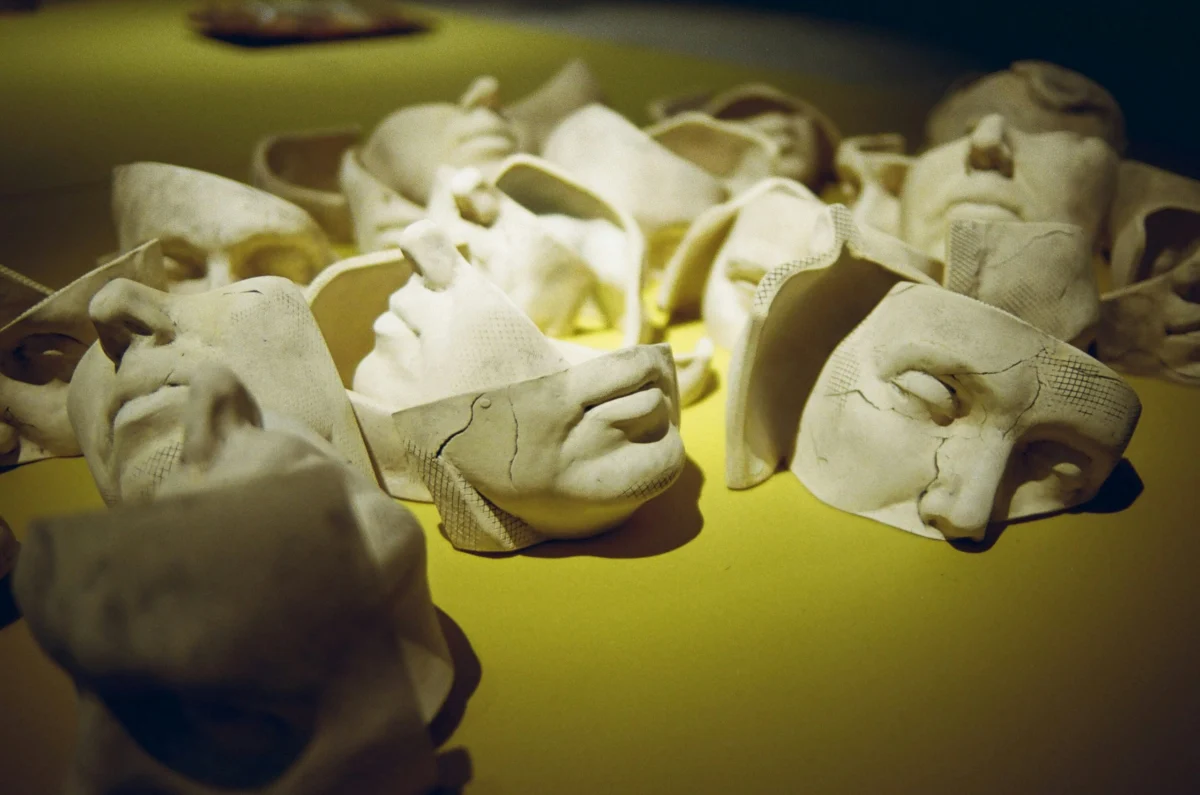
Chokan, relaying this extraordinary news to the ailing Sei, witnessed a remarkable event. The sick Sei silently rose from her bed. Simultaneously, the Sei from the boat arrived at the house. In a miraculous reunion, the two Seijos merged into one being. The reawakened Sei expressed profound confusion, stating, "I didn’t know I was in a coma. When I heard Ochu ran away, I followed his boat as if in a dream. I’m not sure which was the real me: the one sick in bed, or the wife and mother." This profound moment of existential duality forms the crux of the koan.
Master Goso’s Challenge: Beyond the Folktale’s Mystery
Master Goso, however, does not intend for his monks to solve the folktale’s literal mystery. Instead, he uses the narrative as a springboard to direct their attention inward, urging them to cultivate a "penetrating Zen eye" to perceive their "true nature." The koan challenges the very notion of a singular, fixed self, suggesting that our perceived identity is often a composite of roles and experiences, and that the underlying reality may be far more unified than we imagine.
Master Mumon’s commentary amplifies this call to awareness: "When you realize what the real is, you will see that we pass from one husk to another like travelers stopping for a night’s lodging. But if you do not realize it yet, I earnestly advise you not to rush about wildly. When earth, water, fire, and air suddenly separate, you will be like a crab struggling in boiling water with its seven or eight arms and legs. When that happens, don’t say I didn’t warn you." This vivid imagery underscores the peril of clinging to a fragmented sense of self, especially when confronted with the inevitable dissolution of form.
The Human Predicament: Navigating Multiple Roles
The tale of Seijo strikingly illustrates the multiplicity of roles humans inhabit throughout their lives. We are children, siblings, lovers, partners, parents, professionals, friends, and countless other identities, each with its own set of expectations and behaviors. The koan prompts reflection: Which of these is the "real" self? Or is there an underlying consciousness that experiences and embodies these various roles? As the article suggests, these roles can be seen as temporary guests or manifestations of a more fundamental Self, with even our personalities acting as servants to the overarching Mind.
This sense of self-division is a common human experience. The anecdote of someone expressing a profound lack of self-knowledge – "he didn’t know who he was, who I was, who anyone was" – is met not with alarm, but with wonder and an affirmation of the vastness of potential discovery. The audacity of assuming complete knowledge is challenged, highlighting the inherent limitations of our understanding of ourselves and others.
Suffering, the koan implies, arises when we become estranged from this deeper sense of self, mirroring Seijo’s disassociation. Questions emerge: Are we fully present in our actions? Do we constantly yearn for other circumstances or places? Are we torn between competing aspects of our lives or the demands of different roles? What impedes our complete commitment to our chosen paths, particularly the Buddhist path of awakening?
Societal Divisions: Echoes of a Divided Self
The koan’s relevance extends beyond individual psychology to encompass the broader societal landscape. The concept of a "separate soul" can be observed within communities and nations. Abraham Lincoln’s prescient words, "If we could first know where we are, and whither we are tending, we could then better judge what to do, and how to do it. . . ‘A house divided against itself cannot stand.’ I believe this government cannot endure, permanently half slave and half free," resonate deeply with the koan’s theme of division.
As Buddhists, the aspiration for all beings to be free from greed, anger, and ignorance – the root causes of suffering – is paramount. This freedom is intrinsically linked to recognizing our True Nature of interdependence and the co-arising of all phenomena. The aspiration for national unity in countries like the United States often clashes with the persistent realities of historical injustices and ongoing social stratification. The nation’s founding, built upon the genocide of Indigenous peoples and the forced labor of enslaved Africans, casts a long shadow, revealing a profound internal division.
Buckminster Fuller’s observation that humanity must view "Spaceship Earth" as a whole, with a common fate, underscores the interconnectedness that transcends artificial boundaries. He famously stated, "We are not going to be able to operate our Spaceship Earth successfully nor for much longer unless we see it as a whole spaceship and our fate as common. It has to be everybody or nobody."
Diversity Versus Division: A Crucial Distinction
From a Buddhist perspective, exploring the "house divided" necessitates a nuanced examination of the difference between diversity and division. Can genuine diversity exist without division? The ideal of "one nation, indivisible, with liberty and justice for all" is often juxtaposed with the lived reality of a nation whose "soul is separated." One aspect may be characterized by greed, hatred, and delusion, while another champions liberty and justice. Crucially, these qualities are not confined to specific groups but are present within each individual, suggesting that the division is not merely external but deeply internalized. The question arises: Is this perceived national division another form of folktale, an illusion we perpetuate?
The narrative can be re-imagined for a nation: a beautiful new nation, initially betrothed to liberty and justice, later pulled towards greed, anger, and ignorance through consumerism, genocide, and oppression. One part of this national consciousness strives for awakening to its underside, pursuing liberty and justice, while another remains in a "coma of delusive harmful behavior." This raises the profound question: Who is the real United States?
The Flow of Karma and the Illusion of Separation
These two seemingly opposing karmic tributaries flow through each individual, whether consciously acknowledged or not. The repercussions of our sense of separation are often painful. We may believe we are escaping blame by "passing from one husk to another," yet Buddhism teaches that there is ultimately only the "One True Body."
The fundamental question remains: Can a nation, or any collective entity, truly unite into this "One Body," embracing its inherent differences? Is a "House Un-Divided" not the inherent nature of reality, regardless of our perception? Can a nation realize its True Self? And are we not integral participants in this process, requiring individual realization of our Essential Nature?
Building New Models: The Path Forward
Buckminster Fuller’s wisdom offers a practical approach to societal change: "You never change things by fighting the existing reality. To change something, build a new model that makes the existing model obsolete. You cannot change how someone thinks, but you can give them a tool to use which will lead them to think differently."
Within Buddhist communities, despite myriad differences, a shared intention to be beneficial prevails. Practices such as zazen (seated meditation), council, atonement, and metta (loving-kindness) work in conjunction with the three tenets of not knowing, bearing witness, and healing action. These practices offer tools for transformation, addressing the divided house both individually and collectively.
The United States, often described as a grand democratic experiment, remains a work in progress. The global endeavor of peacemaking, reconciliation, mutual recognition, and justice is an ongoing process demanding boundless patience, deep listening, and the shedding of preconceived notions. This commitment mirrors the profound bodhisattva vows taken by practitioners.
The Divided House of the Mind
The internal landscape of our own minds often mirrors these societal divisions. We construct narratives about ourselves, which may differ significantly from how others perceive us. This duality of self-perception is as true for nations as it is for individuals. Over-identification with one aspect of our identity can lead to the loss of other potentials or blindness to areas requiring attention. Conflicts can arise between our various roles and those of others, obscuring the understanding that all these experiences are but ripples in the "Great Ocean" of existence.
Mumon’s Enigmatic Inquiry
Mumon’s verse on Seijo’s koan encapsulates this paradox:
"The moon above the clouds is ever the same;
Valleys and mountains are separate from each other.
How wonderful! How blessed!
Is this one or is this two?"
The feeling of separation from ourselves can signal not only a yearning to fully express our gifts but also a profound longing to apprehend our True Self. While we may perceive incompleteness, there is an underlying sense of Wholeness. To bridge this perceived gap and experience our Real Self, we must release all concepts, expectations, and superficial answers.
Huo-an’s Wisdom on Consequences
Master Huo-an offers a sobering reflection on the enduring nature of our actions:
"Whatever done is not forgotten.
Even in thousands of years:
When causes and conditions combine,
Results and consequences are naturally experienced."
Recognizing that we may be experiencing the repercussions of the harmful, deluded aspects of ourselves, the knowledge that our individual awakening contributes to the larger "House Un-Divided" can fuel a wholehearted commitment to practice. The koan of Seijo, therefore, serves not as a puzzle to be solved, but as an invitation to a profound investigation of self and reality, with implications that reverberate through individual lives and the collective human experience. The path to unity lies not in erasing differences, but in recognizing the fundamental interconnectedness that underlies all apparent divisions.
This article was adapted from a piece originally published on the Zen Center of Los Angeles’ blog.

