

The intersection of celebrity influence and professional athletic conditioning has recently sparked a renewed global conversation regarding the definition of physical strength, particularly as it pertains to women in the film industry. This discourse was catalyzed by a social media publication from Academy Award-nominated actress Rosamund Pike, known for her roles in Gone Girl and I Care a Lot. The footage, which depicted Pike performing multiple repetitions of a 100-pound deadlift, was recorded during her preparation for a film role in Boston under the supervision of renowned strength and conditioning coach Tony Gentilcore. While the weight itself represents a significant personal milestone for the actress, the broader implications of the footage highlight a shifting paradigm in how female physicality is portrayed in mainstream media and cultivated in professional training environments.
The Intersection of Character Development and Physical Conditioning
The collaboration between Rosamund Pike and Tony Gentilcore occurred during the production of the 2021 thriller I Care a Lot. In the film, Pike portrays Marla Grayson, a character defined by predatory ambition and a "lioness" persona. To embody this role, Pike sought a training regimen that emphasized functional power rather than mere aesthetic "toning," a term frequently criticized by fitness professionals for its lack of physiological precision.
According to Gentilcore, the training was not designed around traditional Hollywood "vanity" metrics but was instead focused on the sentiment of strength. The deadlift, a compound movement involving the posterior chain, served as a primary indicator of this progress. By achieving a 100-pound deadlift for multiple repetitions with technical proficiency, Pike demonstrated a level of physical competence that contradicts long-standing cinematic tropes regarding female fragility. The actress later publicly credited the training for helping her find a level of internal and external strength that was essential for her character’s psychological profile.
A Chronology of the Training Evolution
The path to the viral 100-pound deadlift was not an overnight achievement but rather the result of a structured, progressive overload program.
- Foundational Assessment: Prior to her sessions in Boston, Pike had already established a baseline of fitness through previous work with other trainers. This experience allowed for an immediate transition into more complex barbell movements rather than basic introductory exercises.
- Technique Refinement: Under Gentilcore’s supervision, the focus shifted to the mechanics of the "hinge" movement. Proper deadlift form requires the coordination of the glutes, hamstrings, and core while maintaining a neutral spine—a technical requirement that challenges both the nervous system and the skeletal muscles.
- Progressive Overload: Over the course of the filming schedule, the resistance was gradually increased. The 100-pound milestone was selected not just as a numerical goal, but as a weight that required significant effort while allowing for the maintenance of high-quality movement patterns.
- Public Advocacy: Following the completion of the project, Pike shared the footage on Instagram, explicitly thanking Gentilcore and highlighting the importance of strength for women. This act moved the conversation from a private training session to a public advocacy for women’s resistance training.
Supporting Data: The Benefits of Resistance Training for Women
The advocacy for heavy lifting among women is supported by an extensive body of clinical research. Despite the persistent myth that lifting heavy weights leads to "bulky" or "masculine" musculature, physiological data suggests otherwise. Women typically possess significantly lower levels of testosterone than men, making the development of extreme muscle hypertrophy difficult without specific, high-volume caloric intake and targeted supplementation.
Instead, the benefits of resistance training for women are primarily focused on longevity and metabolic health. According to the National Osteoporosis Foundation, women are at a higher risk for bone density loss as they age. Weight-bearing exercises, particularly compound movements like the deadlift and squat, are essential for stimulating bone osteoblasts, which increase bone mineral density and reduce the risk of fractures later in life.
Furthermore, data from the American College of Sports Medicine (ACSM) indicates that resistance training increases basal metabolic rate (BMR). By increasing lean muscle mass, the body burns more calories at rest, which is a critical component of long-term weight management and metabolic health. The psychological benefits are equally documented; a 2018 study published in JAMA Psychiatry found that resistance exercise significantly reduced symptoms of depression and anxiety, likely due to the empowerment associated with achieving tangible physical goals.
Challenging the "Pink Dumbbell" Narrative in Mainstream Media
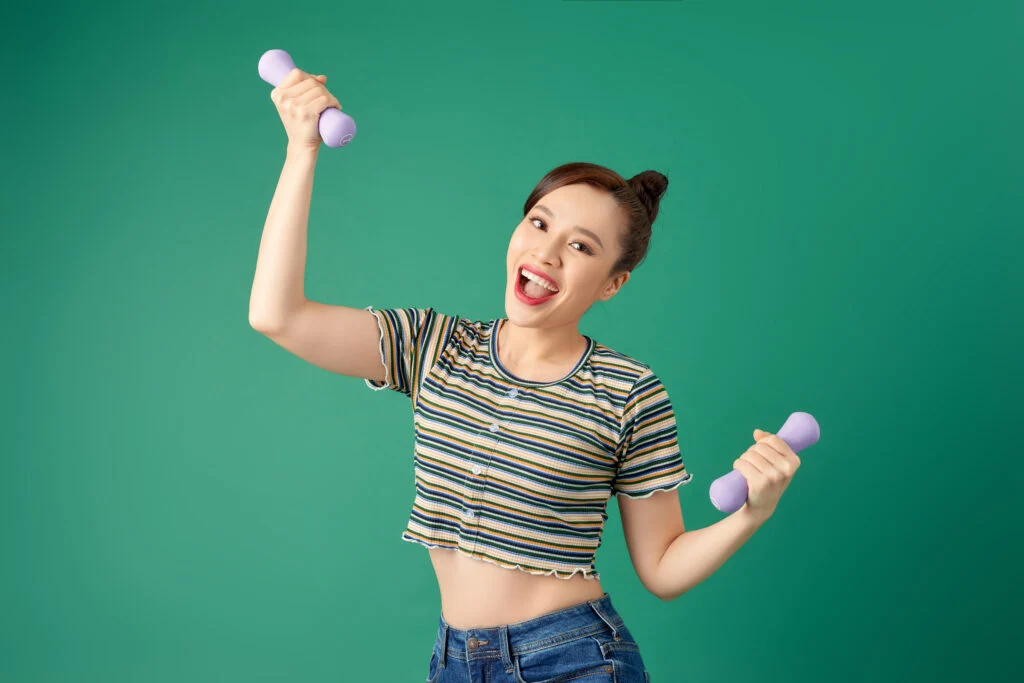
A significant portion of the professional fitness community, including Gentilcore, has identified a disconnect between scientific reality and media representation. For decades, stock photography and fitness advertisements targeted at women have featured "dainty" weights—usually colorful, plastic-coated dumbbells weighing between one and five pounds.
This visual narrative suggests that women are either incapable of or should avoid high-intensity resistance training. This "indoctrination," as some experts describe it, reinforces the idea that strength is a gendered attribute. However, the modern strength and conditioning field is increasingly moving toward a "gender-neutral" programming philosophy. In this approach, exercises are selected based on an individual’s injury history, skeletal morphology, and specific goals rather than their chromosome makeup.
The 100-pound deadlift performed by Pike serves as a counter-narrative to these stock images. By showcasing a high-profile actress engaging in a "masculine" exercise with significant weight, the industry is seeing a democratization of strength. This shift is essential for dismantling the barriers that prevent women from entering the weight room or utilizing the most effective tools for their health.
Official Responses and Industry Implications
The reaction to the Pike-Gentilcore collaboration within the fitness industry has been overwhelmingly positive. Strength coaches have noted that celebrity endorsements of proper lifting techniques do more for public health education than many traditional government-sponsored health campaigns. When a public figure demonstrates that lifting 100 pounds does not result in an unwanted "Conan the Barbarian" physique, it provides a "proof of concept" that resonates with the general public.
Gentilcore himself has used the opportunity to reinforce the idea that "strong is a sentiment." In his professional analysis, he argues that the specific number on the barbell is secondary to the confidence and capability it fosters in the trainee. This perspective is gaining traction in boutique gyms and commercial fitness chains alike, where "strength-based" classes for women are seeing record enrollment numbers.
From a cinematic perspective, the trend reflects a broader move toward "authentic physicality." Directors and producers are increasingly requiring actors to undergo legitimate athletic training to ensure that their on-screen movements—whether in action sequences or dramatic roles—carry a sense of weight and realism. This move away from "starvation diets" toward "performance-based training" marks a healthier era for Hollywood professionals.
Broader Impact and Future Outlook
The implications of Rosamund Pike’s training extend beyond the confines of a gym in Boston. It represents a cultural shift where "strength" is being redefined as a universal human asset rather than a gender-specific trait. As more women in the public eye share their journeys with resistance training, the stigma surrounding heavy weights continues to erode.
Looking forward, the fitness industry is expected to see a continued rise in the popularity of powerlifting and Olympic weightlifting among women. Statistical trends from organizations such as USA Powerlifting (USAPL) show that female membership has grown exponentially over the last decade. This growth is mirrored in the digital space, where female strength influencers are prioritizing educational content over purely aesthetic posts.
In conclusion, the collaboration between Rosamund Pike and Tony Gentilcore serves as a landmark moment in the ongoing effort to normalize women’s strength training. By prioritizing functional ability and the "sentiment" of being strong, Pike has contributed to a necessary dialogue about health, representation, and the rejection of outdated fitness myths. As the definition of "strong" continues to evolve, it is clear that it is no longer measured solely by physical appearance, but by the capacity to meet challenges—both in the gym and in the wider world—with competence and resilience.

