

The allure of personalized nutrition, promising tailor-made dietary advice to optimize individual health, has captured significant public attention and fueled a burgeoning industry. Rooted in the intuitive notion that "one size does not fit all," this approach taps into a deep-seated human desire for uniqueness and special consideration. Marketing campaigns effectively leverage this by highlighting how personalized nutrition can cater to individual needs, leading to the development of customized foods and even futuristic concepts like 3D food printing for ultimate dietary customization.
The Appeal of Individuality
The concept of personalized nutrition is inherently appealing, playing on our innate desire to feel distinct and special. This psychological resonance makes messages emphasizing individuality highly effective in marketing and sales strategies. The idea that our bodies respond differently to food, and that a bespoke dietary plan can unlock our optimal health potential, is a powerful narrative. This has, in turn, spurred significant innovation and commercial interest, leading to a landscape where genetic testing kits and personalized supplement recommendations are readily available, promising to unlock the secrets of our individual biology through our diet.
Acknowledging Genuine Differences
It is undeniable that legitimate biological differences exist among individuals, necessitating tailored approaches in certain circumstances. Severe allergies, such as peanut allergies, can trigger life-threatening reactions, demanding strict avoidance. Similarly, conditions like celiac disease require a complete elimination of gluten, and genetic predispositions, such as lactose intolerance prevalent in certain populations, necessitate dietary modifications.
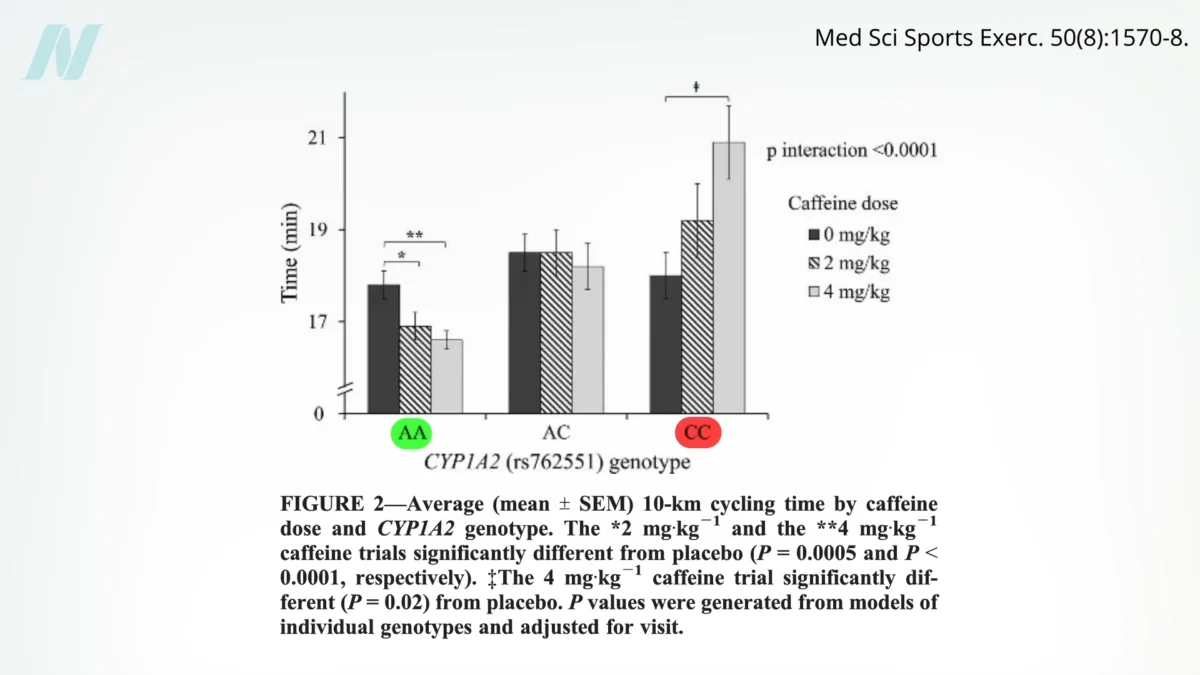
Beyond these well-established examples, emerging research continues to illuminate fascinating individual variations. For instance, a common enzyme mutation found in some Asian populations offers protection against alcoholism. This mutation impairs alcohol metabolism, leading to the buildup of toxic byproducts, thus deterring excessive consumption. Furthermore, research into caffeine metabolism highlights significant individual differences with tangible health and performance implications. Studies, such as those exploring fast versus slow caffeine metabolizers, demonstrate that the ergogenic (performance-enhancing) effects of caffeine are not universal. For fast metabolizers, caffeine can significantly improve athletic performance, shaving minutes off endurance cycling times. Conversely, slow metabolizers may experience no benefit or even a detrimental effect, with caffeine actually slowing their performance. This divergence underscores the biological variability in how individuals process common dietary components.
The Broader Landscape: Similarity Over Specificity
Despite these demonstrable individual variations, a critical question arises: for the vast majority of people, in most everyday situations, are these differences significant enough to warrant a completely personalized nutritional strategy? Scientific consensus suggests that, for many common health goals, human beings are more similar than they are different. The core principles of healthy eating—a balanced intake of fruits, vegetables, whole grains, lean proteins, and healthy fats, coupled with moderation in processed foods, sugar, and unhealthy fats—remain remarkably consistent across diverse populations.
The Rise of Direct-to-Consumer Genetic Testing
The proliferation of direct-to-consumer (DTC) genetic testing companies has amplified the personalized nutrition narrative. These companies often offer dietary recommendations based on an individual’s genetic makeup. However, a significant concern within the scientific community is the limited evidence supporting truly personalized nutrition for the general population. Many DTC genetic tests claim to optimize micronutrient status based on a few genetic variants. Yet, research indicates that these variants often explain only a small fraction—typically a few percent—of the variation in nutrient levels between individuals. This raises questions about the practical utility and scientific validity of such recommendations for widespread application.
Precision Medicine: A Complex Frontier
Personalized nutrition is often framed within the broader context of personalized medicine, also known as precision medicine. This field aims to tailor medical treatments and preventive strategies to individual characteristics, including genetic makeup, environment, and lifestyle. The appeal of precision medicine lies in the promise of greater control over one’s health, from diagnosis and treatment to disease prevention.
However, the realization of precision medicine, particularly for complex chronic diseases, presents substantial challenges. Unlike rare monogenic diseases, which are caused by a single gene mutation (e.g., hemophilia, sickle cell anemia), most common diseases arise from intricate interactions between multiple genes and a multitude of environmental and lifestyle factors. This polygenic and multifactorial nature makes it exceptionally difficult to predict individual risk or tailor interventions based solely on genetic information.
The Case of Adult Stature: A Genetic Puzzle
The study of adult stature provides a compelling illustration of the complexity of genetic influence. While height is a strongly inherited trait, with parental genes accounting for approximately 80% of the differences in height between individuals, genome-wide association studies (GWAS) have identified at least 40 chromosomal locations associated with human height. Astonishingly, these dozens of identified genes collectively explain only about 5% of the variation in height among individuals. This disparity highlights that while genetics plays a role, the identified genetic associations often explain only a small portion of the observable phenotypic differences.

Genome-Wide Association Studies: Misinterpretation and Overreach
Genome-wide association studies (GWAS) are powerful tools that scan entire genomes to identify statistical associations between diseases and specific DNA stretches. While valuable for identifying potential genetic links to health conditions, companies marketing genetic susceptibility tests often reinterpret these findings as predictive of individual disease risk. This reinterpretation can be misleading. The associations discovered through GWAS typically represent modest increases in disease risk, offering limited predictive power when compared to the profound impact of lifestyle behaviors.
Current scientific judgment suggests that using an individual’s DNA alone to predict disease risk provides "little to no useful information" for most common conditions. The predictive value of these genetic insights often pales in comparison to well-established lifestyle factors.
Lifestyle Behaviors: The Unsung Heroes of Health
Consider a hypothetical scenario where a genetic analysis indicates a slightly elevated risk for a particular health condition. The advice often provided in such cases—to exercise regularly, maintain a healthy weight, limit alcohol consumption, and consume a diet rich in fruits, vegetables, and whole grains—is undeniably sound. However, this is precisely the lifestyle advice that public health experts have advocated for decades, irrespective of genetic predispositions.
The critical issue is not the lack of knowledge about healthy living, but the widespread failure to implement these basic strategies. Nationwide surveys consistently reveal that a vast majority of the population, including in the United States, does not adhere to even the most basic dietary recommendations. The Dietary Guidelines for Americans, often considered a benchmark for healthy eating, are not met by nearly everyone. This stark reality underscores a fundamental public health challenge: while personalized genetic information might offer incremental insights, its impact is dwarfed by the collective failure to adopt universally recognized healthy lifestyle behaviors.
The Absurdity of Hyper-Personalization in Public Health
The disconnect between the availability of healthy lifestyle advice and its adoption leads to a critical perspective on the current emphasis on hyper-personalized preventive strategies based on genetic risk. When almost no one in a population is eating a healthy diet, focusing on tailoring preventive strategies based on individual genetic risk can appear almost absurd. The foundational elements of public health and disease prevention—promoting balanced nutrition, regular physical activity, and avoiding harmful substances—remain the most impactful interventions available.
The Role of Personal Responsibility
In this landscape, the conversation around personalized nutrition may benefit from a recalibration. While acknowledging the role of genuine biological differences and the potential of precision medicine for specific conditions, a stronger emphasis on personal responsibility for health is warranted. The power to significantly influence health outcomes lies not solely in decoding our genes, but in consistently applying evidence-based lifestyle choices. The foundational pillars of health—diet, exercise, sleep, and stress management—are within our control and offer the most potent avenues for improving well-being for the vast majority of individuals.
Doctor’s Note: Caffeine Metabolism and Athletic Performance
The video mentioned in the original article, "Friday Favorites: Do the Health Benefits of Coffee Apply to Everyone?" (available at https://nutritionfacts.org/video/friday-favorites-do-the-health-benefits-of-coffee-apply-to-everyone/), delves into the fascinating differences in caffeine metabolism and its impact on athletic performance. This serves as a pertinent example of how individual genetic variations can lead to distinct responses to common dietary components, influencing everything from energy levels to athletic outcomes.
Future Directions and Broader Implications
The field of personalized nutrition and precision medicine is continuously evolving. Ongoing research aims to unravel the complex interplay of genetics, environment, and lifestyle. As our understanding deepens, it is plausible that more nuanced and effective personalized dietary recommendations will emerge for specific conditions or subpopulations. However, for the foreseeable future, the most impactful strategy for improving public health and individual well-being will likely remain the widespread adoption of fundamental healthy lifestyle behaviors, underpinned by a strong sense of personal responsibility for one’s health. The current commercial landscape, driven by the powerful allure of genetic individuality, must be carefully navigated with a critical eye toward scientific evidence and the enduring significance of foundational health principles.
For further exploration of lifestyle approaches to health, readers are encouraged to consult related posts and resources that emphasize evidence-based strategies for disease prevention and health optimization.

