

Paula Arai’s seminal work, "Of Mud and Lotuses: Dreaming the Lives of Buddhist Women," delves into the profound yet often unacknowledged ways Buddhist women have integrated dharma into their lived experiences. Through a tapestry of personal reflections, creative historical narratives, and interview-based non-fiction, Arai illuminates the resilience, ingenuity, and deep spiritual wisdom embedded in the daily lives of Buddhist women, from antiquity to the present. This excerpt, focusing on the story of Saya, a woman Arai interviewed during her research, offers a poignant glimpse into the personal struggles and spiritual underpinnings that have shaped one woman’s journey.
Saya, a woman in her early twenties at the time of her deeply personal experience, confided to Arai a secret she had held for over fifty years: "I have never told anyone this before. I was in my 20s. I had an abortion." This profound revelation, shared in a moment of sacred introspection, marked a pivotal point in their conversation, underscoring the weight of personal history and the courage required to confront it.
A Shared Secret and Lingering Resonance
The decision to terminate her pregnancy was made in mutual understanding with her partner. Together, they navigated the logistical and emotional complexities, traveling across state lines to access the procedure, as it was unavailable in their home state. He was her steadfast companion through the process and her caregiver in the aftermath. The decision, Saya emphasized, was a shared one, born from a recognition that they were not yet prepared for the profound responsibilities of parenthood.
"We did not regret our decision," Saya affirmed, yet the weight of the experience remained. "Yet, there’s not a day that goes by that I don’t think about it. It’s not that I feel shame, but it is so personal. Something unresolved lingers in me. There’s a dialogue inside me. There was a longing to connect, but I didn’t know how."
Saya’s decision to share this deeply private narrative was motivated by the contemporary sociopolitical climate. "I decided to share this because of the times we live in now. So many women are suffering. Girls who are raped must carry a baby, and they don’t know what is going on with their bodies. Women with complications in pregnancy die because doctors fearing jail wait until they do not hear a heartbeat before they will treat a woman." Her words reflect a growing concern over restricted access to reproductive healthcare and the dire consequences for women’s health and autonomy. The fear of legal repercussions among medical professionals, as Saya highlighted, creates a perilous environment where life-saving interventions are delayed, leading to tragic outcomes.
Roots in Resilience: Family History and Buddhist Ethos
Saya’s spiritual grounding, while not overtly ritualistic in her upbringing, was deeply interwoven with Buddhist principles, passed down through her family’s lived experience. Her grandparents immigrated from Japan in the early 1900s, a period marked by significant societal upheaval and xenophobia in the United States. The fear of discrimination, particularly concerning their cultural and religious identity, led them to eschew overt displays of Buddhism. "They feared that having explicit Buddhist items might subject them to adverse treatment, so they did not bring them." This caution stemmed from a broader awareness of their otherness in a predominantly white society.
The family’s experience was further shaped by the pervasive racism of the era. "They did not know that coming to this land to till fields and grow vegetables would become a threat to white Americans. Rounded up into internment camps, they were forcibly detained behind barbed wire on land that was not arable." This harrowing period of forced incarceration, a direct result of anti-Japanese sentiment during World War II, underscores a dark chapter in American history. The internment of over 120,000 Japanese Americans, many of whom were U.S. citizens, remains a stark reminder of the devastating impact of racial prejudice and wartime hysteria.
Fortunately, Saya’s family was among the fortunate few. "Our family was one of the fortunate ones, for a white man looked after our family farm and returned it to us when my family was freed." This act of stewardship, amidst widespread injustice, provided a crucial lifeline. Saya was born shortly after their release, and her grandmother, her "Obachan," played a central role in her upbringing. Life on the farm, characterized by abundance and a strong sense of community, formed the bedrock of Saya’s childhood. "Living on a farm, we always had a lot of food and there was always a lot of sharing. Aunties, uncles, cousins, and neighboring farm families were my world."
Gaman: The Embodiment of Buddhist Patience and Interconnectedness
While her family did not engage in formal Buddhist practices, Saya recognized that her upbringing was steeped in the dharma. "My Obachan was Buddhist, so I knew I grew up culturally Buddhist. It recently became clear to me that I had actually been raised in the dharma. I was living it but not knowing it. It was just the way things were done." Her grandmother, through her comportment and actions, imparted invaluable lessons. "She expected me to, as well. The qualities she embodied included honesty, hard work, reliability, integrity, generosity, standing tall, being a ‘good person’ and being kind."
Central to this inheritance was the concept of gaman, a term that defies simple English translation but encapsulates profound patience, forbearance, and resilience. Saya explained, "Gaman got her through dark times, including the war and incarceration." The essence of gaman lies in its relational understanding of the self. "Awareness of our dependence on each other is implicit in gaman. Being patient or exhibiting fortitude is experienced as being an important part of a larger whole, which is integral to a relational notion of self. You are not alone. And you are not doing things just for yourself. Your actions affect others. So when you endure a difficult situation, you are enacting your respect and care for the greater whole."
Gaman is not passive resignation but a mature and empowering response to adversity. "I have learned that gaman is a mature response to not getting what you want. Gaman is an antidote to self-pity. It is not about self-denial but about understanding there are limitations to conditions and resources. Gaman is a patience that stretches you. It is founded on a network of support. You do not have to have concrete knowledge of the past to draw on ancestral strength and wisdom because it is baked into current conditions." Saya elaborated that gaman fosters a broader perspective, reminding individuals of their interconnectedness and the ripple effect of their actions. This understanding helps in emotional regulation, enabling individuals to navigate difficult feelings with a sense of groundedness.
Nature’s Rhythms: A Farm-Grown Spirituality
Saya’s connection to nature, cultivated through her farm upbringing, provided another profound avenue for spiritual understanding. The cyclical nature of life and death on the farm mirrored the broader rhythms of existence. "The transformation of seasons was also a teacher that gave instruction through changes in temperature, sunlight, rain, wind, and soil, through tiny sprouts and harvested vegetables." This intimate engagement with the natural world continues to inform her perspective. "To this day, gardening keeps me in touch with the natural dynamics of reality. That’s how I approach things. It guides how I process emotions. Nature flows with birth and death, and I am part of that."
Her nurturing spirit, a direct outgrowth of her farm experiences, manifests in her inclination to care for the vulnerable. "I want to care for the vulnerable seedlings and insects. I watch the interactions of insects moving around in the flowers. They show me how all things are interconnected." This sentiment, "Nature flows with birth and death, and I am part of that," encapsulates a deep acceptance of impermanence and a sense of belonging within the grand cosmic dance.
Navigating Elder Care and the Circle of Life
The principles of gaman and an understanding of the natural cycles of life were invaluable as Saya navigated the profound challenges of caring for her aging parents. Her father, a farmer whose identity was inextricably linked to his work, faced devastation when pressured into early retirement due to illness. Saya, as the eldest grandchild, had been raised with a strong sense of duty and responsibility towards her elders, a reflection of her family’s cultural values and the pressure to uphold the family name. "Being raised this way, I was obligated to care for him. It felt natural."
The demands of caregiving intensified as her mother’s health declined due to dementia. For two years, Saya slept in her mother’s bed to provide constant support and assistance. This period was emotionally and physically taxing, marked by her mother’s obstinacy and anger, a stark contrast to her former sweetness. The constant vigilance required to ensure her mother’s safety, coupled with the distressing episodes of her mother’s confusion and paranoia, created an environment that Saya described as akin to "living in a hell realm."
In these trying times, Saya found solace and strength in the dharma teachings on compassion (karuna). "The dharma teachings on compassion were my armor, protecting me from erupting in frustration and shielding us all from anger." She drew upon the memory of her mother’s tender care during her childhood, recalling moments of profound comfort and connection. "I remember being a child falling asleep with my head on her lap as she cleaned my ears with a bamboo ear-cleaning stick. It was so calming. I felt so cared for. I wanted to give that to her, too." This profound empathy, rooted in the recognition of shared vulnerability and the enduring power of love, became her liberation. "Being in touch with the circle of life was my liberation."
Mizuko and the Art of Conscious Healing
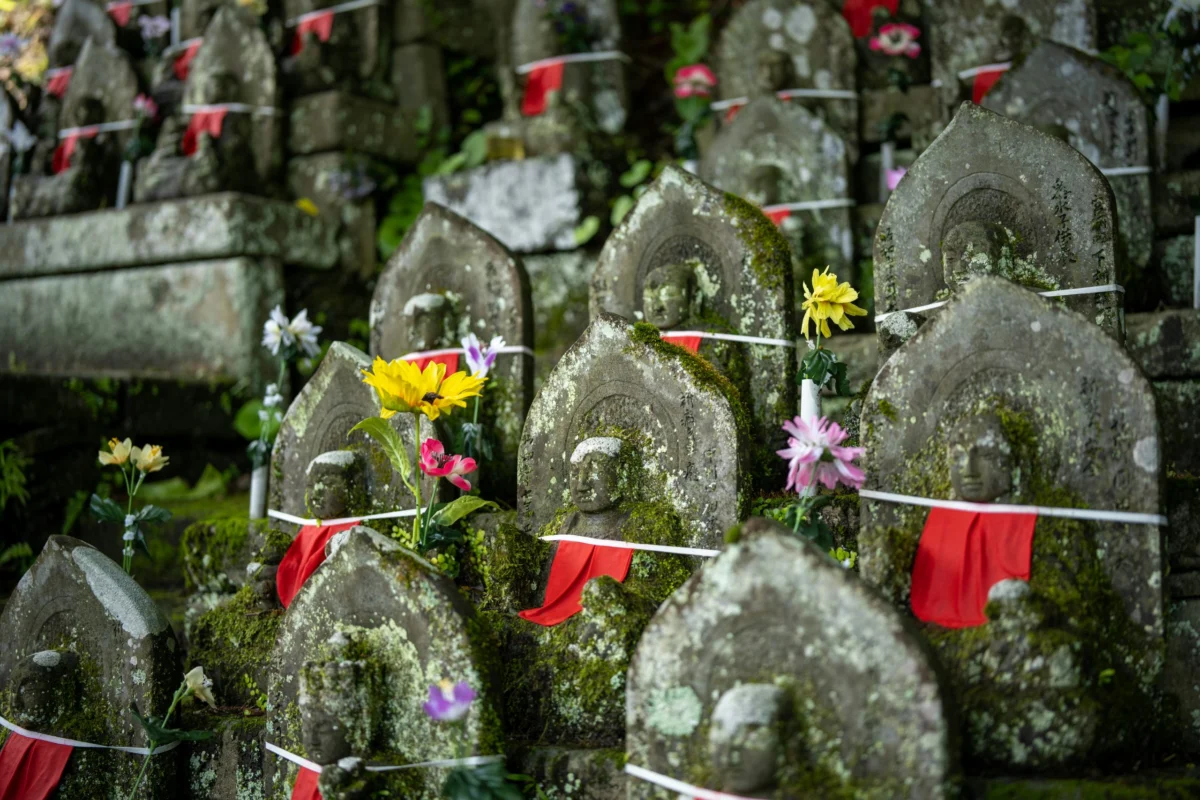
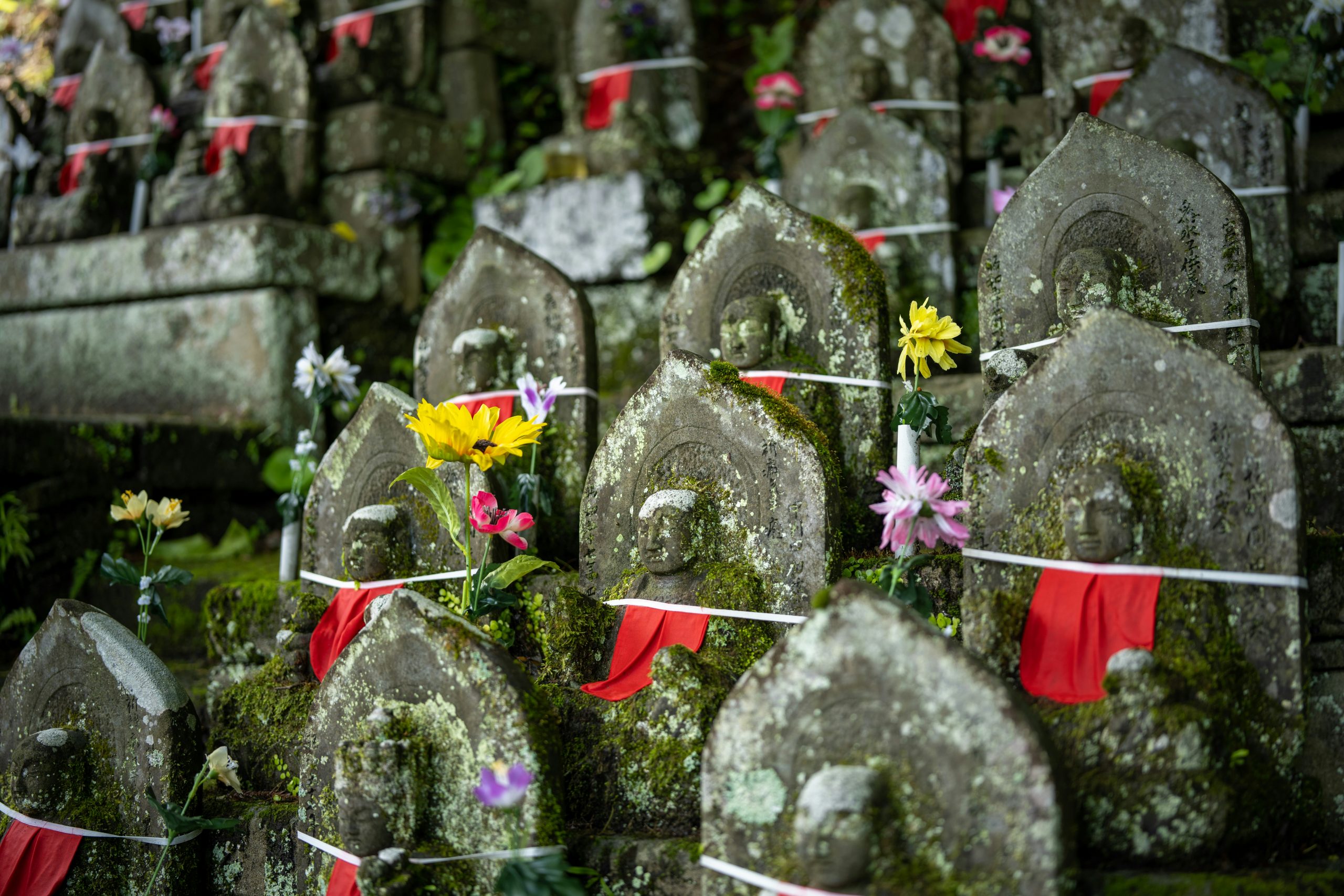
As Saya approaches her seventh decade, she has found a profound way to engage with the unresolved feelings surrounding her past abortion through the Japanese Buddhist mizuko ritual. Mizuko, often translated as "water child," refers to a fetus that has returned to primordial waters without experiencing life on earth, awaiting auspicious conditions for rebirth. The mizuko ritual offers a framework for acknowledging loss and fostering a continuous, healing relationship with the departed spirit. Saya engages in this practice by quietly lighting a candle, offering incense and flowers from her garden, and a small treat on the twenty-fourth of each month, an auspicious day for Jizo Bodhisattva. Jizo, revered for his compassionate focus on guiding beings through different realms, particularly holds a special place for mizuko.
Saya sees parallels between the mizuko ritual and her observations of caterpillars in her garden. The natural process of metamorphosis, with its inherent cycles of life and death, serves as a profound meditation on transformation. "Caring for caterpillars in my garden and watching them change is a mizuko ritual for me. Not all of them make it. It happens before your eyes. It’s watching life and death. It happens in a short period of time." This observation underscores the Buddhist understanding of impermanence and the interconnectedness of all phenomena.
As Saya and her peers age, they increasingly confront infirmity, disease, and challenging diagnoses. These experiences serve as potent reminders of their shared journey within the cycle of life and death.
A Poem of Arrival and Belonging
Following their extensive conversation, Saya presented Arai with a poem, a recent outpouring of her heart after being honored as an elder in her current Buddhist community. These poems, she explained, often signify new growth.
Buddha Was Asleep in Our Home
Buddha was asleep in our home.
As a young child,
I never knew.
He didn’t need to show himself in statues and icons.
He lived in the hearts of my people.
They embodied his way and shared his teaching.
He was happy. He could rest.
I found traces he was living with us . . .
Much later,
After much time had passed.
I was unaware . . .
I just thought they were
My grandmother’s things.
I found the prayer beads.
I walked in a huge circle
To come home.
A long, winding circle
Called life.
I’m almost finished.
Today, I live with Buddha again.
I have a new home,
I found a new family that lives with Buddha.
Maybe I can live without the icons and images.
But now
It’s a different time.
I’m lucky to live
Without the fear.
And, I like
All the images of the Buddha,
Especially the ones
That look like I belong too.
I found home.
I’m so happy.
Saya’s poem resonates with the spirit of the Therigatha, an ancient collection of verses by enlightened Buddhist nuns. Her journey, marked by resilience in the face of racism, xenophobia, and personal choices, has led to a profound spiritual awakening. While overt expressions of dharma now offer solace and strength, Saya’s narrative underscores that the most potent manifestation of the dharma lies in its embodiment within the heart and lived experience. Her final lines, "I found home. I’m so happy," speak to a hard-won peace and a deep sense of belonging.
The narrative of Saya, as presented in "Of Mud and Lotuses," serves as a powerful testament to the enduring presence and transformative power of Buddhist principles, even in the absence of formal structures, highlighting the profound ways in which individuals weave the threads of the dharma into the fabric of their lives, finding meaning, resilience, and liberation amidst personal and societal challenges.

