

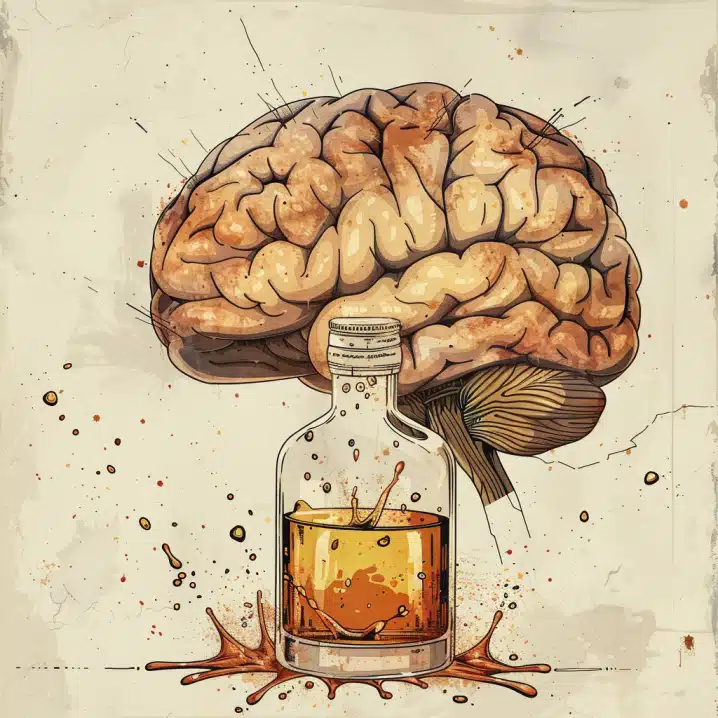
Alcohol’s effects on the brain, particularly in the aging population, have long been a focal point of scientific inquiry due to the increasing longevity and prevalence of alcohol consumption among seniors. A groundbreaking study conducted in Gothenburg, Sweden, has recently provided crucial new insights into how varying levels of alcohol intake specifically impact brain structure in individuals aged 70 and over. This comprehensive research, published in the European Archives of Psychiatry & Clinical Neuroscience in 2023 (with findings often reported in 2024), sheds significant light on the intricate relationship between alcohol consumption and the aging brain, offering invaluable information for healthcare professionals, policymakers, and the general public navigating the complexities of healthy aging.
The Growing Concern: Alcohol and the Aging Brain
As global populations age, the maintenance of cognitive function and brain health has become a paramount public health concern. Alcohol consumption patterns among older adults are shifting, with some studies indicating a rise in both moderate and heavy drinking in this demographic. Unlike younger individuals, the elderly metabolize alcohol differently, and their brains may be more vulnerable to its neurotoxic effects due to age-related physiological changes, including reduced brain volume and increased susceptibility to neuroinflammation. Understanding the specific structural changes induced by alcohol in this vulnerable group is therefore critical for developing targeted prevention strategies and clinical guidelines. Prior research has established a general link between chronic heavy alcohol use and brain atrophy, but precise thresholds and differential impacts across brain regions, especially in a population-based sample of seniors, have remained areas requiring deeper investigation. The Gothenburg H70 Birth Cohort Study aimed to fill some of these knowledge gaps.
Study Objectives and Methodology
The primary objective of the Gothenburg H70 Birth Cohort Study was to investigate the association between current alcohol use and brain structure in a large, population-based sample of 70-year-olds residing in Gothenburg, Sweden. Specifically, the researchers aimed to understand how different amounts of weekly alcohol consumption impact cortical thickness, subcortical volumes, and white matter integrity.
To achieve this, the study employed a robust methodology. Participants, all 70 years of age, underwent detailed assessments including comprehensive health questionnaires, neuropsychological evaluations, and advanced neuroimaging using Magnetic Resonance Imaging (MRI). Alcohol consumption was self-reported, a common method in epidemiological studies, and quantified in grams per week. This data was then correlated with structural MRI metrics such as cortical thickness (a measure of the gray matter’s outer layer), subcortical gray matter volumes (structures deep within the brain), and white matter integrity, assessed using Diffusion Tensor Imaging (DTI) metrics like Fractional Anisotropy (FA) and Mean Diffusivity (MD). The study’s strength lies in its population-based design, offering a snapshot of alcohol’s effects in a representative sample of older adults, thereby enhancing the generalizability of its findings.
Key Findings: A 250-Gram Weekly Threshold Emerges
The research team, led by Olof Lindberg et al., uncovered several significant findings regarding the impact of alcohol consumption on brain structure in 70-year-olds. The most striking discovery was the identification of a non-linear relationship between alcohol intake and structural brain changes, revealing a clear threshold for observable damage.
1. Threshold for Brain Structural Changes:
The study revealed that self-reported alcohol consumption above 250 grams per week was significantly associated with detectable changes in brain structure. This threshold marked the point where individuals began to exhibit significant cortical thinning in various regions of the brain and widespread alterations in white matter integrity. Below this threshold, the structural changes were less pronounced or not statistically significant, suggesting a critical dose-dependent effect.
2. Regional Cortical Thinning:
For individuals consuming more than 250 grams of alcohol per week, significant cortical thinning was specifically noted in several critical brain regions. These included the bilateral superior frontal gyrus, the right precentral gyrus, and the right lateral occipital cortex. The superior frontal gyrus plays a vital role in higher cognitive functions such as decision-making, working memory, and social behavior. Thinning in this region suggests potential compromises in these complex cognitive processes. The precentral gyrus is involved in motor control, while the lateral occipital cortex processes visual information. The observed pattern of thinning aligns with previous research on alcohol’s neurotoxic effects, highlighting specific vulnerabilities.
Intriguingly, the study found a predilection for the right hemisphere, particularly evident in the right precentral gyrus and right lateral occipital cortex. This finding lends support to the "right hemisphere hypothesis," which posits that the right side of the brain may be more susceptible to alcohol-related damage than the left. This hypothesis is often supported by clinical observations of cognitive deficits, such as impaired spatial reasoning, attention, and emotional processing, which are typically associated with right hemisphere functions in individuals with alcohol use disorders. The exact mechanisms for this lateralized vulnerability are still under investigation but could involve differences in neuronal density, metabolic rates, or neurotransmitter systems.
3. Degradation of White Matter Integrity:
Beyond cortical thinning, participants exceeding the 250-gram weekly threshold also exhibited widespread degradation of white matter integrity. This was quantified by reduced Fractional Anisotropy (FA) and increased Mean Diffusivity (MD) across numerous white matter tracts throughout the brain. White matter consists of myelinated nerve fibers that form the brain’s communication pathways, connecting different gray matter regions. Reduced FA and increased MD are markers of disrupted microstructural integrity, indicating damage to the myelin sheath or the axons themselves. This degradation impairs the speed and efficiency of neural communication. Although the study did not directly measure cognitive outcomes, the observed changes in white matter integrity strongly suggest potential impacts on cognitive and functional capabilities, given the crucial role of white matter in facilitating seamless brain communication and information processing. This could manifest as slower processing speed, reduced executive function, and memory difficulties.

4. No Significant Effect on Subcortical Structures:
An unexpected but significant finding was the absence of substantial changes in subcortical gray matter structures across different levels of alcohol consumption. Unlike the cortex and white matter, deep brain structures such as the thalamus, hippocampus, and basal ganglia did not show significant volume alterations at the examined consumption levels. This suggests that alcohol’s impact, particularly at moderate to heavy but not necessarily dependent levels, might predominantly affect the outer cortical layers and the brain’s communication highways, rather than the core subcortical volumes. This differential vulnerability provides valuable clues about the neurobiological mechanisms of alcohol-induced brain damage in older adults.
Contextualizing the 250-Gram Weekly Threshold
To fully grasp the implications of the 250-gram weekly alcohol consumption threshold, it’s crucial to contextualize this amount in terms of everyday alcoholic beverages. A standard drink typically contains about 14 grams of pure alcohol in the United States, though this can vary by country.
- Beer (5% ABV): A 12-ounce (355 ml) serving contains approximately 14 grams of alcohol.
- Wine (12% ABV): A 5-ounce (148 ml) serving contains approximately 14 grams of alcohol.
- Spirits (40% ABV): A 1.5-ounce (44 ml) shot contains approximately 14 grams of alcohol.
Therefore, 250 grams of alcohol is roughly equivalent to:
- 18 standard drinks per week.
- This translates to about 2.5 standard drinks per day, or more than two bottles of wine, or over 12 pints of standard beer in a week.
This threshold significantly exceeds many existing public health guidelines for alcohol consumption, especially for older adults. For example, the U.S. National Institute on Alcohol Abuse and Alcoholism (NIAAA) recommends that individuals over 65 years of age consume no more than 7 standard drinks per week and no more than 3 drinks on any single day. The UK Chief Medical Officers’ guidelines advise both men and women not to regularly drink more than 14 units a week, spread over 3 or more days, with one unit being 8 grams of pure alcohol. This means 14 UK units equate to 112 grams of alcohol per week, less than half of the 250g threshold identified in the Swedish study as being associated with brain damage. This stark difference highlights the potential for brain-damaging levels of consumption even for those who might perceive themselves as "moderate" drinkers by some standards, particularly in older age.
Individual Variability and the Non-Linear Relationship
It is important to acknowledge that the impact of alcohol is not uniform across all individuals, even at levels below the 250g threshold. Factors influencing the effect of alcohol include genetics, body size, sex (women generally metabolize alcohol differently and may be more susceptible to its effects at lower doses), overall health status (e.g., liver function, comorbidities), medication use, and individual brain resilience. These variables underscore the importance of a personalized approach to alcohol consumption advisories.
The non-linear relationship observed means that the brain changes do not necessarily increase proportionally with every additional gram of alcohol consumed. Instead, there appears to be a critical point (the 250g threshold) where the mechanisms of damage are significantly engaged or overwhelmed, leading to a more pronounced and widespread impact on brain structure. Below this threshold, the brain might be able to largely compensate for or repair alcohol-induced minor damage, or the damage might be too subtle to be detected by current imaging techniques. However, once the threshold is crossed, the cumulative effects appear to accelerate, leading to measurable structural degradation.
Applications and Implications of the Findings
The Gothenburg study’s findings carry significant implications across various domains, from individual health choices to public health policy.
For Individuals:
The study provides concrete, quantifiable data that can empower older adults to make more informed decisions about their alcohol intake. It serves as a clear warning about the potential neurological risks associated with exceeding a certain weekly alcohol consumption level. This information can encourage individuals to reassess their drinking habits, particularly if they fall into the 70+ age bracket. Understanding the specific brain regions affected can also help individuals and their families recognize potential early signs of cognitive or motor difficulties that might be linked to alcohol.
For Healthcare Professionals:
These findings are crucial for geriatricians, neurologists, general practitioners, and other healthcare providers. They offer an evidence-based guideline for counseling elderly patients on safe alcohol consumption limits. Doctors can now cite specific structural brain changes associated with consumption above 250 grams per week, making advice more compelling. The research emphasizes the need for routine screening of alcohol use in older adults and tailored interventions, especially for those at risk of or already exceeding the identified threshold. Furthermore, it highlights the importance of monitoring for subtle cognitive or motor changes in patients with higher alcohol intake.
For Public Health and Policymakers:
The study provides valuable data that could influence public health campaigns and national alcohol consumption guidelines. Existing guidelines for older adults may need to be reviewed and potentially adjusted to reflect these new findings, particularly concerning the threshold for brain structural damage. Policies aimed at reducing harmful alcohol consumption in the elderly could be strengthened, with educational initiatives specifically targeting this demographic. The findings also underscore the economic burden associated with alcohol-related cognitive decline and the potential for preventative measures to mitigate future healthcare costs.

Potential for Reversibility of Effects Through Decreased Alcohol Intake?
A critical question arising from these findings is whether the observed structural changes in the brain can be reversed or mitigated by reducing alcohol intake. While the Gothenburg study provides a snapshot of the association, the concept of brain plasticity offers hope for recovery.
Brain Plasticity and Recovery:
The human brain, even in older age, retains a remarkable capacity for plasticity, meaning its ability to reorganize itself by forming new neural connections or strengthening existing ones. This neuroplasticity is the basis for learning, memory, and recovery from injury. In the context of alcohol, cessation or significant reduction in intake can, in some cases, lead to partial recovery of brain volume and function, particularly in early stages of alcohol-related brain damage.
Evidence from Previous Studies:
Prior research, primarily in younger populations or individuals with alcohol use disorder, has shown that abstinence or reduced drinking can lead to improvements in white matter integrity and even some cortical thickening. For instance, studies using MRI have documented increases in gray matter volume in certain brain regions following sustained sobriety. However, the extent of reversibility depends on various factors, including the duration and severity of alcohol abuse, the individual’s age, overall health, and genetic predispositions. In older adults, the brain’s capacity for recovery might be somewhat diminished compared to younger individuals, but it is certainly not absent.
Potential Areas for Recovery:
Given the specific findings of the Gothenburg study, potential areas for recovery through decreased alcohol intake could include:
- Improved Cortical Thickness: Early and sustained reduction in alcohol consumption might slow down or even partially reverse cortical thinning in affected regions like the superior frontal gyrus.
- Enhanced White Matter Integrity: The brain’s white matter, particularly its myelin sheaths, can show some capacity for repair. Reduced alcohol neurotoxicity could lead to improved FA and MD values, indicating better communication pathways.
However, it is important to note that full recovery, especially from long-standing structural damage, might not always be possible. Further longitudinal studies are needed to specifically investigate the reversibility of these effects in older adults following interventions to reduce alcohol consumption.
Limitations of the Study
While the Gothenburg study offers invaluable insights, it is important to acknowledge its limitations:
- Self-Reported Alcohol Consumption: Reliance on self-reported data can be subject to recall bias or underreporting, potentially affecting the accuracy of consumption levels.
- Cross-Sectional Design: The study was cross-sectional, meaning it captured data at a single point in time. This design can establish associations but cannot definitively prove causation. Longitudinal studies, which track individuals over time, are needed to confirm the causal link between alcohol intake and progressive brain changes.
- Specific Age Group: The study focused exclusively on 70-year-olds. While this provides detailed information for this demographic, the findings may not be directly generalizable to younger elderly populations or different age cohorts.
- Lack of Cognitive Outcome Measures: While structural changes suggest potential cognitive impacts, the study did not directly measure cognitive outcomes. Future research should integrate neuropsychological testing to correlate structural changes with functional decline.
Conclusion: A Call for Caution and Informed Choices
The Gothenburg H70 Birth Cohort Study marks a significant step forward in our understanding of alcohol’s precise impact on the aging brain. By identifying a clear threshold of 250 grams of alcohol per week associated with significant cortical thinning and white matter degradation in 70-year-olds, the research provides concrete, actionable information. This finding underscores that even what might be considered "moderate" drinking by some standards could be detrimental to brain health in later life, especially when exceeding current public health guidelines.
The implications are profound, urging individuals, particularly older adults, to critically evaluate their drinking habits. For healthcare professionals, the study provides a robust evidence base for counseling patients and implementing screening protocols. For public health authorities, it serves as a strong impetus to review and potentially revise alcohol consumption guidelines for the elderly, emphasizing the unique vulnerabilities of the aging brain. While the potential for reversibility through reduced intake offers a hopeful avenue, further longitudinal research is essential to fully understand the dynamics of recovery and to develop more precise interventions. Ultimately, these findings reinforce the importance of a cautious and personalized approach to alcohol consumption, prioritizing brain health and cognitive preservation as integral components of healthy aging.

