


Steven Hall, known in the experimental music circles as Nirosta Steel, is experiencing a remarkable late-career resurgence. At 69, his first album in years, MY SKYSCRAPER, released this summer by Indiana-based label ULYSSA, has garnered widespread critical acclaim. The collection, meticulously curated from decades of Hall’s unreleased archives, offers a compelling journey through his four-decade artistic trajectory, weaving together threads of folk, disco, and experimental synth-pop. This unexpected acclaim for a body of work long confined to the vaults highlights the enduring power of artistic vision and the serendipitous nature of creative discovery.
The genesis of MY SKYSCRAPER lies in the ULYSSA label’s deep dive into Hall’s extensive personal archives. The label, known for its commitment to unearthing and preserving overlooked musical gems, recognized the profound artistic merit in Hall’s sprawling body of work. The album’s success is not merely a testament to Hall’s individual talent but also to the collaborative spirit that fueled much of his early creative output. A significant influence on Hall’s artistic philosophy, and consequently on MY SKYSCRAPER, is his longtime collaboration with the late Arthur Russell. Russell, a visionary musician and composer, is credited with pioneering the concept of "Buddhist pop" or "Buddhist bubblegum," a notion that sought to infuse pop music with the mindful introspection and subtle spiritual underpinnings of Buddhist philosophy. This influence is palpable throughout MY SKYSCRAPER, imbuing the diverse sonic landscapes with a unique contemplative quality.
In a recent interview featured on Tricycle Talks, a podcast from Tricycle: The Buddhist Review, Hall sat down with editor-in-chief James Shaheen to discuss the winding path that led to this moment of recognition. The conversation delved into his formative experiences, including his time immersed in the New York poetry scene alongside luminaries like Allen Ginsberg and Larry Fagin. Central to the discussion was his profound friendship with Arthur Russell and the shared exploration of "Buddhist bubblegum" that shaped their creative endeavors. Hall also reflected on his enduring artistic process, admitting to a perpetual sense of incompletion that has characterized his approach to music-making for decades.
An "Overnight Sensation" at 69: Hall’s Perspective
The phenomenon of becoming an "overnight sensation" at an age when many are contemplating retirement has been met with a mixture of surprise and gratitude by Steven Hall. "Above all, I’m the person who’s the most surprised that this has happened," Hall stated in the Tricycle Talks interview. He described the experience as a "tremendous ride, which has been like being on a log rolling on top of a snowball as it gets bigger and bigger and faster and faster." This evocative imagery captures the dizzying, yet exhilarating, pace of his newfound public recognition.
Hall’s primary strategy for navigating this unexpected success is to "maintain my sense of humor about it." He acknowledges the inherent absurdity of achieving such widespread acclaim late in life, yet also recognizes the profound significance of his work resonating with audiences. "I get constantly reminded that it’s quite serious in its scope and that I have to take responsibility for the reaction to my work, because I have to consider this is what I was trying to do in the first place for many years," he explained. While the scale of the current reception was unforeseen, Hall remains grounded in his long-held artistic intentions.
A core element of Hall’s artistic philosophy, and a key to understanding the appeal of MY SKYSCRAPER, is his embrace of chance and his commitment to "being in the moment." This sensibility, he notes, is deeply intertwined with his Buddhist practice. "I think that’s an aspect of my work that people are responding to: that they feel somewhat that they’re in the moment with me," Hall observed. He points to the "unfinished and intimate" quality of some recordings on the album, which create the impression of witnessing the creative process unfold in real-time. This emphasis on process over product is a source of deep pride for Hall. "In my work, I value the process almost as much as or even more than the product itself," he revealed. This restless pursuit of different avenues and interpretations, a "rolling sense of restlessness and unfolding," ensures that each piece remains a dynamic entity rather than a static conclusion.

A Craft Sustained by Passion and Practice
Hall’s enduring dedication to his craft, even during extended periods without widespread recognition, was fueled by a profound internal motivation and a particular view of his artistic endeavors. "I don’t regard what I do too highly. I see what I do as a craft, in the old sense of being an artisan or being in a guild, where I’m one of a group of musicians that share this passion," Hall elaborated. This perspective shifted the focus from individualistic ambition to a sense of belonging within a lineage of dedicated practitioners.
While Hall does not adhere to a formal meditation practice, he views his daily rehearsals and singing as a form of sustained engagement with his art. "Maybe my daily practice is my rehearsing and singing. And that has kept me afresh in some kind of way," he stated. This consistent dedication to the act of creation, regardless of external validation, has been the bedrock of his artistic journey.
Early Influences: From Scottish Choir to the New York Avant-Garde
Hall’s musical journey began with a robust music education in Scotland. His involvement in the Presbyterian church exposed him to both traditional and contemporary choral music, and he even performed the lead in a production of Joseph and the Amazing Technicolor Dreamcoat. His classical training extended to playing the tenor flat E horn in the school orchestra, a testament to his early engagement with performance.
The Beatles, particularly John Lennon’s innovative approach to harmony singing, left an indelible mark on Hall’s musical sensibilities. He developed a penchant for exploring unusual harmonic intervals, a practice that sometimes puzzled his choral directors but ultimately informed his unique vocal arrangements. This early experimentation with harmony foreshadowed his later forays into genre-bending music.
Beyond music, Hall’s formative years were shaped by an intellectual curiosity that spanned Chinese poetry and the vibrant art scene in New York. This yearning for American cultural dynamism, perhaps amplified by his perception of the U.S. through mid-20th-century Hollywood cinema, led him to America at the age of 15. His initial arrival was met with a cultural disconnect, as his crew cut contrasted sharply with the prevailing shoulder-length hairstyles of his high school peers. This early experience of cultural immersion set the stage for his eventual deep engagement with the New York artistic community.
The Poetry Project and the Birth of a Collaboration
Hall’s immersion into the New York poetry scene proved to be a pivotal turning point, leading him to key figures and ultimately to Arthur Russell. His entry into this world was facilitated by a forward-thinking education department head in Wilmington, Delaware, who championed New York poets and secured grants to bring them to the region for readings and workshops. This initiative led to Hall’s participation in a creative writing workshop led by the renowned poet Kenneth Koch.
Within this workshop, which was designed to train established writers, Hall, as the sole high school student, found himself alongside professional writers. He was tasked with teaching creative writing to younger students, an experience that deepened his understanding of the creative process. It was through these visiting poets, including Anne Waldman and Larry Fagin, that Hall forged a significant connection with Fagin. This relationship prompted Hall to travel to New York on weekends, staying with Fagin in the now-legendary poet building.
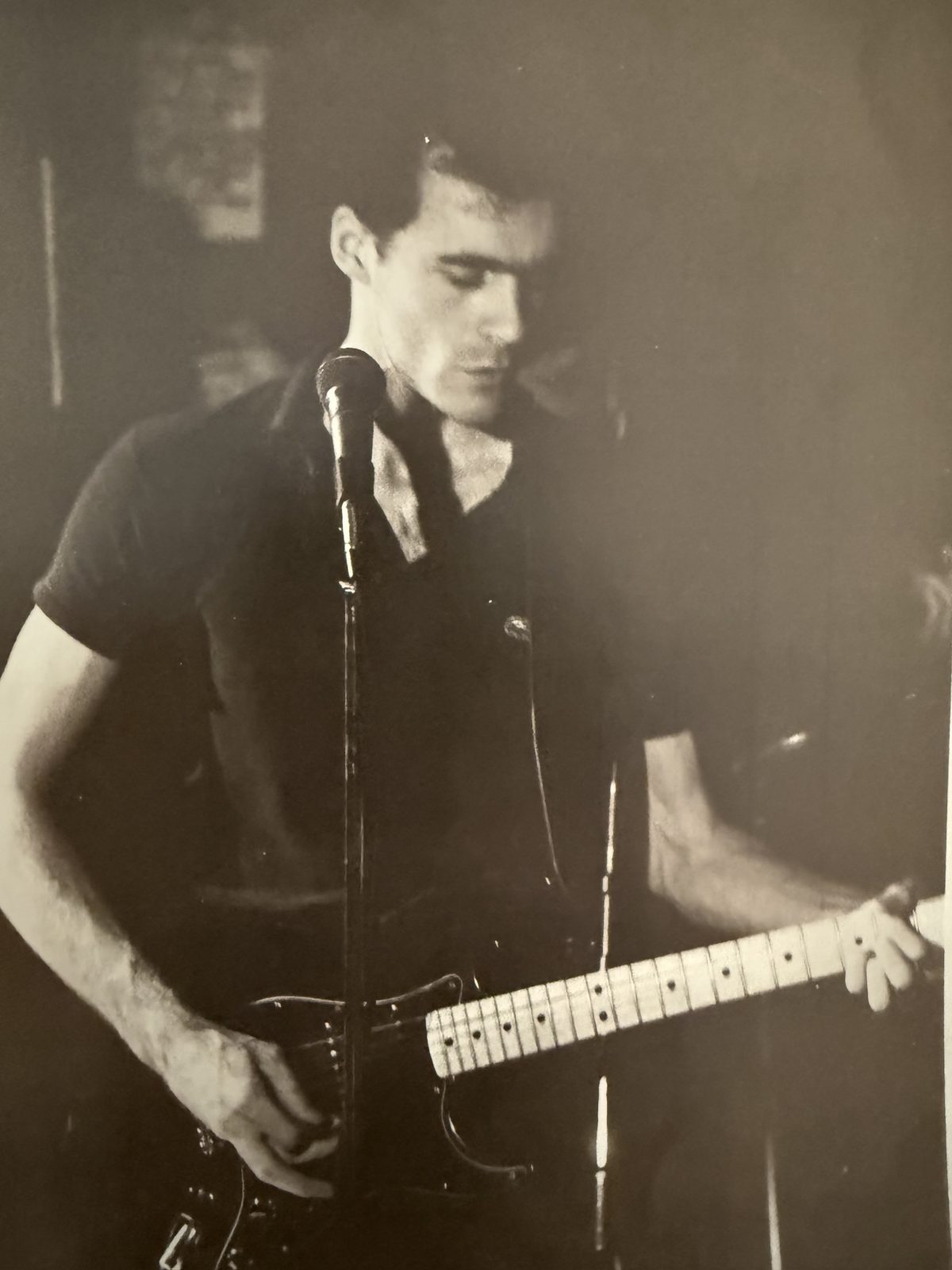
This building, a hub of artistic activity, housed a constellation of influential figures, including Arthur Russell, John Godfrey, Richard Hell, Rene Ricard, Bob Rosenthal, Shelley Kraut, and Allen Ginsberg. Hall’s proximity to these artists within the orbit of St. Mark’s Church and The Poetry Project fostered a rich environment for creative exchange and laid the groundwork for his collaborative work with Russell.
Arthur Russell’s Buddhism and the Genesis of "Buddhist Pop"
The friendship between Steven Hall and Arthur Russell blossomed into a significant artistic partnership, deeply influenced by Russell’s profound engagement with Buddhism. Hall describes Russell as a "teacher" who was "the most fully realized in terms of his practice." Their shared exploration of Buddhist principles infused their collaborative work with a subtle yet pervasive spiritual dimension.
"We were very conscious of incorporating these ideas in our work, but not in any way to preach, not even to be overtly political in the way that Allen was," Hall explained. Instead, their approach was more nuanced, aiming for the Buddhist ethos to be "manifest in our process as much as our product." Russell’s daily meditation and his discussions with Allen Ginsberg on Buddhist teachings provided a framework for this integration.
Hall recounts Russell’s remarkable ability to treat people with deep respect, even while maintaining a disciplined approach in the studio. "He was a bit of a taskmaster sometimes in the studio in terms of what he wanted, but that was only because he had a very particular vision of what he was looking for," Hall said. Russell sought out collaborators who could "focus in a certain area that he was interested in musically and also were compatible with his beliefs." This created an atmosphere of shared purpose and mutual respect, where the creative freedom was balanced by a collective understanding of their endeavors.
The concept of "Buddhist pop," and its more playful iteration, "Buddhist bubblegum," emerged from this fertile ground. Hall suggests that the term "Buddhist pop" might have originated with Allen Ginsberg, reflecting the intersection of their creative worlds. Arthur Russell, however, is credited with coining "Buddhist bubblegum," a term that captures the essence of their shared vision: music that is both lighthearted and imbued with deeper meaning. "Bubblegum means silly and fun," Hall explained. "It’s like really silly music that’s just fun to listen to and easy to remember and easy to sing." This was an aspect of their work that Russell actively encouraged in Hall’s music.
One notable example of their collaboration is the song "Lost in Thought." Hall initially found his repetitive lyrical phrases, such as "broken" and "lost in thought," to be too simplistic. However, Russell encouraged him, finding beauty in the simplicity. "No, it’s really pretty," Russell insisted. "That’s why I don’t want to finish it. I want to do something that has more weight." Russell’s response, "No, you’re good at that. So just do it," exemplifies his philosophy of permission and exploration in the creative process. This approach empowered musicians to delve into the unexpected, transforming moments of uncertainty into opportunities for artistic discovery.
The Improvised Brilliance of "FRESH FEELING" and "SPECIAL WEAKNESS"
The tracks "FRESH FEELING" and "SPECIAL WEAKNESS," central to MY SKYSCRAPER, represent a profound testament to Hall and Russell’s collaborative genius and their mastery of improvisation. These pieces emerged from their daily rehearsals, a period where Russell was intensely focused on learning the drums. Their sessions were characterized by a spontaneous and uninhibited approach to creation.

Hall’s method of using two-word poems, written on three-by-five cards that he would shuffle like a deck of cards, provided a unique framework for their improvisations. The intention was to record live to two-track, a format that precluded extensive editing and necessitated complete immersion in the moment. "Once we started, we were not to stop once I got going," Hall recounted. This commitment to a continuous flow meant that Russell had to be exceptionally attuned to Hall’s spontaneous lyrical shifts, often anticipating his next move with remarkable prescience.
"The idea was there were certain sections I was going to sing, but I didn’t know what the order was," Hall said. "And of course if I didn’t know what I was going to do, he didn’t know either. And he was fine with that." This level of trust and mutual understanding allowed for a fluid and dynamic musical dialogue. The recordings, made live to two-track, captured an unadulterated sonic snapshot of their creative synergy. The fact that these recordings are only now being widely heard after 40 years adds a layer of historical significance to their performance.
The contemporary performance of these pieces presents Hall with an intriguing artistic dilemma: how to honor the historical document while also infusing it with contemporary relevance. He contemplates creating entirely new interpretations, allowing the songs to evolve organically with his current perspective.
Hall’s artistic evolution has also involved a reassessment of his own creative output. He notes a past tendency to segregate his "so-called pop songs" and "dance songs" from his "so-called poetry." Looking back, he recognizes that the lines are blurred, and he now sees potential for musical settings of his published poetry. This broader appreciation for pop and disco music, genres once disparaged, has also informed his perspective. His experiences working with DJs and young musicians in Hong Kong, who treated Arthur Russell’s disco work with the reverence typically reserved for classical composers, served as a profound revelation. This perspective underscored the artistic merit and cultural significance of genres that he had previously underestimated.
The enduring appeal of MY SKYSCRAPER lies not only in its sonic diversity and experimental spirit but also in its testament to a lifelong dedication to artistic exploration. Steven Hall’s journey, marked by decades of unreleased work and a profound collaboration with Arthur Russell, offers a compelling narrative of perseverance, the transformative power of mindful creativity, and the unexpected beauty that can emerge from artistic archives.

