

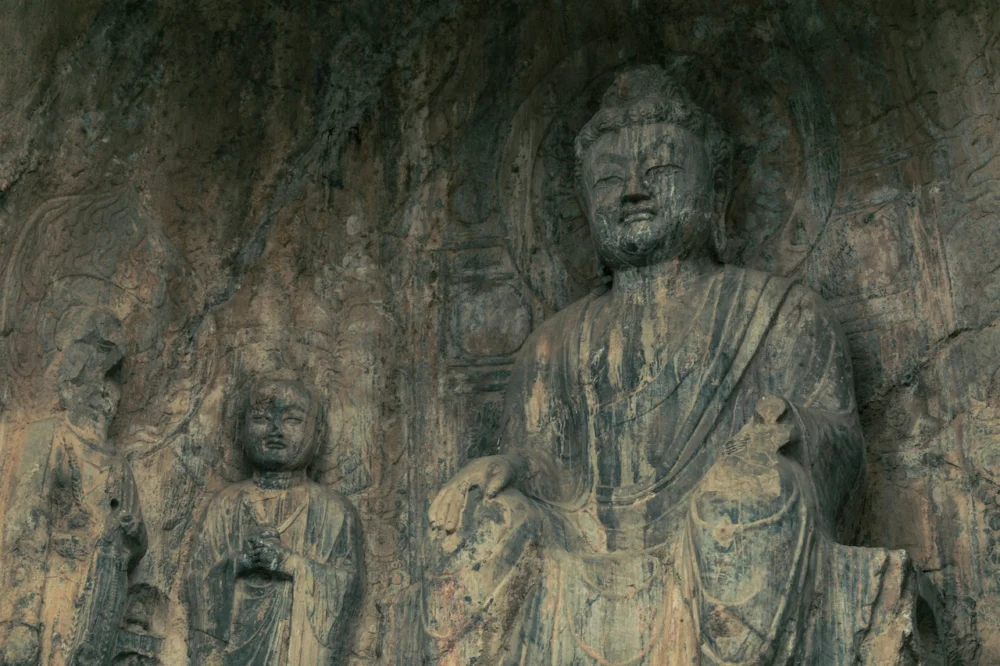
Impermanence, a foundational concept in Buddhist philosophy and insight meditation, has been a consistent focus throughout the religion’s extensive and varied history. Much like the contemplation of nonself and suffering, the practice of meditating on impermanence has demonstrably led to profound liberation for practitioners across diverse Buddhist traditions. While there’s a widespread consensus on its efficacy, historical discourse within Buddhism reveals significant divergences regarding the precise nature of the liberation attainable through such practices. These disagreements can largely be understood as a spectrum between dualistic and nondualistic interpretations of liberation.
Dualistic perspectives often envision the Buddhist ideal of nirvana as a state entirely separate from, and beyond, the transient phenomenal world. In contrast, nondualistic accounts posit liberation as an enlightened and more skillful mode of existence within the very fabric of this impermanent reality, sometimes even questioning the existence of any truly unconditional and permanent state to be attained. While a multitude of liberation experiences exist between these poles, these diametrically opposed viewpoints consistently emerge. Both dualistic and nondualistic practitioners engage in extensive meditation on impermanence, albeit with distinct motivations and anticipated outcomes.
Early Buddhist scriptures, while acknowledging certain conceptual differences, generally leaned towards an otherworldly understanding of nirvana. Nirvana was uniquely characterized as asamskrita—"uncompounded" or "unconditioned"—placing it definitively beyond the cycles of birth and death that define our impermanent and inherently unstable world. The primary objective for many early Buddhist monastics engaging in impermanence meditation was the cultivation of disillusionment with the world, rather than fostering an engagement with it. This often extended to developing a range of responses, from dispassion and disregard to outright disgust and loathing.
Historical Roots: The Charnel Ground and Disillusionment
The most dedicated early practitioners often undertook this meditation in charnel grounds, the sites of death and decay, rather than in serene settings like lakeshores or tranquil gardens. This stark environment was chosen deliberately to amplify aversion to the worldly realm and to redirect the mind away from its allure. The aim was to dismantle "delight in existence," recognizing that the impermanent world of samsara—the cycle of birth, death, and rebirth—is intensely seductive despite being inherently fraught with discontent and suffering. Early Buddhists understood how the ephemeral and dynamic nature of existence fosters attachments and misconceptions, tragically perpetuating the cycle of suffering. Consequently, early meditations on impermanence were designed to steer practitioners away from this unreliable, constantly fluxing world of coming and going and towards the stable tranquility of nirvana.
The Shift Towards Nondualism: Reimagining Liberation
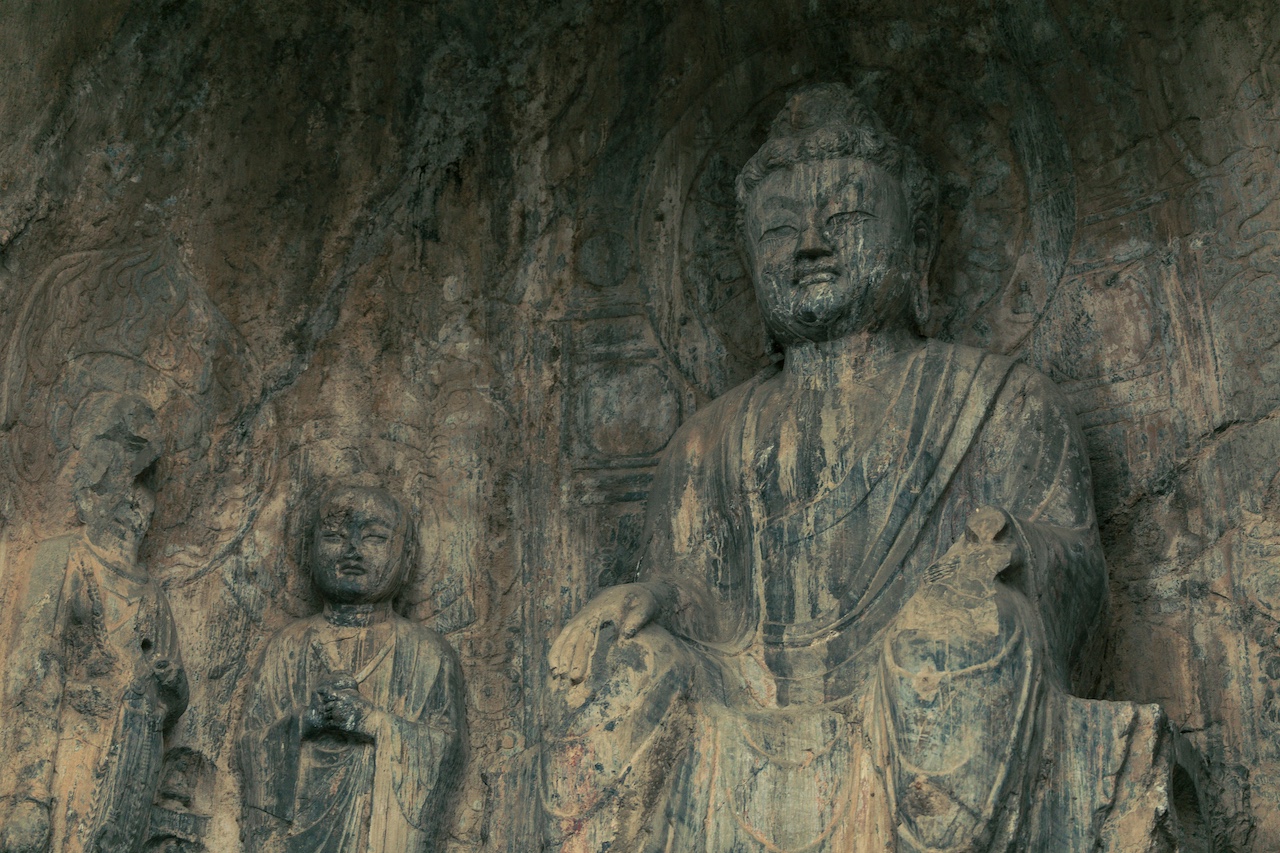
Contemporary Buddhist teachers and writers, while not necessarily advocating for disillusionment, acknowledge the necessity of certain qualities of detachment from worldly enticements for profound spiritual practice. This involves a mindful stepping back, without resorting to outright rejection. These practitioners approach the meditation on impermanence from a nondualistic perspective. As Susan Murphy articulates this concept, "Samsara and nirvana . . . are unopposed . . . such that ‘the sacred order of things manifests not in some safe elsewhere but in impermanence itself.’" This perspective, articulated in her March 20, 2025, article in Tricycle titled "Why Love What You Will Lose," underscores the interconnectedness of these seemingly disparate concepts.
This evolution in understanding and valuing impermanence is not entirely unprecedented. Certain nondual inclinations can be traced to earlier layers of Buddhist thought. Mahayana sutras and practices, for instance, began to equate nirvana with samsara, viewing nirvana not as a static realm apart from the world but as an intrinsic quality of interdependent existence. Following these significant insights, Chan/Zen masters integrated these theoretical nondualistic concepts into ordinary life, drawing upon the pragmatic tendencies of Chinese culture. Similarly, Tibetan tantric practices also moved in a direction that emphasized the immanent nature of liberation. These developments in nondual Buddhism occurred concurrently with other traditions that maintained a focus on otherworldly, transcendent goals of practice. The inherent dialectic between dualism and nondualism means they are inextricably linked, constantly influencing and informing each other.
Implications for Contemporary Practice and Understanding
From a historical perspective, the evolution of Buddhism can be viewed as a complex and gradual transition from dualism toward nondualism, shifting from an awakening from this world to an awakening in and to this world. By observing the impermanence inherent in Buddhism’s historical trajectory, it becomes evident that practitioners have, over centuries, progressively liberated the contemplative experience of impermanence from its otherworldly implications. This has been achieved by meditating on constant change and movement, fostering a deeper understanding of oneself and the world, cultivating more skillful ways of living, and ultimately learning to embrace the world in a more appropriate manner.
These meditations on impermanence illuminate the intricate dynamism of our world and the ever-shifting interconnections that bind all its dimensions. They serve to dismantle the pervasive illusions of "separation" and "static isolation" that often underpin our everyday assumptions. By experiencing these truths viscerally, we can begin to sense the inherent proximity and kinship we share with the rich diversity surrounding us. While a more comprehensive and profound understanding of nondualism is permeating various cultural spheres, from science to politics, this vision is still gradually integrating into our daily lives. This process is teaching us the two ethical imperatives derived from the Buddhist understanding of impermanence: letting go and compassionate engagement, or nonclinging and openhearted generosity. By freeing the awareness of impermanence from its perceived role as an adversary to be resisted and overcome, we empower it to fulfill its historical function within Buddhism: serving as a potent meditative catalyst for a more profound and accurate perception of reality as it is.
Data and Context: The Enduring Relevance of Impermanence
The concept of impermanence, or anicca in Pali, is one of the three "marks of existence" in Buddhism, alongside dukkha (suffering) and anatta (nonself). These are not merely abstract philosophical tenets but are considered observable realities of all conditioned phenomena. Scientific understanding, particularly in fields like quantum physics and ecology, increasingly supports the notion of a fundamentally dynamic and interconnected universe, where change is the only constant. For instance, the Second Law of Thermodynamics, often referred to as the law of entropy, describes the universal tendency of systems to move towards disorder and decay, mirroring the Buddhist concept of impermanence.

Historically, the monastic communities that first codified Buddhist teachings, dating back to the 5th century BCE in India, placed immense value on practices that fostered detachment from worldly concerns. The proliferation of Buddhist schools and traditions throughout Asia, from the Theravada in Southeast Asia to the Mahayana and Vajrayana in East and Central Asia, saw varying emphasis and interpretation of these core doctrines. However, the fundamental principle of impermanence remained central.
Analysis of Implications: A Path to Skillful Living
The ongoing dialogue between dualistic and nondualistic interpretations of liberation reflects the adaptability of Buddhist thought to diverse cultural and philosophical contexts. The shift towards nondualism suggests a re-evaluation of the goal of spiritual practice, moving from escapism to engaged wisdom. This has significant implications for how individuals approach personal challenges, societal issues, and their relationship with the natural world.
By embracing impermanence, practitioners can develop greater resilience in the face of loss and change, reduce attachment to fleeting experiences, and cultivate a more profound appreciation for the present moment. The ethical dimensions of this understanding—nonclinging and generosity—provide a framework for compassionate action and equitable engagement with others. This nuanced understanding of liberation, rooted in the direct experience of constant flux, offers a potent pathway to a more skillful and meaningful existence in an ever-changing world.
The enduring relevance of impermanence meditation lies in its capacity to address the fundamental human experience of change. As global societies grapple with rapid technological advancements, environmental shifts, and social transformations, the wisdom offered by this ancient practice appears more pertinent than ever. It provides a grounding perspective, enabling individuals to navigate uncertainty with greater equanimity and to foster a deeper connection with the transient beauty of life.

