

Ritual, a cornerstone of human cultural expression, serves as a potent vehicle for marking the sacred, establishing meaning, and fostering communal bonds. In Buddhist traditions, these practices, ranging from the seemingly simple act of bowing to intricate initiations, are not merely rote actions but deeply embedded expressions of faith, identity, and the transmission of wisdom. As Buddhism continues its global journey, its rituals are undergoing a dynamic evolution, engaging in a continuous dialogue between ancient forms and contemporary realities. This evolution, while sometimes contentious, offers a vital lens through which to understand the enduring adaptability and profound significance of Buddhist practice in the 21st century.
The fundamental purpose of ritual across cultures, and indeed within Buddhism, is to delineate the extraordinary from the ordinary. By performing specific gestures, uttering particular phrases, or engaging in prescribed sequences of actions, practitioners imbue objects, places, and moments with a sacred quality. This process of "setting apart" creates a consecrated space and time, allowing for a deeper engagement with the values and principles the ritual seeks to embody. The structured nature of ritual, with its inherent beginning, middle, and end, facilitates its transmission across generations. This continuity fosters a profound sense of connection, not only to the lineage of practitioners who have come before but also to the collective present of a community united by shared practice.
Within the vast tapestry of Buddhist traditions, ritual manifests in a dazzling array of forms. From the solitary practitioner reciting mantras to elaborate monastic ordinations, these practices are often intrinsically linked to an individual’s role and commitment within a community or tradition. They serve to reaffirm vows, honor teachers, pay respects to ancestors, and, in some traditions, even to nourish beings in transitional states, such as the "hungry ghosts" in certain Mahayana cosmologies. The diversity of Buddhist ritual reflects the rich cultural contexts in which it has taken root. Each region and tradition has developed its own unique stylistic nuances and thematic emphases, contributing to the formation of distinct community identities and fostering a powerful sense of belonging. Even the most fleeting gestures, such as the anjalimudra – the placing of palms together in a gesture of reverence – or the recitation of a brief aspiration, serve to reorient the practitioner, grounding the mind and body in a contemplative state. These ritualized actions have, for centuries, provided a stable framework and essential support for spiritual development across numerous Buddhist schools.
The preservation and adaptation of Buddhist rituals have been a constant dynamic throughout its history. Rituals are not static relics but living traditions that respond to the changing needs and understandings of their adherents. This adaptability, often occurring gradually over time and across diverse cultural landscapes, ensures that ritual remains relevant while still honoring its historical roots. A compelling contemporary example of this adaptive capacity can be seen in the practice of tree ordinations by Thai monks. In these ceremonies, the traditional ordination rite, typically reserved for human monks, is extended to trees, highlighting a profound ecological consciousness and a commitment to environmental stewardship. This innovative blending of ancient ritual with modern environmental concerns, however, is not without its complexities. The interpretation and meaning attributed to such adaptations can diverge, sparking debates about the appropriateness and efficacy of altering established practices. These discussions, far from being mere academic curiosities, offer invaluable insights into the evolving life and concerns of Buddhist communities worldwide.
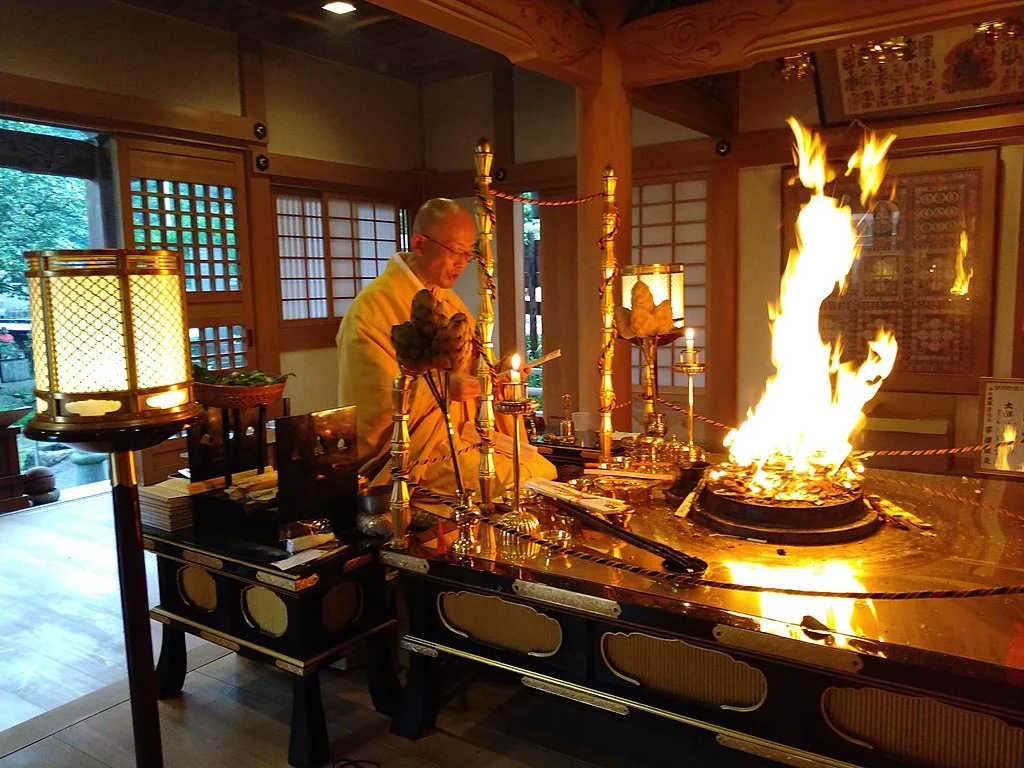
The visual representation of ritual in Buddhist practice often emphasizes both the meticulous execution of form and the underlying spiritual intention. For instance, the goma fire ritual, a practice central to Shingon Buddhism in Japan, exemplifies this. Performed at temples like Jofuku-ji in Ehime Prefecture, the priest’s precise sequence of mantras, mudras, and the manipulation of the sacred flame follows a script that has been maintained with remarkable fidelity across generations of practitioners. This dedication to precise form, while appearing rigid to an outsider, is understood within the tradition as essential for channeling spiritual energy and ensuring the efficacy of the ritual. The accompanying imagery of the goma ritual, with its controlled flames and the focused presence of the priest, underscores the transformative power that is believed to be inherent in such disciplined, consecrated actions.

Modern tensions arise as traditional rituals encounter contemporary societal norms and values. In many Western societies, characterized by a strong emphasis on egalitarianism and individual autonomy, certain traditional Buddhist rituals can appear hierarchical or rooted in anachronistic social structures. For individuals new to Buddhist traditions in the West, encountering unfamiliar or culturally distant rituals can evoke hesitation or skepticism. However, for many, this initial unfamiliarity can also serve as a gateway to profound personal discovery and unexpected insights into the nature of practice. The ongoing negotiation between tradition and modernity in the realm of ritual is a testament to Buddhism’s capacity for engagement with diverse cultural contexts.
A significant aspect of this modern tension relates to the perception of meditation. In the West, meditation is often championed as the quintessential Buddhist practice, frequently framed through psychological or scientific lenses, detached from its ritualistic origins. However, understanding meditation as a form of ritual can subtly yet powerfully alter one’s relationship to it. This perspective emphasizes the importance of structure, repetition, and the dedication of specific time and space to the practice, much like returning to the same meditation cushion each morning. The focus shifts from achieving specific outcomes or "results" to the simple, yet profound, act of showing up and engaging with the practice consistently. This ritualistic framing imbues the act of meditation with a deeper sense of commitment and grounding, moving beyond a purely therapeutic or cognitive exercise.
As Buddhism continues to establish itself in new cultural settings, its ritual forms are undergoing a process of adaptation. These adjustments are generally gradual, influenced by the interplay of established institutions, respected teachers, and the everyday practices of adherents. The resulting expressions of ritual reflect a delicate balance between continuity with the past and the incorporation of present-day realities. In the West, Buddhist rituals are still in a formative stage, and their eventual appearance may differ significantly from their ancestral forms. Nevertheless, even as new ritualistic expressions emerge, a fundamental question continues to guide this process: What values are so essential that they warrant preservation, repetition, and transmission to future generations? This ongoing inquiry into the core of what is valued ensures that ritual remains a vibrant and meaningful practice.
The historical trajectory of Buddhist ritual reveals a consistent pattern of adaptation. For instance, early Buddhist monastic rules, codified in the Vinaya, included rituals for admitting new monks and for resolving disputes. As Buddhism spread to China, it encountered existing Confucian and Taoist practices, leading to the development of unique syncretic rituals, such as the Chan (Zen) monastic ordinations that incorporated elements of indigenous Chinese culture. By the time Buddhism reached Tibet, it had integrated with the Bon religion, resulting in complex tantric rituals that are distinct from those found in other Buddhist traditions. Each of these historical junctures demonstrates how ritual is not a monolithic entity but a dynamic expression that evolves in response to its cultural environment.
The introduction of Buddhism to the West in the late 19th and 20th centuries marked another significant period of ritual adaptation. Early Western converts, often from intellectual and artistic circles, initially engaged with Buddhist practices in ways that emphasized philosophical inquiry and personal spiritual exploration. As Buddhist centers and monasteries were established, the need arose to translate and adapt traditional rituals for a Western audience. This often involved simplifying complex ceremonies, providing explanatory texts, and integrating elements of Western cultural expression. For example, the chanting of Sanskrit or Pali mantras might be accompanied by explanations of their meaning, or Western musical instruments might be incorporated into devotional practices.

The increasing prominence of lay practitioners in many Western Buddhist communities has also influenced ritual. Traditional monastic rituals, which often presuppose a life of renunciation and intense study, have been modified to accommodate the lives of individuals with family and professional commitments. This has led to the development of more accessible services, shorter meditation sessions, and the integration of rituals into daily life rather than confining them to specific monastic settings. The emphasis has shifted towards creating practices that are both meaningful and sustainable for lay followers.
However, this process of adaptation is not without its challenges. Some traditionalists express concern that alterations to ritual can dilute its spiritual potency or lead to a loss of authentic Buddhist teachings. Debates surrounding the appropriate level of adaptation often highlight differing interpretations of what constitutes the "essence" of Buddhist practice. For example, the question of whether to retain traditional forms of veneration, which might appear anthropomorphic or superstitious to some Westerners, is a recurring point of discussion. Similarly, the integration of secularized mindfulness practices, while popular, raises questions about their connection to the broader soteriological aims of Buddhist ritual.
The implications of these evolving ritual practices are far-reaching. For the global Buddhist community, it signifies a continued vitality and capacity for engagement with diverse cultural contexts. It suggests that Buddhism is not a static religion confined to its Asian origins but a living tradition capable of transformation. For Western societies, the adaptation of Buddhist rituals offers a unique opportunity for cultural exchange and the exploration of alternative frameworks for meaning and community. It also presents a challenge to ingrained secular perspectives, encouraging a re-evaluation of the role of ritual and the sacred in modern life.
Looking ahead, the future of Buddhist ritual will likely be shaped by ongoing innovation and a deepening understanding of the relationship between form and function. As technology advances, new possibilities for ritual expression may emerge, such as virtual reality-enhanced meditation experiences or online communal chanting ceremonies. The core challenge will remain to ensure that these innovations serve to deepen spiritual insight and foster genuine connection, rather than becoming mere superficial novelties. Ultimately, the enduring power of Buddhist ritual lies in its ability to speak to the fundamental human need for meaning, community, and connection to something greater than ourselves, a need that transcends cultural boundaries and temporal shifts.

