

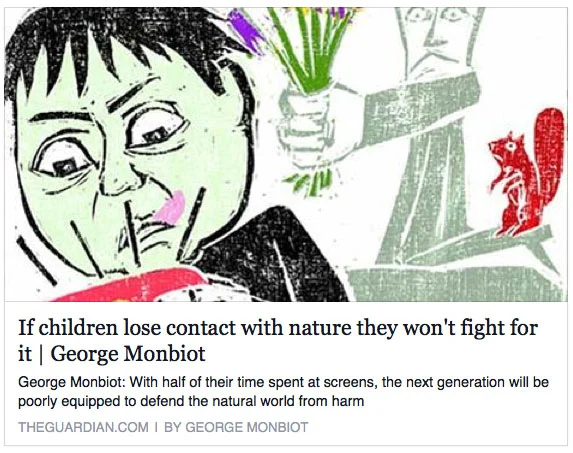
The assertion that children are losing their connection to the natural world and, consequently, their willingness to defend it, has sparked significant debate within environmental and educational circles. While the sentiment behind this claim, articulated by George Monbiot in a 2012 Guardian article, resonates with many concerned about the future of environmental stewardship, a deeper examination of the underlying causes and potential solutions reveals a more nuanced reality than a simple indictment of digital engagement might suggest. This article explores the complexities of this issue, delving into the societal shifts that have altered children’s access to nature, the role of technology, and innovative approaches to fostering ecological literacy in the 21st century.
The Shifting Landscape of Childhood and Nature
The notion that children are spending less time outdoors is not a recent phenomenon. Decades of research have documented a gradual decline in unstructured outdoor play, a trend often attributed to a confluence of factors. Urbanization, with its increasing density and reduced access to green spaces, plays a significant role. As populations migrate to cities, the wild, untamed environments that once served as natural playgrounds become scarcer.
Furthermore, parental concerns about safety have demonstrably impacted children’s freedom to roam. Studies, such as those conducted by the U.S. National Sporting Goods Association, have indicated a decrease in the amount of time children spend playing outside unsupervised. This heightened parental vigilance, while often well-intentioned, can inadvertently create a barrier between children and the natural world, limiting opportunities for spontaneous exploration and discovery.
Beyond safety, the structure of modern childhood has also evolved. Increased academic pressures, a greater emphasis on organized extracurricular activities, and the sheer volume of homework assigned to students leave less time for the serendipitous encounters with nature that were once a staple of childhood. This hyper-scheduled existence, driven by a desire to equip children for future success, can inadvertently sideline the developmental and emotional benefits derived from unmediated experiences in the natural environment.
The Digital Dilemma: A Scapegoat or a Solution?
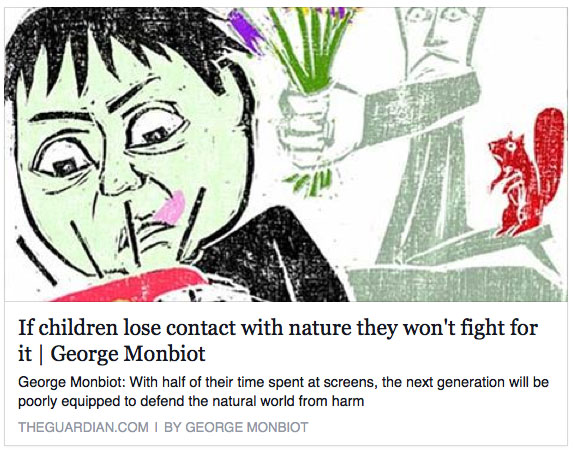
George Monbiot’s argument, published on November 19, 2012, directly linked this disengagement from nature to the pervasive influence of screens. He posited that the allure of digital entertainment, from video games to social media, has supplanted the call of the wild for a generation increasingly immersed in virtual realities. While the correlation between increased screen time and decreased outdoor activity is undeniable, framing this as the sole or even primary cause overlooks a broader societal transformation.
Data from the Pew Research Center has consistently shown a dramatic rise in internet and smartphone adoption across all age demographics since the early 2000s. This technological revolution has fundamentally altered how people of all ages interact with information, entertainment, and each other. For children, these digital tools offer an engaging and often immediate form of stimulation that can be perceived as more accessible and less demanding than the complexities of the natural world.
However, to dismiss technology as an unmitigated antagonist in the nature-connection equation would be an oversimplification. The very platforms that are accused of distancing us from nature also possess the remarkable capacity to bridge geographical divides and disseminate information on an unprecedented scale. As Amy Lenzo, an advocate for ecopsychology, has argued, while societal conditions have undeniably altered children’s freedoms, these screens can also offer “some part of the way back.”
Reimagining Nature Connection in a Digital Age
Lenzo’s perspective highlights a crucial paradigm shift: technology is not inherently detrimental to nature connection; rather, its utilization can be reimagined. Her own upbringing in the Arizona desert, where her initial fascination with nature was fostered through books, underscores the fact that direct, physical immersion is not the only pathway to ecological appreciation. In her view, today’s digital "books"—which encompass multimedia content, interactive platforms, and immersive online experiences—can be even more potent in drawing children into the "mystery and magic of the natural world."
This perspective is supported by emerging trends in digital education and conservation outreach. Organizations are leveraging virtual reality to offer simulated experiences of remote ecosystems, developing educational apps that gamify nature exploration, and utilizing social media to build communities around environmental issues. These tools can serve as powerful gateways, sparking curiosity and providing foundational knowledge that can then motivate real-world engagement.
The argument for encouraging direct engagement with the land remains paramount. The visceral experience of touching soil, smelling pine needles, or observing a bird’s nest firsthand cultivates a profound sense of belonging and stewardship. Research in ecopsychology consistently demonstrates that a personal, embodied relationship with nature is a potent wellspring for conservation motivation. We are far more likely to protect what we know, what we love, and what we feel a part of. This deep-seated connection, often forged in childhood, underpins a lifelong commitment to environmental action.
The Imperative of Belonging
At its core, the debate revolves around a fundamental truth: "We are all of the land, and belong to it." This intrinsic connection, whether recognized or not, forms the bedrock of our existence. The challenge lies in effectively communicating this message in ways that resonate with contemporary children. Simply lamenting the decline of traditional outdoor activities risks alienating a generation that navigates the world through different modalities.
The implication here is that the focus should shift from merely bemoaning the rise of screens to strategically integrating them into a broader nature-connection strategy. This involves a conscious effort to "imbue our own online engagement with nature-connection." This can manifest in several ways:
- Mindful Online Presence: Encouraging individuals, including children, to remain embodied and aware of their physical selves even when engaging online. This means remembering that online interactions are with actual human beings situated within specific environments.
- Sensory Language and Imagery: Utilizing descriptive language and compelling photography or videography that evokes the senses, allowing users to virtually experience the sights, sounds, and even imagined smells of the natural world.
- Bridging Digital and Physical: Creating online platforms that facilitate and encourage real-world exploration. This could involve mapping local natural spaces, providing identification guides for plants and animals, or organizing virtual nature walks that lead to physical outings.
The Path Forward: Synthesis, Not Simplification
The challenge of fostering nature connection in children is multifaceted and demands a holistic approach. It requires acknowledging the profound shifts in societal structures, safety perceptions, and childhood routines that have limited direct outdoor access. Simultaneously, it necessitates a sophisticated understanding of how digital technologies can be harnessed as allies rather than adversaries in this endeavor.
The core message—that children need to connect with nature to become its future guardians—is unassailable. However, the methods for achieving this connection must evolve. Rather than a wholesale rejection of digital tools, the focus should be on a thoughtful synthesis. By integrating technology as a complementary pathway, by fostering mindful digital engagement, and by continuing to champion the irreplaceable value of direct sensory experiences, we can cultivate a generation that not only understands its inherent belonging to the land but is also empowered and inspired to protect it. This requires innovation, adaptation, and a willingness to meet children where they are, utilizing the tools they understand to guide them towards the enduring wisdom of the natural world. The future of environmentalism may well depend on our ability to bridge the digital and the terrestrial, creating a more inclusive and effective pathway to ecological consciousness for all.

