

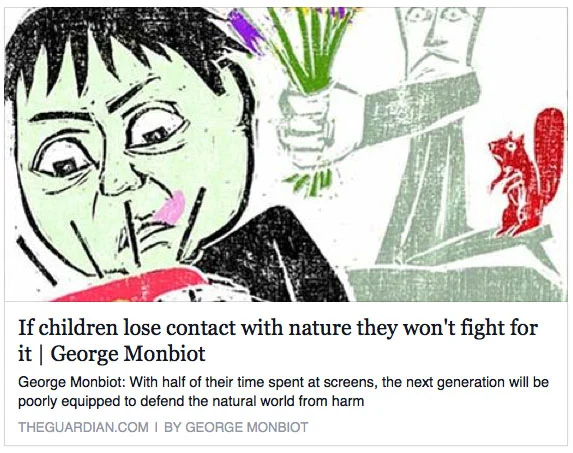
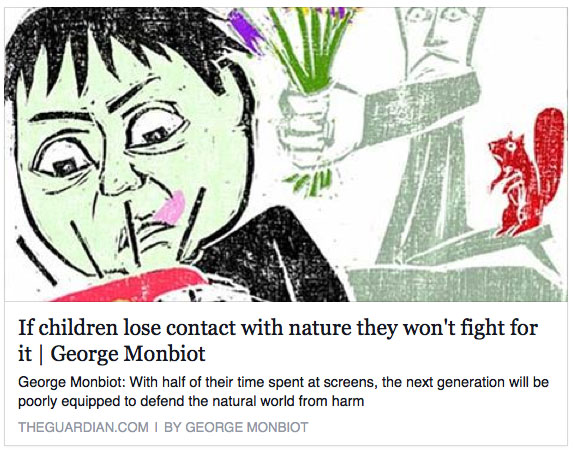
A recent commentary by George Monbiot in The Guardian has ignited a crucial conversation regarding the perceived disconnect between contemporary youth and the natural world. While Monbiot’s assertion that a diminished connection to nature among children could imperil future environmental advocacy resonates deeply, the proposed attribution of this phenomenon solely to the pervasive influence of digital screens has drawn nuanced counterpoints from observers concerned with a more comprehensive understanding of the issue.
The debate centers on a fundamental question: how are children today forming their relationships with the environment, and what are the long-term implications for conservation and ecological stewardship? Monbiot’s article, published in November 2012, argued that an increasing reliance on digital devices and indoor activities is leading to a generation less familiar with, and therefore less invested in, the natural world. This lack of direct experience, he contended, would inevitably translate into a future populace less inclined to champion environmental causes.
However, this perspective, while highlighting a genuine concern, is viewed by some as an oversimplification of complex societal shifts. Critics suggest that while screen time is a significant factor, it is not the sole, nor necessarily the primary, driver of changes in children’s engagement with nature. Instead, they point to a confluence of larger socio-economic and cultural transformations that have reshaped childhood freedoms and access to the outdoors.
Evolving Landscapes of Childhood
Historically, children’s lives were often characterized by greater autonomy and unsupervised exploration of their immediate surroundings. The advent of suburbanization, increased parental anxieties about safety, and the decline of public spaces conducive to unmediated outdoor play have all contributed to a reduction in spontaneous nature engagement. The rise of structured extracurricular activities, while offering developmental benefits, also occupies time that might otherwise have been spent outdoors.
Furthermore, the very definition of “nature” and how it is accessed has evolved. For many, especially those living in urban or suburban environments, direct encounters with wild landscapes are less common than they were for previous generations. This geographical reality necessitates alternative avenues for fostering an appreciation and understanding of the natural world.
The Digital Divide and Nature Connection: A Complex Relationship
The argument that digital engagement inherently severs ties with nature overlooks the potential of these same technologies to act as bridges. Proponents of this view argue that multimedia platforms can serve as powerful tools for introducing children to the wonders of the natural world, sparking curiosity and a desire for deeper exploration.
Amy Lenzo, an advocate for ecopsychology, has articulated this viewpoint, acknowledging the validity of Monbiot’s core concern but challenging the exclusive focus on screens as the antagonist. Lenzo draws a parallel to her own upbringing in the Arizona desert, where her initial passion for nature was ignited through books, not necessarily direct, unmediated encounters. In her view, contemporary digital "books" – encompassing websites, interactive applications, documentaries, and online communities – can offer even more compelling and accessible pathways into ecological understanding and appreciation.
“The truth is that while large-scale social conditions have indeed changed our children’s freedoms and access to the natural world (there’s a lot more happening here than the rise of the internet, folks), I believe that those little screens also hold some part of the way back for many of us (and our children),” Lenzo stated in her commentary.
This perspective suggests that the digital realm is not a monolithic entity that uniformly alienates individuals from nature. Instead, it can be a dynamic space for learning, sharing, and cultivating an emotional connection to the environment. Educational apps that identify plants and animals, virtual tours of national parks, and online forums for discussing environmental issues can all contribute to a nascent appreciation for the natural world.
The Indispensable Value of Direct Engagement
Despite the potential of digital tools, there is a broad consensus on the irreplaceable value of direct, hands-on experiences with nature. Experts in environmental education and psychology consistently emphasize that personal, sensory engagement with the natural world is fundamental to developing a deep and lasting connection.
“Of course we want to encourage children to get out on the land and have direct engagement with the natural world,” Lenzo affirms. “Of course a personal relationship with nature is a hugely powerful motivational source for conservation and environmental activism (we protect what we know and love), and a source of balance and wholeness for all of us.”
This sentiment is echoed by numerous studies. Research by the Children & Nature Network, for instance, has consistently highlighted the cognitive, emotional, and physical benefits of nature exposure for children, including improved concentration, reduced stress, enhanced creativity, and better physical health. The tactile experience of touching soil, the scent of pine needles, the sound of birdsong – these sensory inputs create a visceral understanding and appreciation that digital representations, however vivid, cannot fully replicate.
Reimagining Online Engagement for Nature Connection
The challenge, therefore, lies not in eradicating digital engagement, but in integrating it harmoniously with direct nature experiences. The key, according to proponents of a more nuanced approach, is to imbue online interactions with a greater sense of presence and connection to the physical world.
This involves encouraging mindful online engagement. When discussing nature online, for example, users can be prompted to recall sensory details from their own experiences, use evocative language and imagery, and remember that their online interactions are with real people who are situated within specific environments. This approach seeks to maintain a connection to our embodied selves and the terrestrial realities that underpin our digital lives.
“We are all of the land, and belong to it, whether we know it or not,” Lenzo emphasizes. “From my perspective, it’s far more effective to convey this message creatively in the many ways we now have to connect and communicate with each other – and imbue our own online engagement with nature-connection (e.g. don’t disconnect from our bodies when we’re online, remember we are talking with actual human beings with their feet on the ground within a specific environment, use sense-based language and photography to stay connected to the natural world, etc.) – than it is to bemoan reality.”
Data and Implications for the Future
The debate carries significant implications for future environmental policy and education. If a generation loses its innate connection to nature, the political will and public support for conservation efforts could dwindle. This could manifest in several ways:
- Reduced Funding for Environmental Protection: A less engaged public may be less inclined to support government funding for national parks, wildlife refuges, and conservation programs.
- Weakened Environmental Legislation: Without a strong constituency advocating for ecological health, the passage and enforcement of environmental regulations could become more challenging.
- Declining Participation in Environmental Careers: A diminished passion for nature might lead to fewer young people pursuing careers in environmental science, conservation, and sustainability.
Data from organizations like the National Wildlife Federation in the United States has indicated a decline in children’s outdoor time over recent decades. A 2005 study by the Environmental Protection Agency (EPA) found that American children spent, on average, only about 30 minutes per week in unstructured outdoor play. While this data predates the widespread adoption of smartphones and tablets, it highlights pre-existing trends of reduced outdoor activity.
The rise of social media platforms, while providing unprecedented connectivity, has also been associated with increased screen time. Pew Research Center data from 2018 indicated that 45% of teenagers reported being online "almost constantly." This pervasive digital presence, while not inherently negative, demands a conscious effort to balance it with real-world experiences.
Towards a Balanced Approach
The conversation initiated by Monbiot, and expanded upon by voices like Lenzo, underscores the need for a multi-faceted strategy. This approach should:
- Advocate for Increased Direct Nature Exposure: Continue and amplify efforts to get children outdoors, fostering direct sensory engagement with the natural world through school programs, community initiatives, and family activities.
- Leverage Digital Tools Thoughtfully: Utilize technology as a complementary tool for education and awareness, designing digital content that inspires curiosity, facilitates learning, and encourages offline exploration.
- Promote Mindful Digital Citizenship: Educate individuals, particularly young people, on how to engage with technology in a way that enhances, rather than detracts from, their connection to the physical world.
- Foster a Sense of Belonging to Nature: Emphasize the intrinsic connection between humanity and the environment, cultivating a deep-seated understanding that human well-being is inextricably linked to ecological health.
Ultimately, the goal is not to demonize technology but to harness its power responsibly. By acknowledging the complex interplay between our digital lives and our relationship with the natural world, we can forge a path forward that ensures future generations will not only understand but also actively champion the preservation of our planet. The dialogue must move beyond simplistic blame to embrace innovative solutions that integrate the best of both the digital and natural realms.

