

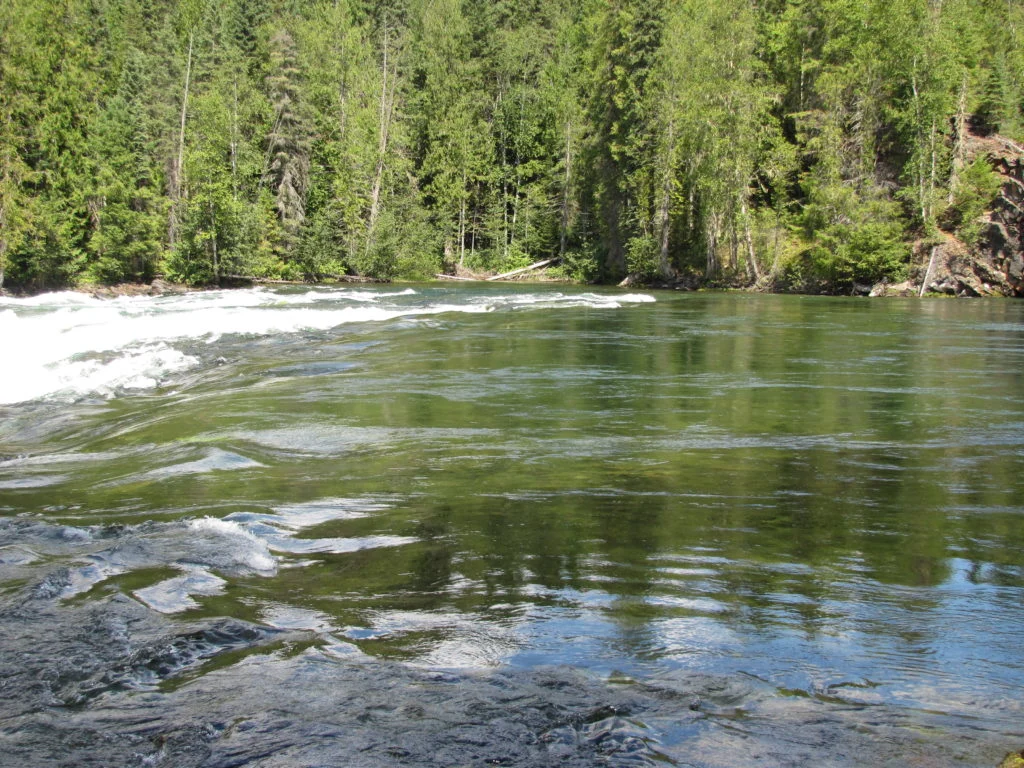
Wells Gray Provincial Park, British Columbia – Nestled within the expansive wilderness of Canada’s Caribou Mountains lies Wells Gray Provincial Park, a protected natural sanctuary renowned for its breathtaking geological formations and rich biodiversity. This vast expanse, covering over 5,250 square kilometers, is a mosaic of towering mountains, pristine lakes, winding rivers, and dense forests, supporting a remarkable array of wildlife. While the park is home to iconic species such as black and grizzly bears, majestic moose, diverse birdlife, and abundant fish populations, it also harbors a less celebrated, though significant, inhabitant: over 30 species of mosquito, a testament to the park’s thriving aquatic and terrestrial ecosystems.
However, the true and defining characteristic of Wells Gray Provincial Park is its spectacular concentration of waterfalls. Shaped by a unique geological history, the park boasts approximately 39 officially named major waterfalls, with countless smaller cascades contributing to its status as a "waterfall wonderland." Among these natural marvels, Helmcken Falls stands as a titan, holding the distinction of being the fourth-largest waterfall in Canada. Its sheer scale is staggering, measuring roughly three times the height of the world-famous Niagara Falls, plunging an impressive 141 meters (463 feet) in a single, awe-inspiring drop. This immense volume of water, thundering over the precipice, creates a spectacle of raw, untamed power that has captivated visitors for generations.
The Ephemeral Nature of Existence: Lessons from the Cascade
Beyond its visual grandeur, Helmcken Falls, like all waterfalls, offers profound insights into the nature of existence. Observing the relentless cascade, feeling the cool mist on one’s skin, and hearing the thunderous roar of the water, it becomes profoundly clear that a waterfall is not merely a static feature of the landscape but a dynamic, living entity. The very word "waterfall" speaks to relationships and processes. It represents a singular event: the precise moment a particular river reaches a specific geographical point, transforming its course. It is the immensely powerful and aesthetically beautiful form that water assumes momentarily on its perpetual journey downstream.
When viewed through a broader temporal lens, this concept of impermanence extends to all phenomena, including life itself. Just as a waterfall is a transient manifestation of water’s flow, a tree can be understood as the form taken by sunlight, water, and essential chemical elements over several centuries. Similarly, animals, including humans, represent the temporary configurations of sustenance—food, water, and air—for a lifespan of less than a century. The waterfall, in this context, becomes a profound metaphor, a story of life written in an instantaneous, yet enduring, display of natural force.
The Deceptive Calm Before the Storm
A particularly striking characteristic observed at many waterfalls is the deceptive calmness of the water preceding the dramatic plunge. The river, upstream from the precipice, often appears placid, smooth, and serene, offering little indication of the tumultuous chaos and raw power that awaits just beyond the horizon. The current accelerates almost imperceptibly, transitioning from the quietude of a lake or gentle flow to a sudden, violent outpouring over the falls. This paroxysm of energy, a blend of chaos, raw force, and undeniable beauty, serves as a stark contrast to the preceding tranquility.
Parallels in Human Affairs and Societal Dynamics
This natural phenomenon offers a potent analogy for the dynamics of human affairs and societal evolution. In personal lives, as individuals age, life can proceed smoothly, marked by a predictable rhythm. However, this calm can be disrupted by the onset of illness or the natural progression of old age, leading to a gradual, then accelerating, decline in bodily functions. The smooth current gives way to a more turbulent passage.
On a broader societal scale, the pace of technological advancement and social change appears to be in a state of continuous, albeit often imperceptible, acceleration. This mirrors the river’s increasing speed as it approaches the falls. There may come a point, a threshold, where the accumulated changes trigger widespread societal disruption, a metaphorical "chaos ensuing." For those at the forefront of these changes, the maelstrom might already be engulfing them, while for individuals or communities further behind, the perceived calm and stability of the past may still prevail. The critical insight here, drawn from observing nature, is the importance of heightened awareness. By listening with an alert and discerning mind, one may perceive the distant roar of the approaching cascade before it is too late to navigate towards safer ground, much like a swimmer recognizing the signs of an impending waterfall and paddling to the safety of the riverbank. Nature, in its grandest displays, consistently offers lessons in observation, adaptation, and foresight.
The Geological Tapestry of Wells Gray Park
The genesis of Wells Gray Provincial Park’s dramatic topography, particularly its abundance of waterfalls, is rooted in the region’s volcanic past. The area is characterized by a series of ancient lava flows that have been sculpted by the persistent erosive forces of glaciers and rivers over millennia. The Helmcken Falls, for instance, plunges over a sheer basalt cliff face, a remnant of past volcanic activity. The powerful flow of the Murtle River, which feeds Helmcken Falls, has carved through these ancient rock formations, creating the dramatic canyons and sheer drops that define the park’s signature landscapes.
The geological history of the region can be traced back millions of years. The area sits atop the Clearwater River Volcanic Belt, a region that experienced significant volcanic eruptions during the Tertiary period. These eruptions laid down thick layers of basaltic lava. Following these volcanic events, the landscape was repeatedly shaped by glaciation during the Pleistocene epoch. Massive ice sheets advanced and retreated, carving out valleys, depositing moraines, and further eroding the volcanic rock. The retreat of the last ice age, approximately 10,000 to 15,000 years ago, allowed rivers to re-establish their courses, carving out the canyons and creating the spectacular waterfalls we see today. The sheer volume of water in rivers like the Murtle, fed by glacial meltwater and abundant rainfall, provides the consistent erosive power necessary to maintain these dramatic features.
Conservation Efforts and the Future of Wells Gray
The designation of Wells Gray Provincial Park in 1965 was a crucial step in preserving this unique natural heritage. The park’s vast size and relatively remote location have contributed to the maintenance of its ecological integrity. Ongoing conservation efforts focus on managing human impact, protecting sensitive habitats, and ensuring the long-term survival of its diverse flora and fauna. Park management strategies include trail maintenance, visitor education programs, and regulations aimed at minimizing disturbance to wildlife and their environments.
The park’s rich biodiversity, while a significant draw for tourism, also necessitates careful management. The presence of large carnivores like bears requires visitors to be informed about safety protocols, and the park actively promotes responsible wildlife viewing. The mosquito population, while perhaps less glamorous, plays a vital role in the ecosystem, serving as a food source for birds and other insectivores.
Tourism and Economic Impact
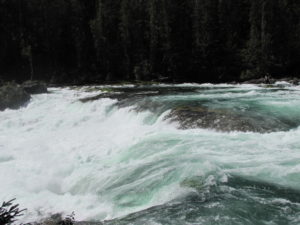
Wells Gray Provincial Park is a significant destination for nature enthusiasts, hikers, and sightseers, contributing to the local economy of nearby communities such as Clearwater. The park attracts thousands of visitors annually, who engage in activities ranging from waterfall viewing and hiking to backcountry camping and wildlife observation. The economic benefits extend to local businesses, including accommodation providers, tour operators, and retail outlets.
While tourism is a vital component of the region’s economy, park authorities are mindful of the need to balance visitor access with environmental protection. Sustainable tourism practices are encouraged to minimize the ecological footprint of visitor activities. The accessibility of certain key attractions, such as the viewpoints for Helmcken Falls and Spahats Creek Falls, has been improved over the years, facilitating greater public appreciation of these natural wonders.
A Living Laboratory and Source of Inspiration
The profound observations about impermanence and the deceptive nature of calm, drawn from the experience of Helmcken Falls, resonate deeply within the field of ecopsychology. This interdisciplinary field explores the relationships between human psychology and the natural environment, suggesting that direct engagement with nature can foster psychological well-being and a deeper understanding of life’s processes. Waterfalls, with their raw power and dynamic nature, serve as powerful reminders of our interconnectedness with the natural world and the cyclical patterns of growth, change, and renewal that govern all living systems.
The enduring spectacle of Helmcken Falls, a testament to geological forces and the ceaseless flow of water, continues to inspire awe and contemplation. It stands not only as a majestic natural landmark but also as a profound educator, offering timeless lessons on the ephemeral nature of existence, the importance of preparedness, and the deep, often subtle, connections that bind us to the natural world. As visitors stand before its thundering descent, they are not merely witnessing a grand vista; they are engaging with a living metaphor, a powerful reminder of life’s constant, dynamic journey.

