

In an era defined by demanding schedules and the constant quest for optimal health, a growing body of scientific evidence underscores the unparalleled efficacy of compound exercises for individuals seeking to elevate their fitness levels. Far from a mere trend, this training methodology, which engages multiple muscle groups and joints simultaneously, represents a foundational principle of human movement and a highly efficient strategy for achieving diverse fitness objectives, from enhanced strength and endurance to accelerated fat loss.
Understanding the Core: Compound vs. Isolation Exercises
At the heart of modern strength and conditioning lie two primary exercise categories: compound and isolation. Isolation exercises, as their name suggests, target a single muscle group and typically involve movement at only one joint. Examples include bicep curls, tricep extensions, and leg extensions. While these can be valuable for specific bodybuilding goals, muscle rehabilitation, or addressing muscular imbalances, their scope is inherently limited.
In contrast, compound exercises are multi-joint movements that activate several muscle groups synergistically. A squat, for instance, engages the quadriceps, hamstrings, glutes, core, and lower back, all working in concert. Similarly, a push-up recruits the chest, shoulders, triceps, and core. This fundamental difference in muscle activation forms the basis for the superior benefits attributed to compound movements. The body is designed to move as an integrated system, and compound exercises mirror these natural, functional movements more closely than isolated actions.
The Scientific Edge: Unpacking the Efficiency Claim
The assertion that compound exercises are "3.5x more efficient" than traditional workouts, as often cited, stems from their profound impact on metabolic rate, calorie expenditure, and hormonal response. When multiple large muscle groups are recruited simultaneously, the body demands significantly more energy. This translates directly into a higher calorie burn during the workout itself.
Beyond immediate caloric expenditure, compound movements trigger a more robust physiological response. Research published in journals like the Journal of Strength and Conditioning Research and the American Journal of Clinical Nutrition indicates that workouts incorporating compound exercises lead to a greater post-exercise oxygen consumption (EPOC), often referred to as the "afterburn effect." This means the body continues to burn calories at an elevated rate for hours after the session concludes, as it recovers and repairs muscle tissue.
Furthermore, the extensive muscle activation in compound exercises stimulates a greater release of anabolic hormones, such as testosterone and human growth hormone (HGH). These hormones are crucial for muscle protein synthesis, leading to greater muscle growth (hypertrophy) and improved body composition over time. An increase in lean muscle mass, in turn, elevates the basal metabolic rate (BMR), meaning the body burns more calories even at rest. This metabolic boost is a critical factor in sustainable weight management and overall fitness enhancement, surpassing the localized effects of isolation exercises.
The Evolution of Fitness: A Shift Towards Functional Movement
The emphasis on compound exercises represents a significant evolution in fitness philosophy. For decades, particularly within bodybuilding circles, the focus was heavily on isolating individual muscles to achieve specific aesthetic outcomes. Gyms were often equipped with numerous machines designed to target one muscle at a time.
However, a growing understanding of human biomechanics, sports performance, and public health has driven a paradigm shift. Exercise physiologists and sports scientists began to highlight the importance of "functional fitness" – training the body for the movements it performs in daily life and sport. This perspective underscored that lifting a heavy object, climbing stairs, or performing an athletic maneuver rarely involves the isolation of a single muscle. Instead, it requires the coordinated effort of multiple muscle groups.
The re-emergence of disciplines like Olympic weightlifting, powerlifting, and CrossFit, which are built around compound movements, further solidified this shift. Public health organizations and fitness accreditation bodies now increasingly advocate for multi-joint exercises as a cornerstone of effective and time-efficient fitness programs, particularly for the general population where time constraints are a major barrier to exercise adherence. This chronological shift reflects a maturing scientific understanding of how the human body optimally responds to physical training.
Comprehensive Benefits of Compound Training
The advantages of integrating compound exercises into a fitness regimen extend far beyond mere efficiency:
- Time Efficiency: As noted, engaging multiple muscle groups simultaneously means you can achieve a full-body workout in a shorter duration. This is invaluable for busy individuals.
- Enhanced Calorie Expenditure: The increased energy demand during and after compound workouts leads to more significant calorie burning, aiding in fat loss and weight management.
- Superior Muscle Growth: The greater hormonal response and overall muscle activation stimulate more comprehensive muscle hypertrophy across the body, not just in isolated areas.
- Improved Functional Strength: By mimicking real-world movements, compound exercises build practical strength that translates directly to daily activities, improving balance, coordination, and overall physical capability.
- Increased Coordination and Stability: Performing multi-joint movements requires greater neuromuscular control, enhancing inter-muscular coordination and improving joint stability.
- Injury Prevention: Strengthening the synergistic muscle groups around joints through compound movements can significantly improve joint stability and reduce the risk of injury during physical activity.
- Cardiovascular Health: Many compound exercises, especially when performed in a circuit or with minimal rest, elevate heart rate significantly, providing a potent cardiovascular workout in addition to strength training.
Expert Perspectives on Implementation
Leading exercise physiologists emphasize the critical role of proper form and progressive overload in maximizing the benefits and minimizing the risks associated with compound exercises. "The power of compound movements lies in their ability to challenge the body holistically," states Dr. Elena Rodriguez, a prominent sports scientist. "However, this also means that incorrect form can propagate issues across multiple joints. Seeking guidance from a certified personal trainer, especially when starting, is paramount to learning correct biomechanics and ensuring long-term safety and effectiveness."
Fitness professionals often recommend starting with bodyweight variations to master the movement patterns before adding external resistance. "Progressive overload – gradually increasing resistance, repetitions, or workout density – is the engine of progress," explains Mark Johnson, a veteran strength coach. "But it must be built on a foundation of flawless technique. Rushing into heavy weights without mastering the movement is a recipe for stagnation and injury."
Practical Application: Essential Bodyweight Compound Movements
One of the most appealing aspects of compound exercises is that many can be performed effectively without any specialized equipment, relying solely on bodyweight. This accessibility makes them ideal for home workouts or individuals new to structured exercise.
Here are five foundational bodyweight compound exercises that can form the backbone of a highly effective fitness routine:
-
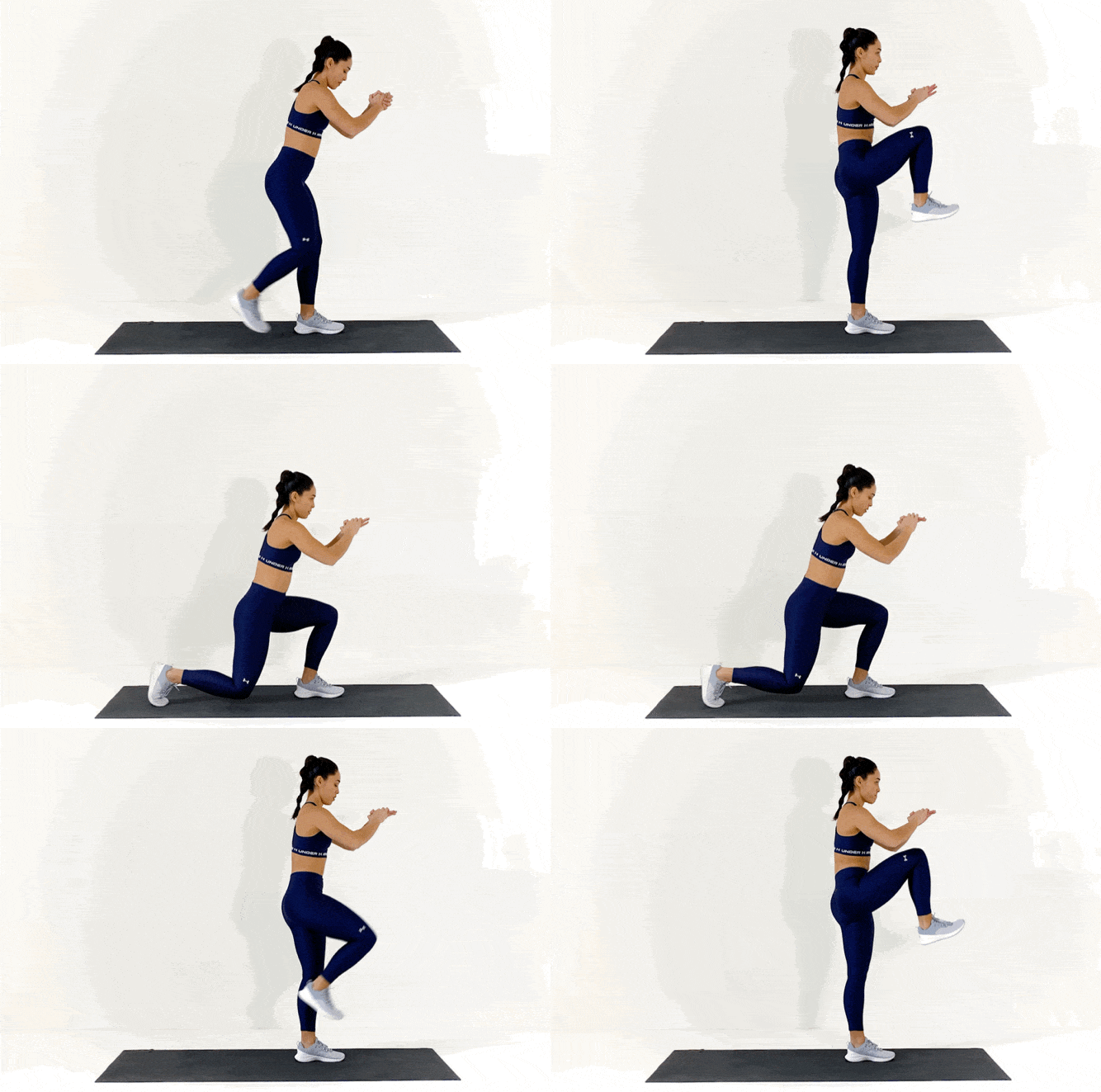
Reverse Lunge with a Knee Drive:
- Muscles Worked: Quadriceps, hamstrings, glutes, hip flexors, core.
- Execution: Begin standing tall. Step one leg back into a lunge position, lowering your hips until both knees are bent at approximately 90-degree angles. Ensure your front knee is directly above your ankle and your back knee hovers just above the ground. Drive through your front heel to return to standing, simultaneously bringing the back knee forward and up towards your chest in a controlled drive. This adds a dynamic, explosive element and further engages the hip flexors and core.
- Pro Tip: Maintain an upright torso throughout. For an added challenge, hold dumbbells or kettlebells in each hand.
-
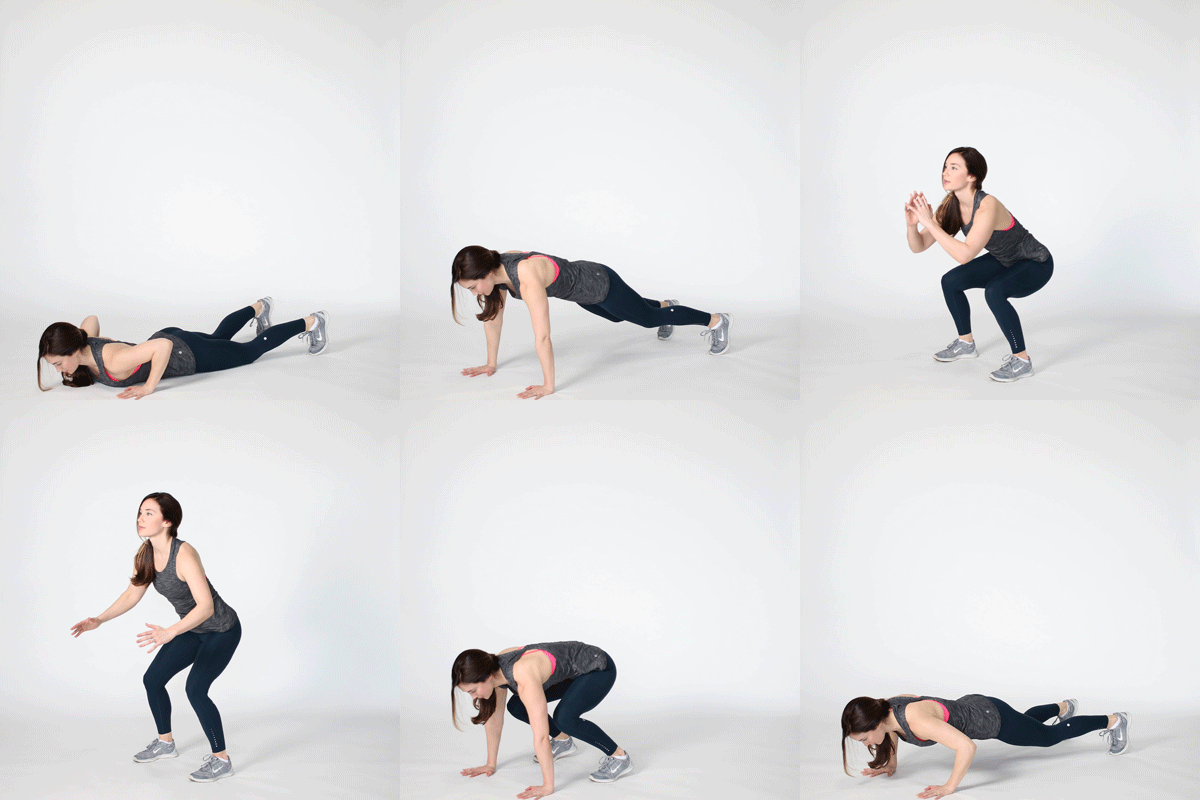
Burpees:
- Muscles Worked: Chest, shoulders, triceps, quadriceps, hamstrings, glutes, core, cardiovascular system.
- Execution: Start standing. Drop into a squat position, placing your hands on the floor just outside your feet. Kick your feet back into a plank position, immediately performing a push-up (chest to the floor, then push back up). Jump your feet back towards your hands, returning to the squat position. Explode upwards into a jump, reaching your hands overhead. This full-body sequence makes the burpee an exceptional metabolic conditioner.
- Pro Tip: Focus on smooth transitions between each phase of the movement. For beginners, omit the push-up or the jump, or step the feet back instead of jumping.
-
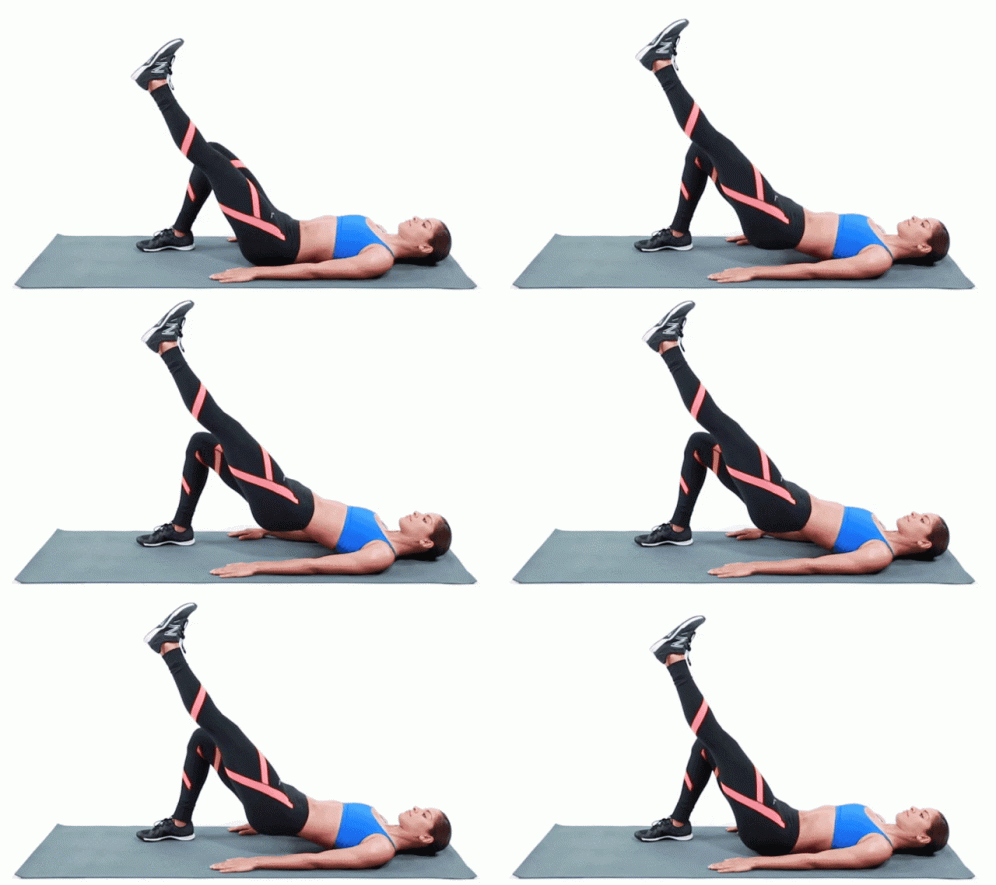
Single-Leg Bridge:
- Muscles Worked: Glutes, hamstrings, lower back, core.
- Execution: Lie on your back with your knees bent, feet flat on the floor, and arms by your sides. Extend one leg straight up towards the ceiling. Engaging your glutes, lift your hips off the floor until your body forms a straight line from your shoulders to your knee of the bent leg. Hold briefly at the top, squeezing your glutes, then slowly lower your hips back down.
- Pro Tip: Keep your core tight to prevent arching your lower back. Focus on driving through the heel of the planted foot. Aim for 10-12 repetitions on each side for optimal glute and hamstring activation.
-
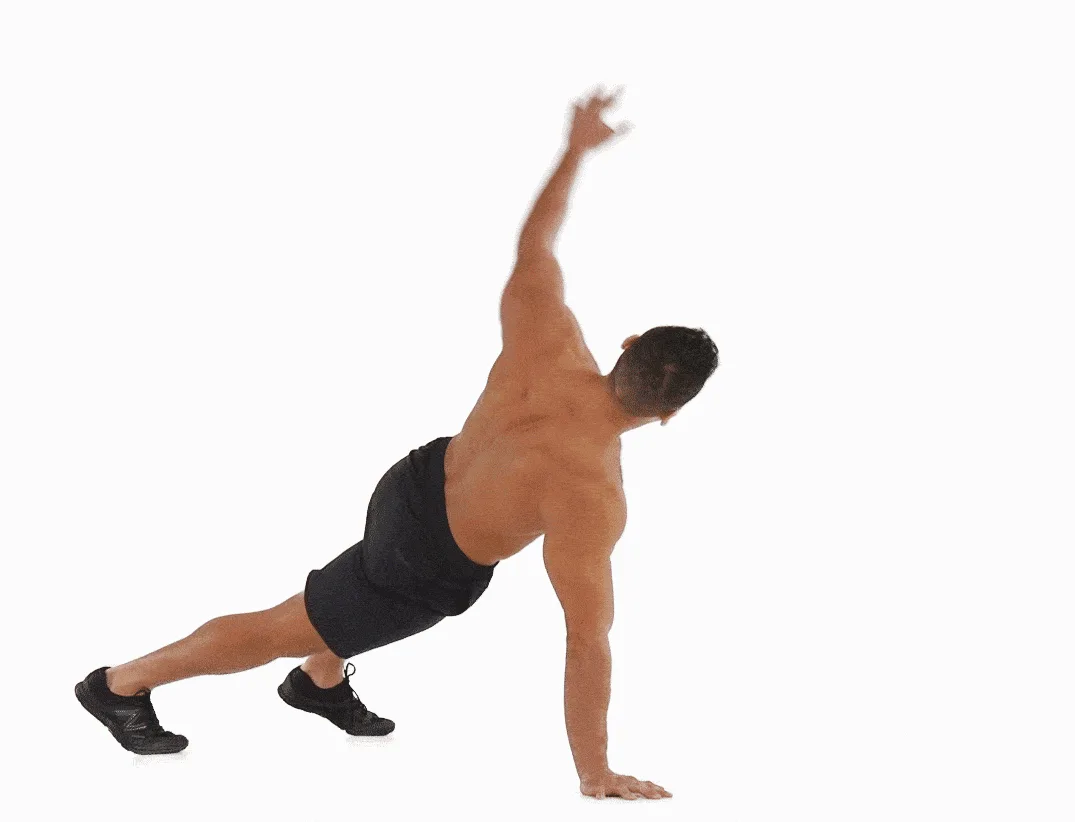
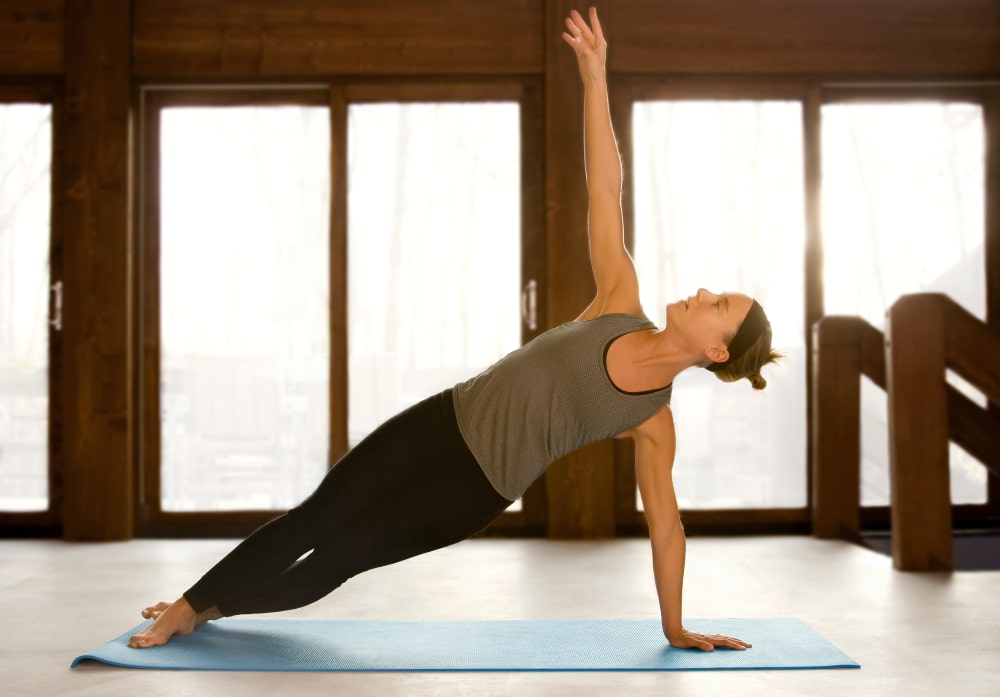
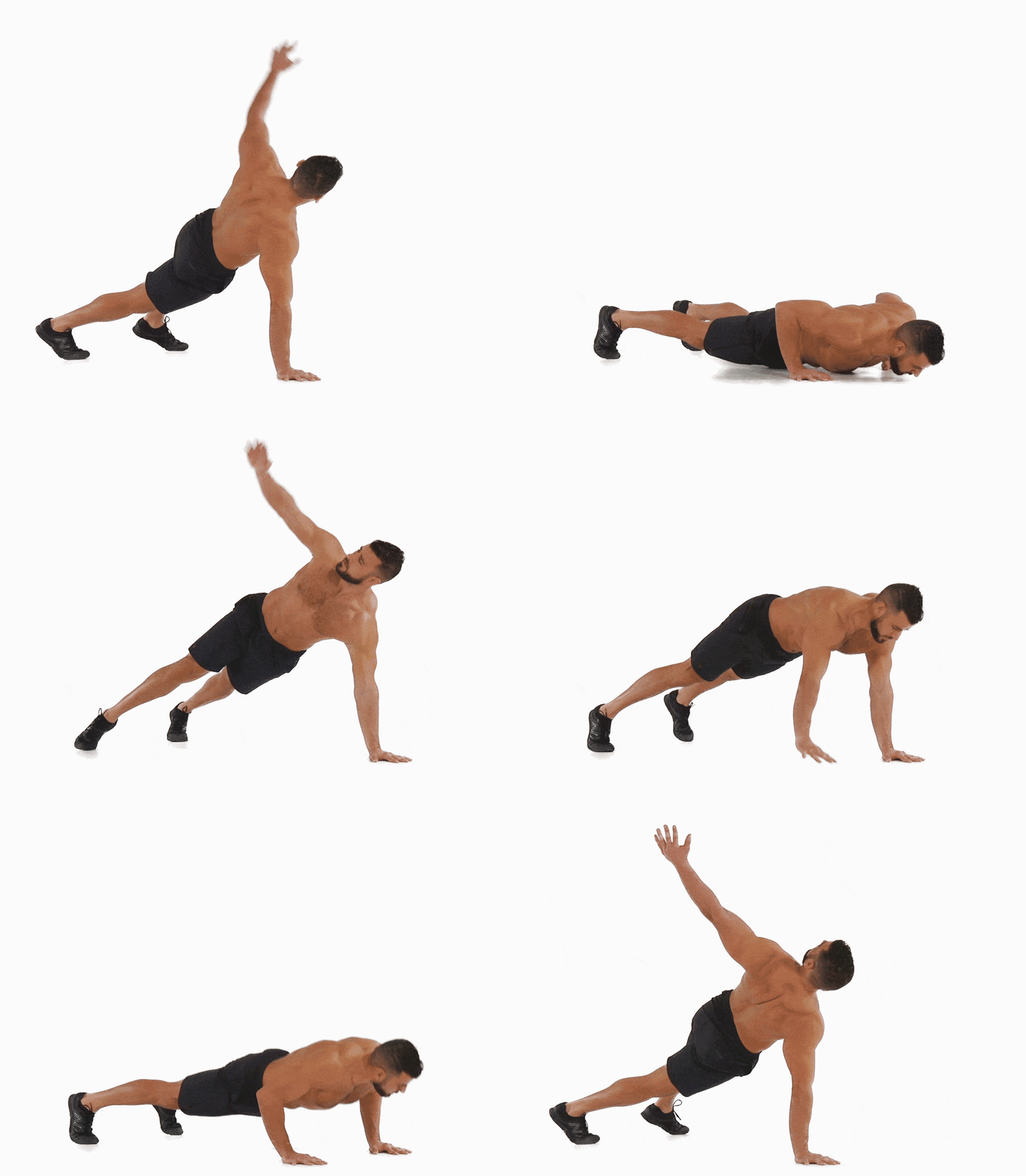
Push-Up and Rotate:
- Muscles Worked: Chest, shoulders, triceps, core, obliques.
- Execution: Start in a high plank position, hands directly under your shoulders. Perform a standard push-up, lowering your chest towards the floor. As you push back up, shift your weight onto one hand and rotate your body, extending the opposite arm straight up towards the ceiling, forming a "T" shape with your body. Return to the plank position and repeat the push-up, then rotate to the other side.
- Pro Tip: Maintain a stable core throughout the rotation to prevent your hips from sagging. The rotation adds a significant challenge to the obliques and shoulder stability.
-
Air Squat:
- Muscles Worked: Quadriceps, hamstrings, glutes, calves, core, lower back.
- Execution: Stand with your feet shoulder-width apart, toes pointing slightly outwards. Keep your chest up and back straight. Initiate the movement by pushing your hips back as if sitting in a chair, simultaneously bending your knees. Descend until your thighs are at least parallel to the floor, or deeper if flexibility allows, ensuring your heels remain grounded. Drive through your heels to return to the starting position.
- Pro Tip: Imagine pushing your knees out as you descend to activate the glutes more effectively. For an added challenge, perform jump squats by exploding upwards from the bottom of the squat.
Integrating Compound Exercises into Your Routine
A well-structured workout program can effectively integrate these movements. A common approach involves circuit training, where exercises are performed sequentially with minimal rest between them, followed by a longer rest period before repeating the circuit. This maximizes cardiovascular benefits and time efficiency. For instance, a 15-minute full-body circuit could involve 45 seconds of each exercise followed by 15 seconds of rest, repeated for 2-3 rounds.
Crucial Safety Considerations
While highly effective, compound exercises demand attention to form and progressive overload to prevent injury.
- Mastering Form: Prioritize learning the correct technique for each movement. Watching instructional videos, performing movements in front of a mirror, or recording oneself can be beneficial.
- Start with Bodyweight: For beginners, mastering the bodyweight versions of these exercises is crucial before adding external resistance (dumbbells, barbells).
- Listen to Your Body: Pay attention to pain signals. Sharp pain is a warning sign to stop and reassess. Muscle soreness (DOMS) is normal, but joint pain is not.
- Professional Guidance: Working with a certified personal trainer, especially when initially learning complex compound movements or if you have pre-existing conditions, is highly recommended. They can provide personalized feedback, spotting, and program design.
- Progressive Overload: Once comfortable with the form, gradually increase the challenge by adding repetitions, sets, reducing rest time, or introducing external resistance. Avoid increasing the load too quickly.
Addressing Frequent Questions
What Are The Best Compound Exercises For Weight Loss?
For weight loss, the most effective approach combines cardiovascular exercise with strength training. Compound exercises are particularly potent because they burn more calories during the workout and significantly elevate the post-exercise metabolic rate due to greater muscle activation and hormonal response. Exercises like burpees, squats, lunges, deadlifts (even bodyweight variations), and push-ups are excellent choices. They build muscle mass, which is key to a higher resting metabolism, making the body more efficient at burning fat over time. The integrated full-body workout demonstrated in the accompanying video provides an excellent starting point for this goal.
What Are The Best Compound Exercises For The Legs?
Legs house some of the body’s largest muscle groups, making them ideal for compound training. Squats, in all their variations (air squats, goblet squats, back squats), are foundational, engaging the quadriceps, hamstrings, glutes, and core. Lunges (forward, reverse, lateral) are equally effective for targeting the same muscle groups while also improving balance and unilateral strength. Deadlifts (conventional, Romanian, sumo) are another powerhouse movement, particularly for the hamstrings, glutes, and entire posterior chain. Step-ups and glute bridges (including single-leg variations) further enhance lower body strength and activation. Incorporating these ensures comprehensive development and significant calorie expenditure.
What Are The Best Compound Exercises For Back Pain?
Strengthening the core and the muscles supporting the spine through compound movements can significantly alleviate and prevent back pain. Squats, when performed with proper form and an engaged core, strengthen the lower back and improve posture. Bodyweight deadlifts or good mornings (focusing on the hip hinge movement) are excellent for reinforcing the posterior chain without excessive spinal loading initially. Bird-dog exercises, planks, and glute bridges are also highly beneficial for core stability and glute activation, both of which are critical for a healthy back. For individuals with existing back pain, it is imperative to consult a healthcare professional or physical therapist before starting any new exercise program, and to work with a qualified trainer to ensure exercises are performed safely and effectively.
Broader Impact and Implications
The growing recognition of compound exercises’ efficacy has significant implications for public health initiatives, fitness program design, and even the architectural layout of gyms. With sedentary lifestyles becoming a global concern, advocating for time-efficient, high-impact workouts like those built around compound movements can encourage greater participation in physical activity. For the fitness industry, it reinforces the value of functional training methodologies and the expertise of trainers skilled in teaching complex movement patterns. As research continues to unravel the intricacies of human physiology, compound exercises stand as a testament to the body’s inherent design for integrated, multi-faceted movement, offering a powerful and proven pathway to superior health and fitness.
Sources:
- Andrews E. (2015). 5 Compound Exercises You Should Add to Your Workout. ACE Fitness.
- Garber CE, et al. (2011). Quantity and Quality of Exercise for Developing and Maintaining Cardiorespiratory, Musculoskeletal, and Neuromotor Fitness in Apparently Healthy Adults: Guidance for Prescribing Exercise. Medicine & Science in Sports & Exercise, 43(7), 1334-1359.
- Hwang-Bo Kak, et al. (2013). The Effects of Resistance Exercise on Hormonal Responses. Journal of Physical Therapy Science, 25(8), 989-993.
- Additional scientific literature supporting metabolic expenditure, EPOC, and hormonal responses to multi-joint resistance training.

