

In an era where time is a premium commodity, the pursuit of optimal physical fitness often confronts the challenge of limited availability. However, recent advancements in exercise science and a deeper understanding of human physiology underscore a highly efficient training methodology: compound exercises. This approach, involving multi-joint movements that engage several muscle groups simultaneously, has emerged as a proven strategy for individuals seeking to elevate their fitness levels significantly in condensed periods. Scientific consensus, supported by various studies, indicates that these exercises can be substantially more effective than traditional isolated movements, offering a compelling solution for a comprehensive and time-efficient workout regimen.
Understanding Compound Versus Isolation Movements
At the core of modern strength training lies a fundamental distinction between two primary categories of exercises: compound and isolation. Isolation exercises, as their name suggests, concentrate on a single muscle group, typically involving movement at only one joint. Examples include bicep curls, tricep extensions, and leg extensions. While these can be valuable for targeting specific muscle imbalances or for advanced bodybuilding techniques, their overall physiological demand and efficiency are comparatively lower.
Conversely, compound exercises are characterized by movements that cross multiple joints and engage a multitude of muscle groups synergistically. A squat, for instance, involves movement at the hip, knee, and ankle joints, simultaneously activating the quadriceps, hamstrings, glutes, and core muscles. Similarly, a push-up recruits the chest, shoulders, triceps, and core. This multi-faceted muscular engagement is the linchpin of their superior efficacy, providing a holistic stimulus that isolation exercises cannot replicate. The shift towards embracing compound movements reflects an evolving understanding of how the human body functions as an integrated system rather than a collection of discrete parts.
The Scientific Mandate: Unpacking the Benefits of Compound Training
The assertion that compound exercises are up to 3.5 times more efficient than regular workouts, as highlighted by emerging research, stems from a confluence of physiological advantages. This efficiency is not merely anecdotal but is rooted in measurable metabolic, hormonal, and neurological responses within the body.
- Elevated Metabolic Demand and Calorie Expenditure: When multiple large muscle groups are activated concurrently, the body’s energy expenditure dramatically increases. This leads to a higher caloric burn not only during the workout but also in the post-exercise period, known as Excess Post-exercise Oxygen Consumption (EPOC), or the "afterburn effect." Compound movements trigger a more significant EPOC, meaning the body continues to burn calories at an elevated rate for hours after the session concludes, contributing more effectively to fat loss and metabolic conditioning.
- Enhanced Hormonal Response: Engaging large muscle groups with challenging compound movements stimulates a more robust release of anabolic hormones, including growth hormone and testosterone. These hormones are crucial for muscle protein synthesis, tissue repair, and overall body composition improvement. A greater hormonal surge translates directly into more efficient muscle building and recovery, accelerating fitness gains.
- Development of Functional Strength: Functional strength refers to the ability to perform real-world movements with ease and efficiency. Compound exercises inherently mimic these everyday actions—lifting, pushing, pulling, squatting, and bending. By training muscles to work in concert, these exercises improve intermuscular coordination and intramuscular synchronization, leading to better balance, agility, and reduced risk of injury in daily activities and sports. This is a critical distinction from isolation exercises, which often train muscles in patterns not directly relevant to functional movement.
- Time-Efficiency and Workout Density: For individuals with limited time, compound exercises are a game-changer. By working multiple muscle groups simultaneously, one can achieve a comprehensive full-body workout in a fraction of the time required for a routine focusing on isolation movements. This increased workout density allows for greater physiological adaptation within shorter sessions, making fitness more accessible and sustainable for busy lifestyles.
- Improved Cardiovascular Health: The high metabolic demand of compound movements often elevates heart rate significantly, providing a substantial cardiovascular workout in addition to strength training benefits. This dual advantage contributes to improved cardiorespiratory endurance, blood circulation, and overall heart health.
A Brief Chronology of Fitness Paradigms
The emphasis on compound exercises is not a novel concept but rather a resurgence of foundational training principles, refined by modern sports science. Historically, strongmen and early athletes relied almost exclusively on multi-joint movements like squats, deadlifts, and overhead presses to build formidable strength. The mid-20th century, however, witnessed the rise of bodybuilding culture, which popularized isolation exercises to sculpt individual muscle groups for aesthetic purposes. Gyms became equipped with machines designed to target specific muscles, leading many to believe that isolating muscles was the optimal path to development.
In recent decades, driven by insights from sports medicine, physical therapy, and performance coaching, there has been a significant shift back towards functional training. Disciplines like CrossFit, powerlifting, and Olympic weightlifting, which are built around compound movements, have gained widespread popularity. This evolution reflects a growing understanding that true fitness extends beyond aesthetics, encompassing functional movement, injury prevention, and overall athletic performance. Today, leading health organizations and fitness professionals increasingly advocate for compound movements as the cornerstone of any effective exercise program.
Expert Perspectives and Endorsements
Fitness professionals and exercise physiologists universally acknowledge the superior benefits of compound exercises. Dr. Lena Hanson, a renowned exercise physiologist and director of the Institute for Sports Performance, states, "Compound movements are the bedrock of efficient and effective training. They challenge the body as an integrated unit, leading to greater strength gains, improved coordination, and a significantly higher metabolic expenditure compared to single-joint movements. For anyone looking to maximize their results in minimal time, they are indispensable."
Certified personal trainers often integrate compound exercises as the primary component of their clients’ programs. Marcus Chen, a veteran strength and conditioning coach, comments, "When I design a program, whether for an athlete or a busy professional, compound exercises are always at the forefront. They deliver the most bang for your buck, building functional strength that translates into better performance in daily life and sport, while also being incredibly time-efficient." Organizations such as the American Council on Exercise (ACE) and the American College of Sports Medicine (ACSM) consistently recommend compound movements as a fundamental element of a well-rounded fitness regimen, emphasizing their role in promoting overall health, preventing chronic diseases, and enhancing quality of life.
Core Compound Exercises: Building a Foundation Without Equipment
One of the most appealing aspects of compound exercises is their accessibility. Many highly effective compound movements require no specialized equipment, making them ideal for home workouts or travel. The following five exercises are excellent examples that can form the basis of a potent, equipment-free routine:
-
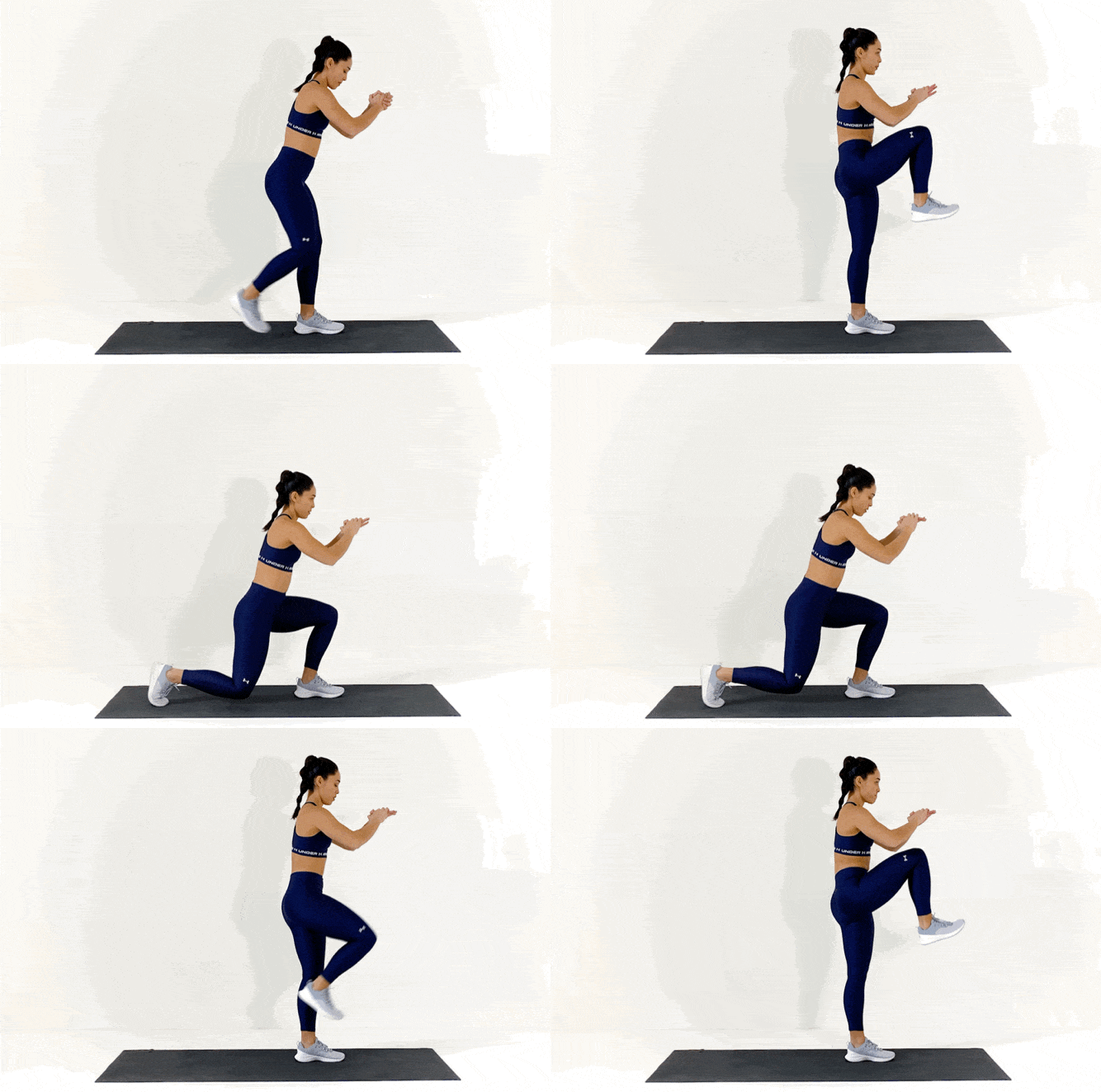
Reverse Lunge With a Knee Drive: This dynamic exercise targets the glutes, quadriceps, hamstrings, and calves while also engaging the core for stability.
- Execution: Step backward with one leg into a lunge position, ensuring the front knee remains aligned over the ankle. Push off the back foot, driving the knee forward and upward towards the chest, mimicking a running motion. Return to the starting position with control.
- Benefits: Improves lower body strength, balance, and cardiovascular endurance. The knee drive adds a powerful dynamic element, mimicking athletic movements.
- Progression: Hold light dumbbells for added resistance.
-
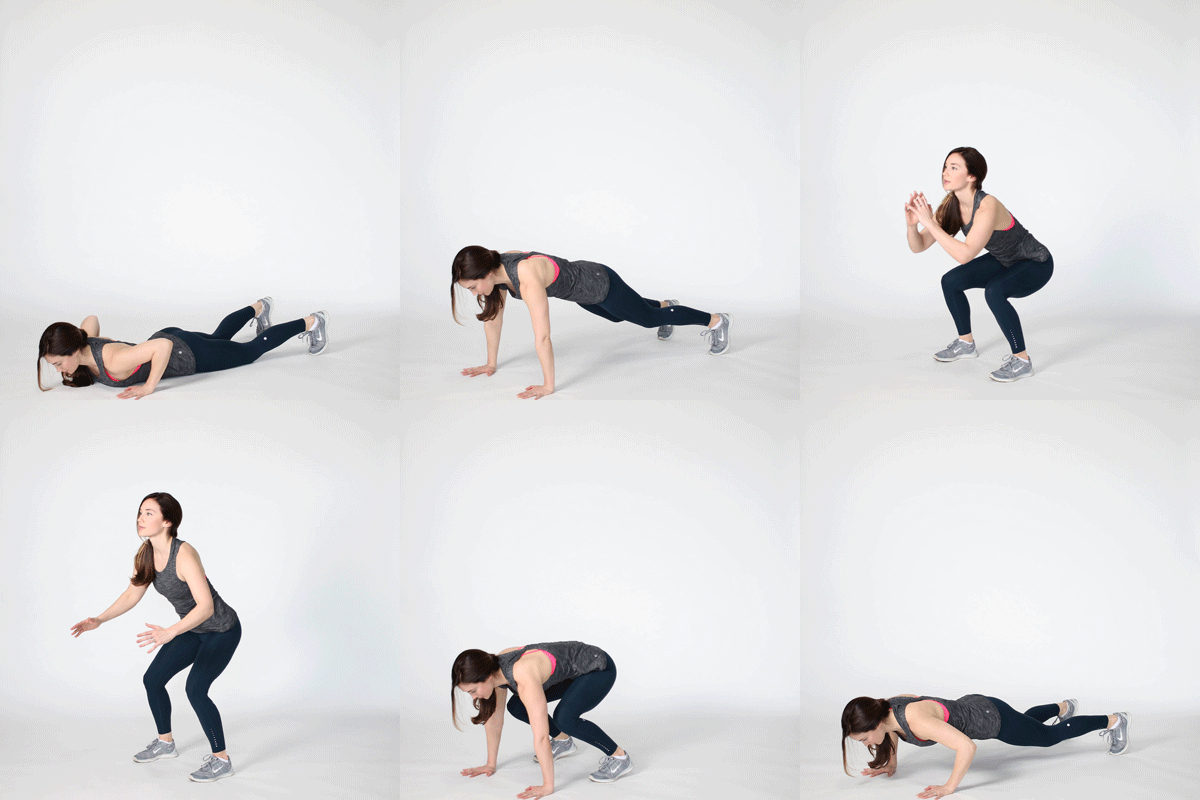
Burpees: A full-body powerhouse, the burpee combines a squat, plank, push-up, and jump into one fluid movement, making it an exceptional metabolic conditioner.
- Execution: Begin standing, then drop into a squat with hands on the floor. Kick feet back into a plank position, perform a push-up, then jump feet back to the squat. Explode upward into a jump, reaching arms overhead.
- Benefits: Builds explosive power, muscular endurance, and significantly elevates heart rate for cardio benefits.
- Form Tip: Maintain a strong core throughout to protect the lower back.
- Regression: Remove the push-up or the jump if needed.
-
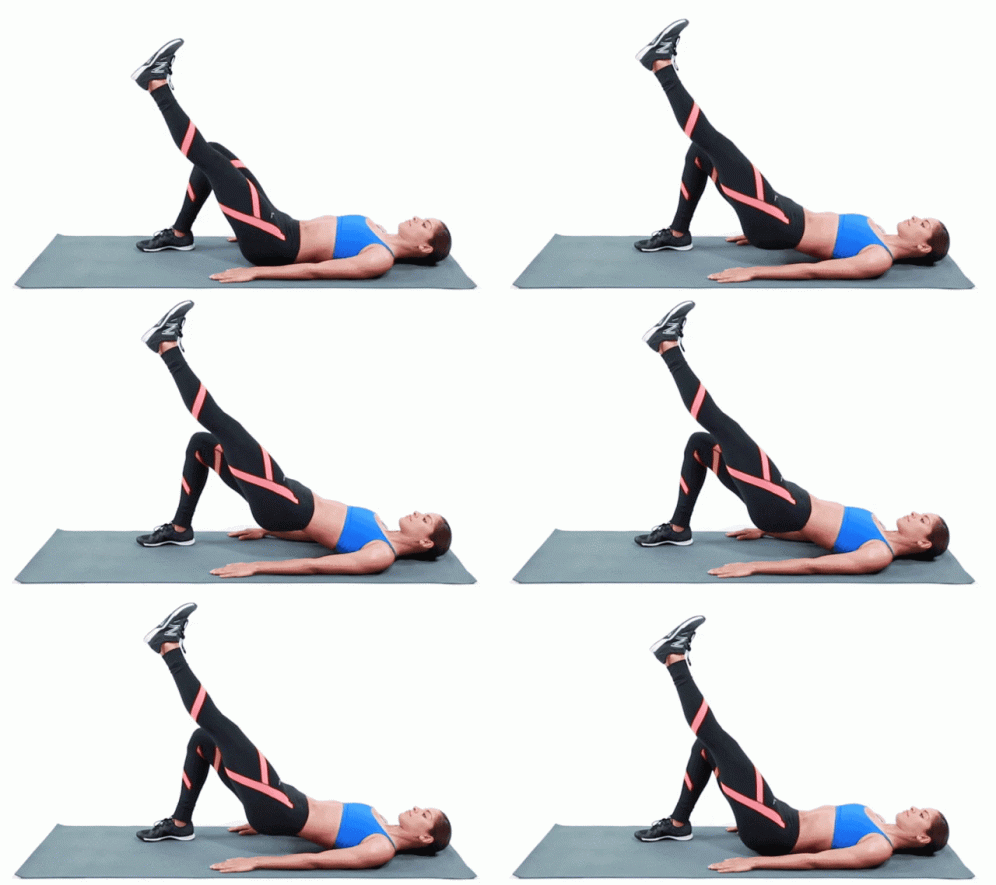
Single-Leg Bridge: This exercise powerfully engages the glutes, hamstrings, and core, crucial for hip stability and lower back health.
- Execution: Lie on your back with knees bent, feet flat on the floor, hip-width apart. Extend one leg straight up. Pressing through the heel of the grounded foot, lift your hips off the floor until your body forms a straight line from shoulders to the extended knee. Lower slowly.
- Benefits: Enhances unilateral leg strength, glute activation, and core stability, which are vital for walking, running, and preventing imbalances.
- Repetition: Aim for 10-12 repetitions on each side for optimal muscle engagement.
-
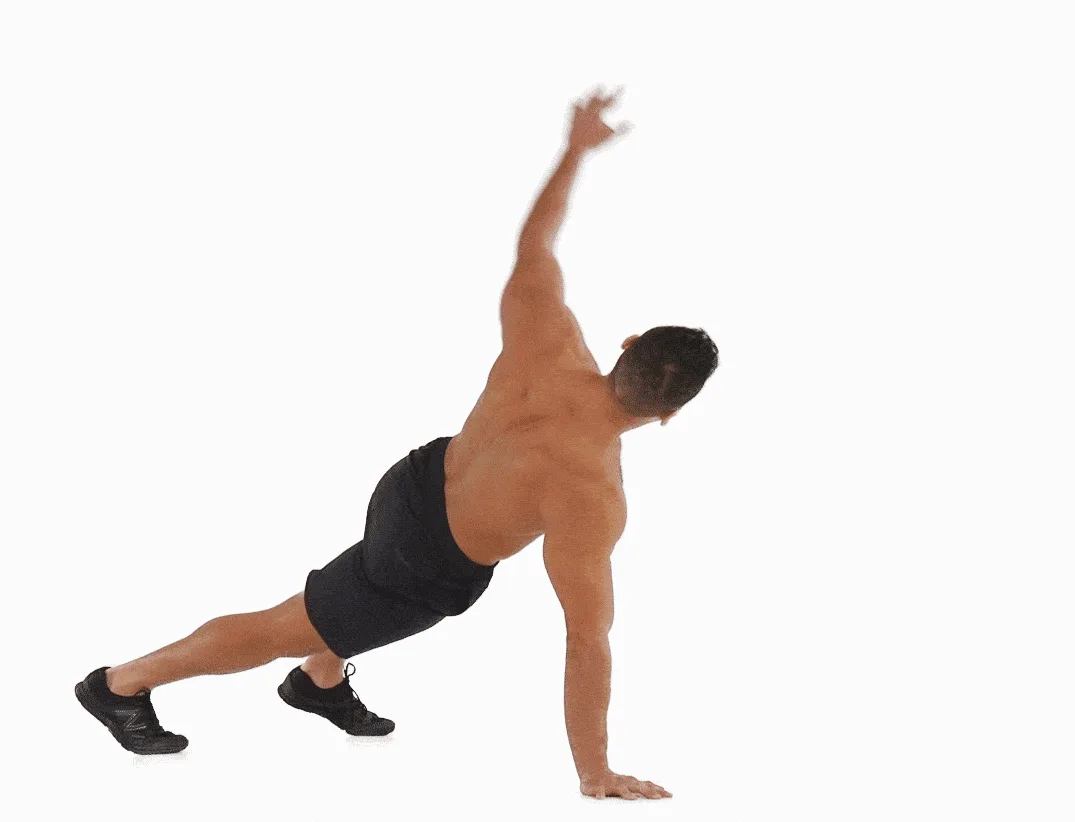
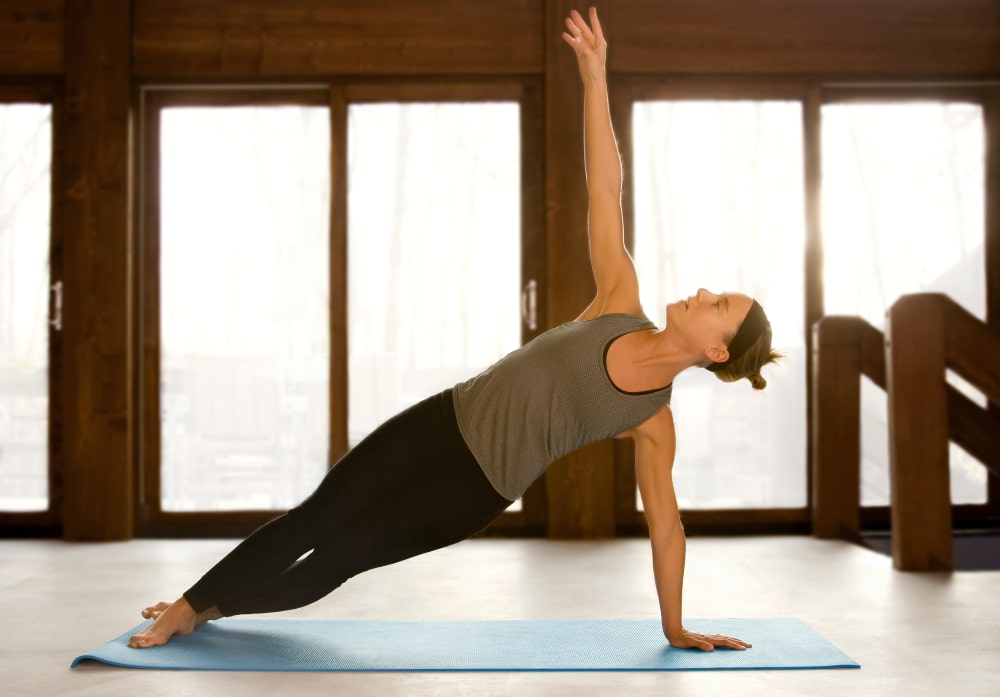
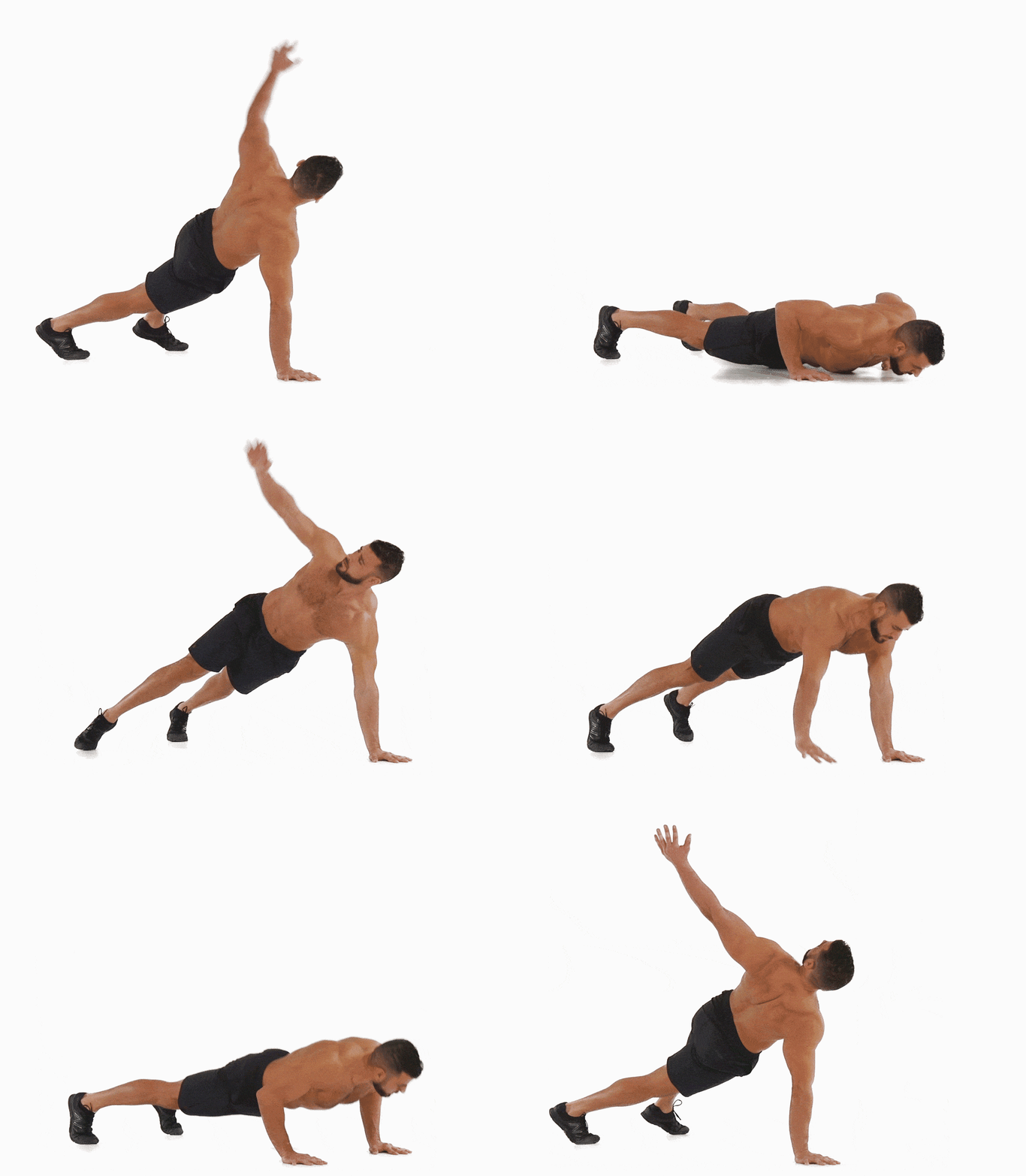
Push-Up and Rotate: This variation of the classic push-up adds a rotational element, challenging the chest, shoulders, triceps, and particularly the obliques and core for rotational stability.
- Execution: Start in a high plank position. Perform a push-up. As you push back up, rotate your body, lifting one arm towards the ceiling and stacking your feet to enter a side plank. Return to the starting plank position and repeat on the other side.
- Benefits: Develops upper body pushing strength, core rotational stability, and shoulder mobility.
- Form Tip: Keep the core tight throughout the rotation to protect the spine.
- Progression: Increase tempo or add a slight pause at the top of the side plank.
-
Air Squat: A foundational movement pattern, the air squat effectively works the quadriceps, hamstrings, glutes, and core without any external load.
- Execution: Stand with feet shoulder-width apart, toes slightly out. Keep your chest up and core engaged. Initiate the movement by pushing your hips back as if sitting in a chair, lowering until your thighs are parallel to the ground (or as deep as comfortable with good form). Drive through your heels to return to standing.
- Benefits: Improves lower body strength, mobility, and cardiovascular endurance. It is a fundamental movement for daily activities and athletic performance.
- Form Tip: Ensure knees track over toes, and avoid rounding the back.
- Progression: Increase repetitions, reduce rest time, or hold the bottom position for a few seconds.
Structuring a Time-Efficient Compound Workout
To harness the power of compound exercises, especially within a 15-minute timeframe, strategic structuring is essential. A circuit training approach is highly effective. After a brief dynamic warm-up (e.g., arm circles, leg swings, light jogging in place), perform each exercise for a set number of repetitions or a timed interval, moving directly from one to the next with minimal rest.
- Sample 15-Minute Circuit:
- Warm-up (3 minutes): Jumping jacks, high knees, butt kicks.
- Circuit (10 minutes, 2-3 rounds):
- Reverse Lunge with Knee Drive: 10-12 reps per leg
- Burpees: 8-10 reps
- Single-Leg Bridge: 10-12 reps per leg
- Push-Up and Rotate: 8-10 reps per side
- Air Squats: 15-20 reps
- Rest: 30-60 seconds between rounds.
- Cool-down (2 minutes): Static stretches for major muscle groups.
This structure ensures continuous muscular engagement and elevated heart rate, maximizing the metabolic and cardiovascular benefits within the limited timeframe.
Safety First: Mitigating Risks and Optimizing Form
While highly effective, compound exercises, due to their multi-joint nature and higher demand, necessitate a strong emphasis on proper technique to prevent injury. Incorrect form can negate benefits and lead to strains or more serious issues.
- Professional Guidance: For beginners or those uncertain about their form, working with a certified personal trainer is highly recommended. An experienced professional can observe movements, provide immediate feedback, correct posture, and offer modifications to suit individual fitness levels and physical limitations. They can also advise on appropriate progression, ensuring movements are challenging but safe.
- Start Light, Focus on Form: When incorporating new compound exercises, prioritize mastering the movement pattern without external resistance before adding weights or increasing intensity. A good rule of thumb for bodyweight exercises is to aim for 10-15 repetitions per exercise, ensuring each rep is performed with control and precision.
- Listen to Your Body: Pay close attention to any discomfort or pain. Pushing through sharp pain is counterproductive and increases injury risk. Rest, modify the exercise, or seek professional advice if persistent pain occurs.
- Breathing Techniques: Proper breathing is integral to compound movements. Typically, exhale during the exertion phase (e.g., standing up from a squat, pushing up from a push-up) and inhale during the eccentric (lowering) phase. This helps stabilize the core and provides energy.
Broader Implications: Transforming Personal Fitness and Public Health
The increasing recognition and adoption of compound exercises carry significant implications for both individual fitness journeys and public health initiatives.
- For Individuals: The time-efficiency of compound workouts can be a powerful motivator for consistent exercise adherence. By offering substantial results in shorter durations, these programs reduce the common barrier of "lack of time," making fitness more attainable for a wider demographic. This translates into improved overall quality of life, enhanced functional independence as one ages, and a greater sense of well-being.
- For the Fitness Industry: The emphasis on compound and functional movements is reshaping gym design and personal training methodologies. There’s a growing trend towards functional training zones, open spaces for bodyweight and free-weight exercises, and trainers focusing on movement patterns rather than isolated muscle groups. This fosters a more holistic and performance-oriented approach to fitness.
- For Public Health: The accessibility of bodyweight compound exercises means effective fitness is not confined to expensive gyms or specialized equipment. This democratizes health, offering a viable strategy to combat sedentary lifestyles, reduce the prevalence of obesity, and mitigate the risk of chronic diseases such as type 2 diabetes and cardiovascular conditions. Promoting these efficient, equipment-free workouts can be a cornerstone of public health campaigns aimed at encouraging physical activity across all age groups and socioeconomic backgrounds.
Frequent Questions
What Are The Best Compound Exercises For Weight Loss?
For weight loss, compound exercises are unequivocally superior to isolation movements due to their profound impact on calorie expenditure and metabolism. As discussed, these exercises burn more calories during the workout and significantly increase EPOC, leading to sustained calorie burning post-exercise. Furthermore, they build greater muscle mass, which is a key driver of a higher resting metabolic rate. The burpee, air squat, and reverse lunge with knee drive, as demonstrated, are excellent examples of bodyweight compound exercises that maximize metabolic demand. Incorporating weighted variations like deadlifts, squats, and overhead presses (if equipment is available) further amplifies these effects, making them highly effective tools for sustainable weight loss by building lean muscle and torching fat.
What Are The Best Compound Exercises For The Legs?
Legs are inherently designed for compound movements, making them a prime target for this training methodology.
- Squats: The quintessential lower body compound exercise, engaging the quadriceps, hamstrings, glutes, and core. Variations like air squats, goblet squats, and back squats (with weights) offer comprehensive development.
- Lunges: Another foundational movement, lunges work the quads, hamstrings, and glutes unilaterally, improving balance and addressing muscle imbalances. Reverse lunges and walking lunges are particularly effective.
- Deadlifts (Bodyweight or Weighted): While often associated with weights, the hip hinge movement pattern of a bodyweight deadlift (or good morning) engages the posterior chain—hamstrings, glutes, and lower back—powerfully. Weighted deadlifts are among the most effective full-body strength builders.
- Step-ups: This exercise effectively targets the quads, glutes, and hamstrings, while also improving balance and functional strength relevant to climbing stairs or hills. Incorporating these variations ensures a comprehensive and challenging leg workout.
What Are The Best Compound Exercises For Back Pain?
When addressing back pain, the focus shifts to strengthening the core and the muscles supporting the spine, while also improving posture and mobility. Compound exercises, when performed with impeccable form, can be highly beneficial for both prevention and management of back pain.
- Squats: Properly executed squats strengthen the entire posterior chain, including the lower back, glutes, and hamstrings. This helps build a stable foundation and improve posture, reducing strain on the lumbar spine.
- Bodyweight Deadlifts (Good Mornings): Emphasizing the hip hinge pattern without external load can safely strengthen the lower back and hamstrings, teaching proper mechanics for lifting.
- Single-Leg Bridges: As mentioned, this exercise targets the glutes and hamstrings, which are crucial for hip stability and taking pressure off the lower back. Strong glutes can significantly alleviate back pain.
- Plank Variations: While not strictly a dynamic compound lift, planks are compound isometric exercises that engage the entire core (including deep abdominal muscles and lower back stabilizers), providing essential spinal support.
It is paramount to consult with a healthcare professional or a physical therapist before attempting any exercises for back pain. Proper form is non-negotiable; any exercise performed incorrectly can exacerbate pain. Starting with bodyweight and focusing on controlled, precise movements is crucial.
In conclusion, the scientific evidence overwhelmingly supports the efficacy of compound exercises as a cornerstone of an optimized fitness regimen. Their ability to deliver holistic strength, metabolic conditioning, and functional gains within condensed timeframes positions them as an invaluable tool for anyone committed to improving their physical health, regardless of their starting point or schedule constraints. Embracing these multi-joint movements is not merely a training preference; it is a strategic investment in long-term health, performance, and overall well-being.
Sources: Andrews E. (2015), Garber CE, et al. (2011), Hwang-Bo Kak, et al. (2013). Additional insights derived from established exercise physiology principles and industry best practices by the American Council on Exercise and American College of Sports Medicine.

