

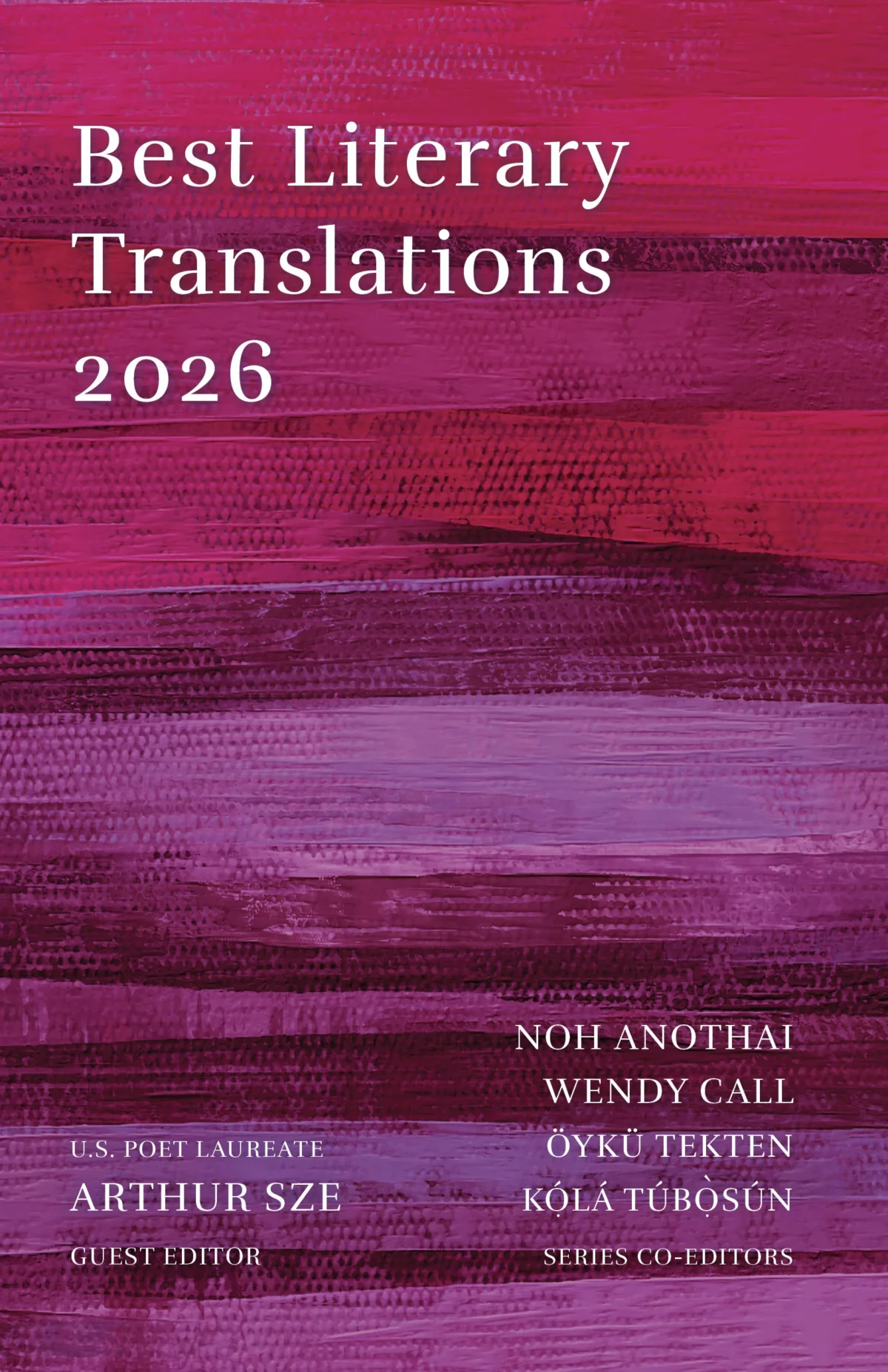
The forthcoming anthology, Best Literary Translations 2026, set to feature a curated selection of thirty-two works of poetry, fiction, and literary nonfiction from across the globe, promises to be a significant contribution to the international literary landscape. Guest edited by esteemed US Poet Laureate Arthur Sze, this collection meticulously translates works from twenty-one distinct languages into English, offering readers an unparalleled journey through diverse cultural narratives and artistic expressions. Among the distinguished contributors are celebrated poets such as Kim Hyesoon, Yuki Tanaka, and Chen Yuhong, alongside the inclusion of a poignant poem by the legendary Song dynasty poet Li Qingzhao, translated by Brandon Toh. This particular inclusion serves as a potent reminder of the enduring legacy of classical Chinese literature and its continued relevance in contemporary global discourse.
The anthology’s inclusion of Li Qingzhao’s work, "[I often recall]," translated by Brandon Toh, offers a compelling entry point into the rich tradition of ci poetry. This form, which reached its zenith during the Song dynasty (960-1279), is essentially rewritten song lyrics, each piece adhering to the specific prosody of a lost melody. While the original musical compositions have vanished with time, the poetic structures remain, allowing translators to reconstruct the lyrical essence of these ancient verses. Toh’s approach to translating Li Qingzhao’s poem is particularly noteworthy, as he consciously adopts a modern reader’s perspective, prioritizing the poem’s evocative imagery and its sonic qualities when recited. This translation strategy is crucial for bridging the linguistic and cultural chasm between classical Chinese and contemporary English, ensuring the poem’s emotional resonance is preserved.
The Art of Ci Poetry and the Translator’s Craft
The ci form, originating from the Tang dynasty and flourishing in the Song, represents a sophisticated fusion of poetry and music. Unlike the more rigid structures of shi poetry, ci allowed for greater flexibility in meter and rhyme, adapting to the melodies of popular songs. This inherent musicality, however, poses a significant challenge for translators. The loss of the original melodies means that the rhythmic and tonal nuances that once defined a ci poem are largely inaccessible. Translators must therefore rely on their understanding of the poetic text itself, as well as the cultural context in which it was created, to convey its intended effect.
Brandon Toh’s translator’s note provides valuable insight into his meticulous process. He explains that his translation focuses on the poem’s "stuporous imagery" and its "sound when recited." This deliberate choice acknowledges the inherent limitations of translating a form intrinsically linked to lost music. By emphasizing the sensory experience of the poem—its visual evocations and its auditory appeal—Toh seeks to recreate a semblance of the original impact for a contemporary audience. The poem’s narrative of being lost and disoriented, drifting among lotus flowers, and then startling a flock of herons into flight, lends itself well to this focus on imagery and evocative language.
A key element highlighted in Toh’s note is the concept of the jingjie (shengjijie), or "eye of the poem." This critical concept, popularized by the Song dynasty literary titan Su Shi, refers to a line or phrase that imbues a poem with a vital spark, a sense of life or soul. Toh draws a compelling parallel between jingjie and Roland Barthes’ concept of punctum in photography, which describes a detail that pierces the viewer’s consciousness, creating an emotional or intellectual resonance beyond the purely aesthetic.

For Li Qingzhao’s "[I often recall]," Toh identifies the final stanza – "So, I / rowed, and / rowed, / and startled / a flock of herons / into flight" – as the poem’s jingjie. This sudden eruption of movement and sound, he argues, provides a striking contrast to the preceding dreamlike and introspective mood. The ambiguity of this moment—whether it jolts the poet awake or plunges her deeper into a reverie—is central to the poem’s enduring power. Toh’s translation strategy, particularly his careful selection of the verb "startled" and the arrangement of fricative sounds in "flock" and "flight," aims to capture this pivotal shift and its inherent uncertainty.
Li Qingzhao: A Poetic Icon Defying Conventions
Li Qingzhao (1084–1151), also known by her literary sobriquet Yi’an Jushi, is widely recognized as the preeminent woman poet in Chinese history. Her life, spanning the turbulent Northern and Southern Song dynasties, was marked by profound personal and political upheaval. Despite societal expectations that often confined women to domestic spheres, Li Qingzhao pursued a literary career with remarkable tenacity. She navigated periods of war, exile, imprisonment, and significant personal loss, including the death of her husband and the subsequent confiscation of her family’s vast collection of art and antiquities. Her poetry, deeply personal and exquisitely crafted, reflects both the joys of her early life and the profound sorrows of her later years.
Her ability to continue writing and to produce works of such enduring beauty and emotional depth in the face of immense adversity has cemented her status as a cultural icon. The fact that only two English translations of her works remain in print today underscores the ongoing need for wider dissemination of her literary contributions, a need that Best Literary Translations 2026 aims to address. The inclusion of her ci poem in this anthology serves as a significant act of literary preservation and reintroduction, bringing her voice to a new generation of readers.
The Significance of Best Literary Translations 2026
The Best Literary Translations series, now in its 2026 edition, has established itself as a crucial platform for showcasing the breadth and depth of global literary talent. Edited by a distinguished panel including Noh Anothai, Wendy Call, Öykü Tekten, Károly Tábory, and Arthur Sze, the anthology’s commitment to representing a wide array of languages and literary forms is commendable. The inclusion of works from twenty-one languages in a single volume is a testament to the meticulous curatorial effort and the collaborative spirit of international literary translation.
The selection process for such an anthology is inherently complex. It involves identifying works that not only possess significant literary merit but also translate effectively, preserving their essence while resonating with an English-speaking audience. The guest editors, particularly Arthur Sze, with his profound understanding of poetry and translation, play a pivotal role in shaping the collection’s thematic coherence and its overall impact. Sze’s own work as a poet and translator has often explored the intersections of science, nature, and philosophy, suggesting an editorial vision that values intellectual depth and lyrical beauty.

The publication of Best Literary Translations 2026 arrives at a time when global interconnectedness is both a reality and a subject of ongoing debate. In this context, literary translation plays an indispensable role in fostering cross-cultural understanding and empathy. By providing access to voices and stories that might otherwise remain unheard, translated literature broadens our perspectives and challenges our assumptions. The anthology’s commitment to diverse languages and genres ensures that it will appeal to a wide range of readers, from seasoned literary enthusiasts to those new to international literature.
Broader Implications for Literary Translation and Cultural Exchange
The success and impact of anthologies like Best Literary Translations 2026 have significant implications for the field of literary translation. They not only provide exposure for individual translators and their chosen works but also highlight the critical importance of supporting translation initiatives. Translators are often unsung heroes of the literary world, working diligently to bridge linguistic and cultural divides. The recognition and visibility afforded by such publications can encourage more translators to undertake ambitious projects and can inspire new generations of scholars and writers to engage with the art of translation.
Furthermore, these collections contribute to a richer and more nuanced understanding of global literary history. By juxtaposing works from different eras and regions, they reveal shared human experiences and universal themes, while also celebrating the unique cultural contexts that shape artistic expression. Li Qingzhao’s ci poem, appearing alongside contemporary works, serves as a powerful reminder of the continuity of poetic tradition and the timeless nature of human emotion.
The partnership with publishers like Deep Vellum Publishing, known for its commitment to translating contemporary and classic literature from around the world, is also crucial. Such collaborations ensure that these translated works reach a wider audience and are made available in high-quality editions. The visual presentation of the anthology, including the cover art and the inclusion of the book’s cover image, further enhances its appeal and marketability, signaling its importance within the literary landscape.
In conclusion, Best Literary Translations 2026 stands as a testament to the vibrant and ever-evolving world of international literature. Through its careful curation and its commitment to linguistic diversity, the anthology promises to offer readers a profound and enriching experience. The inclusion of Li Qingzhao’s classic ci poem, masterfully translated by Brandon Toh, serves as a poignant highlight, demonstrating the enduring power of ancient voices and the vital role of translation in connecting us across time and culture. This collection is poised to become an indispensable resource for anyone interested in the global literary conversation, fostering a deeper appreciation for the art of storytelling and the universal human desire to communicate and connect.

