


The history of diabetes management offers a remarkable testament to the power of dietary interventions, predating the advent of pharmaceutical marvels like insulin. For individuals grappling with diabetes before the 1920s, a seemingly humble foodstuff—oatmeal—played a pivotal role in preserving and extending lives. This groundbreaking approach, championed by physician Carl von Noorden, emerged as a beacon of hope, challenging prevailing medical wisdom and laying the groundwork for future understanding of metabolic health.
Von Noorden’s seminal work, published in 1903, introduced what became known as the "oatmeal diet" for diabetes. The findings were met with considerable skepticism within the medical community, a predictable reaction to a treatment that diverged sharply from established practices. However, the burgeoning body of evidence gathered in the ensuing years proved undeniable, gradually overcoming the initial resistance.
The impact of von Noorden’s research was profoundly felt by prominent physicians of the era. Dr. James B. Herrick, a highly respected figure in medicine, began experimenting with the oatmeal diet on his own patients. Initially approaching the treatment with considerable doubt, Herrick was astonished by the dramatic improvements he observed. This personal conviction led him to issue a significant proclamation in 1909: no child or adolescent diagnosed with diabetes should be denied the potential benefits of this dietary intervention. This marked a critical turning point, elevating the oatmeal diet from a controversial theory to a recognized therapeutic option for younger patients.
Further validation came from Dr. Elliott Joslin, a towering figure in the history of diabetes care and the founder of what is now the world’s oldest and largest diabetes clinic. Joslin described the effects of the oatmeal regimen as "sometimes magical," referring to it as an "unsolved mystery" and "one of the greatest puzzles in diabetes." While the precise mechanisms remained elusive at the time, researchers had identified a crucial clue: the strict exclusion of animal protein was essential for the diet’s success. They observed that animal protein intake seemed to negate the beneficial effects of the oatmeal-based approach.
More than a century later, contemporary scientific understanding provides the missing pieces to this historical puzzle. It is now well-established that high intake of animal protein can indeed exacerbate insulin resistance, the underlying pathological process in prediabetes and type 2 diabetes. Conversely, diets rich in plant-based foods have been shown to enhance insulin sensitivity, effectively reversing the detrimental effects of insulin resistance. This scientific revelation retrospectively validates the empirical observations of early 20th-century physicians, demonstrating a remarkable foresight in their dietary recommendations.
The Enduring Benefits of Oatmeal for Diabetes Management
The association between higher consumption of whole grains, including oats, and a reduced risk of developing diabetes has been a consistent finding in nutritional science. Research consistently highlights the salutary effects of oats on glycemic control and overall metabolic health. Numerous randomized controlled trials have demonstrated that incorporating oats into the diet significantly improves both short-term and long-term blood sugar regulation, alongside positive impacts on cholesterol levels.
The primary driver of these benefits is believed to be a specific type of fermentable fiber found in oats called beta-glucan. This soluble fiber possesses a unique ability to interact with the gut microbiome, fostering a more favorable environment for beneficial bacteria. This microbiome-modulating capacity is thought to be a key mechanism underlying not only improved blood sugar control but also cholesterol-lowering effects.

The Power of Fiber in Oatmeal
The impact of dietary fiber, particularly the type found in oats and legumes, is far-reaching. The beneficial bacteria residing in the gut, often referred to as the gut flora, ferment this fiber to produce short-chain fatty acids (SCFAs). These SCFAs possess potent anti-inflammatory properties, which are crucial for overall health and can play a significant role in managing chronic inflammatory conditions associated with diabetes.
Dozens of randomized controlled trials have provided robust evidence that the fibers present in oats and beans can lead to improved long-term blood sugar control in individuals with diabetes. The underlying principle is that dietary fiber selectively promotes the growth of specific gut bacteria that are instrumental in alleviating the metabolic dysregulation characteristic of type 2 diabetes.
Oat fiber itself acts as a prebiotic, specifically stimulating the proliferation of beneficial bacterial species such as Lactobacillus and Bifidobacteria. The synergistic combination of a diet low in animal protein and animal fat, coupled with an abundance of prebiotic fiber, explains why oatmeal-based dietary regimens became an integral part of clinical practice in diabetes management.
Rapid and Lasting Improvements: The Oatmeal Intervention
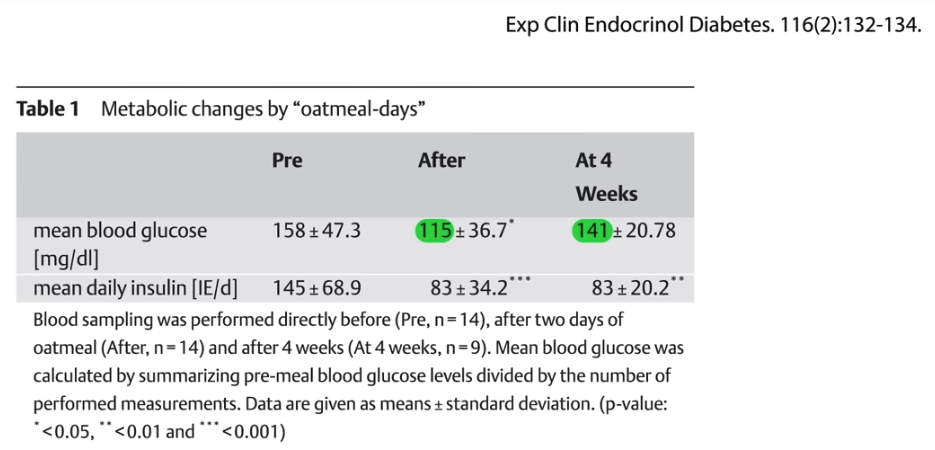
The remarkable speed at which the benefits of oatmeal can manifest has been a subject of scientific inquiry. Several studies suggest that even a few days of consuming oatmeal can yield positive effects that persist for approximately one month. One notable randomized, controlled, crossover trial revealed that participants who followed an oatmeal diet experienced a dramatic reduction in insulin requirements, dropping by nearly 40% within just two days. This was achieved in comparison to a control group that restricted calories while adhering to a standard hypocaloric diabetic diet.
Crucially, the positive impact extended beyond immediate insulin needs. A key measure of long-term blood sugar control, assessed four weeks after the intervention, reflected sustained benefits. This indicates that the metabolic improvements initiated by the oatmeal diet had a lasting influence on the body’s ability to regulate blood glucose.
Further research has corroborated these findings. Studies have shown that a mere two-day period of consuming oatmeal can significantly reduce the need for insulin and improve blood sugar levels, with beneficial effects observed for up to four weeks. In patients with uncontrolled type 2 diabetes, a two-day oatmeal intervention led to a 40% reduction in insulin dosage and a near normalization of average blood sugar levels. Even after participants resumed their regular diets, researchers documented a significant and lasting reduction in insulin dosage and improved mean blood sugar levels for several weeks post-study.
The implications of these findings are profound. When individuals are placed on diets rich in oats, beans, fruits, vegetables, and nuts, there is a corresponding increase in the population of gut bacteria that produce beneficial SCFAs. This dietary shift is associated with a substantial decrease in fasting blood sugar levels, often by approximately 25% within one month. Moreover, the diversity and abundance of these fiber-promoted SCFA-producing bacteria correlate directly with improved blood sugar control, as evidenced by better hemoglobin A1c levels, a marker of long-term glycemic management.
Potential Downsides and Considerations
While the benefits of oatmeal for diabetes management are substantial, it is imperative to acknowledge potential risks and the need for careful medical supervision. If an individual adopts an oatmeal-rich diet that significantly improves their glycemic control, their physician must be prepared to rapidly adjust or "deprescribe" their blood sugar medications. Failure to do so could lead to dangerously low blood sugar levels (hypoglycemia), a potentially life-threatening condition.
Oatmeal interventions are not recommended for individuals who may have difficulty recognizing or reporting symptoms of hypoglycemia. The primary "downside" of intensive oatmeal interventions is their efficacy; they can work so well that they necessitate prompt medical intervention to prevent overmedication. Therefore, such dietary trials should always be conducted under close medical supervision.
Understanding the Glycemic Index of Oatmeal
The glycemic index (GI) of a food indicates how quickly it raises blood glucose levels. For individuals managing diabetes, understanding the GI of different forms of oatmeal is crucial for making informed dietary choices. Generally, whole grains are beneficial, but the less processed, more intact the grain, the slower its digestion and absorption, leading to a more gradual rise in blood sugar.
- Oat Groats: These are whole oat kernels with the inedible outer husks removed. They are considered the least processed form.
- Steel-Cut Oats (Irish Oats/Pinhead Oats): Oat groats that have been cut into two to four pieces. These are typically considered a low-glycemic-index food, with an average GI below 55.
- Scottish Oatmeal: Oat groats that have been coarsely ground. This form also tends to have a lower GI.
- Rolled Oats (Old-Fashioned Oats): Oat groats that have been steamed and flattened. These generally have a glycemic index of around 55, still within the moderate range.
- Instant Oats: These oats are steamed for longer and rolled more thinly, making them quicker to cook but also leading to faster digestion. They have a higher glycemic index, scoring around 79. While this is considered a high-GI food, it is still generally less impactful than many processed breakfast cereals, which can have GIs in the 80s or even 90s.
For optimal blood sugar management, opting for less processed forms of oats, such as steel-cut or rolled oats, is generally advisable.
Enhancing the Oatmeal Experience
Oatmeal, a classic whole-grain breakfast, offers remarkable versatility in preparation and flavor. Beyond its inherent health benefits, it can be a delicious and satisfying meal. A foundational approach involves creating a "BROL" base, standing for Beans, Rolled Oats, Oats, and Legumes, representing a plant-based, fiber-rich foundation.
For those with a preference for sweetness, creative combinations can be devised. One popular sweet variation involves frozen dark red cherries, cocoa powder, dates, and walnuts or pumpkin seeds, creating a "chocolate-covered-cherry sensation."
The savory potential of oatmeal is equally vast. Recipes exist for "BROL bowls" incorporating sautéed greens, and a simple internet search for "savory oatmeal" reveals a plethora of culinary explorations. These can include ingredients such as mushrooms, herbs, curry spices, and roasted vegetables, transforming oatmeal into a hearty and flavorful meal suitable for any time of day.
The historical journey of the oatmeal diet for diabetes underscores a fundamental principle of nutrition: the profound impact of whole, plant-based foods on metabolic health. What was once a puzzling "cure" is now understood through the lens of modern science, highlighting the intricate relationship between diet, the gut microbiome, and insulin sensitivity. As research continues to unravel these connections, the enduring wisdom of early dietary interventions, like the oatmeal cure, remains a powerful reminder of the foundational role of nutrition in managing chronic diseases.

