

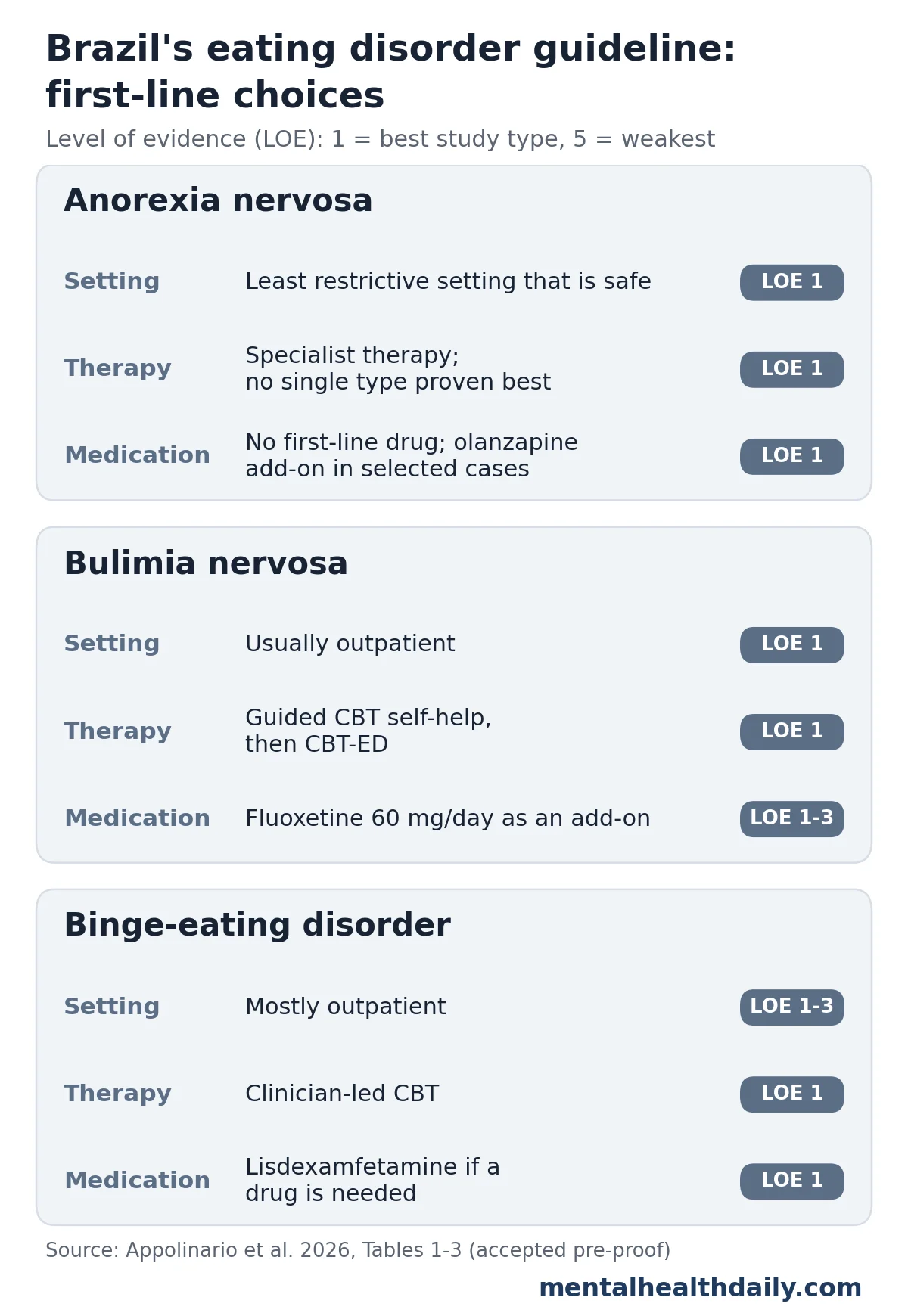
The Brazilian Psychiatric Association (ABP) has released a groundbreaking set of guidelines, marking a significant step forward in the diagnosis and treatment of eating disorders across Brazil. These comprehensive recommendations prioritize evidence-based psychotherapies, placing cognitive behavioral therapy (CBT) at the forefront for bulimia nervosa and binge-eating disorder. For pharmacological interventions, fluoxetine is identified as the preferred medication for bulimia, while lisdexamfetamine takes precedence for binge-eating disorder. In contrast, the guidelines acknowledge the complex landscape of anorexia nervosa, noting that no single therapy has definitively proven superior, and medication typically serves only a minor, supportive role. These new directives are primarily tailored for clinicians operating within Brazil’s public health system, aiming to standardize and improve care for both adults and adolescents grappling with these challenging conditions.
A Crucial Step for Public Health in Brazil
The introduction of these guidelines addresses a long-standing need within the Brazilian healthcare landscape. Prior to this, clinicians often relied on international guidelines that, while valuable, might not always fully account for the specific socio-economic, cultural, and resource realities of Brazil. Eating disorders, including anorexia nervosa, bulimia nervosa, and binge-eating disorder, represent a substantial public health burden globally and increasingly within Brazil. They are complex psychiatric illnesses characterized by severe disturbances in eating behaviors, thoughts, and emotions, often leading to serious medical complications, psychological distress, and impaired functioning.
The prevalence of eating disorders in Brazil, mirroring global trends, highlights the urgency of clear, evidence-based guidance. While precise national statistics can be challenging to gather, studies suggest that rates are comparable to those found in developed countries, with adolescents and young adults being particularly vulnerable. The lack of standardized protocols can lead to inconsistent care, delayed diagnoses, and poorer outcomes, making these new ABP guidelines a vital tool for improving patient pathways and optimizing resource allocation within the public health system (Sistema Único de Saúde – SUS).
Rigorous Development and Consensus-Building
The meticulous process behind the creation of these guidelines underscores their scientific rigor. The Brazilian Association of Psychiatry convened a multidisciplinary working group comprising leading psychiatrists, psychologists, and dietitians, reflecting the holistic nature required for effective eating disorder treatment. This expert panel was tasked with conducting an exhaustive review of treatment evidence for the three primary eating disorders: anorexia nervosa, bulimia nervosa, and binge-eating disorder.
The research methodology was robust, involving searches across six major scientific databases, which remarkably extended through June 30, 2025. This forward-looking approach suggests a commitment to incorporating the most current and even anticipated research into their recommendations, ensuring the guidelines remain relevant for a longer period. Priority was given to systematic reviews and meta-analyses, considered the highest levels of evidence, with randomized controlled trials used to fill any evidentiary gaps.
Following the extensive literature review, the working group engaged in a series of five expert meetings. During these sessions, recommendations were meticulously debated and refined, requiring more than 75% agreement among the experts to be formally adopted. This high threshold for consensus reinforces the strength and reliability of the final guidelines. Each recommendation is also accompanied by a Level of Evidence (LOE) derived from the Oxford Centre for Evidence-Based Medicine scale. It is crucial to understand that this LOE describes the type of study supporting a statement, not necessarily the efficacy of the treatment. As the guidelines themselves point out, even Level 1 evidence (the strongest study type) can demonstrate that a treatment is no better than usual care, a phenomenon observed more than once in the context of anorexia nervosa. This nuance is vital for clinicians to interpret the recommendations accurately, understanding the limitations and strengths of the underlying research.
Guiding Principles: Psychotherapy First, Medication as an Adjunct
A foundational principle permeating all three disorder-specific recommendations is the primary role of psychotherapy. The guidelines consistently advocate for psychotherapy as the initial and central component of care, with medication introduced only as an integral part of a broader treatment plan, never as a stand-alone solution. However, the strength of the evidence supporting specific therapeutic and pharmacological options varies significantly across the disorders, reflecting the distinct challenges each presents.
Bulimia Nervosa: A Stepped Approach to Recovery
For bulimia nervosa, characterized by recurrent episodes of binge eating followed by compensatory behaviors such as self-induced vomiting, misuse of laxatives, excessive exercise, or fasting, the ABP guidelines endorse a stepped-care model. This approach begins with guided Cognitive Behavioral Therapy self-help (CBT-GSH), which empowers individuals with structured materials and minimal therapist contact to initiate recovery. If initial progress is insufficient, the treatment escalates to full Cognitive Behavioral Therapy for Eating Disorders (CBT-ED), delivered by a trained clinician.
CBT-ED has demonstrated considerable efficacy, showing a large effect on eating disorder symptoms when compared to waitlist or no treatment groups (standardized mean difference of 1.01). While its advantage over other active treatments was smaller (g = 0.27), its consistent effectiveness has cemented its status as a gold standard. CBT-ED focuses on identifying and challenging distorted thoughts about food, weight, and body shape, developing coping mechanisms for triggers, and establishing regular eating patterns. The inclusion of guided self-help is particularly significant for Brazil’s public health system, potentially increasing accessibility to early intervention given resource constraints.
When medication is deemed necessary as an adjunct, fluoxetine (commonly known as Prozac) is the first-line pharmacological choice. At a dosage of 60 mg/day, fluoxetine has been extensively studied and is the only medication approved by Brazil’s regulatory agency, ANVISA, specifically for bulimia. Its approval by the US Food and Drug Administration (FDA) also covers moderate-to-severe bulimia nervosa in adults. Studies indicate that fluoxetine at this dosage leads to higher rates of binge-eating remission and fewer treatment dropouts compared to placebo, exhibiting small-to-moderate effect sizes (LOE 1). As an antidepressant belonging to the selective serotonin reuptake inhibitor (SSRI) class, fluoxetine is thought to modulate neurotransmitters involved in mood regulation and impulse control, which can be disrupted in bulimia. However, the guidelines explicitly state it should always complement psychotherapy, not replace it.
Binge-Eating Disorder: CBT as the Core, Lisdexamfetamine for Pharmacological Support
Binge-eating disorder (BED), distinct from bulimia nervosa by the absence of regular compensatory behaviors, is another condition where the guidelines provide clear direction. Affecting a significant portion of the population, often comorbid with obesity and depression, BED benefits greatly from structured interventions. For moderate to severe cases, clinician-delivered CBT is strongly recommended, leading to remission of binge eating in a substantial 48–53% of patients. This form of CBT helps individuals understand the emotional and behavioral triggers for binges, develop alternative coping strategies, and restore a healthier relationship with food.
A critical aspect of the guidelines for BED is their stance on weight management. They explicitly state that weight loss should not be the primary therapeutic goal. Instead, any weight management efforts should only commence after the binge-eating behaviors have stabilized, employing gradual, non-restrictive, and health-focused methods. This approach prioritizes psychological recovery and reduces the risk of perpetuating restrictive eating cycles that can paradoxically exacerbate bingeing. The treatments for BED, including both psychotherapy and self-help formats, were generally well tolerated, with dropout rates of 19% for psychotherapy and 24% for self-help, indicating reasonable patient adherence.
When pharmacological intervention is required for BED, lisdexamfetamine (Vyvanse) is the recommended first-line drug. This stimulant medication, also used for Attention-Deficit/Hyperactivity Disorder (ADHD), is the sole medication approved by ANVISA for binge-eating disorder in Brazil, mirroring its FDA approval for moderate-to-severe BED in adults. Pooled data from three randomized trials provide strong evidence (LOE 1) for its effectiveness, showing reductions in binge frequency and increased remission rates, with medium effect sizes. However, it did not significantly improve depressive symptoms, underscoring the need for integrated care addressing all aspects of a patient’s health. Lisdexamfetamine is thought to work by increasing dopamine and norepinephrine in the brain, which can help improve impulse control and reduce compulsive behaviors associated with binge eating.
Anorexia Nervosa: A Complex Landscape with Limited Pharmacological Efficacy
The treatment landscape for anorexia nervosa (AN), characterized by severe restriction of energy intake leading to significantly low body weight, an intense fear of gaining weight, and disturbance in the way one’s body weight or shape is experienced, remains particularly challenging. The guidelines emphasize a dual approach: nutritional rehabilitation under medical supervision paired with psychotherapy. The primary objectives are to restore a healthy weight, alleviate core eating disorder symptoms, and ensure patients remain engaged in treatment, a common difficulty in AN.
Unlike bulimia and BED, no single psychotherapy has definitively outperformed others for AN. The guidelines acknowledge the utility of several approaches, including CBT-ED, Family-Based Treatment (FBT), Specialist Supportive Clinical Management (SSCM), Maudsley Anorexia Nervosa Treatment for Adults (MANTRA), and Cognitive Remediation Therapy (CRT). Each of these therapies offers distinct strengths, and the choice often depends on patient age (FBT is particularly effective for adolescents), symptom presentation, and therapist expertise. Despite the lack of a single "best" option, the guidelines firmly position specialist psychotherapy as first-line for anorexia, stressing that it should be manualized, adapted to the individual, and delivered by clinicians with significant experience in treating eating disorders.
The role of medication in AN is considerably more limited. Systematic reviews consistently do not support the use of antidepressants for weight gain or the core symptoms of anorexia (LOE 1). The overall quality of drug studies in AN is noted to be low, reflecting the inherent difficulties in conducting research in this medically complex and often resistant population. The one exception noted is olanzapine, an atypical antipsychotic. While not approved for anorexia by regulatory bodies, the largest trial involving 152 participants found a small but significant effect on weight gain. Subsequent meta-analyses have corroborated small-to-medium effects on weight restoration but did not find significant improvements in eating disorder-specific or general psychiatric symptoms. The guidelines permit olanzapine as an add-on to therapy in carefully selected cases, with vigilant monitoring of metabolic parameters such as blood sugar and lipids due to potential side effects.
Optimizing Care Settings and Nutritional Support
Beyond specific therapies and medications, the guidelines also provide critical recommendations regarding care settings and the integration of nutritional support. For anorexia nervosa, reviews comparing intensive full-time inpatient care with outpatient treatment or partial hospitalization have not shown a clear superiority of one setting over another in terms of weight restoration or symptom reduction (LOE 1). Consequently, the guidelines advocate for the least restrictive safe setting, with decisions made on a case-by-case basis considering the patient’s medical risk, symptom severity, and available social support. This flexible approach aims to maximize patient autonomy and integration while ensuring safety.
Bulimia nervosa and binge-eating disorder are typically managed in outpatient settings. A higher level of care, such as partial hospitalization or inpatient treatment, is reserved for individuals with severe symptoms, serious medical or psychiatric comorbidities, or those who have not responded to outpatient interventions.
Nutritional care is highlighted as an indispensable component of treatment across all disorders, with the guidelines emphasizing that it is most effective when integrated into psychotherapy rather than delivered in isolation. For bulimia and binge eating, structured, regular meals and snacks are recommended to break the destructive cycle of meal skipping and subsequent bingeing. Education on hunger and fullness cues is also crucial, empowering patients to re-establish intuitive eating patterns. Dietitians play a vital role in guiding patients through gradual, supported exposure to feared foods, systematically challenging food-related anxieties and expanding dietary variety.
Alignment with International Standards and Local Nuances
The authors of the Brazilian guidelines assert that their recommendations largely align with existing international guidelines, a point underscored by comparison with the 2023 American Psychiatric Association (APA) guideline, which covers the same three disorders. The core treatment choices for adults show striking similarities: renourishment combined with psychotherapy for anorexia, CBT alongside 60 mg daily fluoxetine for bulimia, and CBT or interpersonal therapy for binge-eating disorder, with antidepressants or lisdexamfetamine as pharmacological options when indicated. An earlier umbrella review of meta-analyses further supports this consensus, highlighting modest overall treatment effects, the efficacy of family-based therapy in adolescent anorexia, the broad effectiveness of CBT-ED in adult bulimia, and the benefits of psychotherapy and lisdexamfetamine for binge-eating disorder.
Crucially, while harmonizing with global best practices, the Brazilian guideline also incorporates local specificities. A notable example is its mention of sibutramine, a weight-loss drug that has been withdrawn from many international markets due to cardiovascular safety concerns but remains available in Brazil. The guideline notes that sibutramine can reduce binge frequency, though its prescription requires special forms and informed consent, reflecting a careful balancing act between potential benefit and known risks within the Brazilian regulatory framework. This localized detail highlights the importance of guidelines being culturally and contextually adapted.
Implications for Patients, Clinicians, and Public Health
These new guidelines represent a pivotal moment for eating disorder care in Brazil. For patients and their families, they offer the promise of more consistent, evidence-based treatment pathways, potentially leading to earlier diagnosis, more effective interventions, and improved long-term outcomes. Clear recommendations can empower patients to advocate for appropriate care and provide families with a better understanding of what constitutes best practice. The emphasis on psychotherapy as a first-line approach also reinforces the importance of a comprehensive, rather than purely medical, recovery journey.
For clinicians, the guidelines provide a much-needed framework, reducing variability in practice and ensuring that care aligns with the latest scientific evidence. This standardization can enhance clinical confidence, facilitate interdisciplinary collaboration, and support training initiatives across the vast public health system. However, the effective implementation of these guidelines will require significant investment in training for psychiatrists, psychologists, and dietitians, particularly in specialized eating disorder therapies such as CBT-ED and FBT, which may not be widely available or routinely taught.
For the public health system, the guidelines offer a strategic roadmap for resource allocation and service development. By prioritizing cost-effective interventions like guided CBT self-help and clearly delineating treatment steps, the SUS can optimize its limited resources. Long-term, consistent application of these guidelines has the potential to reduce the burden of severe, chronic eating disorders, thereby lowering healthcare costs associated with medical complications and prolonged treatment. However, successful implementation will depend on overcoming systemic challenges such as geographical disparities in access to specialized care, addressing societal stigma surrounding mental health, and ensuring adequate funding for the necessary infrastructure and workforce development.
Looking Ahead: Continuous Improvement and Research
While comprehensive, the guidelines also implicitly highlight areas for future research and continuous improvement. The acknowledged limitations in evidence for anorexia nervosa, particularly regarding pharmacological interventions, underscore the need for further robust studies in this complex disorder. Moreover, the generalizability of some findings to the diverse Brazilian population, encompassing various socio-economic and cultural backgrounds, warrants ongoing evaluation and potentially localized adaptations. The dynamic nature of medical science means that these guidelines will need regular review and updates to incorporate new research findings and evolving clinical best practices.
Support: If you or someone you know is struggling with an eating disorder in the US, the National Alliance for Eating Disorders runs a free helpline staffed by licensed therapists at 1-866-662-1235. In a crisis, call or text 988 for the 988 Suicide & Crisis Lifeline, or call 911.

