

In a serialized publication that promises to offer readers a profound exploration of Buddhist texts through the lens of personal experience, acclaimed Japanese poet Hiromi Ito has begun releasing chapters from her book, Reading the Heart Sutra. Originally published in Japanese in 2010 and now translated into English for the first time by Jeffrey Angles, the work delves into the complexities of motherhood, loss, and the care of aging parents, intertwined with reflections on Buddhist philosophy. Tricycle magazine is publishing one chapter each month, providing a sustained engagement with Ito’s contemplative journey.
The latest excerpt from Reading the Heart Sutra finds Ito grappling with the profound and often unsettling questions surrounding her father’s impending death. The chapter, titled "The Song of the Earth: The Farewell," pivots from her previous reflections on assisting her father’s peaceful passage to a deeper contemplation of the Buddhist concept of the Pure Land. Ito candidly expresses her uncertainty and lack of a clear understanding of this spiritual destination, a sentiment that appears to stem from her father’s own apparent detachment from religious traditions and ancestral connections.
Navigating the Uncertainties of the Pure Land
Ito articulates a deep desire for her father to find peace, yet this desire is met with a fundamental lack of comprehension regarding the Pure Land itself. "If it’s possible to get there, of course I want him to go. Definitely. More than anything," she writes. However, she immediately counters this wish with a stark realization: "going to the Pure Land isn’t like going to math class or something. Just wanting to get there doesn’t change a thing." This highlights a core theme of the chapter: the gap between a yearning for spiritual solace and the intellectual or experiential understanding required to embrace it.
Her father, described as "old, tired, and his imagination has dried up," has seemingly abandoned family traditions, including the ancestral grave, and has not deeply engaged with religion throughout his life. This creates a poignant dilemma for Ito, who, despite her father’s lack of religious framework, wishes for him to experience a peaceful death. "I don’t think he’s thought much about religion at all, but I still want him to die in peace. So, what am I supposed to do…?" This question underscores the immense responsibility and emotional weight of caring for a dying parent when their spiritual landscape remains uncharted.
The Unforeseen Catalyst: Mahler’s "The Song of the Earth"
The narrative takes an unexpected turn when Ito receives an email from a friend in Germany, who likens the experience of reading her book, The Disappointment of Women, to listening to a Mahler piece accompanied by a tenor’s voice. This seemingly tangential observation sparks a profound connection for Ito, leading her to Gustav Mahler’s monumental work, Das Lied von der Erde (The Song of the Earth).
Ito admits she is not an ardent Mahler devotee but finds solace in listening to his music, often as a background accompaniment to her activities. Her preferred recording of Das Lied von der Erde features Bruno Walter conducting the Vienna Philharmonic, with the memorable vocal performance of Kathleen Ferrier. It is this specific piece that becomes a focal point for her meditations on death and eternity.
The poem that inspires the final movement of Das Lied von der Erde, "The Farewell," is derived from ancient Chinese poetry, notably by Meng Haoran and Wang Wei. Mahler’s musical setting, however, transforms these poetic sentiments into a profound exploration of weariness, longing, and the search for eternal peace. Ito’s analysis of the final movement, where the contralto repeatedly sings the word "Ewig" (eternal), resonates deeply with her own preoccupations.
A Journey from Darkness to Light
Ito describes the music leading up to this final declaration as a journey through darkness, a metaphor for life’s struggles and uncertainties. The occasional glimpses of brightness suggest moments of hope or clarity, but it is the sustained repetition of "eternal" that finally allows for an emergence into light and a vision of the distance. "The word feels so raw and emotionally charged that I feel like I can see the pale light of eternity," she writes, illustrating the profound impact of the music on her perception of the divine or the infinite.
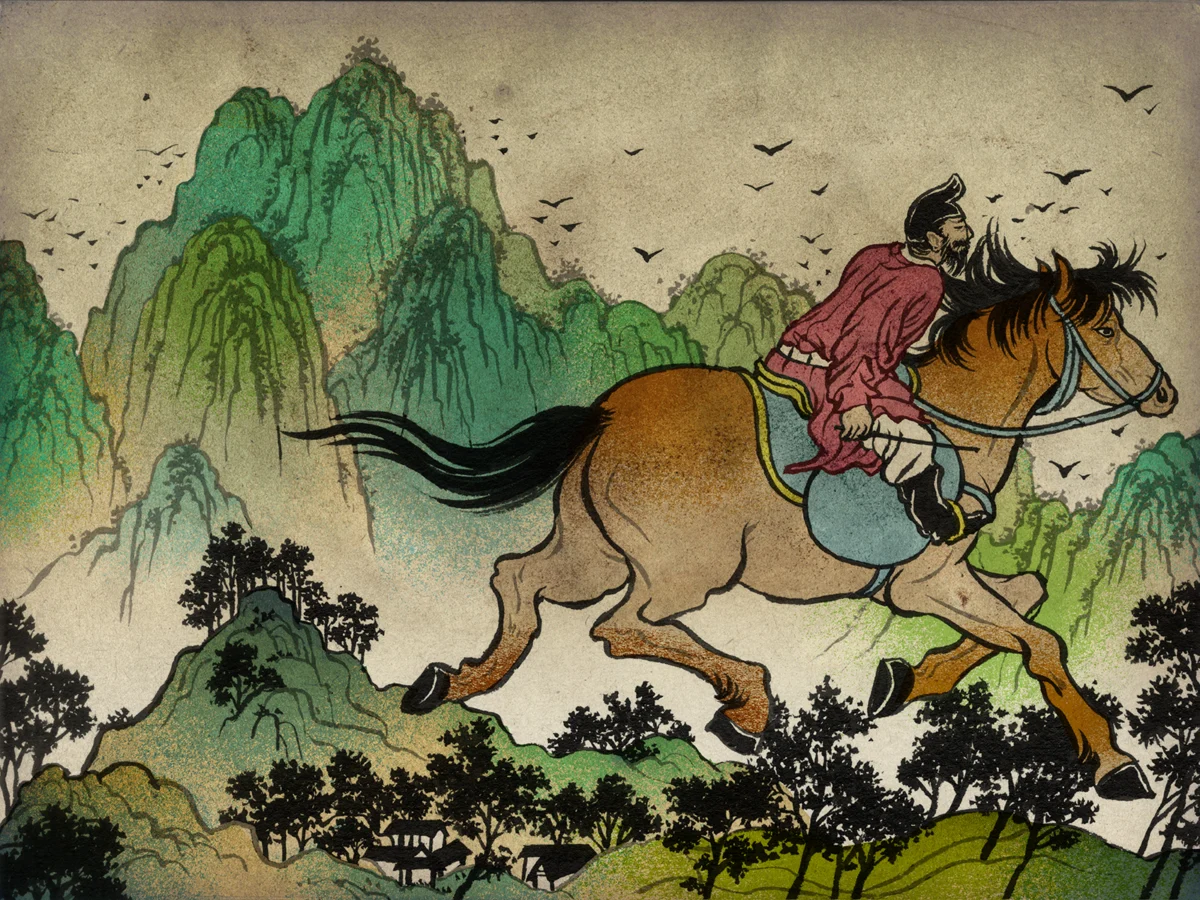
The original poem by Wang Wei, which forms the basis of Mahler’s "The Farewell," depicts a scene of parting and a friend’s decision to return to the mountains to rest in silence. The translated verses convey a sense of serene sadness and an acceptance of the natural cycle of life and renewal:
Dismounting, I offer wine to drink
And ask where you will go
You say you’ve haven’t fared well
You’ll return to rest by the southern mountains
Then just go, I will not ask again
White clouds stretch on, endlessly
Ito notes the influence of Buddhism on Wang Wei’s poem, a connection that becomes crucial to her understanding. The poem’s journey through translation and adaptation, ultimately reaching Mahler, is likened by Ito to a "long game of telephone." Mahler’s interpretation, she suggests, intensifies the sense of world-weariness and even suicidal ideation, leading the narrator to peer into the "abyss of death" before encountering a "pure vision."
Personal Resonance and the Quest for Meaning
This profound encounter with Mahler’s work, particularly the lingering word "Ewig," becomes a conduit for Ito to process her own anxieties surrounding mortality. She candidly admits to being "completely obsessed with death," a preoccupation intensified by her own menopausal transition and her constant focus on her parents’ health. Her active imagination, while a source of creative power, also fuels her contemplation of the end of life.
The desire to grasp the meaning of the Pure Land, a concept central to her father’s potential spiritual journey, is reignited by her engagement with Mahler’s music. Despite her limited German and her difficulty with extended English texts, Ito is driven to internalize the lyrics. She enlists the help of a German-speaking friend to translate the lyrics word-by-word, meticulously refining the language into Japanese. This painstaking process allows each word to become "fresh and intense, making their way into my heart."
Bridging the Gap: Music, Poetry, and Parental Legacy
Ito draws a parallel between her own experience of encountering Wang Wei’s poem through Mahler’s music and Mahler’s own discovery of the poem. She feels a palpable connection to the ancient poet, as if his voice is still present, resonating from deep within the text. This personal connection, forged through art and translation, offers a potential pathway for her to bridge the spiritual and emotional gap between herself and her father.
Her father, a man who played the horn in a band before the war and whose youth was influenced by the jazz-infused nihilism of the 1960s, has no prior connection to Buddhist sutras or the nenbutsu chant. Yet, Ito harbors a hopeful notion: could Mahler’s "Song of the Earth," delivered note by note, word by word, carry him to the peace she desires? "Perhaps he’ll be carried away by the music. And perhaps they will carry him where he needs to go," she muses, presenting a deeply personal and artistic approach to spiritual guidance.
The "Farewell" as a Vision of Eternity
The published text includes a rendition of the lyrics for "The Song of the Earth: The Farewell," offering readers a direct glimpse into the poetic heart of Ito’s reflection. The lyrics depict a weary traveler, a good friend, contemplating their next steps and seeking solace in silence and a return to their homeland. The imagery culminates in a vision of the earth’s renewal and a vast, pale light stretching towards eternity:
Spring will come to the rich earth
Flowers will bloom and green will grow
As far as the eyes can see
The distant sky will fill with pale light
As far as the eyes can see
Onward to eternity, to eternity
To eternity, to eternity, to eternity
This extended meditation on music, poetry, and spirituality, as presented by Hiromi Ito, offers a unique perspective on the universal human experiences of life, death, and the enduring search for meaning. Her serialized publication promises further insights as she continues to unravel the complexities of Buddhist texts through the rich tapestry of her own life. The initial chapters have already established a compelling narrative, and the ongoing release of Reading the Heart Sutra is poised to be a significant contribution to contemporary literature exploring faith, family, and the human condition.

