

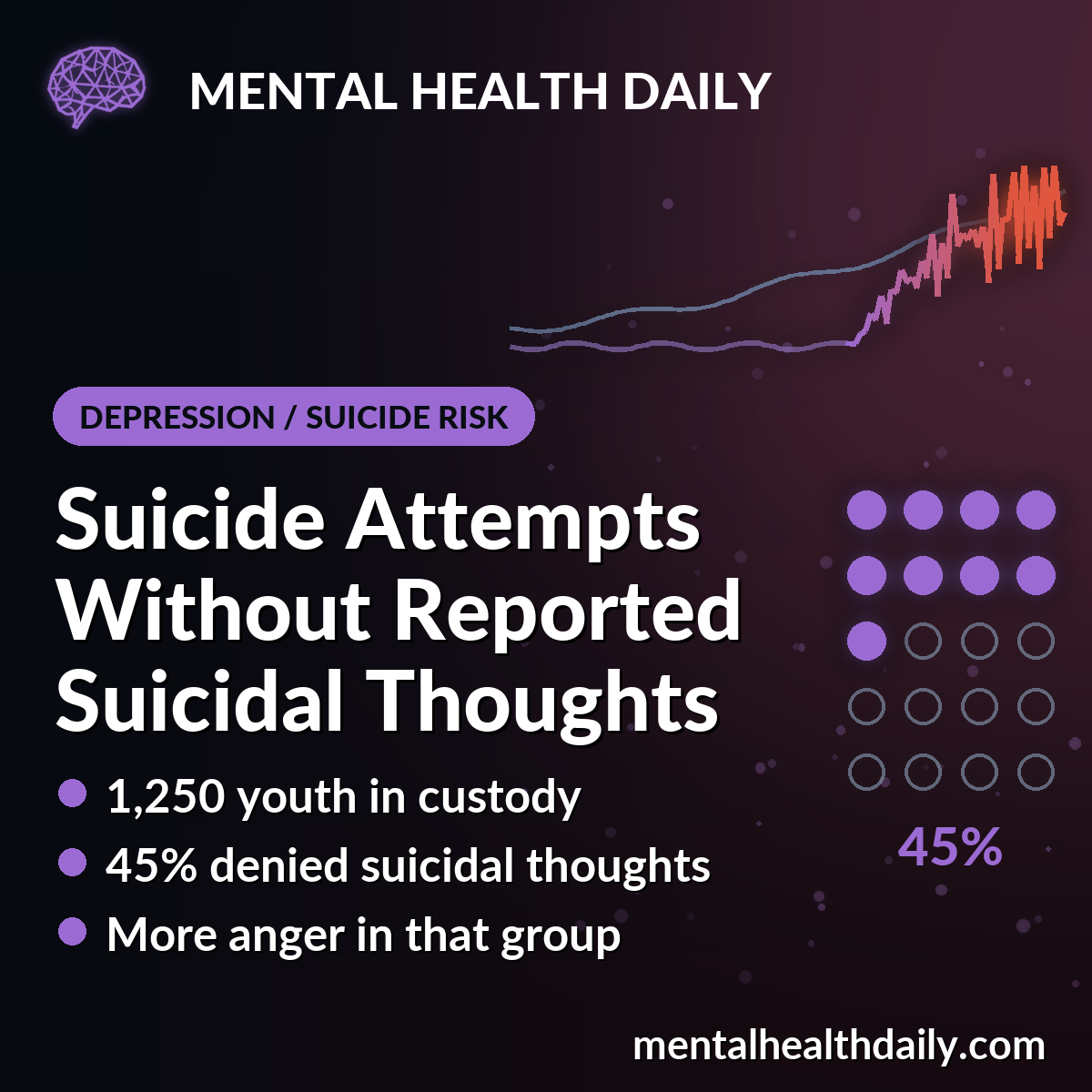
A groundbreaking 2026 study involving 1,250 Florida youth in juvenile justice programs who had a history of suicide attempts has unveiled a critical gap in conventional suicide screening methods: a significant 45% (557 individuals) denied having serious suicidal thoughts or a plan during intake assessments. This finding, published by Padron et al., not only replicates an earlier study’s observation of a 40% denial rate in a different cohort but also highlights that anger or irritability was notably more prevalent among these youth compared to those who did report suicidal ideation (40% vs. 30%). This research fundamentally challenges the prevailing "ideation-to-action" theories of suicide and suggests that current screening protocols, which often begin by directly inquiring about suicidal thoughts, may be failing to identify a substantial portion of at-risk youth within the carceral system.
The Foundation of Suicide Prevention: An Evolving Understanding
For decades, most models of suicide have operated on an "ideation-to-action" framework. This theory posits that an individual first develops suicidal thoughts (ideation), and a subset of those individuals subsequently progress from thinking about suicide to making an attempt. This logic has naturally informed suicide screening protocols, where questions about suicidal thoughts serve as the primary gateway, with further intervention triggered only if an affirmative response is given. However, the unique psychological and environmental pressures faced by youth in the juvenile legal system necessitate a re-evaluation of these models. This population is particularly vulnerable, with suicide rates estimated to be two to three times higher than those among youth outside of custody, underscoring the urgent need for effective and comprehensive screening.
The 2026 study builds upon previous research, focusing specifically on this high-risk demographic. Researchers sought to determine if the standard ideation-to-action sequence accurately reflects the experiences of youth within the juvenile justice system. The data for the study was meticulously collected from the Florida Department of Juvenile Justice (FDJJ) residential programs. Every youth admitted to these programs undergoes an intake interview within 30 days of admission, utilizing a structured risk-and-needs assessment tool known as the R-PACT (Residential Positive Achievement Change Tool). Trained case managers administer this tool, gathering extensive information on criminal history, demographics, mental health history, and suicidal thoughts and behaviors.
From a total of 17,420 youths analyzed over several years, 1,250 (7%) reported a lifetime suicide attempt. It is crucial to note that the 2026 study specifically excluded records from 2009–2012, which were used in the original study, ensuring that the replication sample comprised an entirely distinct group of young individuals. This methodological choice strengthens the confidence in the consistency of the findings across different cohorts within the same system.
Unpacking the "Denial" Phenomenon: More Than Just Absence of Thought
The study defined "ideation" as endorsing either of two interview items: having had serious thoughts about suicide, or having made a suicide plan. By this precise definition, a striking 557 of the 1,250 youth (45%) who had attempted suicide did so without ever reporting suicidal ideation. This figure closely mirrors the 40% (171 of 427 youth) found in the original study, which utilized earlier Florida records. The consistency across non-overlapping samples reinforces the robustness of this unexpected finding.
The implications of such a high rate of denial are profound. It suggests that a substantial portion of youth in custody who are at extreme risk of suicide may not be identified by screening tools that rely solely on self-reported suicidal thoughts. This challenges the very bedrock of many suicide prevention strategies currently in place within institutional settings.
Clinical Differences and the Role of Anger
Beyond the ideation denial, the study revealed significant clinical differences between the two groups—those who reported ideation and those who denied it—and these differences largely mirrored the findings of the original study. While the two groups did not differ significantly by age, sex, felony status, or weapon offenses, their clinical profiles diverged.
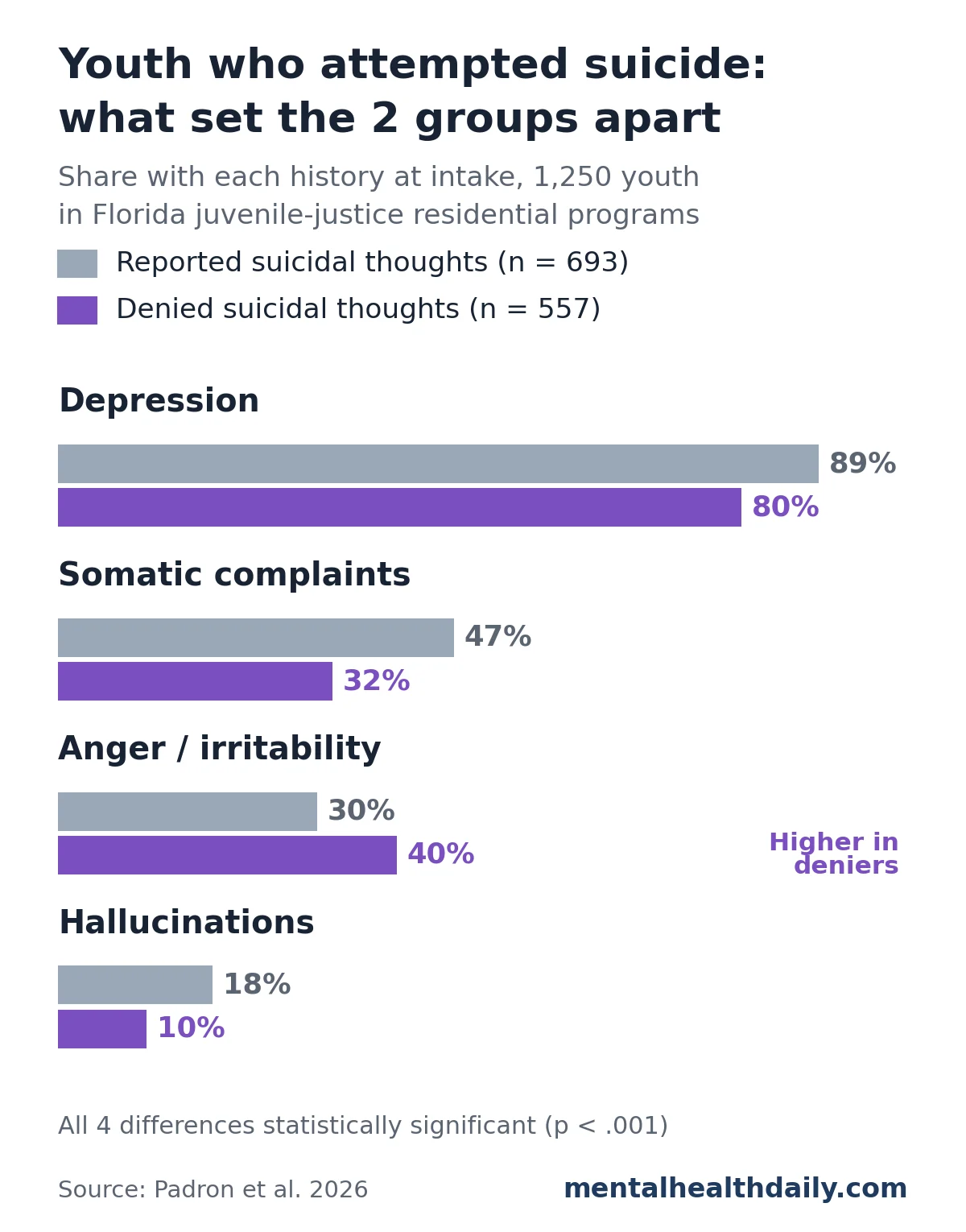
A key finding was the elevated prevalence of anger or irritability among youth who denied suicidal ideation. "Irritability" in this context was defined as a tendency to become angry easily. Among those who denied ideation, 40% had a history of anger or irritability, compared to only 30% of youth who reported suicidal thoughts. Conversely, the group denying ideation showed lower rates of other clinical histories, including depression (80% vs. 89%), somatic complaints (32% vs. 47%), and hallucinations (10% vs. 18%).
To further understand these relationships, researchers employed a logistic regression analysis. This statistical method estimates how each factor relates to attempting suicide without reported ideation while holding other variables constant. Results are expressed as an odds ratio (OR), where a value above 1 indicates higher odds of attempting without ideation, and below 1 indicates lower odds. In this analysis, a history of anger or irritability emerged as a significant predictor, with youth exhibiting such a history having higher odds of being in the "no-ideation" group. Interestingly, a history of abuse and neglect, which had been significant in the original study, lost its statistical significance once other factors were accounted for in this replication.
While the link between anger and denied ideation is statistically significant at the group level, the study cautions against using it as a sole identifier for individuals. Six out of ten youth who attempted suicide without reported ideation had no recorded anger history, and three out of ten youth who did report ideation did have an anger history. This nuance indicates that while anger is linked to higher odds at the group level, it does not define a separate, distinct type of young person, nor is it a definitive marker for individual risk assessment in isolation.
The finding also contributes to a wider, often inconsistent, body of literature on anger and suicide risk. A 2018 systematic review of 39 studies indicated that while irritability was generally linked to suicidal thoughts or attempts in community samples, findings in clinical samples, especially among children and teens, were mixed and often hampered by inconsistent definitions of anger and varying study quality. The Florida study provides a more specific insight: among youth who have already attempted suicide, anger is more common in those whose attempt was not preceded by reported suicidal thinking. This suggests a potential alternative pathway to suicidal behavior that bypasses the traditional ideation phase.
Understanding the Measurement Gap: Beyond Simple Denial
The researchers are careful to clarify that "denying suicidal ideation" does not definitively mean an absence of suicidal thoughts. Instead, it indicates that ideation was not reported or identified. Several lines of evidence help explain the potential breadth of this measurement gap.
Firstly, the definition of "suicidal thoughts" significantly impacts reporting. A 2022 survey of 6,200 U.S. adults found that 36% of individuals with a lifetime suicide attempt denied ever having active suicidal thoughts. However, when passive thoughts (such as wishing to be dead) were included, only 11% denied any suicidal thinking whatsoever. The Florida interview specifically asked about "serious thoughts" and "plans," potentially missing passive, fleeting, or less crystallized ideation that some youth may have experienced.
Secondly, adolescents are known to forget or underreport thoughts they previously had. A 2026 study involving 80 adolescents used phone check-ins five times a day for two weeks. Of the 48 participants who reported suicidal thoughts during these frequent check-ins, a significant 35% to 41% later denied having had any such thoughts when asked in subsequent surveys or interviews. Those who later denied ideation tended to have milder, less frequent thoughts and less severe depression, a pattern that resonates with the lower depression rates observed in the Florida no-ideation group.
Furthermore, the unique environment of juvenile custody adds layers of complexity. Youth in detention settings may be hesitant to disclose suicidal thoughts to a case manager, fearing that a "yes" answer could lead to being flagged as high-risk, potentially resulting in further restrictions, isolation, or transfer to more secure facilities. Additionally, some young people, especially those grappling with intense emotional dysregulation, may genuinely struggle to recognize, label, or articulate the feelings and thoughts they experienced prior to an attempt. Whether these youth truly transition from calm to crisis without suicidal thinking, or whether their thoughts simply go unreported due to various factors, the outcome for screening is the same: a conventional screen relying primarily on suicidal-ideation questions will miss a large proportion of at-risk youth.
Implications for Suicide Screening and Prevention in Juvenile Justice
The study’s findings strongly advocate for a paradigm shift in suicide screening within juvenile justice. The existence of a "rapid pathway" to suicide, where a trigger ignites a surge of anger or distress, leading quickly to an attempt as a means of escape with minimal forethought, is a significant hypothesis. While this study, based on lifetime histories rather than real-time events, cannot definitively confirm this sequence, it provides compelling evidence for the necessity of broader, more comprehensive screening.
Current screening models that disproportionately emphasize ideation may need to be supplemented or replaced with approaches that also assess other critical risk factors, especially intense emotional states like anger and irritability, as well as impulsive behaviors. This calls for:
- Broader Risk Assessment: Incorporating questions about intense emotional states, impulsivity, and coping mechanisms beyond direct suicidal ideation inquiries.
- Behavioral Indicators: Training staff to recognize behavioral cues of distress, anger, and irritability as potential warning signs, particularly in youth who may not verbally express suicidal thoughts.
- Trauma-Informed Care: Recognizing that many youth in the juvenile justice system have experienced significant trauma, which can manifest as anger or difficulty articulating internal states. Screening should be conducted in a trauma-informed manner, building trust and reducing stigma.
- Multi-Modal Screening: Utilizing a combination of self-report questionnaires, structured interviews, and observational data from trained staff to create a more holistic risk profile.
Addressing Racial Disparities: A Call for Culturally Sensitive Approaches
The study also unearthed a concerning racial disparity that demands careful attention. Black youth constituted 43% of the no-ideation group compared to 34% of the ideation group. Furthermore, Black youth had 32% higher adjusted odds of attempting suicide without reported ideation (OR 1.32, 95% CI 1.02 to 1.70) when compared to White youth.
This finding is not indicative of lower risk among Black youth; rather, it strongly points to a critical screening gap. The researchers offer several plausible explanations: suicidal distress among Black youth might be expressed differently, perhaps through irritability or somatic complaints rather than sadness, making it less recognized by assessors who may be biased towards conventional presentations of depression. There may also be greater stigma associated with disclosing mental health struggles or suicidal thoughts within certain cultural contexts, leading to underreporting. Systemic biases in how mental health issues are identified and addressed for Black youth within the justice system could also contribute. This highlights the urgent need for culturally competent screening tools and training for case managers and mental health professionals to ensure that racial and ethnic disparities in suicide identification and prevention are actively addressed. Ignoring these disparities would perpetuate inequities in care and exacerbate risk for vulnerable populations.
Limitations and Future Directions
While the replication strengthens confidence in the 40-45% figure, it is important to acknowledge the study’s limitations. As a replication within the same state system, utilizing the same interview tool and research team, it represents a valuable validation across different years rather than an independent test in a completely new setting. Other limitations include:
- Reliance on Self-Report: The data primarily relies on youth’s self-reported histories during intake interviews, which can be subject to recall bias, social desirability bias, or a lack of self-awareness.
- Cross-Sectional Data: The study captured lifetime histories rather than real-time assessments leading up to a specific attempt, making it difficult to establish causality or the precise sequence of events.
- Specificity of the R-PACT: While a robust tool, the R-PACT’s specific questions about suicidal ideation might not capture the full spectrum of suicidal thinking.
- Generalizability: While findings are consistent across different samples within Florida, their generalizability to other juvenile justice systems or broader youth populations warrants further research.
Despite these limitations, the consistent findings from two non-overlapping samples from the same system underscore a critical message: roughly four out of ten youth in custody who have attempted suicide do not report suicidal thinking when asked directly. These youth are somewhat more likely to have a history of anger and somewhat less likely to have a history of depression. Consequently, suicide screening in juvenile justice that heavily relies on a youth’s affirmative answer to questions about suicidal thoughts will inevitably miss a substantial number of at-risk individuals.
The research calls for a fundamental re-evaluation of current suicide screening paradigms. It necessitates the development and implementation of more holistic, trauma-informed, and culturally sensitive assessment tools that consider a broader range of risk factors, including intense emotional states, impulsivity, and diverse expressions of distress. Such an evolution in screening practices is paramount to effectively safeguarding the lives of vulnerable youth within the juvenile justice system.
If you or someone you know is in crisis, call or text 988 (the 988 Suicide & Crisis Lifeline in the U.S.) or go to the nearest emergency department.

