

The fundamental tenets of spiritual traditions worldwide—Buddhism, Judaism, Islam, Christianity, and countless others—converge on a universal ethical imperative: the profound responsibility to care for the vulnerable. This shared code, encompassing children, the sick, and the elderly, often feels like an innate understanding, a deeply ingrained "of course." Yet, in the relentless current of daily life, this inherent impulse can be easily overshadowed by the immediate demands and perceived urgencies of personal schedules. The human tendency to erect barriers against the world’s suffering is, paradoxically, astonishingly pervasive.
The sheer volume of global suffering, amplified by 24/7 media saturation, can create a sense of overwhelming paralysis. Even disconnecting from digital streams does not shield individuals from the visible manifestations of hardship on our streets, such as those seeking assistance with signs. While a small gesture of a dollar might be offered, the more common reaction is a shielding of the self and a swift continuation of one’s path. This disengagement, while perhaps a coping mechanism, starkly contrasts with the profound spiritual teachings that advocate for active empathy and care.
A pivotal reframing of this challenge emerged from a poignant quote attributed to Mother Teresa: "We serve life, not because it is broken, but because it is holy." This perspective shifts the motivation from pity or obligation to a recognition of inherent worth, a fundamental sanctification of existence itself. This transformative insight offers a pathway to reconnect with the spirit of compassion, even amidst pervasive hardship.
A powerful, real-world illustration of this principle unfolded recently aboard Alaska Flight #23, en route from New York to Seattle. As passengers settled into their seats, the cabin was pierced by the heart-wrenching cries of an infant. The sound, universally recognized by parents and caregivers, elicited a visible, shared discomfort among the 178 individuals onboard. Faces registered a common plea: "please make it stop."
For one passenger, a mother with decades of experience, the sound triggered a vivid recollection of her own past struggles with a crying child on a long-haul flight. Forty years prior, a transatlantic journey from New York to Rome with her three young children had been a test of endurance. Flight attendants, accustomed to her frequent travels with a young family—a baby strapped to her belly, another on her back, and a third in a stroller—had often eyed her arrival with a degree of apprehension. While her children were generally well-behaved, a particular flight had presented an exceptional challenge. Her six-month-old daughter, Chloe, had wailed inconsolably for the first hour of the seven-hour flight.
The young mother had exhausted all conventional remedies: checking for ear discomfort, tummy aches, fever, overtiredness, or the need for a diaper change. The infant remained distressed, leaving the mother feeling helpless amidst her two other young sons, aged four and two, who were beginning to squabble over a toy. The situation was fraught with the typical anxieties of a young parent facing an extended period of infant distress in a confined public space.
It was at this critical juncture, shortly after the "Fasten Seatbelt" sign was extinguished, that an unexpected intervention occurred. A fellow passenger approached, extended her arms, and inquired, "Do you think she’d come with me?" With a mixture of relief and trepidation, the mother handed over her infant. The instant Chloe was cradled in the stranger’s embrace, her cries ceased. A palpable wave of relief washed over the entire cabin. Approximately fifteen minutes later, the woman returned with a sleeping child, eliciting tears of profound gratitude from the mother.
When asked how she could ever repay this kindness, the woman simply smiled and offered a timeless piece of advice: "Do it for someone else."
Forty years later, the echo of that profound act of kindness resonated on Alaska Flight #23. A different baby, estimated to be around 18 months old, was experiencing a similarly intense period of distress at the outset of a five-and-a-half-hour flight. The passenger who had been helped years ago, now a grandmother, recognized the mother’s palpable anxiety and the shared discomfort of her fellow passengers. Drawing on her own transformative experience, she penned a note to the baby’s mother, which was conveyed by a flight attendant.
The note recounted her personal history, offering a message of solidarity and understanding. "When the seat belt light goes off," the note read, "if you’re willing, I’d like to try. But even if you don’t want to give your child to a complete stranger, just know that there’s at least one person on this flight who knows exactly how you feel, and who is showering you and your baby with love and compassion, no matter what."
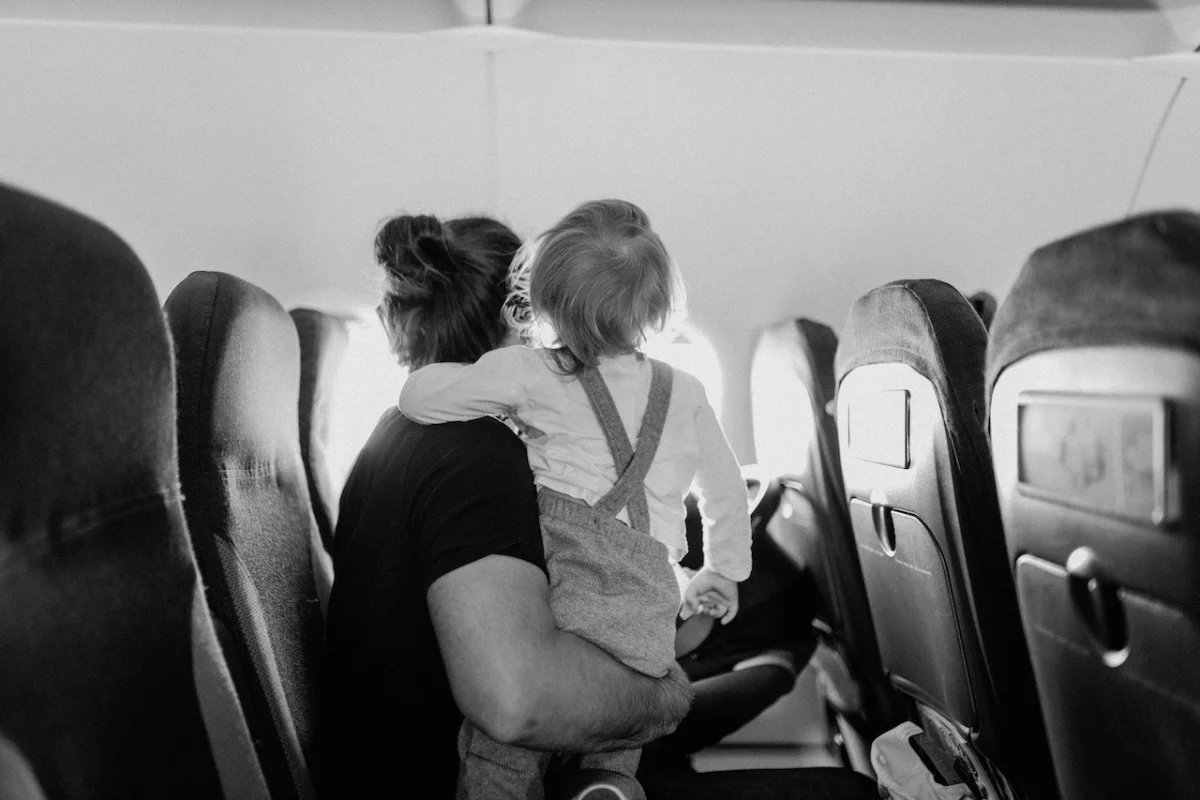
This offer of shared humanity and potential assistance was met with a remarkable acceptance. A short while later, when the passenger extended her arms, the child, named Rory, readily came to her. The passenger, channeling her decades of experience and the lingering memory of her own maternal vulnerability, began to whisper stories to Rory as they walked up and down the aisle. She shared anecdotes about her own children at that age, holding the infant close, and activating what she described as her "grandmother molecules." The experience was described as "heaven," a moment where a different energetic field appeared to shift the mood. The passenger confessed to a fleeting desire to keep the child, finding profound fulfillment in finally fulfilling the promise made to her benefactor forty years prior.
The Transformative Power of Shared Experience
The emotional impact of Rory’s cries was not confined to the immediate vicinity. The passenger reflected that the baby’s "gutsy, belly-strong voice" seemed to lance a boil in her own heart, liberating her own grief and giving voice to what she perceived as the world’s collective sorrow. This connection, forged through shared vulnerability, created a profound sense of empathy that extended beyond the individual.
The ripple effect of this act of compassion became increasingly evident. On their third excursion up and down the aisle, a palpable shift had occurred among the other passengers. The initial shyness and discomfort had dissipated, replaced by a growing "quiet tenderness." Passengers began to engage, offering small gestures of kindness. A man traveling with his grandchildren offered a toy monkey for Rory to hug. A young woman played peekaboo from behind her scarf. What had begun as a moment of individual distress had blossomed into a collective experience of love and protection, transforming the entire plane into a supportive "village" or "sangha" for Rory and her mother.
This experience underscores a central tenet of spiritual practice, as articulated by the author’s teacher, Anam Thubten. While daily meditation and retreats are valuable, he emphasizes that true spiritual growth often occurs "once you get up from the cushion." Memorizing scriptures, performing rituals, or receiving empowerments hold little significance if compassion is not integrated into the fabric of daily life.
In his recent book, Releasing the Knot of the Mind: Instructions on Resting in Stillness and Awareness, Thubten posits that obstacles encountered in life are not always personal but rather part of a shared spiritual journey. This perspective resonates deeply with the Alaska Airlines incident, suggesting that the challenges faced by an individual, such as a crying infant on a flight, can serve as a catalyst for collective spiritual engagement.
Thubten further elaborates on the mind’s innate capacity: "The mind has the capacity to break its falsely constructed boundaries and expand itself infinitely so that it can love everyone and experience equilibrium in all situations. Even in the midst of painful and sometimes challenging situations, our mind has the potential to experience stillness, peace, and pure unconditional joy."
This concept of "unconditional joy" was precisely what the passenger experienced. It was not a joy born of duty or obligation, but a pure, unadulterated happiness derived from holding Rory and witnessing the spontaneous emergence of a compassionate community from a plane full of strangers. This moment offered a glimpse of what "world peace" could truly be: not necessarily a grand cessation of global conflict, but the immediate, intimate act of extending comfort to a distressed child and a struggling mother, and the subsequent recognition of shared humanity with every individual present.
The passenger’s reflection on Rory’s cries highlights the profound interconnectedness of human experience. The baby’s raw expression of distress became a conduit for releasing a broader spectrum of pain and suffering. The passenger’s internal monologue, "Let her rip, little one. Give that rage and suffering a way out of our hearts, let it climb into the arms of a stranger, into the arms of love itself," encapsulates the essence of empathy. This resonated with the inherent understanding that "we are you. We get it," acknowledging the universal presence of pain within the human condition.
This profound realization is the very core of compassion and the embodiment of Anam Thubten’s notion of a "spiritual journey shared by many." By emulating the kindness shown to her years before, the passenger became an active participant in Rory’s "sangha," and by extension, the entire plane’s collective embrace. The initial separation of "us and her, us and them" dissolved, replaced by an all-encompassing sense of unity: "There was only us."
Broader Implications: The Microcosm of Global Harmony
The incident on Alaska Flight #23, while seemingly a small, isolated event, carries significant implications for understanding and fostering compassion in an increasingly fragmented world. The transformation of a cabin filled with potentially annoyed travelers into a unified collective of caregivers for a distressed child demonstrates the innate human capacity for empathy and cooperation when presented with a shared opportunity.
Supporting Data and Context:
- Prevalence of Travel Anxiety: Air travel, while common, can induce stress for various reasons, including confined spaces, schedules, and the unpredictable nature of infant care in such environments. Studies on passenger behavior often highlight the potential for both frustration and surprising acts of kindness in shared travel spaces.
- Psychology of Compassion: Research in positive psychology consistently points to the benefits of altruistic behavior, not only for the recipient but also for the giver. Acts of compassion have been linked to increased happiness, reduced stress, and a greater sense of purpose.
- The "Village" Concept: The idea that it takes a village to raise a child is a widely recognized cultural and psychological principle. This incident on the flight served as a real-time, impromptu manifestation of this concept, demonstrating how strangers can spontaneously form a supportive community.
- Spiritual Teachings on Empathy: The consistent emphasis across major religions on caring for the vulnerable is not merely a moralistic injunction but a recognition of its foundational role in societal well-being and individual spiritual development.
Analysis of Implications:
The incident serves as a powerful reminder that opportunities for compassion are not limited to grand gestures or organized charity. They are present in the mundane moments of everyday life, often catalyzed by unexpected challenges. The passenger’s conscious decision to "do it for someone else," mirroring the act of kindness she received, highlights the cyclical nature of generosity and its potential to create enduring positive change.
Furthermore, the collective response of the passengers suggests that perceived barriers of anonymity and self-interest in public spaces can be overcome by shared human experience and a genuine offer of connection. The shift from individual discomfort to collective care indicates that fostering a more compassionate society may involve creating more opportunities for spontaneous, empathetic engagement.
The passenger’s reflections on her teacher’s teachings add a layer of depth, suggesting that these moments of collective empathy are not isolated incidents but rather manifestations of our shared spiritual journey. The ability of the mind to expand and embrace others, even in challenging circumstances, is a testament to our inherent potential for unconditional joy and equilibrium.
This narrative, unfolding at 35,000 feet, transcends the confines of a single flight. It offers a potent metaphor for how individual acts of kindness, when amplified by collective participation, can create ripples of positive change, demonstrating that in the tapestry of human existence, there is, indeed, "only us." The call to serve life, not because it is broken, but because it is holy, finds its truest expression in these moments of profound, shared humanity.

