

The early months of 2016 have been marked by two significant media moments that have resonated deeply within discussions surrounding environmental advocacy and social justice. The first, a landmark acceptance speech at the Academy Awards, and the second, a compelling TED Talk, both serve as potent reminders of the escalating urgency of climate change and the critical need to amplify marginalized voices in the fight for a sustainable future. These communications, delivered by prominent figures, have provided platforms for vital messages that extend far beyond their immediate contexts, offering both stark warnings and hopeful pathways forward.
DiCaprio’s Oscar Speech: A Global Platform for Climate Action and Indigenous Rights
Leonardo DiCaprio’s long-awaited Best Actor Oscar win for his harrowing performance in "The Revenant" on February 28, 2016, transcended the typical celebratory fanfare of Hollywood’s most prestigious awards ceremony. His acceptance speech, delivered on a global stage watched by millions, became a powerful and impassioned plea for urgent action on climate change and a poignant recognition of the historical disenfranchisement of Indigenous peoples.
DiCaprio, known for his environmental activism and the establishment of the Leonardo DiCaprio Foundation, utilized his moment in the spotlight to directly address the existential threat posed by a warming planet. His address was not merely a general call to arms but included specific references to the scientific consensus and the collective responsibility required to mitigate the crisis. He articulated the need for immediate and substantial changes in global policy and individual behavior, framing climate change as a paramount challenge facing humanity.
"Climate change is real. It’s happening right now. It’s the most urgent threat facing our species, and we need to work together collectively, and stop procrastinating," DiCaprio stated, his voice firm and resonating with conviction. He underscored the interconnectedness of human actions and their impact on the environment, urging a unified approach to address the escalating consequences.
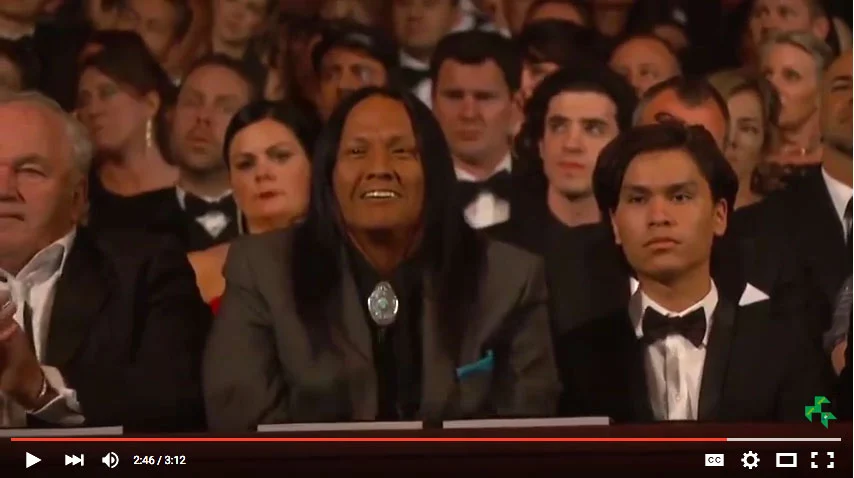
Crucially, DiCaprio dedicated a significant portion of his speech to highlighting the role and rights of First Nations peoples. He stated, "It is time to acknowledge our history and to protect our planet for future generations of all whose voices have been drowned out by the politics of greed." This statement drew a direct line between the historical exploitation of both natural resources and Indigenous communities, often driven by economic interests that prioritize profit over ecological and social well-being. The phrase "politics of greed" served as a sharp indictment of systems and individuals that have perpetuated environmental degradation and silenced the voices of those most intimately connected to the land and its preservation.
Background and Context: The Revenant and the Oscars
"The Revenant," directed by Alejandro G. Iñárritu, is a visceral survival drama set in the 1820s American frontier. DiCaprio’s role as Hugh Glass, a frontiersman who endures brutal conditions and betrayal, was widely praised for its physical and emotional intensity. The film’s production itself was reportedly challenging, with filming taking place in remote, harsh environments, underscoring the raw and unforgiving nature of the wilderness. This context of survival and the exploitation of natural resources within the film likely informed DiCaprio’s impassioned message on the Oscars stage.
The Academy Awards, as the pinnacle of the film industry’s accolades, provides an unparalleled platform for public discourse. For years, environmental issues had been a quiet undercurrent in some acceptance speeches, but DiCaprio’s address marked a significant moment where climate change was placed front and center, delivered by one of the world’s most recognizable actors. His win, after multiple nominations, amplified the impact of his message, making it impossible for the audience and the wider public to ignore.
Supporting Data and Scientific Consensus
DiCaprio’s assertion that "climate change is real" is firmly supported by a vast and growing body of scientific evidence. The Intergovernmental Panel on Climate Change (IPCC), the leading international body for assessing the science related to climate change, has repeatedly issued reports detailing the undeniable human influence on the Earth’s climate system. These reports, compiled by thousands of scientists worldwide, highlight observed changes such as rising global temperatures, increased frequency and intensity of extreme weather events, sea-level rise, and ocean acidification.
For instance, the IPCC’s Fifth Assessment Report (AR5), released in stages between 2013 and 2014, concluded with "very high confidence" that the atmosphere and ocean have warmed, that the Greenland and Antarctic ice sheets are losing mass, and that the global average sea level has risen. The report also stated that human influence on the climate system is unequivocal. DiCaprio’s call for collective action directly aligns with the scientific community’s urgent recommendations for substantial reductions in greenhouse gas emissions to avoid the most catastrophic impacts of climate change.
Implications for Indigenous Communities
The specific mention of First Nations peoples carries profound implications. Indigenous communities, particularly those in the Arctic, small island nations, and remote regions, are often on the front lines of climate change impacts. They experience the direct consequences of rising sea levels, melting permafrost, altered weather patterns, and the degradation of ecosystems upon which their livelihoods and cultural practices depend. Historically, these communities have been stewards of the land for millennia, possessing invaluable traditional knowledge about environmental sustainability.
However, their voices have frequently been marginalized in decision-making processes concerning resource development and environmental policy. DiCaprio’s acknowledgment of their "drowned out" voices serves as a powerful call for their inclusion and empowerment. It recognizes that effective climate solutions must incorporate Indigenous perspectives, rights, and leadership. This sentiment echoes the growing global movement advocating for climate justice, which emphasizes the disproportionate burden of climate change on vulnerable populations and the need for equitable solutions.
Al Gore’s TED Talk: A Case for Optimism in the Face of Climate Crisis
In tandem with DiCaprio’s impactful speech, Al Gore, the former U.S. Vice President and Nobel Peace Prize laureate, delivered a significant TED Talk titled "The Case for Optimism on Climate Change" in March 2016. Gore, a long-standing and influential voice in the climate change discourse, presented a nuanced perspective that acknowledged the severity of the ongoing crisis while simultaneously highlighting tangible progress and the potential for a sustainable future.
Gore’s presentation began by reiterating the gravity of the climate situation, providing a sobering overview of the continuing environmental challenges and their observed effects. This foundation of seriousness served to underscore the importance of the subsequent shift towards optimism. He then meticulously detailed a series of positive developments and innovations occurring globally, demonstrating how these changes are creating new possibilities and shaping a more hopeful future.
"We are making progress," Gore stated, emphasizing that the narrative of despair is not the only one to be told. He highlighted advancements in renewable energy technologies, shifts in public policy, and the growing momentum of grassroots movements as key drivers of change. Gore’s message was one of empowerment, suggesting that while the challenge is immense, humanity possesses the capacity and the tools to address it effectively.
Background and Context: Gore’s Decades of Advocacy
Al Gore has been a leading figure in raising public awareness about climate change for decades. His 2006 documentary "An Inconvenient Truth" and his subsequent book of the same name played a pivotal role in bringing the issue to mainstream attention. His work earned him a share of the Nobel Peace Prize in 2007. Gore’s consistent engagement with the scientific community and his tireless advocacy have positioned him as a credible and influential voice.
The TED Talk platform is renowned for its ability to disseminate innovative ideas and compelling narratives to a global audience. By choosing this forum, Gore aimed to reach a broad spectrum of individuals and policymakers, offering a counter-narrative to the often-overwhelming sense of doom associated with climate change. His talk was not about downplaying the crisis but about fostering the resolve and belief that solutions are achievable.
Supporting Data and Technological Advancements
Gore’s optimism is grounded in demonstrable progress, particularly in the renewable energy sector. The cost of solar and wind power has plummeted dramatically in recent years, making them increasingly competitive with, and often cheaper than, fossil fuels. According to the International Renewable Energy Agency (IRENA), the global average cost of electricity from utility-scale solar PV has fallen by 73% between 2010 and 2020. Similarly, wind power costs have seen significant reductions.
Furthermore, Gore highlighted advancements in energy storage, the increasing adoption of electric vehicles, and innovative policies aimed at carbon pricing and emission reductions. He pointed to the growing number of countries and corporations setting ambitious renewable energy targets and committing to carbon neutrality. These developments, while not eradicating the problem, represent significant steps in the transition away from a fossil fuel-dependent economy.
Timeline of Progress
The period leading up to early 2016 saw a notable acceleration in climate action and awareness:
- December 2015: The Paris Agreement was adopted at the 21st Conference of the Parties (COP21) to the UNFCCC. This landmark international treaty, signed by nearly all nations, aimed to limit global warming to well below 2, preferably to 1.5 degrees Celsius, compared to pre-industrial levels. The agreement marked a significant global commitment to addressing climate change.
- Late 2015 – Early 2016: Reports emerged detailing increasingly severe weather events and their attribution to climate change, including heatwaves, droughts, and intense storms, reinforcing the urgency of the issue.
- February 28, 2016: Leonardo DiCaprio’s Oscar acceptance speech.
- March 2016: Al Gore’s TED Talk.
This chronology illustrates that the messages delivered by DiCaprio and Gore were not isolated incidents but emerged within a context of escalating climate impacts and growing international efforts to address them.
Broader Impact and Interconnectedness
The confluence of DiCaprio’s impassioned plea and Gore’s data-driven optimism in early 2016 created a powerful synergistic effect in the public discourse on climate change. DiCaprio’s speech amplified the urgency and moral imperative of climate action, particularly highlighting the often-overlooked voices of Indigenous communities. Gore’s talk provided a more grounded, evidence-based perspective on the feasibility of solutions, offering a necessary counterpoint to potential despair.
Official Responses and Industry Reactions
While specific official responses directly to these individual media moments can be fluid and varied, the underlying themes they addressed have been central to international policy discussions. The Paris Agreement, adopted just months before these events, represented a significant global consensus on the need for climate action, a consensus that both DiCaprio and Gore were reinforcing.
Industry reactions to DiCaprio’s speech, particularly from sectors reliant on fossil fuels, were likely mixed, ranging from dismissiveness to cautious acknowledgment. However, the broader environmental movement and renewable energy industries would have viewed both communications as significant boosts to their advocacy efforts. Many environmental organizations and Indigenous rights groups publicly lauded DiCaprio’s speech for its directness and inclusivity.
The Power of Amplification and Advocacy
These two communications underscore the profound impact that influential individuals can have when leveraging their platforms for critical social and environmental causes. DiCaprio’s Hollywood stature brought unprecedented attention to the climate crisis and Indigenous rights, while Gore’s decades of dedicated advocacy provided a robust and hopeful framework for understanding the path forward.
The interconnectedness of climate action and social justice, as highlighted by DiCaprio, is a growing area of focus. Addressing climate change effectively requires not only technological innovation and policy changes but also a commitment to equity and the empowerment of marginalized communities. Gore’s emphasis on optimism, supported by tangible progress, serves to galvanize support and demonstrate that a sustainable future is within reach, provided there is collective will and concerted effort.
In conclusion, the media moments of early 2016, epitomized by Leonardo DiCaprio’s Oscar speech and Al Gore’s TED Talk, served as crucial inflection points in the ongoing conversation about climate change. They provided powerful platforms for urgent warnings, acknowledged historical injustices, and offered a compelling vision of hope rooted in scientific progress and collective action. These messages continue to resonate, reminding us that while the challenges are immense, the potential for positive change, driven by informed advocacy and a commitment to justice, remains a potent force.

