

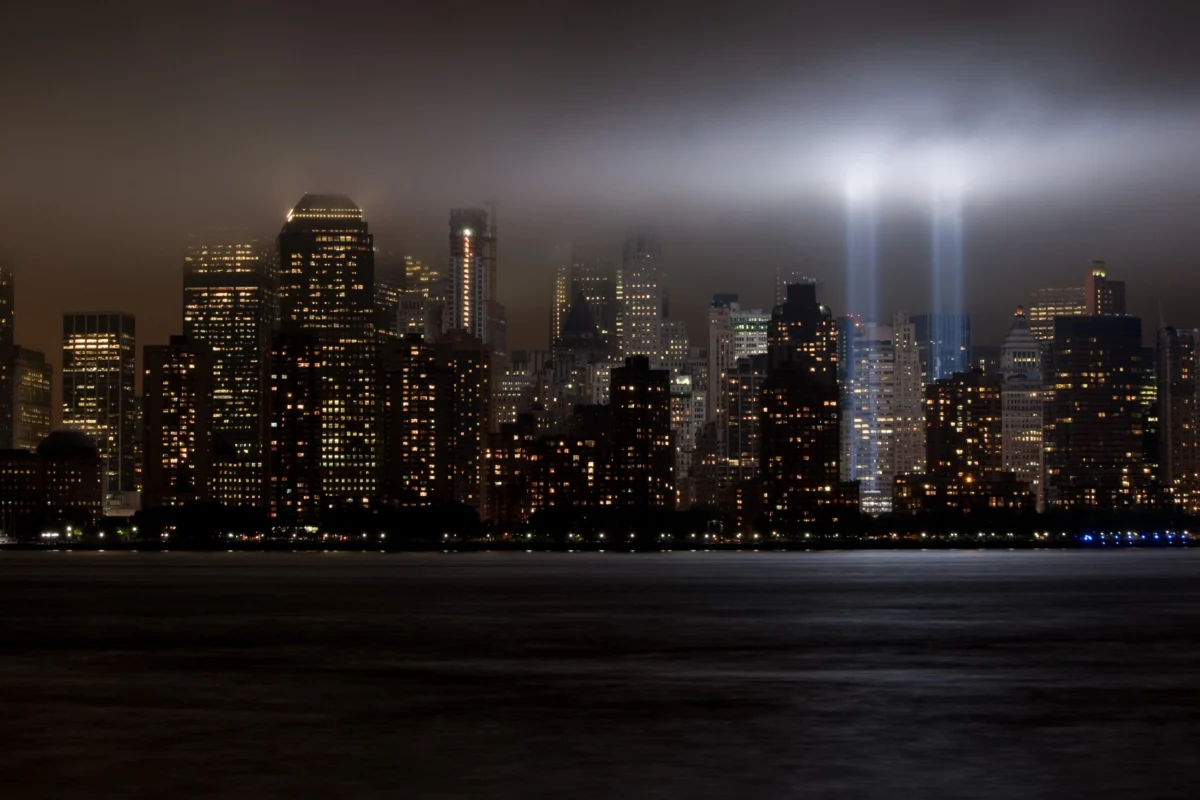
Twenty-five years after the September 11, 2001, attacks, a profound reflection on the immediate aftermath and the enduring impact of the tragedy, originally penned by teacher Larry Ward and published in The Mindfulness Bell’s December 2001 issue, offers a unique perspective on navigating grief and finding solace. This essay, alongside a special section featuring Thich Nhat Hanh’s responses and insights from practitioners present with him during that time, serves as a powerful testament to the human capacity for resilience and the transformative power of mindful practice in the face of unimaginable loss.
The original publication occurred within months of the catastrophic events that reshaped the global landscape, profoundly altering the sense of security and interconnectedness for millions. The World Trade Center towers, symbols of American economic power, and the Pentagon, the nerve center of the U.S. military, were targeted in a coordinated series of terrorist attacks orchestrated by the extremist group al-Qaeda. The attacks resulted in the deaths of 2,977 people, making it the deadliest terrorist attack on U.S. soil. The immediate response was a mixture of shock, disbelief, and a surge of national unity, juxtaposed with widespread fear and uncertainty.
Larry Ward’s account begins with his journey to New York City to join Thich Nhat Hanh, a globally renowned Zen master and peace activist, and other monastics for a service at Riverside Church on September 25, 2001. His flight to New York was his first since the attacks, an experience that immediately brought the heightened security measures and the palpable atmosphere of anxiety into sharp focus.
The Evolving Landscape of Air Travel
Ward recounts his flight from Santa Barbara, noting the increased security presence, the need to surrender personal items like fingernail clippers, and the significantly reduced number of passengers. His flight to Denver had only ten occupants, a stark contrast to pre-9/11 travel norms. The subsequent flight to LaGuardia Airport in New York was similarly sparsely populated, with only thirty-two passengers on a plane designed for 250. This observation underscores the immediate and profound impact of the attacks on public confidence and travel behavior. Data from the Bureau of Transportation Statistics indicates a significant drop in air travel in the months following 9/11, with passenger enplanements declining by 15.1% in the fourth quarter of 2001 compared to the same period in 2000.
The palpable fear extended beyond security checkpoints. Ward observed a heightened level of anxiety among fellow travelers and noted the prevalence of "gallows humor," a coping mechanism often employed in the face of extreme stress. He also bore witness to the discomfort and apprehension of a fellow passenger who appeared to be of Arab descent, highlighting the immediate and unfortunate rise of Islamophobia and suspicion directed towards individuals perceived as belonging to the “other.” This was a grim foreshadowing of the broader societal divisions and prejudices that would emerge in the ensuing years.
Disorientation and a Renewed Appreciation for Trust
Upon approaching LaGuardia, Ward experienced a disorienting moment of spatial awareness. The absence of the World Trade Center towers, previously a significant landmark, left him momentarily adrift. This visual void served as a potent metaphor for the sudden and overwhelming absence of normalcy and security. Descending through thick clouds, he confronted a stark realization: a complete lack of certainty about what lay ahead, a feeling of profound vulnerability where trust in unseen systems and individuals—pilots, air traffic controllers, airport security—became paramount. The applause from passengers upon a safe landing, a gesture not typically observed in routine flights, underscored the collective relief and the heightened awareness of the fragility of everyday life.
Witnessing the Aftermath in New York
Arriving in Manhattan, Ward was met with the accounts of his friends, who shared their experiences of shock, sadness, and a pervasive sense of vulnerability that had settled over the island. The sheer scale of the loss and the physical destruction had created a profound psychological impact, altering the daily lives of individuals, families, and institutions. His invitation to his friends to join him and Thich Nhat Hanh for a service aimed at processing anger resonated with the immediate need for collective healing and emotional processing.
A Mindful Pilgrimage to Ground Zero
The following morning, Ward embarked on a deeply personal journey to Ground Zero. His intention was to perform walking meditation, taking 5,000 steps, one for each person believed missing in the initial aftermath. This act of mindful remembrance was not merely a physical journey but a spiritual engagement with the palpable grief saturating the city. His walk from Canal Street to the site, breathing with each step, offered a unique perspective on the human cost of the tragedy. He described seeing "deep heartbreak in the faces I passed," and the sensory experience of approaching Ground Zero—the pungent smell of burning rubber and the irritating haze of smoke—served to immerse him further into the reality of the destruction.
Immersed in the Dust of Tragedy
Ward’s description of his experience at Ground Zero is particularly poignant. The sheer scale of the devastation rendered his mind unable to fully comprehend the scene. He witnessed a multitude of people, some weeping openly, others in stunned disbelief, and even the law enforcement and military personnel present were enveloped in an "eerie silence." He described the grief as having a tangible substance, a monument to the tragedy in itself.
The physical presence of dust and ash, coating buildings and covering his own person, became a profound symbol of interconnectedness. He realized he was not just breathing air but inhaling the remnants of lives lost: "the dust of a policeman, it was the dust of a fireman, it was the dust of a stockbroker, a janitor, a secretary, a maid, a delivery person." This realization transcended the physical and touched upon the shared humanity of all those affected. He articulated this powerful connection: "The dust of the September 11 World Trade tragedy was in me now as I was in it, in every cell of my body, in every mindful step, every fiber of my heart and the mystery of my every breath."
The Wisdom of Emptiness and Impermanence
Ward then connects his lived experience to core Buddhist teachings, specifically the concepts of emptiness (sunyata) and signlessness (animitta), as transmitted by Thich Nhat Hanh. He explains that the seemingly solid and permanent structures of the World Trade Center, like all phenomena, were ultimately marked by impermanence and lacked an enduring, independent self. This philosophical insight, he suggests, offers a framework for understanding and processing loss. The ability to experience "Buddha feet, Buddha eyes, and insight into the doors of liberation" is rooted in the capacity to embrace aimlessness and the practice of mindfulness, which begins with stopping and looking deeply. This perspective offers a profound counterpoint to the human tendency to cling to material permanence and the illusion of absolute security.
A Beacon of Collective Practice: Riverside Church Service
The service at Riverside Church that evening drew an overwhelming response. By 7 p.m., when the program was scheduled to begin, over 100 people were already lined up. Within a few hours, the crowd had swelled to an estimated 3,000, filling the church to capacity and leaving many still outside. This immense turnout demonstrated a deep societal need for communal healing, spiritual support, and a shared space to process the collective trauma.
The program included chanting the Heart Sutra, Thich Nhat Hanh’s dharma talk on practicing with anger, and a poignant account from Sister Chan Khong, who shared her experience of her hometown’s destruction during the Vietnam-American War. Her story, like Ward’s observations, underscored the universal nature of suffering and the power of mindful practice to navigate it.
The Sangha as a Vessel for Shared Grief
Ward highlights the profound impact of the sangha’s (spiritual community’s) ability to "hold the grief of 3,000-plus people without getting caught by it." This capacity, he explains, is the fruit of dedicated practice – developing personal solidity, calmness, and insight not for self-aggrandizement, but to be able to offer this cultivated inner strength to others in their time of need. The gratitude expressed by attendees, particularly when Ward explained he had traveled to New York specifically for the event, underscored the profound comfort derived from the presence of a community dedicated to compassionate engagement.
He emphasizes the paramita of inclusivity and forbearance, not merely as the capacity to endure suffering, but as an active engagement with transforming suffering into light. This transformation, he asserts, is cultivated through practices such as noble silence, conscious breathing, mindful sitting, mindful walking, and the observance of mindfulness trainings.
A Call to Deepen Practice and Embrace Transformation
Returning from New York, Ward felt a renewed clarity regarding the significance of the moment. He identified this period as a time for "Maitreya Buddha," a concept signifying a future enlightened being, but more immediately, a call to embody "Mr. Love and Ms. Love," as Thich Nhat Hanh would say. He saw in the post-9/11 world a clear indication of what truly matters and what does not, urging a deepening of spiritual practice.
Ward recognized the attacks as a catalyst for profound transformation and healing, a perspective rooted in his historical studies which suggest that periods of war, amidst their chaos and sorrow, often harbor profound spiritual opportunities. He committed to rearranging his life to dedicate more time to mindful living, breathing, walking, and community building, seeking to be fully present for the dharma and the work it inspires in a suffering world.
The Yearning for Light
The essay concludes with a powerful statement about the world’s deep yearning for its "true home" amidst darkness. This yearning, Ward posits, is for the light of the Buddha within each person, the light of the dharma present in reality, and the light of the sangha, our capacity for harmonious and aware living. This final sentiment encapsulates the enduring message of hope and resilience embedded within the narrative, suggesting that even in the darkest of times, the path toward healing and understanding remains illuminated by the principles of mindfulness and compassion.
The original publication of this essay in December 2001, just three months after the attacks, provided an immediate opportunity for reflection and spiritual grounding for a readership grappling with unprecedented trauma. The insights offered by Larry Ward and Thich Nhat Hanh, grounded in Buddhist philosophy and practice, offered a path forward, emphasizing that while physical structures may crumble and lives may be tragically lost, the inner capacity for peace, understanding, and transformation remains an enduring source of strength. The legacy of 9/11 continues to be examined, and Ward’s words from two and a half decades ago offer a timeless reminder of the human spirit’s ability to find light even in the deepest shadows.

