

The issue of weight stigma, often referred to as the "last acceptable form of bias," is a deeply entrenched and pervasive problem affecting individuals across various societal spheres, with particularly concerning implications within the healthcare system. This form of discrimination and stereotyping targets overweight and obese individuals, leading to significant emotional, social, and physical repercussions. Emerging research and historical studies paint a stark picture of how widespread and deeply rooted these negative attitudes are, starting from childhood and persisting into adulthood, even among healthcare professionals.
Documented Experiences of Weight Stigmatization
Empirical evidence highlights the frequency with which individuals experience weight-based discrimination. A significant study involving fifty overweight women who meticulously documented instances of stigmatization over a single week recorded over a thousand such occurrences. This translates to an average of approximately three daily encounters with harassment, physical barriers, or perceived poorer service due to their weight. These experiences ranged from overt insults and name-calling to the more subtle, yet equally damaging, discrimination in public spaces and commercial establishments.
While women appear to bear a disproportionate burden of this stigma, obese men also report experiencing discrimination, albeit at a rate three times lower than their female counterparts. For men, the daily occurrence of such negative interactions may be less frequent, but the impact remains significant.
Further corroboration of this bias comes from research utilizing actors to simulate job applicants. When actors were made to appear overweight through theatrical prosthetics, they were demonstrably more likely to face discrimination in employment settings compared to when they presented at their normal weight. This employment bias was found to be particularly pronounced against overweight women, underscoring a gendered dimension to weight-based discrimination.
Societal Perceptions and Early Onset of Bias
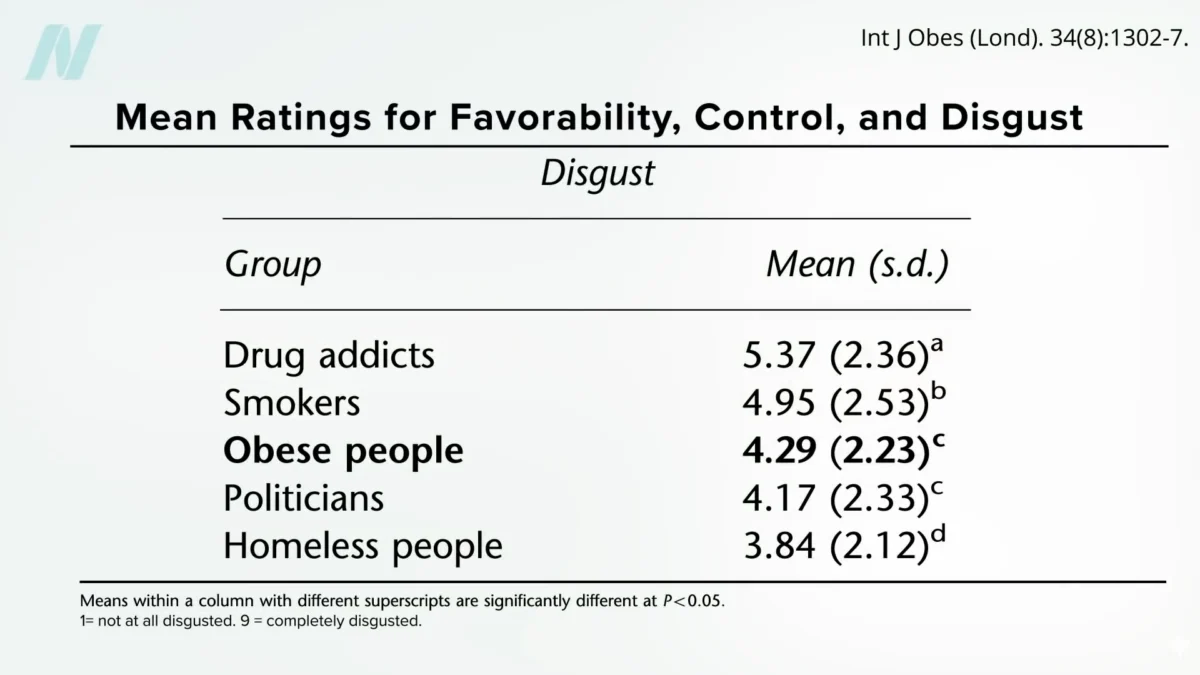
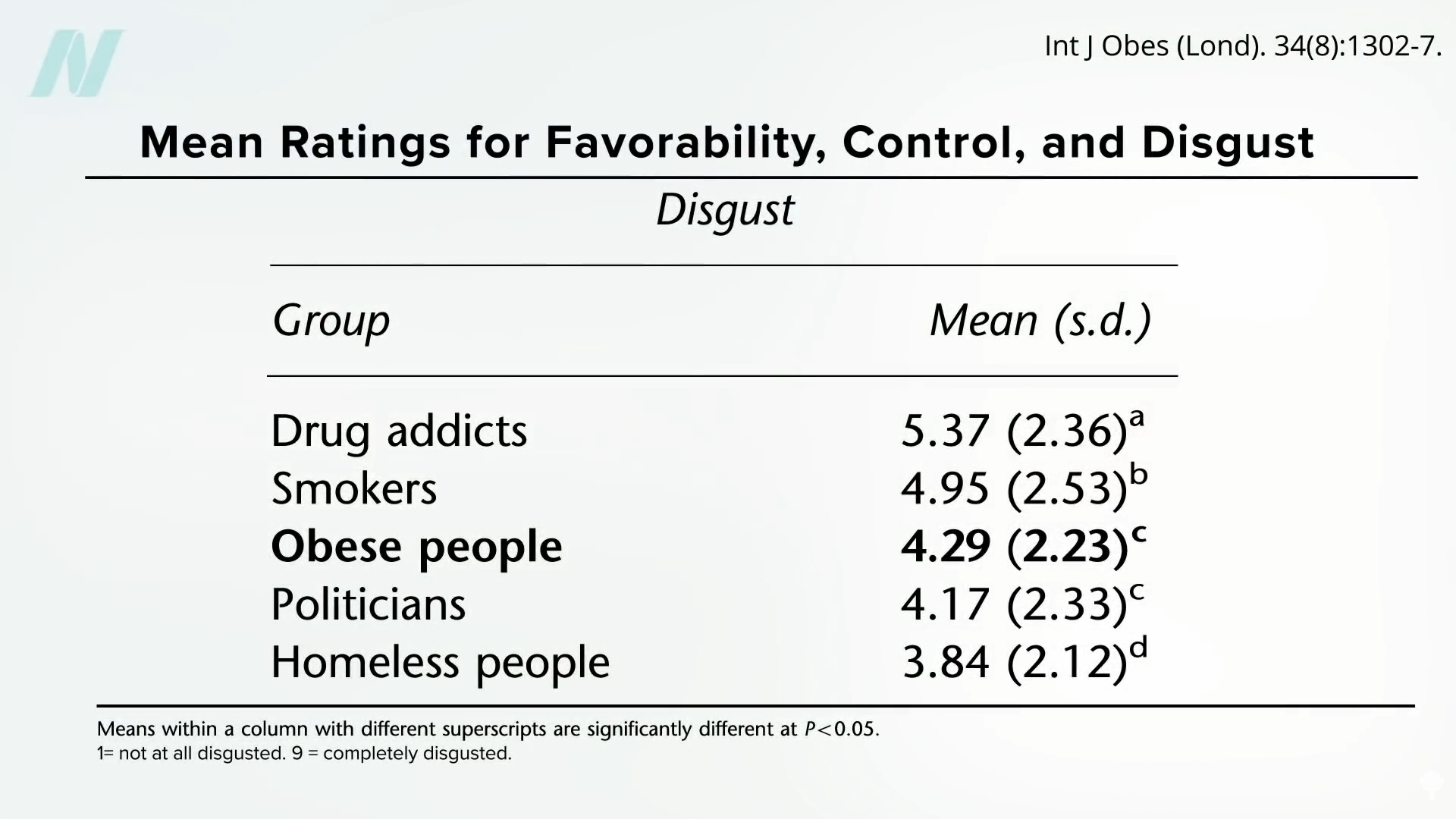
Surveys exploring societal attitudes reveal the deeply negative perceptions associated with obesity. In a comparative study examining attitudes towards sixteen stigmatized social groups, including individuals experiencing homelessness, obese people were ranked as more disgusting than all but drug addicts and smokers. This finding, even when considering the comparison, places individuals with obesity in a profoundly negative social hierarchy. Researchers noted an interesting parity in this particular survey, where obese individuals were rated as equally disgusting as politicians, suggesting a broad spectrum of negative societal associations.
The roots of this weight stigma extend surprisingly early into life. Studies indicate that children as young as three years old can internalize and express negative stereotypes about their overweight peers, describing them as "mean," "stupid," "lazy," and "ugly." The severity and negativity of these descriptions tend to escalate with age, indicating a progressive societal conditioning that embeds negative beliefs about weight from a very young age.
A landmark study published in 1961 provided early, stark evidence of this phenomenon. Children across diverse social, cultural, and ethnic backgrounds in various states were shown pictures of children with different physical challenges, including a child with a leg brace, a child in a wheelchair, a child missing a hand, a facially disfigured child, and an obese child. Across all tested groups, a consistent pattern emerged: the obese child was invariably ranked last in terms of likeability.
The concerning trend of increasing stigmatization was highlighted in a 2003 follow-up study that replicated the 1961 research. The findings were grim, with the obese child being liked even less than in the original study. This disturbing trend mirrors broader societal shifts, as national surveys have recorded a nearly 70% increase in perceived weight discrimination since the mid-1990s. This suggests a worsening societal climate regarding weight and a reinforcement of negative stereotypes over time.
Pervasive Bias in Educational and Familial Settings
The pervasive nature of weight stigma is further evidenced by attitudes within educational institutions and even within families. Over a quarter of teachers and school staff surveyed expressed the view that becoming obese is "one of the worst things that could happen to a person." Such attitudes from educators can significantly impact the emotional well-being and self-esteem of students, potentially leading to bullying and social exclusion.
Even parents, who are expected to provide unconditional support, can exhibit weight bias. Studies have shown that parents may offer less support for their overweight daughters’ college education compared to their thinner siblings. This form of discrimination, even within the intimate sphere of the family, has been described by prominent obesity researchers as "strong prejudice indeed when parents discriminate against their own children," underscoring the profound and often invisible harm caused by these attitudes.
Weight Stigma Within the Medical Profession
Perhaps the most troubling aspect of weight stigma is its presence within the healthcare profession. A representative national survey revealed that over half of physicians hold negative views of obese patients, perceiving them as "awkward, unattractive, ugly, and noncompliant." These attitudes can profoundly influence the quality of care provided.
Furthermore, a concerning percentage of nurses, approximately a quarter, agreed or strongly agreed with the statement: "Caring for an obese patient usually repulses me." Such visceral reactions among healthcare providers can create an environment of discomfort, shame, and avoidance for patients seeking necessary medical attention.
Health Consequences of Medical Stigma
The antagonism and bias experienced within healthcare settings can have severe and life-threatening consequences for individuals who are already at higher risk for certain health conditions. For example, obese women face an elevated risk for developing cervical, endometrial, and ovarian cancers. Despite these increased risks, they are often less likely to receive recommended screenings. Studies have indicated that morbidly obese patients have approximately half the odds of receiving their recommended pelvic exams.
This disparity in care can stem from a combination of factors. While some patients may avoid medical appointments due to anticipated stigma, a significant issue is that some healthcare providers actively turn away obese patients. A survey of OB/GYN practices in Florida revealed that as many as one in seven refused to see heavier women, setting weight cut-offs for new patients as low as 200 pounds. This exclusionary practice directly impedes access to essential preventive and diagnostic care.
Even for patients who are seen by physicians, the quality and duration of care can be compromised. Research indicates that physicians randomized to see a migraine patient presented as average weight, overweight, or obese spent approximately 28% less time with the obese patient. Moreover, recorded physician-patient interactions reveal a tendency for physicians to build "less emotional rapport with overweight and obese patients." This deficit in connection can hinder effective communication, trust, and ultimately, the patient’s engagement with their treatment plan.
Worsening Attitudes Among Specialists
Alarmingly, even obesity specialists, who are expected to be at the forefront of understanding and treating weight-related issues, profess increasingly explicit anti-fat attitudes. Surveys conducted between 2001 and 2013 showed a worsening trend among these specialists, who described fat people as significantly more lazy, stupid, and worthless compared to thin individuals. This suggests that the very professionals tasked with helping individuals manage their weight may be internalizing and perpetuating harmful stereotypes.
The presence of such bias is not confined to individual attitudes; it can even permeate the medical literature. An example cited from the Annals of Internal Medicine illustrates this point with the phrase, "Obesity is an aesthetic crime: it is ugly." Such language reflects a deeply ingrained aesthetic judgment that can overshadow clinical objectivity and compassionate care.
The Illusion of Respect and the Need for Authentic Care
Despite the pervasive negative attitudes held by some healthcare professionals, a study titled "Obese Patients Overestimate Physicians’ Attitudes of Respect" revealed an interesting disconnect. While physicians harbored negative views towards their obese patients, the same patients often reported satisfaction with their providers. The researchers concluded that this discrepancy suggests physicians may be "successfully playing the part," but the "lack of true respect" raises serious questions about the authenticity of the patient-physician relationship. This highlights the critical need for genuine empathy and unbiased care, rather than mere outward displays of professionalism.
The implications of this widespread weight stigma are profound, impacting not only individual well-being but also public health outcomes. Addressing this pervasive bias requires multifaceted interventions, including comprehensive training for healthcare professionals, public awareness campaigns to challenge stereotypes, and policy changes to ensure equitable access to care and opportunities for all individuals, regardless of their weight. The burden of weight bias is significant, and understanding its depth and breadth is the crucial first step towards fostering a more inclusive and equitable society.
The next blog in this two-part series will further explore The Burden of Weight Bias. Both blogs in this series are drawn from the author’s book, How Not to Diet.

