


In the landscape of contemporary poetry, Samyak Shertok emerges as a profound voice, one that grapples with the spectral echoes of a homeland fractured by conflict and the quiet erosion of ancestral tongues. His debut collection, No Rhododendron, published in 2025, is not merely a compilation of poems; it is a meticulously crafted testament to the enduring power of language to confront, process, and ultimately, transmute profound grief. Shertok’s work navigates the treacherous terrain of political violence, displacement, and cultural memory, forging what he terms a “new ghost language” to articulate the inarticulable sorrow that lingers across generations.
Shertok’s journey to poetry is as unconventional as his linguistic explorations. Growing up in a rural village in Nepal, a place where the transistor radio was the sole harbinger of the outside world, the notion of becoming a writer seemed an unattainable aspiration, reserved for those with academic accolades or the venerable aura of figures like Rabindranath Tagore. His early encounters with literature were confined to the pages of textbooks, offering little indication of the personal and therapeutic potential of verse. It was only after relocating to the United States to pursue a degree in psychology that Shertok encountered poetry not as an academic pursuit, but as a potent tool for healing. His involvement in a program at the Mayo Clinic, where he collaborated with cancer patients to transform their personal narratives into poems, proved to be a pivotal experience. Witnessing firsthand how these personalized verses offered solace and a sense of enduring presence, Shertok recognized poetry’s capacity to "keep people alive in a certain way," honoring their stories and experiences in the face of mortality.
This profound understanding of poetry’s healing force was tested and amplified in April 2015, when a devastating earthquake struck Nepal. The seismic event left thousands injured and displaced millions, plunging the nation into a state of crisis. In the immediate aftermath, Shertok spearheaded the Healing Through Poetry: Nepal Earthquake Relief Project. This initiative established writing workshops designed to provide a sanctuary for survivors to articulate their grief, confusion, and anxieties. Crucially, these workshops also served as a platform for survivors to voice their frustrations and disillusionment with the Nepalese government’s inadequate response and perceived lack of support during the recovery efforts. This dual function of poetry – offering personal catharsis while also facilitating collective critique – became a cornerstone of Shertok’s artistic and humanitarian philosophy.

No Rhododendron extends this dual purpose, delving into the lingering trauma of the Nepalese Civil War (1996-2006). This protracted period of internal conflict inflicted deep wounds upon the nation, leaving a legacy of loss, displacement, and fractured communities. Shertok’s poems meticulously excavate the layers of grief and mourning associated with this era, demonstrating how the specter of political violence continues to haunt survivors and their descendants. He achieves this through an innovative approach to poetic form, iterating on traditional structures to create a new linguistic register—a “ghost language”—that can more accurately represent the fragmented and dislocated nature of memory and trauma. This language is not about forgetting, but about confronting the haunting presence of the past, giving it form and voice, and through that articulation, beginning the process of release. As Shertok explained to the Nepali Times, "Each poem is a being. A poem begins with a haunting, and ends when you are able to release the haunt." This encapsulates his belief that poetry serves as a conduit for processing unresolved emotional and historical burdens.
The Echoes of Ancestral Tongues and Cultural Displacement
A central theme woven throughout No Rhododendron is the precarious state of ancestral languages and the profound sense of loss that accompanies their erosion. Shertok’s exploration of the “father tongue,” the language of his heritage that he feels he did not fully inherit, is particularly poignant. The poem "How to Sky-Bury Your Father Tongue" directly addresses this linguistic disconnect. He recounts his father’s attempts to teach him Lama, a dialect of Tibetan spoken in his ancestral region, and the poignant moment of mutual realization that they would rather “go drown ourselves / in the Mikli-Phoom,” a local river, than force the transmission of a language that felt increasingly alien. This image is a powerful metaphor for the struggle to retain cultural identity in the face of assimilation and modernization.
The poem also delves into the irony and misinterpretations surrounding his given name, Sertok, meaning "golden steeple" in Lama. While his Hindu teachers in primary school misheard it as "Sher" (lion), leading classmates to coin the playful moniker "Sher-Tok" (Lion, Bite!), Shertok himself later adopted the name Samyak, derived from the Buddhist concept of the Middle Way. This linguistic journey reflects his personal negotiation of identity, a constant interplay between inherited traditions and adopted realities. The poem’s imagery of messenger pigeons weaving prayers between a mill and a river, and the presence of the "Resident Cat, Houdini," further layers the narrative with symbolic resonance, hinting at the elusive nature of memory and the unexpected ways the past can resurface.
The "disappearing tongue" is presented as a potent symbol of cultural loss, raising the fundamental question: "Do things become ghosts once we stop calling them by their names?" Shertok’s contemplation of this question is not merely academic; it is deeply personal, tied to his own experiences of displacement and the fading echoes of his ancestral linguistic heritage. He observes how the wind carries pine needles and dead leaves, mirroring the way fragmented memories and lost languages can permeate the present. The act of Houdini, the cat, making a pigeon disappear and spitting out feathers, becomes a striking metaphor for how readily elements of our heritage can be consumed and rendered ephemeral.

The Political Undercurrents of Grief and Resilience
Beyond the personal and linguistic dimensions, Shertok’s poetry is intrinsically linked to the political realities of Nepal. The "Healing Through Poetry" initiative, born from the ashes of the 2015 earthquake, underscored the government’s perceived failures in providing adequate relief and reconstruction support. This context is crucial for understanding the deeper layers of grief addressed in No Rhododendron. The poems implicitly critique the systemic neglect and the ways in which political instability and conflict exacerbate individual suffering.
The poem "The Last Himalayan Beekeeper" offers a poignant tribute to his mother, Ama, depicted as the last keeper of a traditional beekeeping practice. Her method of harvesting honey, eschewing smoke for song, and her ability to work with bees without being stung, speaks to a deep, almost spiritual connection with nature and tradition. The line, "A home is one blossom and a thousand stings," encapsulates the inherent duality of life and loss, of beauty and pain. The bees that flew into her hair and fell as rhododendrons when she combed it are a powerful, almost surreal image of the generative power of nature and the deep connection between life and legacy.
The poem’s trajectory shifts as Shertok recounts how his mother fed him raw honey every night the summer before he left home, teaching him "to hold / bees in my throat, one / for every ancestor." This ritual, fraught with both nourishment and a symbolic burden of remembrance, becomes a metaphor for carrying the weight of lineage. The stingers his mother plucks from his tongue and binds to her crown represent the enduring pain and the sacrifices made to preserve cultural memory. Ama’s final words, "your mouth is our last hive," serve as a profound imperative, urging him to use his voice and his poetry to safeguard the legacy of his ancestors, even as the traditional ways fade.
A New Lexicon for Loss and Remembrance
Samyak Shertok’s work is characterized by its innovative use of imagery and its unflinching engagement with difficult themes. The "ghost language" he constructs is not a lament for what is lost, but a vibrant testament to the enduring presence of memory and emotion, even when traditional linguistic frameworks fail. His poetry challenges readers to consider the ways in which political events, cultural displacement, and the passage of time shape our understanding of self and heritage.
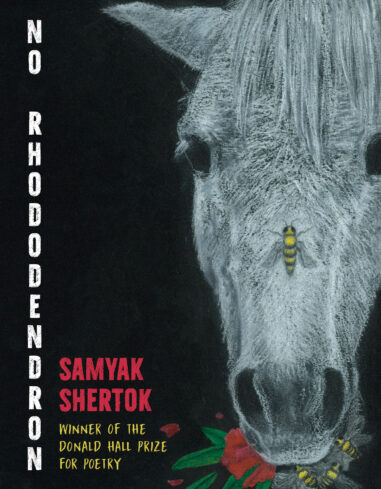
The collection’s title, No Rhododendron, itself carries a symbolic weight. Rhododendrons are native to the Himalayas and are often associated with beauty, resilience, and the natural landscape of Nepal. The absence of this symbol suggests a void, a sense of something precious that is no longer present or accessible in its traditional form. This absence is not an endpoint but a starting point for Shertok’s poetic exploration, a space where new meanings and new languages can emerge.
The broader implications of Shertok’s work extend beyond literary circles. In an era marked by increasing global migration, political upheaval, and the ongoing erosion of indigenous languages, his poetry offers a vital framework for understanding and articulating the complex emotional landscapes of diaspora and cultural loss. By giving voice to the "hauntings" of history and memory, Shertok provides a powerful model for how art can serve as a catalyst for healing, remembrance, and the reclamation of silenced narratives. His work stands as a testament to the enduring power of the human spirit to find language for its deepest sorrows and to forge a path toward a more profound understanding of its past and its present. The publication of No Rhododendron marks a significant contribution to contemporary literature, offering a unique and deeply resonant exploration of grief, identity, and the persistent, vital pulse of ancestral memory.

