

The seemingly mundane act of defecation has become a focal point of scientific inquiry, with researchers and product developers alike exploring the optimal body positions for effective bowel movements. Central to this discussion is the Squatty Potty, a toilet-height stool designed to mimic the squatting posture traditionally adopted in many parts of the world, and its purported benefits for those accustomed to Western-style sitting toilets. This article delves into the scientific underpinnings of why posture matters, examines the evidence supporting the Squatty Potty’s efficacy, and explores alternative methods for achieving a more physiologically advantageous defecation position.
The Anorectal Angle: A Critical Anatomical Consideration
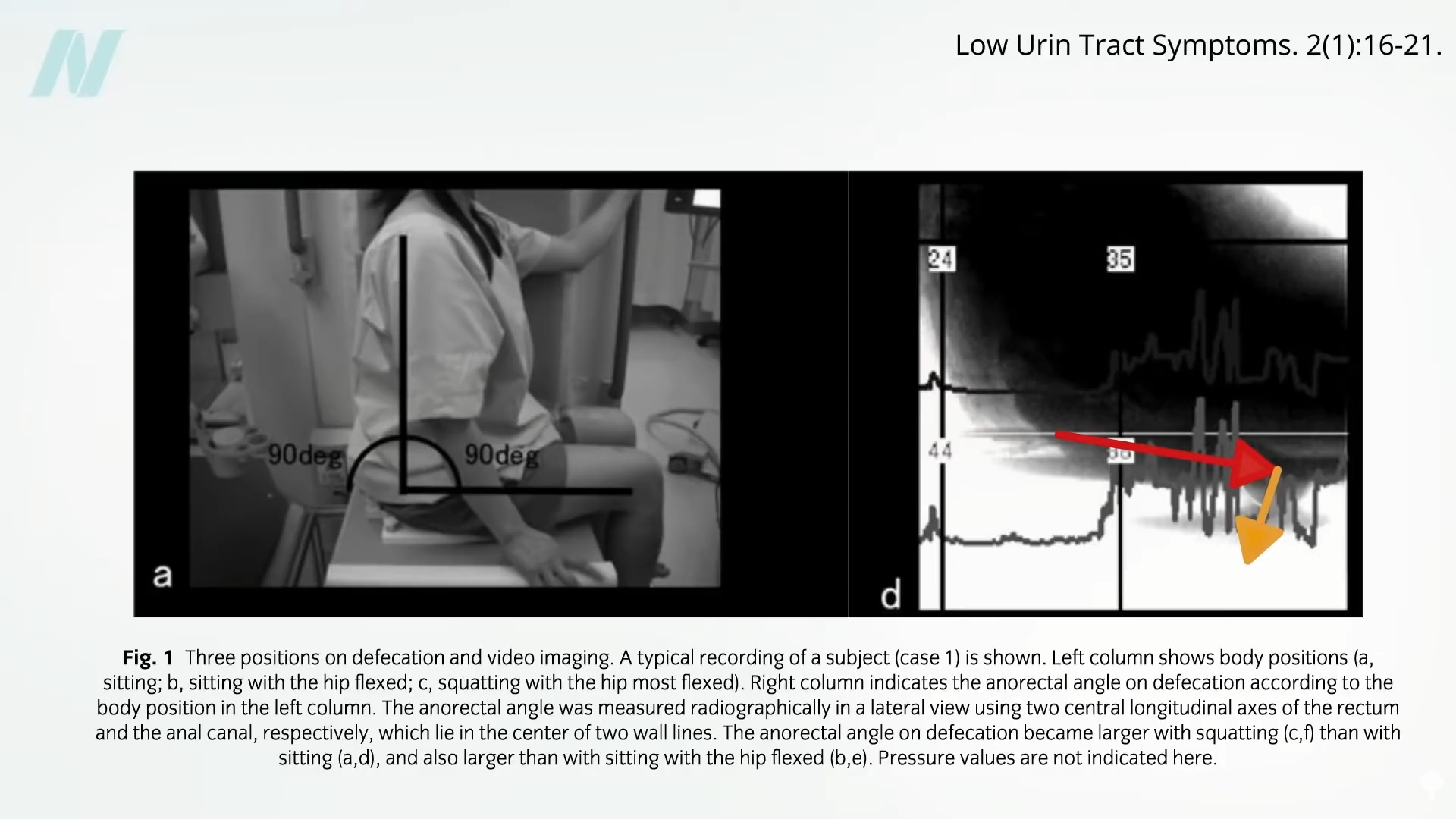
For decades, medical professionals and health advocates have noted a significant difference in bowel habits between populations that traditionally squat to defecate and those that utilize elevated toilet seats. The key anatomical factor at play is the anorectal angle, the degree of flexion between the rectum and the anus. In a seated position on a standard Western toilet, this angle is approximately 90 degrees. This sharp bend can impede the natural passage of stool, requiring increased muscular effort and straining.
In contrast, the squatting posture, prevalent in many Asian and African cultures, results in a much more acute anorectal angle, often approaching 35 degrees. This straighter pathway significantly reduces the resistance to stool expulsion, facilitating a more complete and less strenuous bowel movement. The physiological advantage of this straighter angle is akin to releasing a parking brake before attempting to drive; it allows the body’s natural mechanisms to function without unnecessary impediment.
While the seated position is effective in preventing involuntary bowel movements when one is not actively defecating, it presents a significant challenge when the goal is to empty the bowels. Historically, medical discourse has often shied away from detailed discussions of defecation, leading to a knowledge gap among some practitioners and the general public regarding the importance of toilet posture. This reticence, coupled with a lack of formal training on the subject, has contributed to a situation where "doctors don’t know squat" about this fundamental aspect of digestive health.
The Genesis of the Squatty Potty and Early Investigations
The rise of the Squatty Potty can be traced to a growing awareness of the potential health implications of the seated defecation posture. The product, developed by a company that champions squatting platforms, emerged as a solution for individuals seeking to replicate the benefits of squatting without requiring a complete overhaul of their bathroom facilities.
Prior to the widespread adoption of the Squatty Potty, simpler footstools were explored as a means to elevate the knees and thus alter the anorectal angle. However, early research on these devices yielded mixed results. A study published in PubMed (PMID: 12870773) indicated that while these modest footstools provided a four-inch boost, they did not significantly improve self-reported difficulty in defecating or reduce the average time spent on the toilet. This suggested that a more substantial adjustment in posture might be necessary to achieve demonstrable benefits.

The Squatty Potty, by contrast, offers a significantly greater height increase, often twice that of basic footstools, aiming to more closely approximate the anatomical alignment of squatting. This led to a demand for empirical evidence to validate its effectiveness.
Scientific Validation: The Squatty Potty Under the Microscope
In response to public interest and anecdotal claims, researchers have begun to formally investigate the impact of posture modification devices, including the Squatty Potty. A study, referenced by its PubMed identifier (PMID: 30346317), implemented a device described as a "Defecation Posture Modification Device" (DPMD), effectively a Squatty Potty. The findings of this research were encouraging. Participants who used the DPMD reported several positive outcomes:
- Increased Feelings of Bowel Emptiness: Users felt that their bowels were more thoroughly emptied after defecation.
- Reduced Straining: A significant decrease in the perceived effort required to pass stool was observed.
- Time Savings: Participants spent approximately one minute less on the toilet on average.
These results provide a scientific basis for the anecdotal benefits of the Squatty Potty. The improved anorectal angle facilitated by the device appears to streamline the defecation process, leading to greater efficiency and comfort.
However, the research also highlighted a potential drawback: discomfort. In a previous trial involving a six-inch riser (PMID: 12870773), participants experienced such significant discomfort that it led to the abandonment of further study. While the Squatty Potty aims to provide a more optimal angle, the transition to a significantly altered posture can initially be challenging for some individuals, leading to temporary discomfort. This suggests that gradual adaptation and proper positioning are crucial for maximizing benefits while minimizing any potential adverse effects.
Exploring Alternative Postures: The "Thinker" Position and Beyond
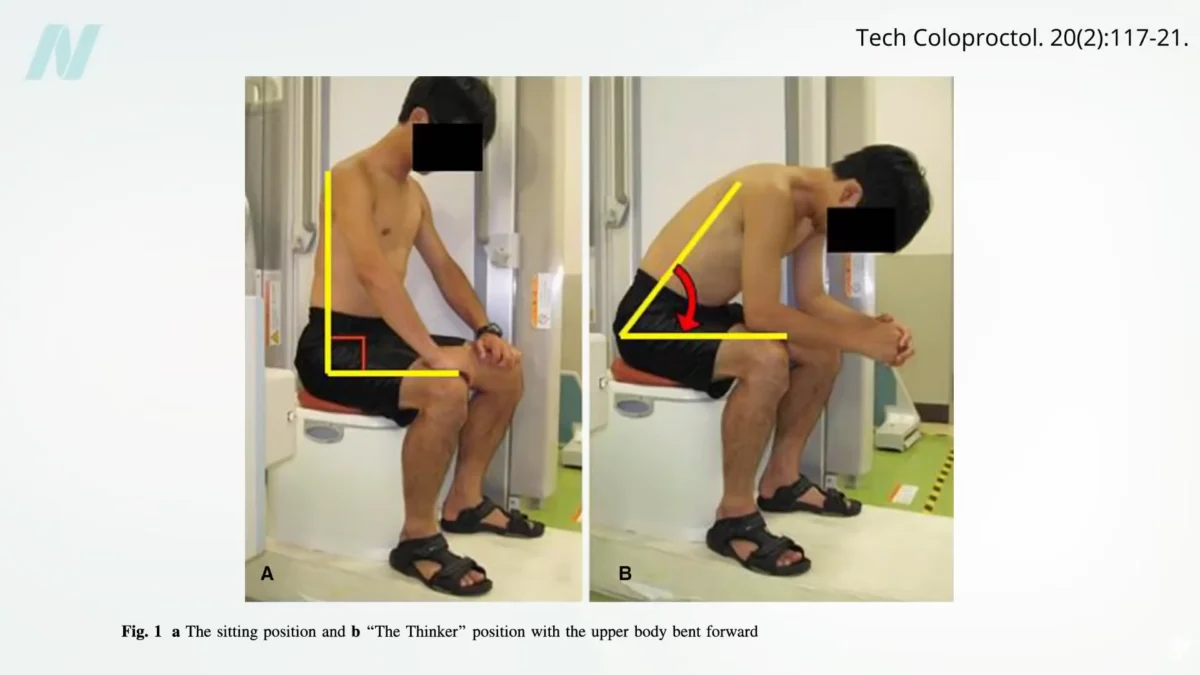
The pursuit of optimal defecation posture extends beyond the use of external devices. Researchers have also investigated alternative body positions that can achieve a similar anatomical advantage. One such exploration involved a posture that has been humorously likened to Auguste Rodin’s iconic sculpture, "The Thinker."
Cleveland Clinic researchers conducted a study examining this "Thinker" position, where individuals lean forward with their elbows resting on their knees. Utilizing a sophisticated imaging technique called cinedefecography – essentially an X-ray movie of the defecation process – they were able to measure the anorectal angle. This advanced diagnostic tool revealed that the "Thinker" position could open the anorectal angle to over 130 degrees. This is a notable improvement compared to simply raising the feet on a stool, which typically achieves an angle of around 90 degrees.
The implications of the "Thinker" position are significant. It suggests that a more effective defecation method might be achievable through a simple behavioral change, without the need for any specialized equipment. While this position has demonstrated the potential for a more efficient anorectal angle, its direct impact on constipation has not yet been formally studied. Further research is warranted to confirm its efficacy in alleviating constipated individuals.
The Broader Context: Diet, Strain, and Mortality Risk
It is crucial to acknowledge that toilet posture is just one piece of the complex puzzle of digestive health. The debate over sitting versus squatting has been ongoing for decades, with proponents of squatting often attributing a wide range of Western health ailments to the "porcelain throne." A commentary from nearly 50 years ago highlighted this perspective, suggesting that populations who squat and consume less refined, more natural foods, characterized by higher fiber content, experience easier bowel movements.
This perspective suggests a powerful interplay between diet and defecation. Adding adequate fiber to the diet can significantly improve stool consistency and ease of passage, potentially reducing the reliance on specific postures. In essence, dietary modifications may allow individuals to achieve effortless defecation without necessarily altering their toilet plumbing. This highlights the importance of a holistic approach, considering both dietary intake and physical positioning.
Furthermore, the act of straining during defecation carries significant health risks. Bearing down forcefully can lead to a spike in blood pressure in the heart and brain, increasing the risk of sudden cardiac events, including heart attacks and strokes. In Japan, straining during defecation has been identified as the daily activity most frequently occurring at the time of death. Individuals who are bedridden or have limited mobility appear to be particularly vulnerable. Therefore, promoting positions that minimize strain, such as sitting upright in bed when possible, is a critical public health consideration.
Conclusion: A Multifaceted Approach to Digestive Well-being
The scientific exploration of defecation posture, exemplified by the investigation into the Squatty Potty and alternative positions like "The Thinker," underscores a fundamental truth: our bodies are designed for efficient elimination, and certain postures facilitate this process more effectively than others. While the Squatty Potty offers a tangible solution for many, research indicates that simple behavioral adjustments, such as leaning forward, may also yield significant anatomical benefits.
Ultimately, achieving optimal bowel function likely requires a multifaceted approach. This includes not only adopting a physiologically advantageous defecation posture but also prioritizing a fiber-rich diet and avoiding excessive straining. As research continues to illuminate the intricate mechanics of digestion, individuals are empowered with more knowledge and tools to promote their own digestive well-being, moving beyond the traditional Western toilet and embracing a more natural, efficient approach to a daily bodily function. The ongoing dialogue between product innovation, scientific inquiry, and individual health choices promises to further refine our understanding and practice of effective defecation.

