

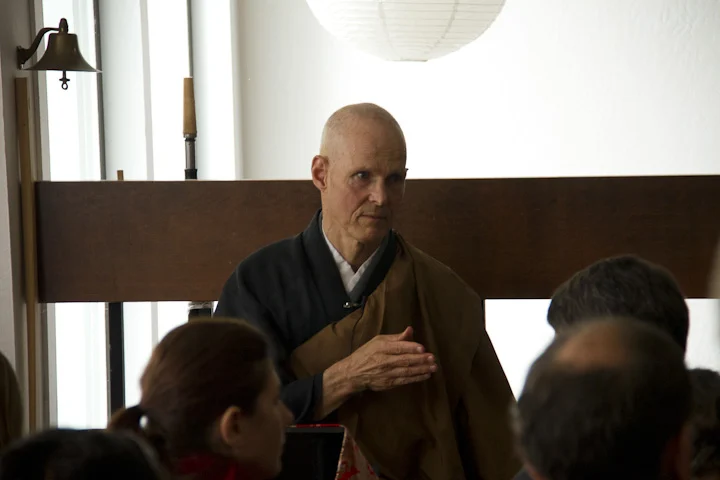
In his latest literary offering, Zen teacher Tenshin Reb Anderson, a venerable figure in American Buddhism and a student of the late Shunryu Suzuki, delves into the profound and often paradoxical nature of spiritual realization with his book, Nothing to Attain: Zen Stories of Faith and Understanding. Published on July 20, 2026, by Shambhala Publications, the book presents a compelling blend of intimate teachings, historical context, and personal narrative, aiming to illuminate the path for both novice practitioners and seasoned adherents. The core message, drawn from the Avatamsaka Sutra, posits that all beings inherently possess the wisdom and virtues of the buddhas, yet this realization is obscured by misconceptions and attachments. Anderson’s work intricately explores this duality: the ultimate state of "nothing to attain" and the necessary, arduous journey of shedding these obscurations.
Unpacking the Core Teaching: The Parable of the Destitute Child
Anderson anchors his exposition of this core teaching in a reinterpretation of the parable of the destitute child, found within the fourth chapter of the Lotus Sutra, subtitled "Faith and Understanding" in his book. This ancient narrative, central to Mahayana Buddhist thought, serves as a powerful allegory for spiritual awakening. The story recounts a son who, estranged from his wealthy father for fifty years, wanders in poverty. Upon his eventual return, the father, though recognizing his son, is not recognized in turn. The son, intimidated by his father’s opulence, initially accepts a menial position shoveling dung. Over time, through a series of incremental advancements and increasing responsibilities, he gradually inherits his father’s fortune and status, all the while remaining unaware of his true lineage.
Anderson draws a direct parallel between this parable and the spiritual journey. The wandering son represents the individual who has strayed from their "original home"—their inherent enlightened nature. The father’s wealth symbolizes the unmanifested Buddha-nature within all beings. The son’s arduous journey through menial labor and gradual acceptance of greater responsibilities mirrors the disciplined practice and gradual shedding of egoic attachments and deluded perceptions that characterize spiritual cultivation. Anderson emphasizes that the "treasures came to the son of themselves," a profound statement suggesting that spiritual awakening is not about acquiring something new, but about recognizing what has always been present, once the veils of ignorance are lifted. This understanding forms the bedrock of his teachings, advocating for both the inherent completeness of our being and the active engagement required to realize it.
A Rich Tapestry of Zen Ancestors and Personal Reflections
Nothing to Attain is not solely a theoretical exploration; it is a rich tapestry woven with historical accounts of Zen Buddhism’s foundational figures and deeply personal reflections from Anderson’s own life. The book introduces readers to key Zen ancestors, tracing their lineage from the legendary first patriarch, Bodhidharma, to influential masters of China’s Tang dynasty such as Mazu, Yangshan, Guishan, and Dongshan, who flourished in the 8th and 9th centuries CE. The narrative then extends through the lineage to later luminaries like Dogen, the founder of Soto Zen in Japan, and Hakuin, a pivotal figure in the Rinzai school.
Anderson’s choice to predominantly use the Chinese transliterations for these early figures—such as Juzhi (Gutei), Zhaozhou (Joshu), and Xuefeng (Seppo)—may present an initial challenge for readers more familiar with their Japanese equivalents, particularly those who have engaged with Zen through koan study. This approach, however, reflects a commitment to the historical roots of Zen in China. As a translator and adapter, Anderson prioritizes accessibility, a strategy that likely enhances the book’s appeal to newcomers to Zen philosophy. His adaptations, often drawing from sources like Thomas Cleary’s Book of Serenity, aim to convey the essence of these teachings in a way that resonates with contemporary understanding, potentially making complex historical narratives more approachable for a broader audience.
Intertwined with these historical accounts are vivid reminiscences of Anderson’s own spiritual journey, most notably his profound connection with his teacher, Shunryu Suzuki. Suzuki, whose seminal work Zen Mind, Beginner’s Mind is a cornerstone of Zen literature in the West, played an instrumental role in establishing Zen Buddhism in America. Anderson recounts his early encounter with Zen through Paul Reps’ Zen Flesh, Zen Bones while studying psychology at the University of Minnesota. He describes an intuitive understanding of the connection between posture and mental state, a realization that led him to abandon his graduate studies in favor of the San Francisco Zen Center, a place he had previously visited. His decision was solidified by a somewhat whimsical observation of his graduate advisor’s posture while eating at McDonald’s, which he likened to "a kind of question mark."
At the San Francisco Zen Center, Anderson encountered Suzuki and received the dharma name Tenshin. The anecdote surrounding the meaning of his dharma name—Suzuki’s initial, seemingly cryptic explanation that "Reb is Reb"—underscores the often paradoxical and deeply personal nature of Zen transmission. Even decades after Suzuki’s passing in 1971, Anderson’s profound respect and admiration for his teacher are palpable, making the inclusion of more stories about Suzuki a cherished aspect of Nothing to Attain.
Navigating Controversy: The Gun Incident and Dharma Transmission
While Nothing to Attain offers a largely introspective and illuminating portrayal of Anderson’s spiritual path, it does not shy away from acknowledging significant events that have shaped his tenure and the broader landscape of the San Francisco Zen Center. One such event, the 1987 arrest for brandishing a firearm, is addressed with a degree of candor that invites critical reflection. Anderson maintains that he retrieved an unloaded gun after being mugged and subsequently chased down his assailant, threatening him with the weapon. This incident led to a six-month voluntary leave of absence from his role as abbot, after which he returned to serve as co-abbot until 1995.
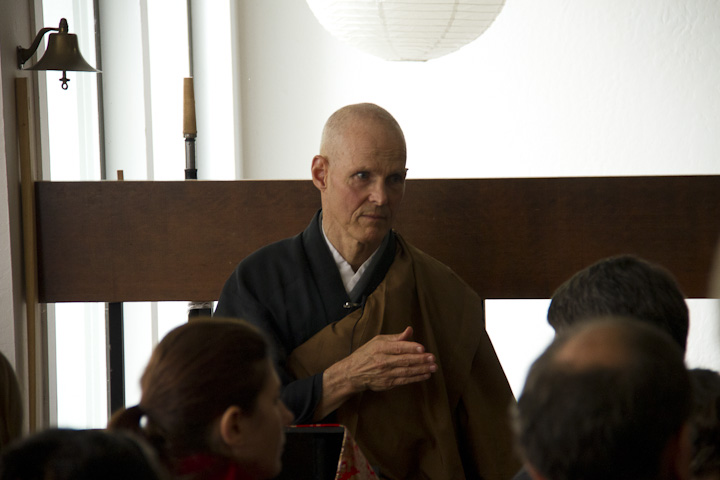
The review of this incident delves into its origins, tracing back to a period around 1983. This timeframe coincides with Anderson receiving dharma transmission from Zentatsu Richard Baker—a transmission that Baker himself has reportedly contested—and Baker’s resignation as abbot amidst allegations of an affair. In his 2001 book, Being Upright: Zen Meditation and the Bodhisattva Precepts, Anderson offers a different account of the gun’s acquisition. He claims to have discovered the firearm alongside the body of a man who appeared to have died by suicide while running in Golden Gate Park. Anderson states he engaged in zazen meditation with the body, intending to return and sit with it before contacting authorities. He asserts that after his third visit, he informed a police officer, and on his fourth visit, he took the gun home.
The author of the original review acknowledges that even if Anderson’s account of finding the gun is accepted, his description of his own actions as potentially driven by "arrogance and inflation" raises questions about his integrity. The implausibility of certain aspects of the story, coupled with the lack of corroborating witnesses for events preceding the arrest, leads to speculation about the true sequence of events. This ambiguity surrounding the gun incident, alongside the murkiness surrounding his dharma transmission through the controversial figure of Zentatsu Richard Baker, presents a complex ethical landscape for evaluating Anderson as a teacher.
Implications for Practice and Perception
The controversies surrounding Anderson’s past inevitably cast a shadow, prompting different interpretations of his standing within the Zen community. Some may view these events as disqualifying him as a legitimate Zen teacher, arguing that such incidents betray the ethical principles of the dharma. Conversely, others may contend that Anderson has demonstrated sufficient remorse and growth, and that the respect he commands from fellow Zen teachers—many of whom have provided endorsements for Nothing to Attain—attests to his continued relevance and the value of his teachings.
The core tenets of Zen Buddhism, as highlighted by Anderson himself, acknowledge the inherent paradox of existence: the innate Buddha-nature coexisting with human fallibility and susceptibility to delusion. This understanding suggests that a nuanced approach is warranted, one that recognizes both Anderson’s personal shortcomings and the potential wisdom his writings offer. Zen practice, after all, is fundamentally about embodied experience and mental cultivation, not solely intellectual study.
A Valuable Contribution to Zen Literature
Ultimately, the value of Nothing to Attain lies in its capacity to guide readers toward the foundational principles of Zen, introduce them to its rich lineage, and offer fresh perspectives to those already engaged in practice. The book serves as a testament to the enduring power of ancient teachings when presented through a contemporary lens. Anderson’s final words in the book, "nothing to attain and everything to realize," encapsulate the essence of Zen practice—a journey of unfolding awareness rather than a quest for external acquisition.
The book’s relatively concise length, under 200 pages, makes it an accessible entry point for individuals new to Zen Buddhism. It offers a comprehensive overview that touches upon historical figures, philosophical concepts, and the practical application of these teachings in daily life. The integration of personal anecdotes, particularly those relating to Shunryu Suzuki, provides an intimate glimpse into the transmission of the dharma and the human element within spiritual lineages.
The analysis of Anderson’s life and teachings also serves as a case study in the complexities of spiritual leadership. In any tradition, particularly those that emphasize self-cultivation and ethical conduct, the personal lives of teachers are often scrutinized. The inclusion of controversial episodes, while potentially unsettling for some readers, adds a layer of authenticity and realism, reflecting the Buddhist understanding of the path as one of continuous learning and confronting one’s own imperfections.
The broader impact of Nothing to Attain is likely to be significant within the Zen community and beyond. By bridging historical Zen traditions with contemporary American Buddhist experience, Anderson’s work contributes to the ongoing evolution of Buddhism in the West. It encourages a deeper engagement with the sutras and the lives of the ancestors, while also prompting reflection on the nature of faith, understanding, and the relentless pursuit of self-realization. The book’s enduring message—that the ultimate truth is not something to be achieved but something to be uncovered within—resonates as a timeless call to awaken to our inherent potential.

