

The introduction of calorie labeling on menus in national chain restaurants, mandated in 2017, was intended to empower consumers to make healthier dietary decisions. The rationale was straightforward: providing clear caloric information would allow individuals to monitor their intake and align their food choices with their daily energy requirements. However, a growing body of research and observed consumer behavior suggests that this seemingly intuitive approach has yielded unexpectedly counterproductive results, with studies indicating that the average reduction in calories consumed due to such labeling is a mere eight calories per meal – an insignificant amount. This outcome points to a deeper, more complex interplay between consumer psychology and food choices, revealing a paradoxical phenomenon where the mere presence of a healthy option can, counterintuitively, drive individuals towards less healthy, more indulgent selections.
The Genesis of Menu Labeling and Its Limited Impact
The push for menu labeling gained momentum in the early 2010s. New York City, in 2008, became a pioneer by mandating that restaurant chains with more than 15 outlets display calorie information on their menus. The intention was to combat rising obesity rates and promote public health. However, initial studies following the New York mandate found no significant overall effect on consumer behavior regarding calorie consumption. This lack of impact was a precursor to the broader federal mandate that followed in 2017, underscoring the complexities of translating information into behavioral change in the fast-food environment.
Even before the federal mandate, major players in the fast-food industry began voluntarily implementing calorie labeling. McDonald’s, for instance, started posting calorie counts nationally in 2012, following the New York City initiative. This move, while seemingly progressive, also coincided with other menu developments by the same corporation. McDonald’s announced plans to incorporate seasonal produce into its offerings, a step that, on its face, appeared to be a positive move towards healthier options. Yet, the effectiveness of these initiatives in genuinely shifting consumer habits toward healthier choices has been called into question by subsequent research.
The "Vicarious Goal Fulfillment" Phenomenon
A significant body of research highlights a peculiar aspect of human psychology that directly impacts food choices: the concept of "vicarious goal fulfillment." This phenomenon suggests that the mere act of considering or being presented with a healthy option can, paradoxically, provide a psychological "license" for individuals to indulge in less healthy choices.
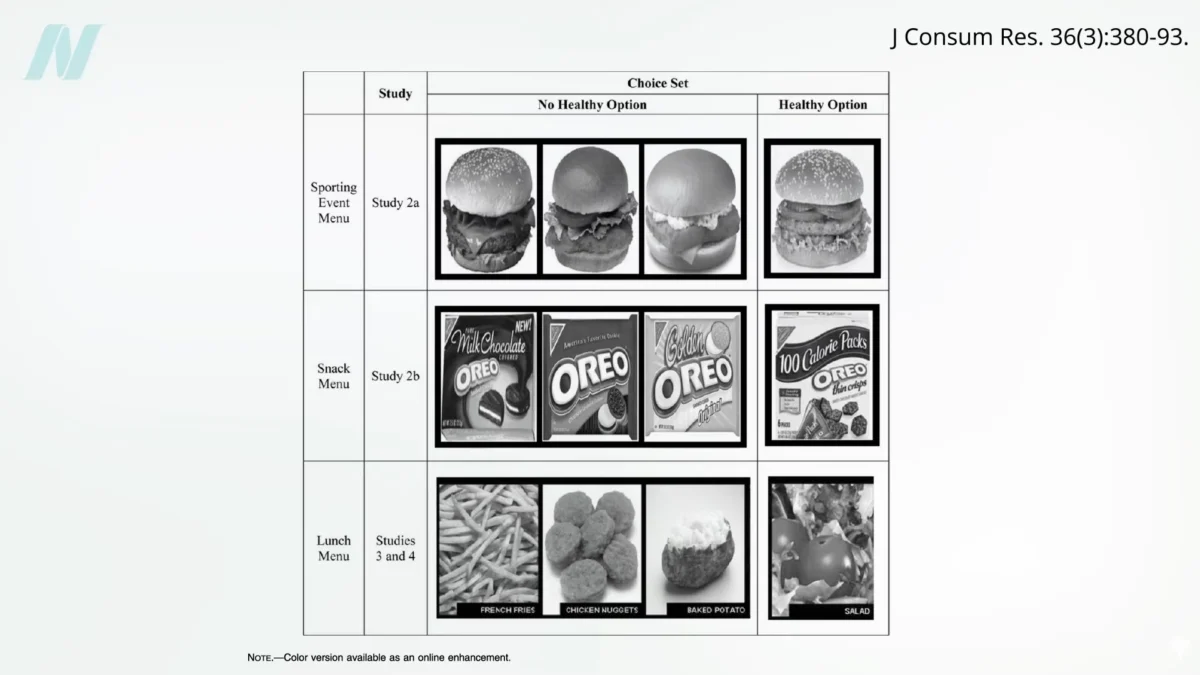
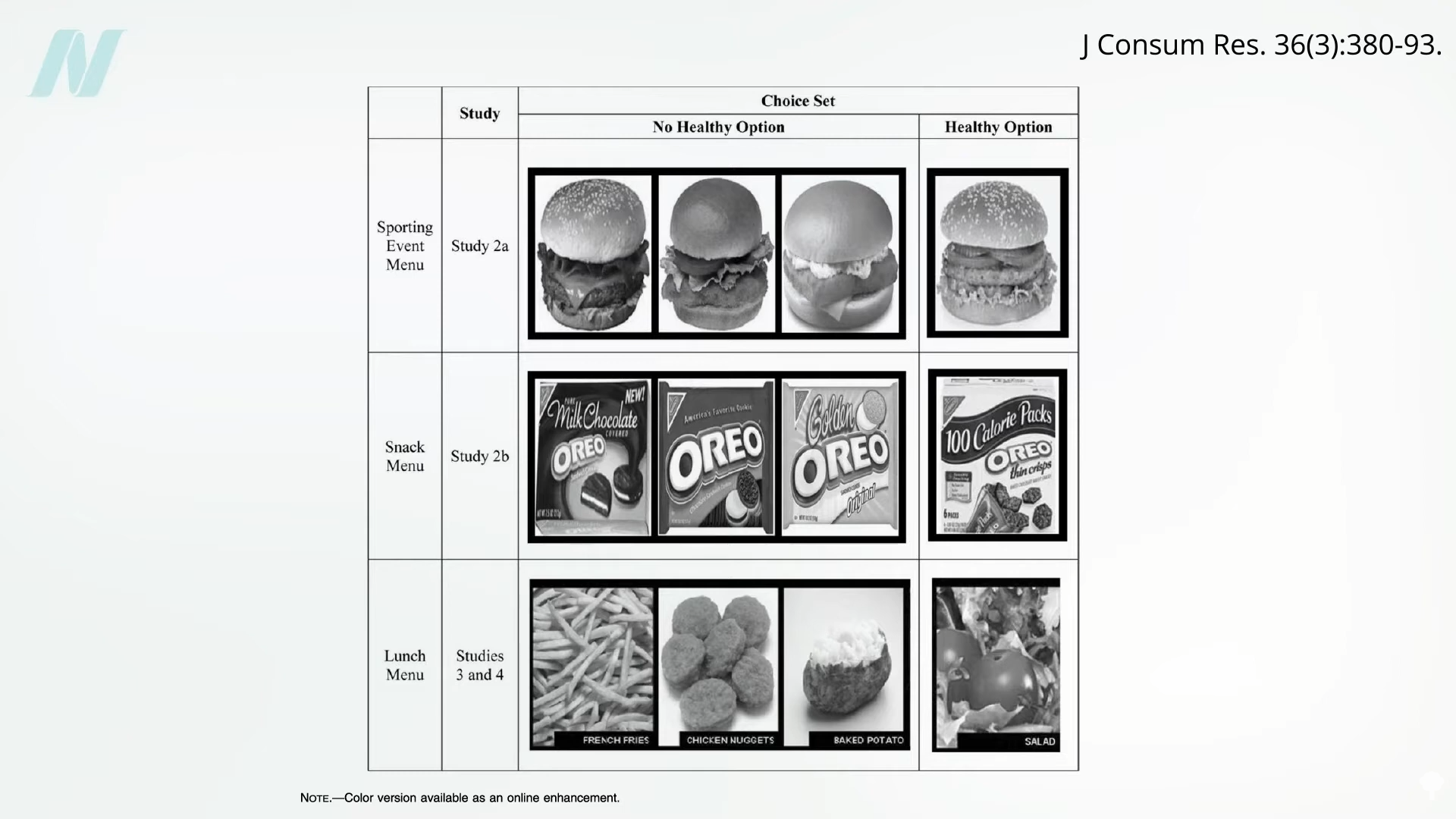
One of the most striking illustrations of this comes from studies involving side dish selections. When presented with a choice between an unhealthy option like French fries and a more neutral option like a baked potato, approximately 10% of consumers opt for the fries. However, when a third, explicitly healthier option, such as a side salad, is introduced, the dynamic shifts dramatically. Instead of a straightforward choice between indulgence and moderation, consumers now face a spectrum. The expectation might be that the salad would be chosen, or at least that the neutral baked potato would gain favor over the fries. The reality, however, is that the introduction of the salad option causes the preference for French fries to triple, reaching about 33% of consumers. This indicates that the presence of a healthy alternative, rather than curbing indulgent choices, can amplify them.
This effect extends to main course selections as well. Research comparing consumer choices between a bacon cheeseburger, a chicken sandwich, and a fish sandwich (in a scenario with no explicitly healthy option) revealed that 17% chose the burger. When the fish sandwich was replaced with a veggie burger, the preference for the bacon cheeseburger more than doubled, reaching 37%. This suggests that the presence of a vegetarian alternative, rather than steering consumers towards it, can embolden them to select the most indulgent meat-based option.

The academic underpinning for this behavior is explored in studies titled "Vicarious Goal Fulfillment: When the Mere Presence of a Healthy Option Leads to an Ironically Indulgent Decision." The theory posits that by seeing the healthier option, individuals mentally "check off" a good deed, believing they have fulfilled their health-conscious intentions for the moment. This mental satisfaction then frees them to indulge in less healthy choices, rationalizing that they have already demonstrated their commitment to health by simply considering or seeing the healthier alternative.
The "Self-Licensing" Effect: Rewarding Past Good Deeds
Closely related to vicarious goal fulfillment is the psychological principle of "self-licensing." This concept describes the human tendency to justify engaging in behaviors that deviate from our goals after having previously engaged in behaviors that move us toward those goals. It’s akin to the idea of rewarding oneself for perceived progress. For example, someone might feel justified in eating a donut after a week of successful weight loss, effectively negating the progress made.
This self-licensing effect has been observed in various contexts, including smoking habits. Studies have shown that smokers who believe they are taking vitamin C supplements (even if they are actually sugar pills) tend to smoke more cigarettes afterward compared to those who are told they are receiving placebo pills. The subconscious reasoning appears to be that by taking a health-conscious step (the perceived supplement), they have earned the right to indulge in a detrimental behavior, thus "living a little" at the expense of their long-term health.
The implications of self-licensing extend to dietary choices and exercise. Research indicates that individuals who believe they are taking dietary supplements (again, even if they are placebos) exhibit reduced desire to engage in physical activity and subsequently walk less. Furthermore, these individuals are more likely to opt for a buffet over a "healthy, organic meal" and consume more food, including less healthy items and a higher proportion of sugary drinks and candy, when given the opportunity. This phenomenon suggests that the perceived act of supporting one’s health through supplements can inadvertently liberate individuals from dietary discipline.
A seminal study titled "The Liberating Effect of Weight Loss Supplements on Dietary Control" investigated this directly. Participants were given either a known placebo or a purported weight-loss supplement (which was identical to the placebo). Those who believed they were taking a weight-loss aid consumed more food at a buffet, selected less healthy items, and consumed significantly more candy and sugary drinks in subsequent taste tests. The investigators concluded that individuals who rely on dietary supplements for health protection may incur a "hidden price: the curse of licensed self-indulgence."
The "What the Hell Effect" and Perceptual Warping
Beyond self-licensing and vicarious goal fulfillment, another psychological quirk, often referred to as the "what the hell effect," contributes to this counterintuitive outcome. This effect describes the tendency for individuals to abandon their dietary goals entirely after a single instance of straying. If a dieter succumbs to eating one "forbidden" cookie, they may rationalize that they have already broken their diet and might as well continue eating the entire bag.
This concept is illustrated in studies involving different types of Oreos. When presented with chocolate-covered Oreos, regular Oreos, and golden Oreos, the introduction of a "lower-calorie" Oreo option doubled the likelihood that participants would opt for the most indulgent choice: the chocolate-covered Oreos. The presence of a slightly healthier alternative seems to trigger a "why not go all the way" mentality, leading to the most extreme indulgence.
Furthermore, the presence of healthy foods can significantly warp our perception of the unhealthier options. Studies have shown that when participants are asked to estimate the calorie content of a burger, their estimates are higher when the burger is presented alone. However, when the same burger is accompanied by celery sticks, the estimated calorie count of the burger decreases, even though participants are aware that the celery also contains calories. This perceptual shift, known as the "health halo effect," makes the unhealthy option seem comparatively healthier due to its juxtaposition with a healthy item.
This effect has been observed across various food combinations. Adding an apple to a bacon-and-cheese waffle sandwich, a side salad to beef chili, or carrots next to a cheesesteak all lead to a perceived reduction in calorie content, as if hundreds of calories simply disappear. This phenomenon can explain why individuals might order dessert and sugary drinks alongside a seemingly "healthier" sub at a sandwich shop, even if the sub itself is calorie-dense.
Even a simple textual reference to healthy eating can influence calorie perceptions. Presenting an advertisement for a Big Mac with the accompanying text, "For your health, eat at least five fruits and vegetables per day," leads consumers to estimate the burger’s calorie count as significantly lower compared to an ad for the same burger without that health-oriented message. This suggests that the mere promotion of healthy foods, even without their direct presence, can bolster a restaurant’s image and consumer loyalty without necessarily leading to healthier eating habits.
Implications and Future Directions
The findings from these studies have significant implications for public health initiatives and the food industry. While the intention behind menu labeling and the introduction of healthy options is commendable, the unintended psychological consequences suggest that a more nuanced approach is required.
Broader Impact and Analysis:
- Policy Re-evaluation: The limited impact of calorie labeling suggests that policymakers may need to explore alternative or complementary strategies beyond simply providing information. Behavioral economics principles and nudges that are more carefully designed to account for psychological biases might be more effective.
- Industry Strategies: Restaurants, while often aiming to cater to health-conscious consumers, may inadvertently be creating an environment that encourages greater indulgence. Understanding these psychological triggers can help them design menus and promotions that genuinely promote healthier choices rather than creating a "health halo" that masks less healthy behaviors.
- Consumer Education: Empowering consumers with knowledge about these psychological biases could be crucial. Understanding concepts like vicarious goal fulfillment and self-licensing might help individuals become more conscious of their decision-making processes and resist these counterproductive impulses.
Future Research:
Further research could delve deeper into the specific contexts and individual differences that influence these psychological effects. Understanding which demographics are most susceptible to these biases and under what conditions could inform more targeted interventions. Additionally, exploring innovative menu designs and promotional strategies that actively counter these psychological pitfalls, rather than inadvertently activating them, remains a critical area of investigation. The journey toward healthier eating habits is clearly more complex than simply presenting information; it requires a profound understanding of the human mind.

