

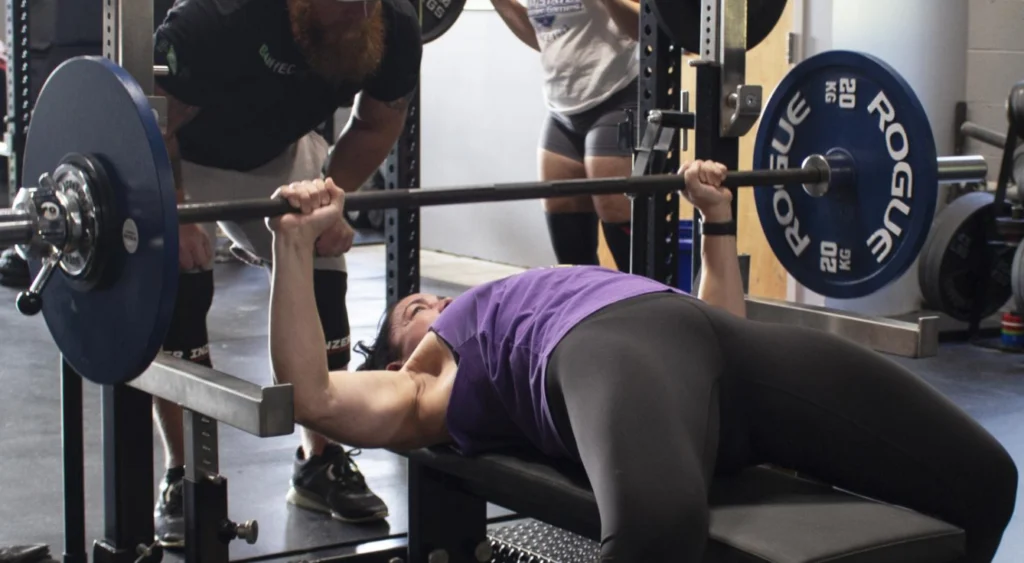
The bench press remains a cornerstone of resistance training, serving as a primary metric for upper-body strength in both competitive powerlifting and general fitness programming. Traditionally, the exercise is performed with the lifter’s feet firmly planted on the floor to maximize stability and force production. However, a growing body of evidence and shifting coaching philosophies have introduced the "feet-up" variation—specifically the Larsen Press—as a viable tool for technical development and muscular hypertrophy. This analysis explores the biomechanical foundations, historical context, and practical applications of both foot-placement strategies, addressing the ongoing debate regarding safety, efficiency, and athletic outcomes.
Biomechanical Foundations of the Standard Bench Press
The standard bench press is defined by five points of contact: the head, the upper back/shoulders, the buttocks, and both feet. Maintaining these contact points is essential for creating a stable base from which to exert force. When the feet are placed on the floor, the lifter can engage in what is known as "leg drive." This involves the transfer of force from the lower body through the kinetic chain, stabilizing the pelvis and reinforcing the arch of the spine.
According to Greg Robins, a prominent coach at Strength House, the structural integrity of the bench press is akin to an architectural arch. An arch requires pressure from two opposing sides to maintain its shape and strength. In the context of the bench press, the feet pushing against the floor provide the counter-force to the weight of the barbell pressing down on the shoulders. This compression creates a rigid, stable platform. Biomechanically, this setup allows for a slight lumbar arch, which serves two primary purposes: it places the glenohumeral joint in a more advantageous position for force production and reduces the range of motion (ROM) the bar must travel, thereby increasing the total load an athlete can move.
The Evolution of the Bench Press: A Brief Chronology
The history of the bench press is marked by a transition from floor-based pressing to the specialized equipment used today. In the early 20th century, the "floor press" was the standard, as weight benches had not yet been popularized. Because the lifter lay flat on the ground, the legs were often extended, limiting the influence of the lower body.
By the 1950s and 1960s, the introduction of elevated benches allowed for a greater range of motion, and lifters began experimenting with foot placement to optimize leverage. The 1970s saw the formalization of powerlifting as a sport, with organizations like the International Powerlifting Federation (IPF) establishing strict criteria for the lift. These rules generally required the feet to remain flat on the floor to ensure a standardized level of stability and to prevent lifters from using excessive lower-body movement to "cheat" the weight upward.
In recent decades, however, the "feet-up" variation has seen a resurgence. Originally dismissed by many traditionalists as a sign of poor form or "ego lifting" with lighter weights, the variation gained credibility through the success of elite athletes like Adrian Larsen, after whom the Larsen Press is named. Larsen demonstrated that benching with legs extended and off the floor could build significant pectoral and triceps strength by removing the "crutch" of leg drive.
The Case for Feet-on-Floor: Power and Stability
For competitive powerlifters and those seeking to maximize absolute strength, the feet-on-floor position is indispensable. The primary advantages include:
- Maximum Force Production: The use of leg drive allows for a more explosive "start" off the chest. By driving the heels into the floor, the lifter creates a surge of tension that stabilizes the torso and prevents energy leaks.
- Enhanced Stability: A wider base of support reduces lateral instability. This is particularly critical when handling sub-maximal or maximal loads (90% to 100% of a one-rep max), where any deviation in the bar path can lead to a failed lift or injury.
- Safety and Risk Mitigation: Having the feet on the ground provides an immediate "escape route" or balance correction if the weight shifts unexpectedly. It significantly decreases the likelihood of the lifter rolling off the bench or losing control of the barbell.
Furthermore, the lumbar arch—often a point of contention among fitness enthusiasts—is a natural component of the bench press when the feet are on the floor. While critics argue that arching the back is dangerous, biomechanical experts point out that the lumbar spine possesses a natural lordotic curve. When performed correctly, an arch distributes the load across the bony structures of the upper back and hips, rather than placing undue stress on the intervertebral discs.
The Larsen Press and Feet-on-Bench Variations
The Larsen Press involves performing the bench press with the legs straight and hovering just off the ground or resting lightly on the bench, effectively eliminating leg drive. This variation is increasingly utilized by coaches to address specific technical deficiencies.
Tony Bonvechio, a strength coach and competitive powerlifter, highlights that the main benefit of removing the legs from the equation is the reinforcement of upper-back tightness. "One of the biggest mistakes we see lifters make is collapsing the upper back as they bring the bar down," Bonvechio notes. Without the stability of the legs, the lifter is forced to maintain the arch of the thoracic spine through muscular effort alone. This teaches the athlete how to keep the shoulder blades retracted and depressed, which is vital for long-term shoulder health and pressing efficiency.
Greg Robins further elaborates on the benefits of the feet-up approach, noting that it purposefully increases the difficulty of the exercise. By removing the legs, the lifter experiences:
- Increased Range of Motion: Without the high arch facilitated by leg drive, the bar must often travel a greater distance to reach the chest.
- Higher Relative Intensity: An athlete can achieve significant muscular fatigue using 10% to 20% less weight than their standard bench press. This allows for high-intensity training with less systemic fatigue and lower joint stress.
- Core Engagement: To maintain balance on the narrow bench without the feet for support, the lifter must engage the core musculature to a higher degree to prevent rotation.
Addressing the "Arch" Controversy
The debate over whether to arch the back during a bench press often influences the decision to put feet on the bench. Many lifters choose the feet-on-bench position because they believe it "flattens" the back and protects the spine. However, journalistic investigation into sports medicine reveals that for a healthy individual, the arch used in a bench press is rarely a cause of injury.
The tension required to maintain an arch is primarily isometric and occurs in the erector spinae muscles, not the spinal discs themselves. In fact, for many, the "feet-up" position can actually be more precarious if the lifter lacks the core stability to keep the spine neutral under load. The consensus among modern strength professionals is that the arch is a tool for performance, and while a "Marissa Inda-style" extreme arch may not be necessary for the general population, a moderate arch is both safe and effective.
Broader Impact and Training Implications
The integration of both styles into a training program represents a shift toward "variability-based training." Rather than adhering to a single dogmatic approach, modern athletes use the standard bench press for competition-specific strength and the Larsen Press or feet-up variations for hypertrophy and technical refinement.
Data on Muscle Activation
Electromyography (EMG) studies have shown that while the standard bench press allows for higher total loads, the feet-up variation can lead to higher relative activation of the pectoralis major and anterior deltoids in some lifters, as these muscles can no longer rely on the momentum or stability provided by the lower body. This makes the feet-up bench press an excellent "accessory" movement for those looking to build chest volume without the heavy spinal loading associated with max-effort attempts.
Recommendations for Different Populations
- Competitive Powerlifters: Should spend 70-80% of their training time with feet on the floor to master competition standards, using feet-up variations during the off-season to fix technical "leaks."
- General Fitness Enthusiasts: May benefit from alternating between the two. Feet-on-floor provides a safer environment for learning, while feet-on-bench can provide relief for individuals with certain types of hip or lower-back tightness that make a deep arch uncomfortable.
- Rehabilitative Settings: The floor press or a "hook lying" position (feet flat on the bench with knees bent) is often preferred for those recovering from lower-extremity injuries, allowing them to maintain upper-body pressing strength without involving the legs.
Conclusion
The choice between benching with feet on the floor or on the bench is not a matter of "right versus wrong," but rather a matter of "objective versus intent." The standard feet-on-floor position remains the gold standard for stability, safety, and maximum power. Conversely, the Larsen Press and other feet-up variations serve as sophisticated tools for increasing time under tension, improving upper-body mechanics, and providing a novel stimulus for muscle growth. As the field of strength and conditioning continues to evolve, the professional consensus suggests that a nuanced approach—incorporating the strengths of both techniques—is the most effective path toward long-term athletic development and injury prevention.

