

In a striking juxtaposition of regulatory action and public perception, life-saving medications valued in the billions have been systematically removed from the market due to the presence of a probable carcinogen, N-nitrosodimethylamine (NDMA). This substance, a potent nitrosamine, has been identified in pharmaceutical products at levels that, according to scientific assessments, are significantly lower than those commonly found in a single serving of grilled or cooked chicken. This discrepancy raises critical questions about risk assessment, public health priorities, and the pervasive presence of environmental contaminants in our daily lives.
The NDMA Scare in Pharmaceuticals
The scrutiny of NDMA in pharmaceuticals gained significant momentum in 2018 when one of the world’s top-selling blood pressure medications, valsartan, a widely prescribed Angiotensin II Receptor Blocker (ARB) marketed under various brand names including Diovan, was found to be contaminated. This discovery triggered a global recall, affecting millions of patients who had been prescribed the tainted drug. The contaminant, NDMA, is classified as a "probably carcinogenic" agent by regulatory bodies.
Further investigation revealed that the levels of NDMA detected in valsartan posed a considerable cancer risk. The U.S. Food and Drug Administration (FDA) estimated that prolonged use of the contaminated valsartan could lead to cancer in approximately 1 in 8,000 individuals. The European Medicines Agency (EMA) offered a similar, if not slightly more concerning, projection, suggesting a potential risk as high as 1 in 5,000. These figures underscore the seriousness with which regulatory agencies approached the contamination, leading to a swift and comprehensive market withdrawal.
The valsartan incident was not an isolated event. Researchers and regulatory bodies began to suspect that other widely used medications might also harbor similar contaminants. This suspicion proved prescient. A few months following the valsartan recall, the FDA announced the detection of NDMA in ranitidine, a popular medication for acid reflux and ulcers, widely recognized by its brand name, Zantac. Zantac, a blockbuster drug that has generated billions in revenue throughout its history and is available both by prescription and over-the-counter, became the next target of regulatory concern.
The contamination of ranitidine with NDMA was deemed significant enough for regulatory action. In 2020, following its ongoing efforts to address nitrosamine impurities in ARB medications and later in ranitidine, the FDA requested the immediate withdrawal of all ranitidine products from the market. This decision was based on testing that indicated NDMA levels in some ranitidine formulations could, under certain conditions, exceed the acceptable daily intake (ADI) limit of 96 nanograms per day. The agency’s findings were stark: the levels of NDMA found in Zantac were comparable to the exposure levels one might experience from consuming grilled or smoked meats.
Subsequently, in 2020, NDMA was also detected in certain formulations of metformin, a cornerstone medication for managing type 2 diabetes, commonly sold as Glucophage. While the regulatory response to metformin contamination was more nuanced, involving targeted recalls of specific extended-release formulations, it further solidified the emerging pattern of nitrosamine impurities impacting widely used pharmaceutical products.
The Paradoxical Levels: Food vs. Pharmaceuticals
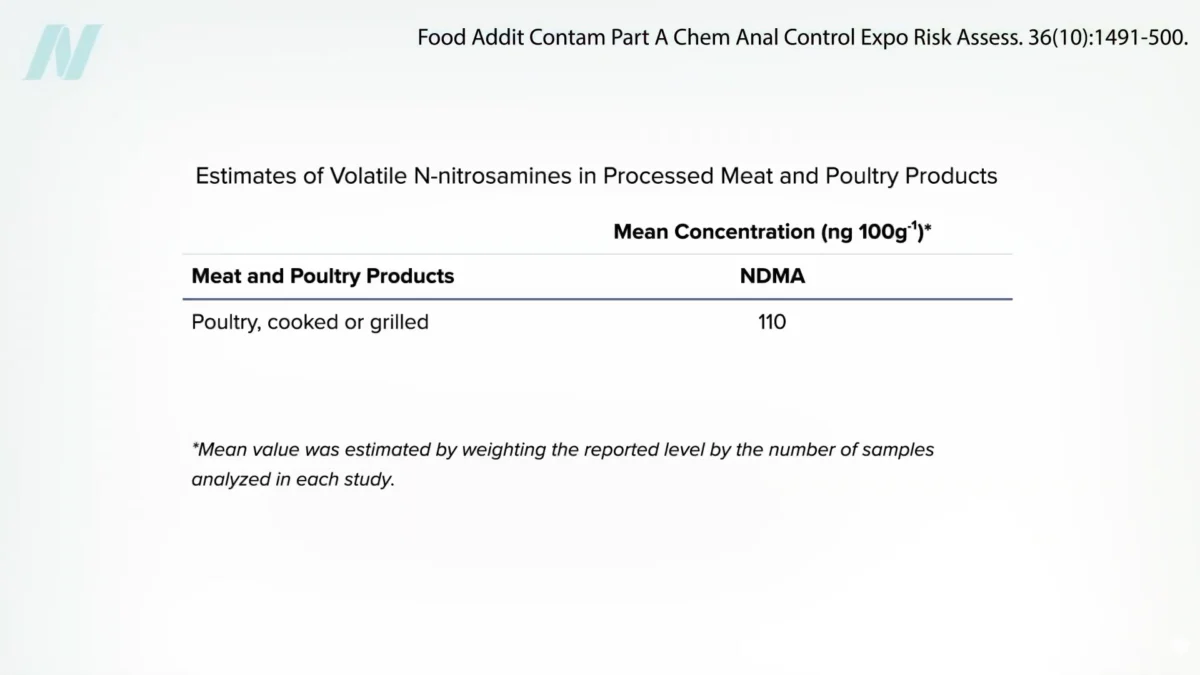
The most startling revelation in the NDMA contamination saga lies in the comparative levels of the carcinogen found in pharmaceuticals versus common food items, particularly cooked meats. While billions were spent on recalling medications to protect public health from NDMA exposure, scientific studies have consistently shown that a single serving of cooked poultry can contain more NDMA than the acceptable daily intake limit set by regulatory agencies for pharmaceuticals.
Research indicates that a single serving of chicken can contain upwards of 100 nanograms of NDMA. This figure dramatically contrasts with the FDA’s established acceptable daily intake limit of 96 nanograms. Notably, raw poultry itself does not contain NDMA. The contaminant is primarily a byproduct of the cooking process, particularly dry-heat methods such as broiling and grilling. These cooking techniques can even generate airborne NDMA, releasing the carcinogen into the surrounding environment. This suggests that individuals in close proximity to where meat is being grilled or smoked, even if not directly consuming the meat, could be exposed to significant levels of NDMA.

The presence of NDMA is not limited to poultry. It is a known byproduct of various industrial processes, including tire manufacturing, pesticide production, and leather tanning. Consequently, NDMA has been detected in a range of food and beverages, including processed meats and beer.
The Broader Implications and Scientific Context
The discovery of NDMA in both pharmaceuticals and food necessitates a broader understanding of its origins and potential health impacts. Nitrosamines, as a class, are potent carcinogens. Their presence in cigarette smoke, for instance, has been a major focus of tobacco control efforts, with significant pressure exerted on the industry to remove these harmful compounds. The argument that "there is simply no logical reason why a removable carcinogen should be allowed to remain in a consumer product" was a key driver behind the stringent regulatory actions taken against ranitidine.
The ability of NDMA to cross the placental barrier has also raised concerns regarding prenatal exposure. Studies have explored potential links between maternal consumption of cured meats during pregnancy and an increased risk of childhood brain tumors. For example, consumption of hot dogs during pregnancy has been associated with a 33% increase in childhood brain tumor risk, sausages with a 44% increase, and bacon with a 60-70% increase. This correlation, while complex and requiring further investigation, highlights the potential long-term consequences of dietary exposure to NDMA.
Regulatory Response and Public Health Considerations
The FDA’s actions regarding Zantac, a drug that generated billions in revenue, were decisive. The agency’s rationale was clear: the presence of NDMA at levels exceeding the acceptable daily intake presented an unacceptable risk to public health. This decision underscored the agency’s commitment to safeguarding consumers, even when it meant withdrawing a widely used and profitable medication.
However, the stark contrast between the regulatory approach to pharmaceuticals and the continued widespread availability of certain food products containing higher levels of NDMA has led to public questioning and debate. While regulatory frameworks for pharmaceuticals are designed to ensure the utmost purity and safety, the food industry operates under different, though still rigorous, standards. The presence of NDMA in cooked meats, while acknowledged by scientific research, has not resulted in similar widespread product recalls or market withdrawals.
This disparity prompts a critical examination of risk assessment methodologies. Is the acceptable daily intake for NDMA the same across all exposure pathways? How are cumulative exposures from various sources factored into public health recommendations? These are complex questions that underscore the challenges in balancing the benefits of certain products with their potential risks.
Looking Ahead: Mitigation and Consumer Awareness
The issue of NDMA contamination serves as a critical reminder of the interconnectedness of environmental factors, industrial processes, and public health. While the pharmaceutical industry faces stringent oversight, the presence of NDMA in common foodstuffs suggests a broader societal challenge.
Consumers seeking to minimize their exposure to NDMA can consider several strategies:
- Cooking Methods: Opting for cooking methods that minimize the formation of nitrosamines, such as stewing, boiling, or baking at lower temperatures, can be beneficial. Avoiding charring or overcooking meats is also recommended.
- Dietary Choices: Reducing consumption of processed and cured meats, which are known sources of nitrosamines, may be advisable. Increasing intake of fruits and vegetables, which contain antioxidants that can help counteract the effects of carcinogens, is generally encouraged.
- Awareness of Industrial Byproducts: Recognizing that NDMA can be a byproduct of various industrial activities underscores the importance of environmental regulations and sustainable industrial practices.
The ongoing scientific research into NDMA and other nitrosamines continues to inform regulatory policies and public health guidelines. The paradox presented by the pharmaceutical recalls in contrast to the continued presence of NDMA in everyday foods highlights the complexities of risk management in a modern society. It underscores the need for continued vigilance, transparent communication, and a holistic approach to public health that considers all sources of potential exposure to harmful substances. The lessons learned from the NDMA contamination in pharmaceuticals may well spur a broader re-evaluation of how we assess and manage risks associated with unavoidable environmental contaminants in our food supply.

