

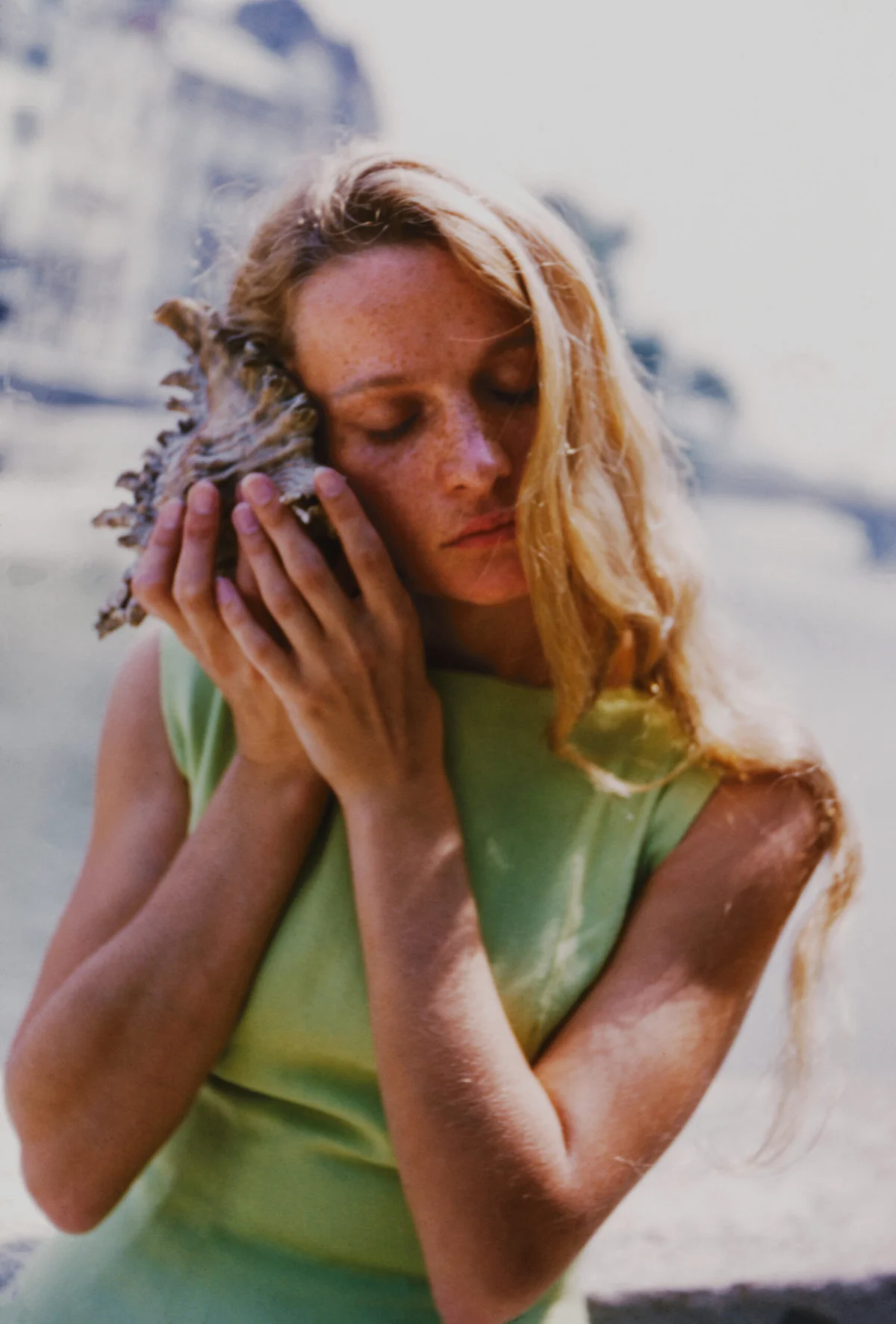
Éliane Radigue, a pioneering composer whose rigorous sonic explorations delved into the profound liminal spaces between existence and emptiness, died on February 23 in Paris at the age of 94. Her life’s work, deeply intertwined with her lifelong practice of Tibetan Buddhism, transcended conventional musical boundaries, transforming sound into a vehicle for spiritual inquiry and a testament to the power of sustained focus. Radigue’s passing marks the end of an era for experimental music, leaving behind a legacy that continues to inspire artists and seekers alike.
Radigue’s approach to music was not merely an artistic pursuit; it was an embodied spiritual practice. Her compositions were often described as sonic pilgrimages, meticulously crafted to explore states of consciousness and the nature of impermanence. This profound connection between art and spirituality was perhaps most vividly encapsulated in her monumental triptych album, Trilogie de la Mort (1998). This nearly three-hour work is a direct sonic interpretation of the Bardo Thodol, commonly known as the Tibetan Book of the Dead, or more precisely, Liberation Through Hearing in the Intermediate State. The album itself is a profound exploration of the intermediate states described in Tibetan Buddhist cosmology, representing the journey between death and rebirth.
The genesis of Trilogie de la Mort was deeply personal and spiritual. The first piece, "Kyema" (1988), consumed eight years of Radigue’s creative life. This extended composition was profoundly influenced by the sacred teachings of her master, Pawo Rinpoche, and tragically, by the untimely death of her son, Yves Arman, who passed away at the age of 34 in a car accident. The six sections of "Kyema" directly correspond to the six intermediate states of consciousness that constitute the existential continuum of being:
- Kyene—Naissance (Birth)
- Milam—Rêve (Dream)
- Samten—Contemplation-Méditation (Contemplation-Meditation)
- Chika—Mort (Death)
- Chönye—Claire lumière (Bright light)
- Sippa—Traversée et retour (Crossing and Return)
The subsequent pieces of the trilogy, Kailasha (1991) and Koumë (1993), drew inspiration from diverse sources, including the geometric drawings of Josef Albers and M.C. Escher, the sacred Himalayan peak of Mount Kailash, and the concept of ashes. Radigue utilized the ARP 2500 synthesizer and magnetic tape to create these works, conjuring nuanced subharmonics that submerged listeners in vast, oceanic depths. Her sonic landscapes were designed to trace the topography of what she termed "the eternity of a perpetual becoming," a realm that persistently eluded easy human articulation.
A Life Dedicated to Transitions and Sound
Radigue’s lifelong fascination with transitions, evident in her statement, "I’ve always been fascinated by transitions—when you leave a tonality for another. You travel in between and you never know where you are going," mirrors the Tibetan Buddhist concept of the bardo, the transitional state between death and rebirth. Tibetan Buddhism posits that upon death, an individual enters a borderless realm where corporeal illusions dissolve before approaching boundless freedom. A practitioner’s life is often dedicated to preparing for this critical juncture, where emotions and attachments dictate the trajectory of their next existence. The ultimate aim for many is to escape the cycle of samsara, a liberation achieved by learning the grace of holding tension. Radigue’s existence was a profound testament to mastering these intermediate states.
Her deep engagement with Tibetan Buddhism, specifically the Karma Kagyu lineage, informed her understanding of sound. She spoke of the transformative power of mantras, describing how listeners are "bathed" in "sounds that we cannot catch" and "all these sounds, overtones, which are floating." She referred to these vibrational remnants as "completely unreal," existing between appearance and disappearance, yet simultaneously embodying "complete freedom." This pursuit of the elusive and the ephemeral became the cornerstone of her artistic and spiritual journey.
Early Life and Artistic Awakening
Born Éliane Louise Thérèse Radigue on January 24, 1932, in Paris, she grew up in a working-class family. Her childhood was marked by a duality: a strict, almost domineering upbringing by her mother, Germaine Radigue, in Paris, contrasted with the freedom she experienced at her family’s rural holiday home in Sarthe. Music was not encouraged in her Parisian household, and Radigue often spoke of an internalized censorship that she battled throughout her early career. Her parents viewed music as the domain of street performers.
However, a pivotal encounter occurred in primary school when she was permitted to take piano lessons from Madame Roger. Radigue’s precocious talent quickly became apparent, leading Madame Roger to encourage her to play a grand piano. "Madame Roger was my goddess, you know," Radigue recalled. Her mother, however, grew jealous and terminated the lessons. Undeterred, Radigue continued to receive clandestine instruction from Madame Roger for years, unpaid, a secret she guarded closely from her mother.

These familial constraints would shape her early adult life. After meeting the artist Armand Fernandez (known as Arman) during a visit to family friends in Nice, Radigue settled in the city for seventeen years. She gave birth to her first child, Marion Moreau, before completing high school. In 1953, at the age of 21, she married Arman and subsequently gave birth to her second daughter, Anne Fernandez, followed by her son, Yves Arman, in 1954.
While raising her children in Nice, Radigue delved into dodecaphonic theory and played the harp at the Conservatoire de Nice. She cultivated a keen ear for the subtle textures of ambient sounds, even identifying distinct personalities in the flights of the five daily planes from a nearby small airport. A chance encounter with Pierre Schaeffer’s musique concrète piece, "Étude aux chemins de fer" ("Railroad Study"), on the radio proved transformative. This led to her becoming Schaeffer’s assistant after meeting him at a lecture in Paris.
Navigating the Landscape of Musique Concrète
Despite the demands of her growing family, Radigue became an indispensable, albeit unpaid, collaborator at Studio d’Essai, working alongside Schaeffer and his coconspirator Pierre Henry. There, she honed her skills in tape splicing and the creation of sonic loops. Her association with Schaeffer ended when she sided with Henry during a professional disagreement, leading Schaeffer to dismiss her with the ultimatum of becoming his secretary.
Radigue then dedicated another decade to supporting her husband’s burgeoning career. "At the time, Arman’s career was taking off, so I let him forge ahead," she stated in an interview with The Wire. "I had our three children to raise, and my priorities were clear." During this period, she found creative inspiration in the French notation of chess squares and the Fibonacci sequence. Feeling that a career as a composer was "somehow forbidden," she preserved little of her work from this era, referring to her efforts as propositions sonores (sound propositions) rather than scores. "Asymptote Versatile" (1960) is the sole surviving piece from this period.
Personal Liberation and Electronic Exploration
The year 1968 marked a significant turning point. Radigue separated amicably from Arman and moved back to Paris with her children. With her husband’s continued financial support, which lasted until his death in 2005, she reconnected with Pierre Henry in 1967. She assisted him in mixing "L’Apocalypse de Jean," a project that often left her working alone in the studio, meticulously assembling hundreds of tape loops. Henry had installed two reel-to-reel machines in her home, allowing her to conduct her own broadcast experiments, such as "Jouet Électronique" (1967) and "Élémental" (1968). Despite Henry acknowledging her as his most gifted assistant, his often mercurial and uncommunicative working style prompted her to leave after "L’Apocalypse de Jean" premiered in October 1968 with a 26-hour performance.
She retained Henry’s two tape recorders and acquired a Telefunken, enabling her to move beyond musique concrète. This shift allowed her to explore the sonic phenomena of the Larsen effect and feedback, leading to early works like "Accromégre" (1968), "In Memoriam — Ostinato, Stress Osaka" (1969), "La Noire = 40, Opus 17," and "Vice-Versa" (1970). Durational pieces from this period, "Ursal" (1969) and "Omnht" (1970), were designed to accompany gallery exhibitions.
Her emerging avant-garde and minimalist inclinations were further nurtured by frequent trips to New York, where she connected with composers such as James Tenney, David Tudor, John Cage, La Monte Young, Jon Gibson, Philip Glass, Terry Riley, and Steve Reich. It was Reich who introduced her to New York University’s Electronic Music department, where she held a residency in 1971, sharing a studio with Laurie Spiegel and Rhys Chatham.
The ARP 2500 and the Dawn of Electronic Mastery
The absence of synthesizers in France at the time made her time in the United States crucial for her discovery of the ARP 2500 modular synthesizer. She affectionately named the instrument "Jules," describing its "magnificent voice" as "love at first sight." This ARP synthesizer became an extension of her artistic vision, accompanying her back to Europe and serving as the primary instrument for many of her most celebrated works over the subsequent three decades. However, her pioneering work was not always immediately embraced. A 1972 premiere of Geelriandre in Paris with pianist Gérard Frémy was met with critical disdain, with one reviewer famously stating, "Nothing happens, and even that’s too much."
Encountering Tibetan Buddhism: A Profound Recalibration
Radigue’s encounter with Tibetan Buddhism in 1974 proved to be another transformative moment, profoundly recasting her artistic trajectory as a karmic process towards spiritual refuge. While raised Catholic and having explored Hinduism earlier in life, she described Buddhism’s arrival as serendipitous: "Buddhism came to me through music," she stated in an interview for the anthology Alien Roots. Following a performance of "Adnos I" at Mills College, a group of French practitioners approached her, suggesting that she was not solely responsible for her music. They presented her with photographs of Kalu Rinpoche and the Sixteenth Karmapa and provided the address of the Kagyu-Dzong Buddhist Center in Paris, which she visited immediately upon her return.
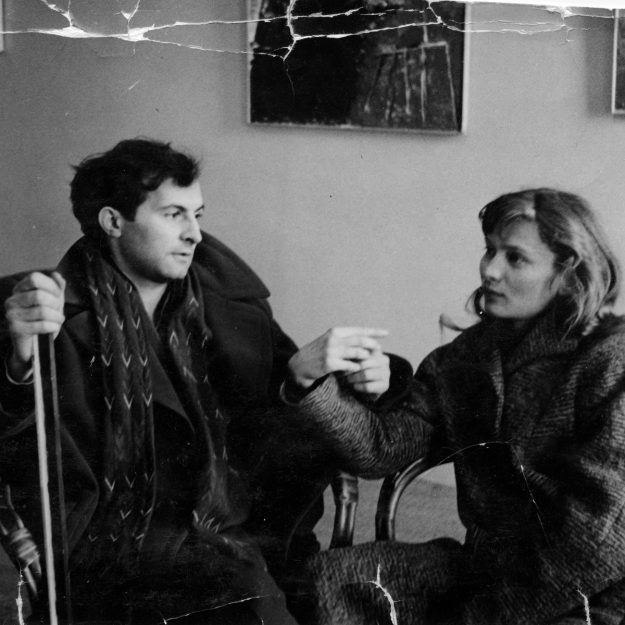
Reflecting on this period, Radigue mused, "Maybe I was already involved with Buddhism in some way, and I didn’t know it. Unconscious, but already there." She took a hiatus from music to undertake a three-year retreat under the guidance of the tenth reincarnation of Pawo Rinpoche, Lama Tsuglak Mawe Wangchuk. This period was described as "like fireworks." She was on the verge of selling her equipment and dedicating the rest of her life to monasticism when her master encouraged her to return to her music.
"Occasionally, I would sense that maybe he was upset by hearing the train of sounds that were still in my mind all day long," she recalled, referring to her master’s reaction to the lingering sounds of her internal sonic world. With his blessing, she completed the "Adnos" trilogy by 1982, followed by "Chants de Milarepa" (1983) and Trilogie de la Mort (1998). From this point forward, her music became a form of ritual "offerings" to Buddhism, a promise to her master.
The Acoustic Turn and Legacy
After completing Trilogie de la Mort, widely considered her magnum opus, Radigue retired the ARP 2500 and her predominantly solitary working methods around the turn of the millennium. In her mid-60s, the physical demands of the synthesizer became too taxing. She experienced instances where the instrument would abruptly shut off during her creative process. "When something is over, it’s over. . . ." she reflected. Her attempts to transition to digital synthesizers were met with physical challenges, including high blood pressure, and significant aesthetic differences. "I think that analog sounds have a special life quality—it is just like the skin. No skin is absolutely perfect, but when you touch the skin, it has a quality of life-ness," she explained. "L’île re-sonante" (2000) was her final fully completed electronic composition.
The remainder of Radigue’s career was devoted to the extensive "Occam" project, a series of collaborations with acoustic musicians, which she deemed "unfinishable." Her Paris apartment evolved into a hub for mentorship, where instrumentalists such as cellist Charles Curtis, harpist Rhodri Davies, and clarinetist Carol Robinson, among dozens of others, would regularly visit.
Nate Wooley, an American trumpeter who collaborated with Radigue on OCCAM X, shared with Tricycle: "There was a strength [in her] that I think had been built up through years of struggle—struggle to make her music, struggle to be taken seriously, personal and family struggles—but that struggle was not something she felt the need to put on another person. It just gave her wisdom and an endurance that she passed on like a kind of teaching."
The resulting acoustic compositions from this period are unwritten, transmitted through memory and oral tradition, embodying William of Ockham’s principle of parsimony: "entities should not be multiplied beyond necessity." Radigue carefully selected the musicians permitted to perform these works, safeguarding their integrity through a lineage-based transmission, akin to a master passing knowledge to disciples. She officially concluded the "Occam" project in the final months of her life with the Los Angeles premiere of Carol Robinson’s "OCCAM HEXA 8" in September 2025.
Critics have identified three distinct periods in Radigue’s artistic and career trajectory: the Feedback Period (1967-1971), the Electronic/ARP Period (1971-2000), and the Acoustic Period (2001-2026). Across these phases, her preoccupation with precise concentration and focused attention remained constant. Her chosen mediums at each stage can be viewed as meditations on the very bardo of reality, reflecting a hard-won discipline cultivated through a life that continuously oscillated between clarity and chaos.
Françoise J. Bonnet, Director of INA GRM and custodian of Radigue’s archives, noted in a lecture that Radigue’s early works explored feedback and the Larsen effect, the sonic loop created between a microphone and speaker. She was fascinated by the precision required to sustain a desired sound before it devolved into cacophony or disappeared entirely. This meticulous control over sonic phenomena translated to her work on the ARP 2500, where careful haptic manipulation was essential to guide sound. In her final creative arc, she collaborated with acoustic musicians to explore the interiority of sound, focusing intently on breath, overtones, microvariations of timbre, and their interaction within specific environmental conditions. Radigue consistently sought the fine, liminal edges of stillness and focus, and her career unfolded with a similar methodical, deliberate slowness.
Éliane Radigue spent a lifetime honoring ambiguity, translating the seemingly impossible into compositions, and drifting unbroken toward the threshold of silence. In her twilight years, she spoke of the countless frequencies beyond human discernment that are intrinsic to existence itself. "We live in a universe which is constantly in vibration on all wavelengths, from the lowest to the largest . . .," she reflected. "Life stops when there is no longer all of that in our bodies. It is also in our body. It is in our minds. It’s always there from our birth until our last breath, all these different rhythms which conjugate and combine." Her passing leaves a void in the world of experimental music, but her profound sonic explorations and spiritual insights will continue to resonate.

